


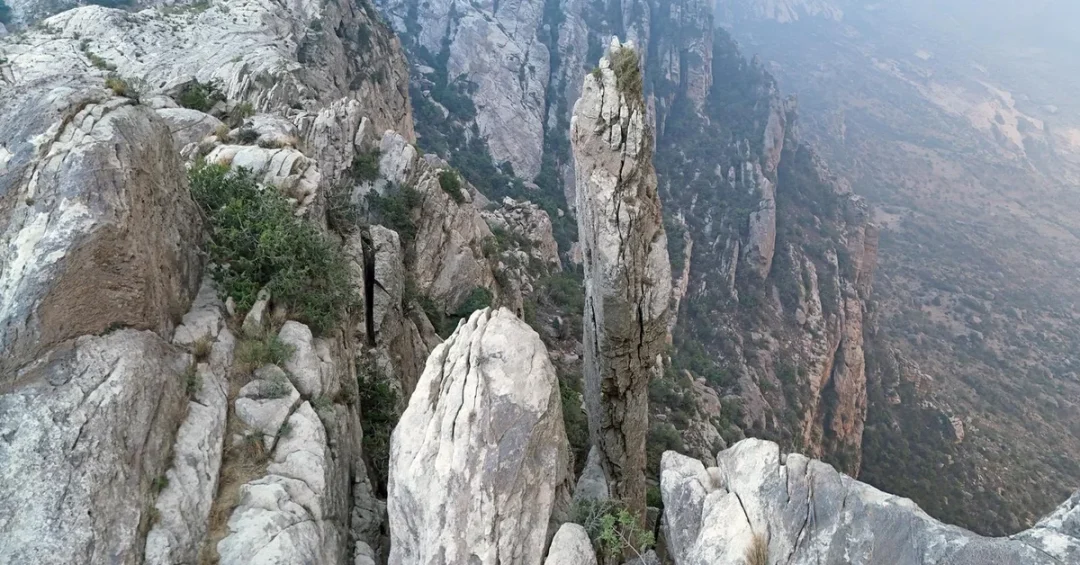
A striking natural rock formation in Aseer Region, known as Al-Ma’tafa rock, is drawing renewed attention to Saudi Arabia’s mountain tourism potential, according to the Saudi Press Agency (SPA). Standing more than 60 meters tall in a public park in Tanumah Governorate, roughly 150 kilometers north of Abha, the landmark rises in isolation against towering peaks, valleys, and lush slopes, attracting nature enthusiasts, hikers, and photographers from across the Kingdom and beyond. Its elongated shape broadens toward the summit and tapers at the base, evoking the form of a traditional cutting tool, and its profile shifts dramatically depending on the vantage point and surrounding topography.
The formation’s growing profile reflects a wider story unfolding across Aseer: a region being positioned as a year-round destination for outdoor exploration, heritage discovery, and cool-climate retreats. For international readers, Al-Ma’tafa offers a vivid illustration of how Saudi Arabia’s natural assets are being integrated into the Kingdom’s tourism economy under Vision 2030. Could a single geological landmark in the highlands signal the next chapter of Saudi tourism? Officials and local stakeholders believe the answer lies in the region’s combination of accessible landscapes, distinctive geology, and developing visitor infrastructure.
Context and Background
Aseer Region has long been known among Saudis for its elevated terrain, moderate temperatures, and green terraces, but it has only recently entered the global travel conversation. Al-Ma’tafa rock sits within a public park in Tanumah Governorate, an area surrounded by mountain peaks and agricultural terraces that have supported local communities for generations. According to the Saudi Press Agency, the site is located about 700 meters from the nearest paved access road, reachable via scenic walking paths that reveal panoramic mountain views, native vegetation, and sweeping valley vistas. That relative seclusion is part of its appeal, offering a sense of discovery while remaining within reach of regional transport networks.
What makes the formation especially compelling for photographers is the atmosphere of the highlands themselves. Low-hanging fog and shifting cloud cover frequently envelop the area, creating a dynamic backdrop that changes by the hour. The interplay of light, mist, and stone produces conditions rarely found elsewhere in the Arabian Peninsula, reinforcing Aseer’s reputation as a distinctive landscape destination. For the Kingdom’s tourism planners, such natural features are not isolated curiosities but anchors for broader itineraries that link mountain drives, heritage villages, and seasonal events.
The timing of this attention matters. As Saudi Arabia continues to diversify its visitor economy beyond traditional pilgrimage and business travel, regional destinations are being assessed for their capacity to host domestic and international travelers. Aseer’s rock formations, including Al-Ma’tafa, are emerging as signature attractions within that effort, supported by official documentation and media coverage through national channels.
Key Details of Al-Ma’tafa Rock
Al-Ma’tafa rock stands over 60 meters tall, an isolated monolith whose silhouette has been compared to a traditional cutting tool. Its elongated form broadens toward the summit and tapers at the base, a shape that produces varying visual impressions depending on the viewer’s position and the surrounding topography. From certain angles it appears to lean against the sky; from others it seems to merge with the ridgeline. This variability makes it a favorite subject for landscape photographers seeking compositions that reward patience and changing weather.
Access to the site is deliberately low-impact. The formation lies approximately 700 meters from the nearest paved road, and visitors reach it via walking paths that traverse the highlands. These routes offer panoramic mountain views, native vegetation, and sweeping valley vistas, turning the approach itself into part of the experience. The Saudi Press Agency notes that the site holds strong potential for ecotourism and adventure sports, with opportunities to develop guided hiking paths, scenic viewpoints, and assessed rock-climbing routes.
Such development would be consistent with the Kingdom’s approach to responsible tourism: improving access while preserving the character of natural landmarks. The presence of a public park at the site provides a foundation for visitor services, while the surrounding terrain supports activities such as trekking, photography tours, and nature observation. For local communities in Tanumah Governorate, these possibilities represent economic opportunities tied to guiding, hospitality, and small-scale retail.
Why Mountain Tourism Matters for Aseer
Mountain tourism has become a central pillar of Saudi Arabia’s regional development strategy, and Aseer is at its heart. The region’s elevation, climate, and cultural heritage make it a natural counterpoint to the Kingdom’s desert and coastal destinations. Al-Ma’tafa rock contributes to this identity by giving visitors a specific, memorable landmark to seek out, much like iconic formations elsewhere in the world that anchor entire travel itineraries. Isn’t a single distinctive landmark often the reason travelers choose one mountain region over another?
Officials have emphasized that natural sites can be developed in ways that respect environmental sensitivity. Guided hiking paths, clearly marked viewpoints, and professionally assessed climbing routes are among the measures under consideration for Aseer’s highlands. These additions would complement existing attractions such as heritage villages, seasonal festivals, and agricultural terraces, creating a layered visitor experience that encourages longer stays. Longer stays, in turn, support hotels, restaurants, and transport providers across the region.
The broader economic logic is straightforward: tourism spending spreads across communities when visitors linger. A landmark like Al-Ma’tafa, located near a public park and accessible by walking paths, can serve as a hub for local guides and photographers while remaining free of heavy infrastructure. This balance between accessibility and preservation is a recurring theme in Saudi tourism planning, and Aseer’s rock formations offer a clear case study.
International and Regional Impact
For international audiences, Aseer’s emerging profile adds a new dimension to perceptions of Saudi Arabia. The Kingdom is already known for religious tourism, business hubs, and large-scale entertainment events, but mountain landscapes represent a different kind of appeal: quiet, scenic, and adventure-oriented. Al-Ma’tafa rock and similar formations can attract travelers who prioritize nature, photography, and outdoor activity, segments that are growing globally. Regional visitors from neighboring Gulf countries, accustomed to desert and coastal trips, may find the cool highlands especially attractive during summer months.
Within the Middle East, mountain tourism is increasingly competitive, with destinations in Oman, Lebanon, and Morocco drawing adventure travelers. Saudi Arabia’s advantage lies in scale, infrastructure investment, and the ability to combine mountain experiences with cultural and heritage offerings. Aseer’s proximity to Abha, a city with an international airport and growing hospitality sector, strengthens its position. As word spreads through photography communities and travel media, the region’s rock formations are likely to appear more frequently in itineraries and social feeds, amplifying their reach.
Regional cooperation also plays a role. Saudi tourism authorities have engaged with international partners to promote the Kingdom’s diverse destinations, and Aseer’s natural landmarks fit naturally into those campaigns. The result is a gradual repositioning of Saudi Arabia as a destination for exploration, not only for pilgrimage or business, with mountain regions leading the way.
Economic and Strategic Significance
The economic significance of sites like Al-Ma’tafa extends beyond ticket sales or visitor counts. Mountain tourism generates demand for local guiding services, equipment rental, transportation, and accommodation, much of which can be provided by small and medium-sized enterprises. In Tanumah Governorate, where agriculture and traditional crafts remain important, tourism offers a complementary income stream that can help stabilize rural economies. The Saudi Press Agency’s description of the site’s potential for ecotourism and adventure sports points directly to these opportunities.
Strategically, developing Aseer’s highlands supports the Kingdom’s goal of extending tourism beyond major cities and seasonal peaks. By creating year-round attractions, Saudi Arabia can smooth demand across regions and seasons, making better use of infrastructure and labor. Al-Ma’tafa rock, with its dramatic profile and photogenic surroundings, is well suited to shoulder-season travel, when fog and cloud cover add atmosphere and temperatures remain comfortable. This aligns with national efforts to build a resilient, diversified tourism sector.
Investment in access and safety will be key. Guided hiking paths and assessed climbing routes require planning, training, and maintenance, but they also create skilled jobs and set standards for responsible use. If managed well, Aseer’s rock formations can demonstrate how natural assets become sustainable economic drivers, benefiting local residents and enhancing the Kingdom’s global image.
Vision 2030 Alignment
Al-Ma’tafa rock and Aseer’s wider geological heritage fit squarely within Saudi Vision 2030, which seeks to diversify the economy, create opportunities for citizens, and showcase the Kingdom’s natural and cultural treasures to the world. Tourism is a designated growth sector under the Vision, and mountain destinations are explicitly part of the plan to attract millions of additional visitors. By highlighting distinctive formations such as Al-Ma’tafa, official channels are signaling that Aseer is ready for greater attention, with development guided by environmental care and community benefit.
The road ahead involves careful planning: improving paths and viewpoints, training local guides, and promoting the region through national and international media. Each step reinforces the Vision’s promise of a more open, diversified Saudi Arabia. For travelers seeking landscapes that surprise and inspire, Aseer’s highlands now offer a compelling answer. Could the Kingdom’s next iconic travel image be a mist-wrapped monolith in Tanumah? For those following Saudi Arabia’s transformation, the answer is increasingly visible on the horizon.
20 Questions
Q1. What is Al-Ma’tafa rock and where is it located?
A1. Al-Ma’tafa rock is a natural rock formation standing over 60 meters tall in a public park in Tanumah Governorate, about 150 kilometers north of Abha in Aseer Region, Saudi Arabia.
Q2. How tall is Al-Ma’tafa rock?
A2. According to the Saudi Press Agency, the formation stands more than 60 meters tall, with an elongated shape that broadens toward the summit and tapers at the base.
Q3. Why is the rock called Al-Ma’tafa?
A3. Its distinctive profile resembles a traditional cutting tool, which is reflected in the name Al-Ma’tafa, and its appearance varies depending on the vantage point and surrounding topography.
Q4. How far is the site from the nearest paved road?
A4. The site is located about 700 meters from the nearest paved access road, reachable via scenic walking paths that offer panoramic mountain views, native vegetation, and valley vistas.
Q5. What makes Aseer Region attractive for mountain tourism?
A5. Aseer offers highlands, moderate temperatures, green terraces, and distinctive geology, making it a year-round destination for hiking, photography, and outdoor exploration in Saudi Arabia.
Q6. What tourism activities could be developed at Al-Ma’tafa rock?
A6. The site holds potential for ecotourism and adventure sports, including guided hiking paths, scenic viewpoints, and assessed rock-climbing routes, according to the Saudi Press Agency.
Q7. Why is the site popular with photographers?
A7. Low-hanging fog and shifting cloud cover frequently envelop the highlands, creating a dynamic backdrop that changes by the hour and rewards landscape photographers with varied compositions.
Q8. How does Al-Ma’tafa rock support Saudi Vision 2030?
A8. It supports Vision 2030 by helping diversify the economy through tourism, creating local opportunities, and showcasing Saudi Arabia’s natural heritage to international visitors.
Q9. Which Saudi authority reported on Al-Ma’tafa rock?
A9. The Saudi Press Agency, the Kingdom’s official news agency, reported on the formation, describing its dimensions, location, and potential for tourism development.
Q10. What is the nearest major city to Al-Ma’tafa rock?
A10. Abha is the nearest major city, located roughly 150 kilometers south of the site, and it serves as a gateway with an international airport and growing hospitality sector.
Q11. Is the site accessible for casual visitors?
A11. Yes. The formation is reachable via walking paths from a nearby paved road, making it accessible for visitors who are comfortable with a moderate walk through highland terrain.
Q12. What natural features surround Al-Ma’tafa rock?
A12. The site is surrounded by towering peaks, valleys, lush slopes, native vegetation, and agricultural terraces, with fog and cloud cover adding atmosphere to the landscape.
Q13. How could local communities benefit from tourism at the site?
A13. Local communities could benefit through guiding services, hospitality, equipment rental, and small-scale retail, creating income streams that complement agriculture and traditional crafts.
Q14. What safety measures would be needed for climbing routes?
A14. Any climbing routes would require professional assessment, clear signage, maintenance, and trained guides to ensure visitor safety and environmental protection in the highlands.
Q15. How does Aseer compare with other mountain destinations in the region?
A15. Aseer offers scale, infrastructure investment, and a mix of natural and cultural attractions, positioning it competitively alongside mountain destinations in Oman, Lebanon, and Morocco.
Q16. What role does Abha play in regional tourism?
A16. Abha serves as a gateway city with transport links and hospitality infrastructure, helping visitors access highland sites such as Al-Ma’tafa rock and other Aseer attractions.
Q17. When is the best time to visit Aseer’s highlands?
A17. The highlands are attractive year-round, with cooler temperatures in summer and atmospheric fog and cloud cover in other seasons, supporting shoulder-season travel and photography.
Q18. Does Al-Ma’tafa rock have cultural significance?
A18. The formation is part of Aseer’s natural heritage and local identity, and its name and shape connect it to traditional tools and the region’s cultural landscape.
Q19. What infrastructure exists at the site today?
A19. The site is within a public park with walking paths and nearby paved access, while further development of viewpoints and guided routes is under consideration.
Q20. What does Al-Ma’tafa rock signal about Saudi tourism’s future?
A20. It signals a broader shift toward nature, adventure, and regional destinations, supporting Vision 2030 goals to diversify the visitor economy and showcase the Kingdom’s landscapes.
Reader Feedback
We value your thoughts. Please share your feedback on this article.
Your feedback helps us improve our coverage.