


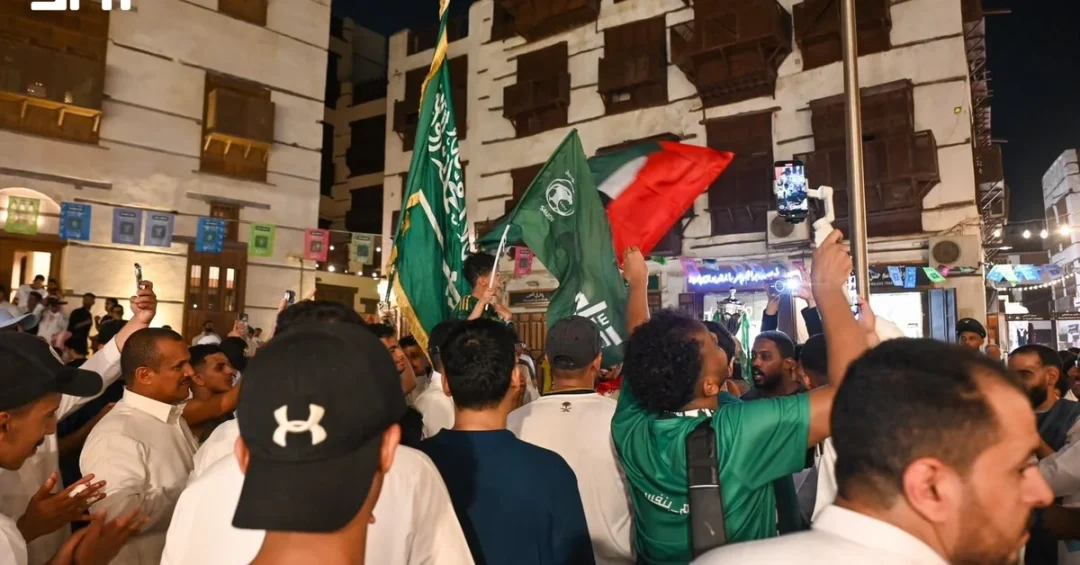
Historic Jeddah’s Beit Nassif emerged as an unexpected crossroads of sport and heritage during the Khaleeji 27 Cup, welcoming thousands of Gulf football fans while reaffirming its centuries-old role as a gateway to the city. According to the Saudi Press Agency (SPA), the square surrounding the house transformed into a lively meeting point for supporters of Gulf national teams, who gathered to exchange chants, take photographs, and explore the surrounding neighborhoods, markets, and historic landmarks.
Context and Background
Beit Nassif, whose construction began in 1289 AH (1872 CE), took four years to complete and spans approximately 900 square meters. Its design reflects the traditional building style of Jeddah, featuring facades adorned with rawashin—wooden latticework windows—and a harmonious blend of wood and stone that defines the city’s urban identity. The house gained national significance when King Abdulaziz bin Abdulrahman Al Saud stayed there in 1344 AH (1925 CE), using it as a venue for receiving state guests, delegations, and scholars. Over the decades, it evolved from a private residence into a cultural landmark in the heart of Historic Jeddah, a UNESCO World Heritage site.
Key Details
During the Khaleeji 27 Cup, Beit Nassif reclaimed its historic function as a welcoming hub. The surrounding square became a vibrant space where fans of Gulf teams mixed football passion with discovery of the site’s heritage. Visitors flowed into the adjacent neighborhoods, markets, and heritage homes, making the house a focal point that bridged sporting competition and cultural experience. The architectural details of Beit Nassif—its rawashin, wooden elements, and stone construction—continued to captivate visitors, offering a window into the lifestyles and social dynamics that shaped Historic Jeddah.
Implications and Impact
The convergence of football fans at Beit Nassif highlights the potential of sports tourism to drive cultural engagement. By hosting supporters from across the Gulf, the site strengthened regional ties and showcased Saudi Arabia’s rich heritage to a diverse audience. This organic fusion of sport and culture aligns with the Kingdom’s broader efforts to position itself as a global destination for both leisure and major events. The increased foot traffic also benefits local merchants and artisans in Historic Jeddah, supporting the local economy and preserving traditional crafts.
Vision 2030 Alignment
Beit Nassif’s role during the Khaleeji 27 Cup exemplifies Saudi Vision 2030’s goals of diversifying the economy, promoting cultural heritage, and enhancing quality of life. By attracting visitors and fostering cultural exchange, the site contributes to the development of tourism and reinforces Saudi Arabia’s position as a crossroads of civilizations. As the Kingdom continues to host world-class events, landmarks like Beit Nassif will remain vital in sharing Saudi stories with the world.
20 Questions
Q1. What is Beit Nassif and where is it located?
A1. Beit Nassif is a historic house in Historic Jeddah, Saudi Arabia. It was built in the late 19th century and serves as a cultural landmark within the UNESCO World Heritage site.
Q2. When was Beit Nassif constructed?
A2. Construction began in 1289 AH (1872 CE) and took four years to complete, finishing around 1876 CE.
Q3. What was the significance of King Abdulaziz staying at Beit Nassif?
A3. King Abdulaziz bin Abdulrahman Al Saud stayed there in 1344 AH (1925 CE), using it to receive guests and scholars, which elevated its status as a national symbol.
Q4. What architectural features define Beit Nassif?
A4. It features rawashin (wooden latticework windows), wood and stone elements, and traditional Jeddah building styles that reflect the city’s urban identity.
Q5. How did Beit Nassif function during the Khaleeji 27 Cup?
A5. The square around it became a gathering point for Gulf football fans, who exchanged chants and explored the surrounding heritage sites, blending sport with culture.
Q6. What is the Khaleeji 27 Cup?
A6. The Khaleeji 27 Cup is a regional football tournament for Gulf national teams, hosted by Saudi Arabia, which brought fans together in Jeddah.
Q7. Why is Historic Jeddah a UNESCO World Heritage site?
A7. It is recognized for its outstanding architectural and cultural heritage, including historic houses like Beit Nassif that showcase traditional Red Sea coastal building styles.
Q8. What role did Beit Nassif play in Jeddah’s history?
A8. It served as a residence, a venue for state guests, and a cultural hub, witnessing key moments in Jeddah’s transformation over more than a century.
Q9. How does Beit Nassif contribute to Saudi Vision 2030?
A9. It supports cultural tourism and heritage preservation, aligning with Vision 2030’s goals to diversify the economy and enhance quality of life.
Q10. What economic impact did the Khaleeji 27 Cup have on Historic Jeddah?
A10. Increased foot traffic benefited local merchants, artisans, and markets, boosting the local economy and showcasing traditional crafts to a wider audience.
Q11. What are rawashin?
A11. Rawashin are traditional wooden latticework windows characteristic of Jeddah’s architecture, providing ventilation, privacy, and aesthetic appeal.
Q12. How has Beit Nassif changed over the decades?
A12. It transitioned from a residential dwelling to a historic and cultural landmark, now serving as a museum and cultural venue.
Q13. Who can visit Beit Nassif?
A13. It is open to the public, including tourists and locals, offering insights into Jeddah’s history and architectural traditions.
Q14. What makes Beit Nassif a focal point for cultural exchange?
A14. Its central location in Historic Jeddah and its historical significance attract diverse visitors, fostering dialogue and appreciation of Saudi heritage.
Q15. How does Beit Nassif blend sport and culture?
A15. During the Khaleeji 27 Cup, football fans gathered at the site, merging their passion for sport with exploration of the surrounding heritage, creating a unique cultural experience.
Q16. What is the area of Beit Nassif?
A16. It covers approximately 900 square meters, with architectural details typical of traditional Jeddah houses.
Q17. Why is Beit Nassif important to national memory?
A17. It hosted King Abdulaziz and served as a venue for state guests, symbolizing Jeddah’s role as a gateway to the Kingdom and a crossroads of cultures.
Q18. How does Beit Nassif attract international visitors?
A18. Its status as a heritage site within Historic Jeddah, combined with events like the Khaleeji 27 Cup, draws global visitors interested in Saudi history and culture.
Q19. What other landmarks are near Beit Nassif?
A19. Historic Jeddah’s markets, neighborhoods, and other heritage homes are nearby, all part of the UNESCO World Heritage site.
Q20. What future plans exist for Beit Nassif?
A20. Under Vision 2030, ongoing preservation and promotion efforts aim to enhance its role as a cultural tourism destination, welcoming visitors from around the world.
Reader Feedback
We value your thoughts. Please share your feedback on this article.
Your feedback helps us improve our coverage.