


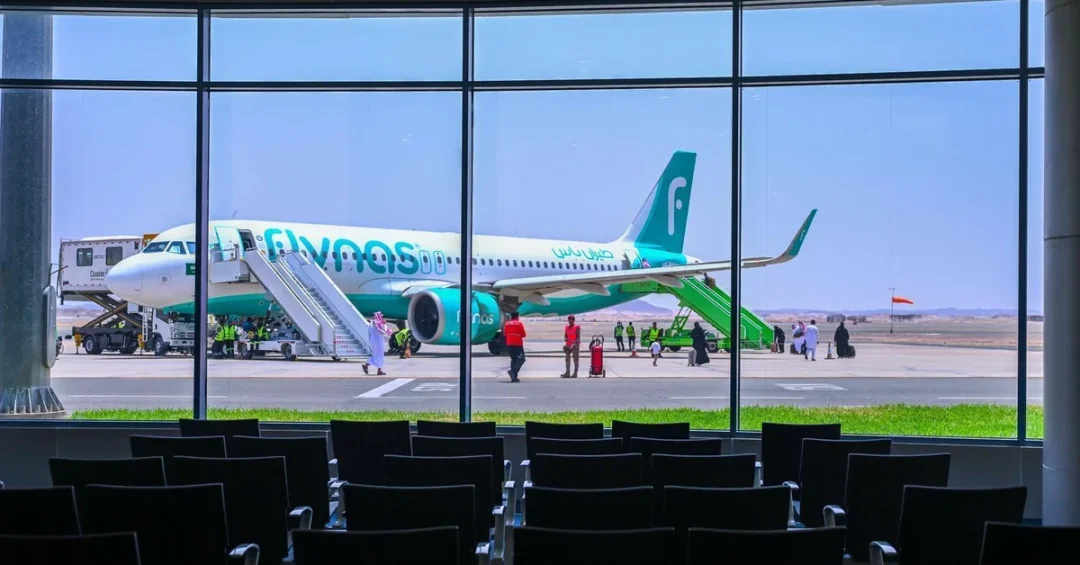
Bisha Airport has recorded passenger numbers exceeding 600,000 during 2025 and the first half of 2026, an 8.5% year-on-year increase, according to official data released by Cluster2 Airports, the operator of the facility. The airport, located about 200 kilometers north of Abha, has also handled more than 5,000 flights over the same period, reflecting growth of 31.8% and underscoring its expanding role as an air gateway to a governorate rich in tourism, economic, and agricultural potential. The performance figures, announced through official Saudi channels, point to rising demand for travel to and from Bisha and reinforce the airport’s position within the Kingdom’s broader aviation network.
The results arrive at a time when Saudi Arabia is investing heavily in regional airports as engines of local development. For international observers, Bisha’s numbers offer a concrete example of how aviation connectivity is being used to open up areas beyond the major metropolitan centers, linking smaller governorates to Riyadh, Jeddah, Dammam, and ultimately to the global economy. Could a single regional airport really reshape the economic trajectory of an entire governorate? The evidence from Bisha suggests that, when paired with strong local industries and strategic national investment, the answer is yes.
Context and Background
Why does Bisha matter beyond its own borders? Bisha is known for its palm oases and date production, particularly Safri dates, which are among the governorate’s prominent comparative advantages for their quality and distinctive taste. The palm and date sector constitutes an important economic activity supported by an integrated network of farmers, producers, and local markets, further enhancing Bisha’s economic and tourism profile. This agricultural foundation gives the governorate a natural export identity that air connectivity can help amplify.
Bisha Airport operates flights to three domestic destinations: Riyadh, Jeddah, and Dammam, served by three national carriers. This enhances air connectivity for the governorate, facilitates the movement of residents, visitors, and businesspeople, and supports economic, commercial, and tourism activities. The airport’s role is therefore twofold: it moves people, and it moves opportunity.
The facility is operated by Cluster2 Airports, one of the airport clusters created under Saudi Arabia’s aviation strategy to improve operational efficiency and passenger experience across the Kingdom. Bisha’s recent performance is part of a wider pattern in which regional airports are being upgraded, digitized, and integrated into a national network designed to serve both domestic travelers and international visitors. The airport’s strategic location and natural resources are driving its growth, and its expanding operations reflect the governorate’s dynamism and its role in supporting travel and connecting it with major destinations across the Kingdom of Saudi Arabia.
Key Details
What exactly do the latest figures show? According to Cluster2 Airports, passenger numbers exceeded 600,000 during 2025 and the first half of 2026, representing an 8.5% increase compared with the same period of the previous year. The number of flights also exceeded 5,000, reflecting growth of 31.8% and the airport’s expanding operational activity. The gap between passenger growth and flight growth is notable: it suggests that airlines are adding capacity and frequency, and that the airport is handling more movements without compromising service quality.
Bisha Airport has recently received several international awards and accreditations, notably the Best Airport in the Middle East award for ease of passenger travel, Airports Council International (ACI) Level 3 Airport Customer Experience Accreditation, and ACI Level 1 Accessibility Enhancement Accreditation. These recognitions are not merely ceremonial. They signal that the airport meets international benchmarks for passenger service, accessibility, and operational reliability, which matters for airlines deciding where to deploy aircraft and for travelers choosing how to reach the region.
The airport’s domestic network connects Bisha to three of the Kingdom’s most important cities. Riyadh is the political and administrative capital, Jeddah is the gateway to the Red Sea and the Two Holy Mosques, and Dammam anchors the Eastern Province’s industrial and energy economy. For residents and businesses in Bisha, these links provide access to government services, commercial partners, healthcare, education, and tourism markets that would otherwise require long road journeys.
Tourism and Agricultural Synergies
How does an airport translate into tourism growth? Bisha’s appeal lies in its natural environment, its agricultural heritage, and its position within the wider Aseer region, which is being developed as a year-round tourism destination. The governorate’s palm oases and date farms offer visitors a distinctive cultural and culinary experience, while the surrounding landscapes provide opportunities for outdoor and heritage tourism. Improved air access shortens travel times and makes weekend and short-stay trips more feasible for domestic and international visitors alike.
The date sector is a particularly important beneficiary. Safri dates are prized for their quality and taste, and the governorate’s integrated network of farmers, producers, and local markets depends on efficient logistics to reach consumers in Riyadh, Jeddah, Dammam, and beyond. Air cargo capacity and reliable flight schedules help move high-value agricultural products quickly, supporting farmers’ incomes and strengthening the local economy. As tourism grows, demand for local products and experiences grows with it, creating a virtuous cycle.
Bisha’s tourism potential also complements the broader Aseer strategy, which positions the region as a destination for nature, culture, and hospitality. Visitors arriving through Bisha can combine date-farm visits with exploration of the region’s heritage sites, markets, and landscapes. The airport thus functions as more than a transport hub; it is a first point of contact that shapes visitors’ impressions of Saudi hospitality and the Kingdom’s modernization.
International and Regional Impact
What does Bisha’s growth mean for the wider region? Saudi Arabia’s aviation strategy aims to expand connectivity, increase passenger numbers, and position the Kingdom as a global logistics and tourism hub. Regional airports such as Bisha are essential to that vision because they distribute the benefits of growth beyond the largest cities, creating jobs and investment opportunities in smaller communities. The airport’s international accreditations also raise its profile among global aviation partners and could support future discussions about additional routes or services.
For international audiences, Bisha offers a window into how Saudi Arabia is developing its secondary cities and regions. The Kingdom is not only building mega-projects; it is also upgrading the everyday infrastructure that connects people to work, markets, and cultural experiences. This balanced approach is central to the country’s long-term stability and prosperity, and it aligns with the objectives of Vision 2030 to diversify the economy and improve quality of life across all regions.
The airport’s performance also has implications for regional travel patterns. As domestic connectivity improves, more Saudis and residents are likely to consider domestic tourism, which keeps spending within the Kingdom and supports local businesses. International visitors, meanwhile, can more easily add secondary destinations such as Bisha to itineraries that include Riyadh, Jeddah, or Aseer’s mountain resorts.
Economic and Strategic Significance
Why should economists and investors pay attention? Aviation is a multiplier industry: every additional flight brings passengers who spend on hotels, food, transport, and local products. The 31.8% increase in flights at Bisha indicates growing airline confidence in the route network, while the 8.5% rise in passengers shows steady demand. Together, these trends support employment in airport operations, ground handling, retail, and hospitality, as well as in the agricultural supply chains that depend on fast, reliable transport.
The airport’s awards and accreditations also have strategic value. The ACI Level 3 Airport Customer Experience Accreditation and ACI Level 1 Accessibility Enhancement Accreditation demonstrate a commitment to international standards, which is important for attracting airline partners and for ensuring that travelers of all abilities can use the facility comfortably. The Best Airport in the Middle East award for ease of passenger travel reinforces Bisha’s reputation as a user-friendly gateway, a factor that can influence repeat visits and positive word-of-mouth.
Strategically, Bisha’s growth supports the Kingdom’s efforts to decentralize economic activity and build resilient regional economies. By connecting agricultural producers to national markets and by opening the governorate to tourism, the airport helps diversify local income sources and reduces dependence on any single sector. This is precisely the kind of integrated development that Vision 2030 seeks to promote.
Vision 2030 Alignment
How does Bisha fit into Saudi Arabia’s long-term vision? Vision 2030 aims to diversify the economy, increase non-oil revenues, and improve the quality of life for citizens and residents. Regional airports are a key enabler of these goals because they connect communities to opportunity, support tourism and trade, and attract investment to areas with strong local advantages. Bisha’s combination of agricultural strength, tourism potential, and improving air connectivity makes it a practical example of the vision in action.
The airport’s recent international recognition also reflects the Kingdom’s broader commitment to excellence in public services and infrastructure. As Saudi Arabia continues to expand its aviation network, facilities like Bisha will play an increasingly important role in linking the Kingdom’s regions to each other and to the world. For international readers, Bisha’s story is a reminder that Saudi Arabia’s transformation is not limited to its largest cities; it is unfolding across the country, driven by official strategies, local initiative, and a clear sense of direction.
With passenger numbers above 600,000, flights exceeding 5,000, and a growing list of international accolades, Bisha Airport is well positioned to support the next phase of the governorate’s development. Its continued success will depend on sustained investment, strong partnerships with national carriers, and the ongoing vitality of Bisha’s agricultural and tourism sectors. On current evidence, the airport is not just keeping pace with the region’s ambitions; it is helping to define them.
20 Questions
Q1. Where is Bisha Airport located?
A1. Bisha Airport is located about 200 kilometers north of Abha, serving Bisha governorate in northern Aseer and acting as an air gateway to a region rich in tourism, economic, and agricultural potential.
Q2. How many passengers did Bisha Airport handle in 2025 and the first half of 2026?
A2. According to Cluster2 Airports, passenger numbers exceeded 600,000 during 2025 and the first half of 2026, representing an 8.5% increase compared with the same period of the previous year.
Q3. How many flights operated at Bisha Airport during the same period?
A3. The airport handled more than 5,000 flights, reflecting growth of 31.8% and underscoring its expanding operational activity and growing role in the Kingdom’s domestic aviation network.
Q4. Which destinations does Bisha Airport serve?
A4. Bisha Airport operates flights to three domestic destinations: Riyadh, Jeddah, and Dammam, served by three national carriers, enhancing connectivity for residents, visitors, and businesspeople.
Q5. What is Bisha known for agriculturally?
A5. Bisha is known for its palm oases and date production, particularly Safri dates, which are among the governorate’s prominent comparative advantages for their quality and distinctive taste.
Q6. What international awards has Bisha Airport received?
A6. Bisha Airport has received the Best Airport in the Middle East award for ease of passenger travel, ACI Level 3 Airport Customer Experience Accreditation, and ACI Level 1 Accessibility Enhancement Accreditation.
Q7. Who operates Bisha Airport?
A7. Bisha Airport is operated by Cluster2 Airports, one of the airport clusters established under Saudi Arabia’s aviation strategy to improve operational efficiency and passenger experience across the Kingdom.
Q8. Why is Bisha’s location important for tourism?
A8. Bisha’s location in northern Aseer places it near natural landscapes, heritage sites, and agricultural attractions, making it a convenient entry point for visitors exploring the wider region.
Q9. How does the airport support the local date industry?
A9. Reliable flights and air cargo capacity help move high-value Safri dates and other products quickly to markets in Riyadh, Jeddah, Dammam, and beyond, supporting farmers and local producers.
Q10. What does the 31.8% growth in flights indicate?
A10. It indicates growing airline confidence in Bisha’s route network and rising demand for travel to and from the governorate, supporting economic, commercial, and tourism activities.
Q11. How does Bisha Airport contribute to Vision 2030?
A11. It supports Vision 2030 by improving regional connectivity, enabling tourism and trade, attracting investment, and helping diversify local economies beyond oil through agriculture and services.
Q12. What is the significance of ACI accreditation for Bisha Airport?
A12. ACI accreditation demonstrates that Bisha meets international standards for customer experience and accessibility, which helps attract airline partners and ensures comfortable travel for all passengers.
Q13. How does the airport benefit residents of Bisha?
A13. It provides faster access to government services, healthcare, education, and commercial opportunities in major cities, while also making it easier for visitors and investors to reach the governorate.
Q14. What role do national carriers play at Bisha Airport?
A14. Three national carriers operate flights connecting Bisha to Riyadh, Jeddah, and Dammam, ensuring reliable schedules and supporting the movement of passengers and goods.
Q15. Why is domestic tourism important for Bisha’s economy?
A15. Domestic tourism keeps spending within the Kingdom, supports local hotels, restaurants, markets, and farms, and helps showcase Bisha’s cultural and natural attractions to a wider Saudi audience.
Q16. What makes Safri dates special?
A16. Safri dates are prized for their quality and distinctive taste, giving Bisha a strong agricultural identity and a product that can reach national and international markets through improved connectivity.
Q17. How does Bisha Airport’s growth reflect Saudi aviation strategy?
A17. It reflects the strategy’s focus on expanding regional airports, increasing passenger numbers, and integrating secondary cities into a national network that supports tourism, trade, and economic diversification.
Q18. What economic activities does the airport support beyond tourism?
A18. It supports agriculture, retail, hospitality, ground handling, logistics, and local services, creating employment and helping diversify the governorate’s income sources.
Q19. How can international visitors reach Bisha?
A19. International visitors can fly to major Saudi hubs such as Riyadh or Jeddah and connect on domestic flights to Bisha, which is served by three national carriers.
Q20. What does the future hold for Bisha Airport?
A20. With strong passenger and flight growth, international awards, and official support, Bisha Airport is well positioned to expand its role in tourism, trade, and regional development.
Reader Feedback
We value your thoughts. Please share your feedback on this article.
Your feedback helps us improve our coverage.
Related articles
 Buraidah International Dates Carnival Kicks Off Tomorrow
 AlUla’s Diverse Landscapes Spotlighted on World Photography Day
 Najran: Where Cultural Heritage Meets Creative Photography
 Al Khafji Sandy Beach: New Coastal Destination Boosts Saudi Tourism
 Historic Al-Qunfudhah Mill: A Window to Saudi’s Coastal Heritage
 Najran: A Cultural Icon Revealed Through the Lens on World Photography Day