


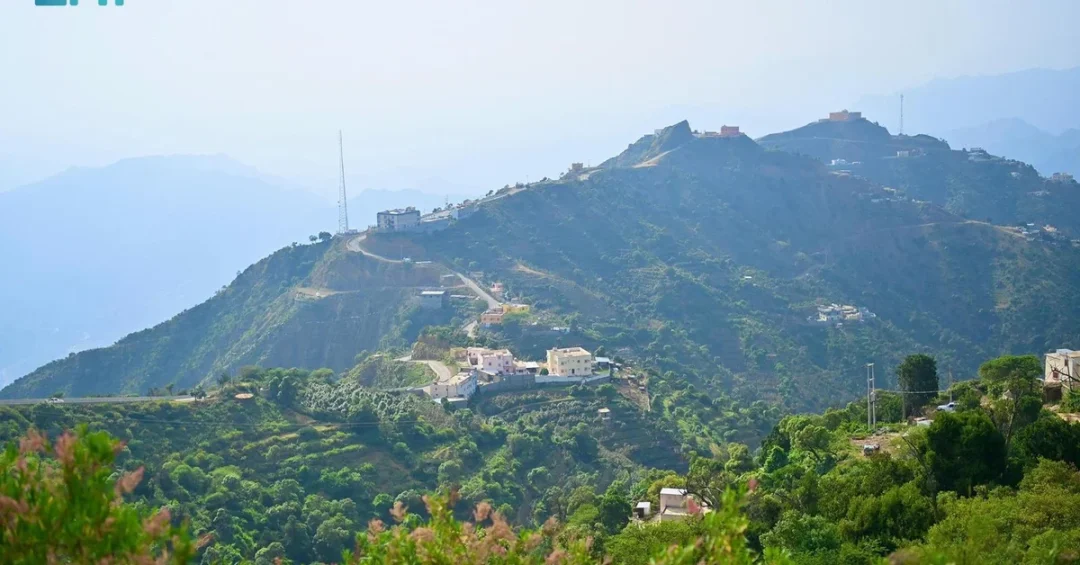
The Black Mountain in Al-Raith Governorate, Jazan region, is drawing visitors from across Saudi Arabia and beyond with its dramatic landscapes, terraced farms, and renowned white Majra honey. Located approximately 124 kilometers northeast of Jazan city and rising over 3,000 feet, this natural wonder captivates travelers seeking tranquility and natural beauty.
Context and Background
The Black Mountain, known locally as Jabal Aswad, is a striking geological formation whose peaks and slopes form an arc, casting deep shadows during sunrise and sunset—hence its name. The summit is cloaked in a lush canopy of juniper trees and other perennial plants, creating a verdant contrast against the surrounding arid terrain. This unique ecosystem has been preserved through generations, offering a glimpse into Saudi Arabia’s rich natural heritage.
Al-Raith Governorate, part of the Jazan region, has long been known for its agricultural traditions. The Black Mountain’s terraced farms, carved into its slopes by local communities, stand as a testament to human ingenuity and adaptation. These terraces not only prevent soil erosion but also create microclimates that support diverse crops.
Key Details
The mountain’s vegetation includes abundant Sidr, Samr, Talh, and Marar trees, which provide ideal conditions for beekeeping. This has made the area a paradise for apiarists, producing the renowned white Majra honey, celebrated for its purity and distinct flavor. Visitors can witness traditional beekeeping practices and sample this prized product.
The terraced farms yield a variety of crops, contributing to the region’s agricultural output and food security. Local guides offer tours that highlight the area’s biodiversity and cultural significance. The mountain’s cooler climate, even in summer, provides a refreshing escape from the heat of the lowlands.
Implications and Impact
The growing allure of the Black Mountain is part of a broader trend of domestic tourism in Saudi Arabia, fueled by the Saudi Tourism Authority’s efforts to promote lesser-known destinations. This influx supports local businesses, from honey producers to tour operators, and creates jobs in rural areas. As more visitors discover this hidden gem, infrastructure improvements, such as better roads and visitor facilities, are underway to accommodate them while preserving the environment.
Regionally, the Black Mountain enhances Jazan’s profile as a tourist destination, complementing its coastal attractions and cultural festivals. It also aligns with the National Tourism Strategy, which aims to attract 100 million visitors annually by 2030.
Vision 2030 Alignment
The promotion of the Black Mountain directly supports Vision 2030, Saudi Arabia’s ambitious blueprint for economic diversification and quality-of-life enhancement. By showcasing natural and cultural treasures like the Black Mountain, the Kingdom not only boosts tourism but also fosters pride in its heritage and encourages sustainable development. As the nation continues to open up to the world, sites like the Black Mountain will play a vital role in redefining Saudi Arabia as a premier destination for nature and adventure tourism.
20 Questions
Q1. Where is the Black Mountain located?
A1. The Black Mountain is located in Al-Raith Governorate in the Jazan region of Saudi Arabia, approximately 124 kilometers northeast of Jazan city.
Q2. How high is the Black Mountain?
A2. The mountain rises over 3,000 feet above sea level, offering panoramic views of the surrounding landscape.
Q3. Why is it called the Black Mountain?
A3. It is named for the dramatic shadows cast by its arc-shaped peaks and slopes during sunrise and sunset, making it appear black.
Q4. What kind of vegetation is found on the Black Mountain?
A4. The summit is covered with juniper trees and other perennial plants, along with Sidr, Samr, Talh, and Marar trees.
Q5. What is special about the honey produced in the area?
A5. The area is renowned for white Majra honey, which is highly prized for its purity and unique flavor.
Q6. What agricultural practices are seen on the mountain?
A6. Local communities have created terraced farms on the slopes, which showcase traditional agricultural heritage and prevent soil erosion.
Q7. What can visitors do at the Black Mountain?
A7. Visitors can relax, rejuvenate, and immerse themselves in the tranquil natural beauty, as well as explore terraced farms and observe beekeeping.
Q8. How does the Black Mountain contribute to local economy?
A8. It supports local businesses such as honey producers and tour operators, creating jobs and income for the community.
Q9. Is the Black Mountain a popular tourist destination?
A9. Yes, it is increasingly attracting visitors from across Saudi Arabia and beyond, drawn by its unique landscapes and cultural experiences.
Q10. What is the climate like at the Black Mountain?
A10. The mountain has a cooler climate compared to the lowlands, providing a refreshing escape, especially during summer.
Q11. Are there guided tours available?
A11. Yes, local guides offer tours that highlight the area’s biodiversity and cultural significance.
Q12. How does the Black Mountain align with Vision 2030?
A12. It supports Vision 2030 by promoting tourism, diversifying the economy, and enhancing quality of life through sustainable development.
Q13. What is the significance of the terraced farms?
A13. The terraced farms demonstrate local ingenuity, conserve soil, and create microclimates for diverse crops, contributing to food security.
Q14. What types of trees are abundant on the mountain?
A14. Sidr, Samr, Talh, and Marar trees are abundant, providing ideal conditions for beekeeping.
Q15. What is the best time to visit the Black Mountain?
A15. Visitors can enjoy the mountain year-round, but early morning and late afternoon offer spectacular views during sunrise and sunset.
Q16. Is the Black Mountain accessible by road?
A16. Yes, it is accessible via roads from Jazan city, and ongoing infrastructure improvements aim to enhance access for visitors.
Q17. What makes the Black Mountain unique?
A17. Its unique arc shape, lush vegetation, terraced farms, and production of white Majra honey make it a distinctive natural and cultural attraction.
Q18. How does the local community benefit from tourism?
A18. Tourism generates income, creates jobs, and encourages the preservation of local traditions and natural resources.
Q19. Are there any conservation efforts in place?
A19. Yes, efforts are underway to preserve the mountain’s ecosystem and promote sustainable tourism practices.
Q20. How can visitors learn more about the Black Mountain?
A20. Visitors can contact local tourism offices or guides in Jazan for information and to arrange visits.
Reader Feedback
We value your thoughts. Please share your feedback on this article.
Your feedback helps us improve our coverage.
Related articles
 Sphinx Mountain: Hail’s Archaeological Gem and Tourist Haven
 Historic Abu Arish Castle .. Tourist Attraction for History, Ancient Architecture Enthusiasts
 Minister Sponsors Training Contract for 500 Jobs at Red Sea Global
 Makkah Deputy Governor Chairs Meeting on Tourism Development
 Minister Al-Khateeb Discusses Tourism Investment Opportunities in Jeddah, Taif
 Saudi Launches Seas of Excellence Training Program