


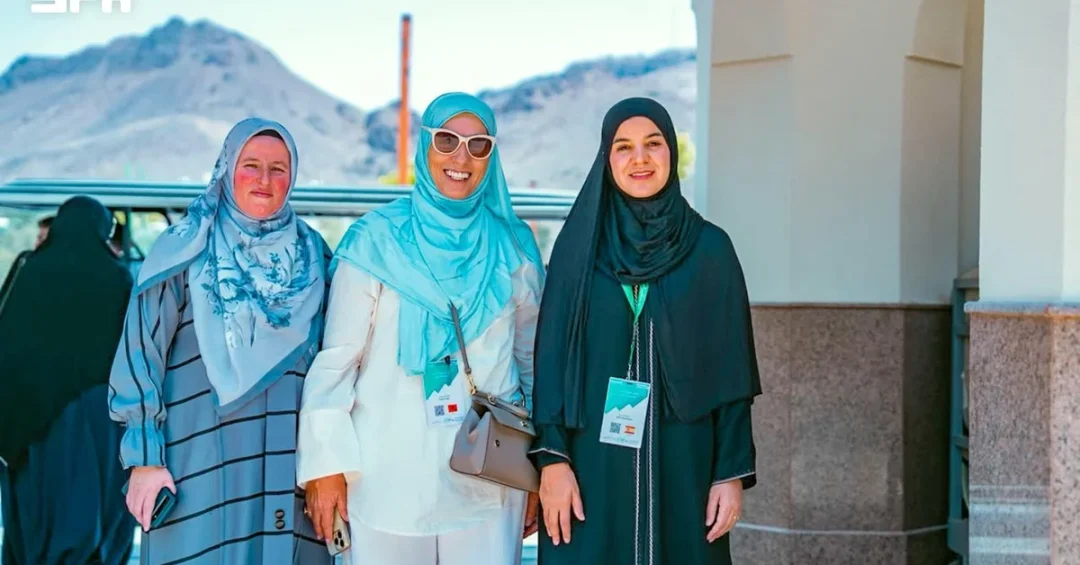
The second group of Umrah performers hosted under the Custodian of the Two Holy Mosques’ Guests Program for Umrah and Visit left Madinah on Monday for Makkah to perform the Umrah rituals, the Saudi Press Agency reported. The delegation comprises 250 male and female Umrah performers from 23 countries across Europe and Asia, according to the Ministry of Islamic Affairs, Dawah and Guidance, the government body that implements the program. The departure followed several days of religious and cultural activities in Madinah, where the guests visited the Prophet’s Mosque, prayed at Al-Rawdah Al-Sharifah, and toured Islamic and historical landmarks. The ministry said it provided comprehensive services and care that facilitated the visit and enabled the guests to perform their religious rites with ease and tranquility. The smooth transition from Madinah to Makkah underscores how the program is designed to let guests focus entirely on worship rather than logistics. Is it any wonder that the guests described the care they received as a reflection of the generous attention Saudi leadership gives to Umrah performers?
The Custodian of the Two Holy Mosques’ Guests Program for Umrah and Visit is one of the Kingdom’s most visible instruments of religious hospitality, inviting Muslims from around the world to perform Umrah at the invitation of the state. The second group’s journey from Madinah to Makkah marks the culmination of a carefully organized itinerary that begins with arrival in the Kingdom, continues through visits to the Prophet’s Mosque and historic sites in Madinah, and concludes with the Umrah rituals in Makkah. The program is implemented by the Ministry of Islamic Affairs, Dawah and Guidance, which coordinates travel, accommodation, guidance, and care for every guest. For the 250 participants from 23 European and Asian countries, the experience represents both a spiritual milestone and a firsthand encounter with Saudi Arabia’s capacity to host large numbers of pilgrims with comfort and dignity.
Context and Background
Why does a program like this matter so much to Muslims around the world? The Custodian of the Two Holy Mosques’ Guests Program for Umrah and Visit exists to extend an invitation to Muslims who might otherwise find it difficult to travel to the Kingdom, offering them the opportunity to perform Umrah and visit the Prophet’s Mosque under the care of the Saudi state. The Ministry of Islamic Affairs, Dawah and Guidance implements the program as part of its broader mandate to serve Islam and Muslims, promote moderation, and strengthen ties between the Kingdom and Islamic communities worldwide. By selecting guests from a wide range of countries, the program reflects the Kingdom’s commitment to inclusivity and to the universal character of the two holy mosques.
The second group’s itinerary in Madinah included visits to several Islamic and historical sites, among them Jabal Uhud and Quba Mosque, as well as the King Fahd Glorious Quran Printing Complex and the International Fair and Museum of the Prophet’s Biography and Islamic Civilization. These stops are designed to enrich the guests’ spiritual experience and deepen their knowledge of Islamic history and civilization. The guests also participated in religious and cultural programs organized by the ministry, which complement the visits and provide context for the sites they see. Such programming transforms the journey into an educational and reflective experience, not merely a logistical one. The ministry’s comprehensive services, from arrival through departure from Madinah, ensured that the guests could perform their religious rites with ease and tranquility.
The program’s structure reflects decades of accumulated expertise in hosting pilgrims. Saudi Arabia has long been the destination of choice for Muslims seeking to perform Hajj and Umrah, and the Kingdom has steadily expanded its capacity and improved its services. The Guests Program is one expression of that broader effort, targeting specific groups and offering them a curated experience that combines worship, learning, and cultural exchange. For the current group, the days spent in Madinah allowed them to greet the Prophet Muhammad and his two companions at the Prophet’s Mosque, an experience the guests described as deeply moving. Their departure for Makkah marks the next phase of a journey that will conclude with the performance of Umrah rituals at the Grand Mosque.
Key Details
What exactly did the guests experience during their time in Madinah? According to the Saudi Press Agency, the group spent several days participating in religious and cultural programs and visiting Islamic and historical sites after visiting the Prophet’s Mosque. The guests expressed great happiness at having the opportunity to pray at Al-Rawdah Al-Sharifah, a site of special significance within the Prophet’s Mosque. Their itinerary included Jabal Uhud, the site of a historic battle in early Islamic history, and Quba Mosque, the first mosque built in Islam. They also visited the King Fahd Glorious Quran Printing Complex, which produces millions of copies of the Quran each year and distributes them worldwide, and the International Fair and Museum of the Prophet’s Biography and Islamic Civilization, which presents the life and legacy of the Prophet Muhammad through exhibits and educational displays.
The ministry provided comprehensive services and care that facilitated the visit and enabled the guests to perform their religious rites with ease and tranquility. This included logistical support, guidance, and arrangements that allowed the group to move between sites smoothly and focus on their spiritual objectives. The guests praised the services and facilities provided to them, saying the care they received from their arrival in Saudi Arabia until their departure from Madinah reflects the generous attention the leadership gives to Umrah performers. They added that it reflects the leadership’s commitment to providing all means necessary to help them perform their religious duties in an atmosphere of security, comfort, and tranquility. Such feedback is consistent with the program’s objectives and with the Kingdom’s broader reputation for hospitality.
The group’s composition, 250 male and female Umrah performers from 23 countries across Europe and Asia, highlights the program’s international reach. Guests come from diverse backgrounds and cultures, united by their faith and their desire to perform Umrah. The ministry’s selection process aims to include Muslims from different regions, ensuring that the program serves as a bridge between the Kingdom and Islamic communities worldwide. For many participants, the invitation represents a once-in-a-lifetime opportunity to visit the two holy mosques and to experience Saudi Arabia’s religious and cultural heritage firsthand. The program’s emphasis on care and comfort is intended to make that experience as rewarding as possible.
International and Regional Impact
How does a program for 250 guests from 23 countries resonate beyond the individuals involved? The Custodian of the Two Holy Mosques’ Guests Program for Umrah and Visit serves as a form of religious diplomacy, strengthening ties between Saudi Arabia and Muslim communities across Europe, Asia, and beyond. When guests return home, they carry with them memories of their visit and impressions of the Kingdom’s hospitality and organization. Those impressions can shape perceptions of Saudi Arabia in their home countries, contributing to a positive image of the Kingdom as a reliable and generous host. The program also reinforces the Kingdom’s role as the guardian of Islam’s holiest sites and as a leader in serving pilgrims from around the world.
Regionally, the program complements Saudi Arabia’s broader efforts to promote moderation and interfaith understanding. By inviting Muslims from diverse countries, the Ministry of Islamic Affairs, Dawah and Guidance creates opportunities for cultural exchange and dialogue. Guests interact with Saudi officials, religious scholars, and local communities, gaining insights into the Kingdom’s approach to Islamic affairs. These interactions can help counter misconceptions and build goodwill. The program also aligns with the Kingdom’s Vision 2030 objectives, which include enhancing Saudi Arabia’s global standing and deepening its engagement with the international community. The positive experiences of the guests contribute to the Kingdom’s soft power and to its reputation as a welcoming destination for Muslims worldwide.
Economic and Strategic Significance
What does the program reveal about Saudi Arabia’s strategic priorities? The Custodian of the Two Holy Mosques’ Guests Program for Umrah and Visit is part of a wider ecosystem of pilgrimage services that the Kingdom has developed over many years. While the program itself is a hospitality initiative, it operates within a sector that has significant economic and strategic importance. Umrah and Hajj bring millions of visitors to the Kingdom each year, supporting jobs, businesses, and infrastructure across Makkah, Madinah, and other regions. The Kingdom has invested heavily in expanding capacity at the two holy mosques, improving transportation links, and upgrading accommodation and services. These investments benefit not only pilgrims but also the Saudi economy and the broader region.
Strategically, the program reinforces Saudi Arabia’s position as the preeminent destination for Islamic pilgrimage. By hosting guests from 23 countries, the Kingdom demonstrates its ability to manage complex logistics and to provide high-quality care at scale. This capability is a source of national pride and a cornerstone of the Kingdom’s international identity. The program also supports the goals of Vision 2030 by promoting tourism, cultural exchange, and global engagement. As Saudi Arabia continues to diversify its economy and open up to the world, initiatives like the Guests Program help showcase the Kingdom’s strengths and build lasting connections with international partners and communities.
Vision 2030 Alignment
How does the Custodian of the Two Holy Mosques’ Guests Program for Umrah and Visit connect to Saudi Arabia’s long-term vision? Vision 2030 aims to transform the Kingdom into a more diversified, globally engaged, and welcoming nation, and the program embodies several of its key themes. It reflects the Kingdom’s commitment to serving Islam and Muslims, a central pillar of its identity, while also contributing to the growth of religious tourism and the enhancement of Saudi Arabia’s international reputation. By providing comprehensive care to guests from around the world, the program demonstrates the Kingdom’s capacity to host visitors with excellence and to create memorable spiritual experiences. These efforts support the broader goal of increasing the number of Umrah performers and pilgrims and improving the quality of services they receive.
As the second group of 250 guests departs Madinah for Makkah to perform Umrah, their journey stands as a testament to the Kingdom’s enduring dedication to the two holy mosques and to the Muslims who visit them. The guests’ expressions of happiness and gratitude reflect the success of the program and the generosity of Saudi leadership. Looking ahead, the Ministry of Islamic Affairs, Dawah and Guidance is expected to continue implementing the program, welcoming new groups and expanding its reach. Each group that completes the journey adds to the program’s legacy and to the Kingdom’s record of service. In a world where faith and travel intersect in powerful ways, Saudi Arabia’s Guests Program offers a model of hospitality that honors both the spiritual aspirations of Muslims and the strategic vision of the nation.
20 Questions
Q1. What is the Custodian of the Two Holy Mosques’ Guests Program for Umrah and Visit?
A1. It is a Saudi program implemented by the Ministry of Islamic Affairs, Dawah and Guidance that invites Muslims from around the world to perform Umrah and visit the Prophet’s Mosque at the invitation of the Custodian of the Two Holy Mosques.
Q2. How many Umrah performers are in the second group?
A2. The second group comprises 250 male and female Umrah performers, according to the Saudi Press Agency. They represent a diverse cross-section of Muslims from multiple countries.
Q3. How many countries are represented in the second group?
A3. The group includes guests from 23 countries across Europe and Asia, reflecting the program’s international reach and its aim to serve Muslims from different regions.
Q4. Where did the second group depart from on Monday?
A4. The group left Madinah on Monday for Makkah to perform Umrah rituals, following several days of religious and cultural activities in the city.
Q5. Which Saudi ministry implements the program?
A5. The Ministry of Islamic Affairs, Dawah and Guidance implements the program, providing comprehensive services and care to the guests throughout their visit.
Q6. What did the guests do in Madinah before departing?
A6. They visited the Prophet’s Mosque, prayed at Al-Rawdah Al-Sharifah, participated in religious and cultural programs, and toured Islamic and historical sites including Jabal Uhud and Quba Mosque.
Q7. What is Al-Rawdah Al-Sharifah?
A7. Al-Rawdah Al-Sharifah is a revered area within the Prophet’s Mosque in Madinah. The guests expressed great happiness at having the opportunity to pray there during their visit.
Q8. Which historical sites did the guests visit in Madinah?
A8. The guests visited several Islamic and historical sites, including Jabal Uhud and Quba Mosque, as well as the King Fahd Glorious Quran Printing Complex and the International Fair and Museum of the Prophet’s Biography and Islamic Civilization.
Q9. What is the King Fahd Glorious Quran Printing Complex?
A9. It is a Saudi facility that prints and distributes copies of the Quran worldwide. The guests visited it as part of their cultural and religious itinerary in Madinah.
Q10. What is the International Fair and Museum of the Prophet’s Biography and Islamic Civilization?
A10. It is a museum and exhibition in Madinah that presents the life of the Prophet Muhammad and Islamic civilization through educational displays. The guests visited it during their stay.
Q11. How did the guests describe the services they received?
A11. The guests praised the services and facilities, saying the care they received reflects the generous attention Saudi leadership gives to Umrah performers and its commitment to helping them perform their religious duties in comfort.
Q12. What did the ministry provide to the guests?
A12. The ministry provided comprehensive services and care that facilitated the visit and enabled the guests to perform their religious rites with ease and tranquility, including logistical support and guidance.
Q13. What is the purpose of the program?
A13. The program aims to serve Islam and Muslims, promote moderation, and strengthen ties between Saudi Arabia and Islamic communities worldwide by inviting guests to perform Umrah and visit the holy sites.
Q14. Which regions do the guests come from?
A14. The second group includes guests from 23 countries across Europe and Asia, reflecting the program’s broad international scope and its inclusive approach.
Q15. What happens after the guests leave Madinah?
A15. After leaving Madinah, the guests travel to Makkah to perform Umrah rituals at the Grand Mosque, completing the spiritual journey that began with their arrival in the Kingdom.
Q16. How does the program reflect Saudi leadership’s attention to pilgrims?
A16. The program reflects the leadership’s generous attention to Umrah performers and its commitment to providing all means necessary for them to perform their religious duties in an atmosphere of security, comfort, and tranquility.
Q17. Does the program include cultural activities?
A17. Yes. The guests participated in religious and cultural programs that enriched their spiritual experience and enhanced their knowledge, complementing their visits to historical and Islamic sites.
Q18. How does the program support Vision 2030?
A18. The program supports Vision 2030 by promoting religious tourism, enhancing Saudi Arabia’s global standing, and strengthening engagement with the international community through hospitality and service to Muslims worldwide.
Q19. What did the guests say about their experience?
A19. The guests expressed great happiness at visiting the Prophet’s Mosque and praying at Al-Rawdah Al-Sharifah, and they praised the care they received from their arrival until their departure from Madinah.
Q20. What is the significance of the program for Saudi Arabia’s global role?
A20. The program reinforces Saudi Arabia’s role as the guardian of Islam’s holiest sites and as a leader in serving pilgrims, contributing to its soft power and its reputation as a welcoming destination for Muslims worldwide.
Reader Feedback
We value your thoughts. Please share your feedback on this article.
Your feedback helps us improve our coverage.
Related articles
 Jeddah Airport Aquarium Showcases Red Sea Marine Diversity
 Umrah Guests Leave Medina for Makkah Under Saudi Program
 Jeddah Airport Unveils World’s Largest Aquarium
 Turabah Dam: A Scenic Blend of Nature, Water, and Wildlife
 Taif Governor Meets Cooperative Tourism Agency Chairman
 Jeddah Summer 2026 Drives Spending and Hospitality Growth