


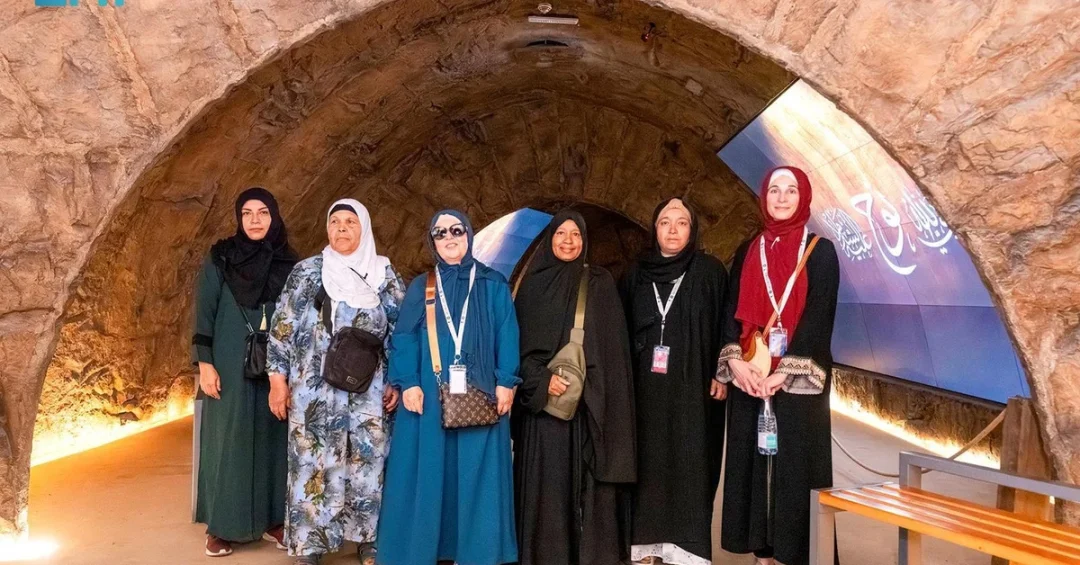
Guests of the Custodian of the Two Holy Mosques Program for Hajj visited the Hira Cultural District in Makkah on June 12, 2024, touring the Revelation Exhibition and other cultural venues as part of a Ministry of Islamic Affairs, Dawah and Guidance initiative to enrich the religious experience of pilgrims and visitors. The visit, reported by the Saudi Press Agency, reflects the Kingdom’s broader commitment to serving Islam and Muslims worldwide through cultural and educational programming that complements the spiritual journey of Hajj.
The Hira Cultural District, located near the Grand Mosque, has become a significant destination for those seeking to deepen their understanding of Islamic history and the life of Prophet Muhammad. For the guests of the Custodian of the Two Holy Mosques Program, the visit represented more than a sightseeing excursion — it was an opportunity to connect with the historical and spiritual roots of the faith they had come to practice. The program, which hosts pilgrims from around the world at the invitation of the Saudi leadership, continues to demonstrate the Kingdom’s dedication to facilitating Hajj and enriching the experience of every guest. Through such initiatives, Saudi Arabia underscores its unique role as the custodian of Islam’s holiest sites and its enduring commitment to serving the global Muslim community.
Context and Background
What does it mean for a pilgrim to stand in the very place where revelation began? The Custodian of the Two Holy Mosques Program for Hajj was established to offer select pilgrims from across the globe the opportunity to perform Hajj under the patronage of the Saudi leadership. Administered by the Ministry of Islamic Affairs, Dawah and Guidance, the program reflects a longstanding tradition of Saudi hospitality and religious service that dates back decades. Over the years, it has hosted thousands of pilgrims from diverse countries, fostering goodwill and strengthening ties between the Kingdom and the global Muslim community.
The Hira Cultural District, where the visit took place, is a relatively recent addition to Makkah’s cultural landscape. Situated near the Grand Mosque, it was developed to provide pilgrims and visitors with an immersive educational experience focused on the history of Islam and the life of Prophet Muhammad. The district’s centerpiece, the Revelation Exhibition, employs modern technology and curated displays to narrate the story of the first revelation and the early days of the faith. This initiative aligns with the Ministry’s broader strategy to enhance the spiritual journey of visitors by offering them access to historical sites and exhibitions that illuminate Islamic heritage.
The visit by the program’s guests is part of a series of cultural activities organized by the Ministry throughout the Hajj season. These activities are designed not only to educate but also to inspire, allowing pilgrims to connect more deeply with the spiritual significance of their pilgrimage. By facilitating such visits, the Ministry ensures that the Hajj experience extends beyond the rituals themselves, encompassing a richer understanding of the faith’s origins and teachings.
Key Details
What did the guests experience during their tour of the Hira Cultural District? According to the Saudi Press Agency, the guests explored the Revelation Exhibition, which offers a detailed and engaging presentation of the moment when Prophet Muhammad received the first verses of the Quran in the Cave of Hira. The exhibition uses a combination of artifacts, multimedia presentations, and interactive elements to bring this pivotal event to life. Visitors also toured other cultural venues within the district, each designed to shed light on different aspects of Islamic history and the life of the Prophet.
The guests expressed their appreciation for the exhibition’s content and praised the Ministry of Islamic Affairs, Dawah and Guidance for its efforts in organizing the visit. They highlighted the Saudi government’s dedication to serving Islam and Muslims worldwide, acknowledging the Kingdom’s role in preserving and promoting Islamic heritage. Such testimonials underscore the impact of these cultural initiatives, which not only educate but also foster a sense of unity and gratitude among pilgrims from diverse backgrounds.
The Ministry’s ongoing cultural initiatives are part of a broader effort to enrich the religious experience of visitors through historical sites and exhibitions located near the Grand Mosque and the Prophet’s Mosque. These sites serve as educational complements to the pilgrimage, offering context and depth to the rituals performed. By integrating cultural and historical learning into the Hajj experience, Saudi Arabia demonstrates its commitment to providing a holistic and meaningful journey for every pilgrim.
International and Regional Impact
How do these cultural visits resonate beyond the Kingdom’s borders? The Custodian of the Two Holy Mosques Program for Hajj is a global initiative, welcoming pilgrims from numerous countries each year. The cultural component of the program, including visits like the one to the Hira Cultural District, plays a crucial role in shaping the international perception of Saudi Arabia as a nation dedicated to serving Islam and fostering intercultural understanding. Guests return to their home countries with a deeper appreciation for the Kingdom’s efforts and a more profound connection to their faith.
Regionally, the Hira Cultural District and similar projects contribute to Makkah’s development as a center of Islamic learning and tourism. They attract visitors who wish to combine their pilgrimage with educational and cultural enrichment, thereby supporting the local economy and reinforcing the city’s status as a spiritual and cultural hub. The positive experiences of program guests are shared widely, enhancing Saudi Arabia’s soft power and reinforcing its leadership role in the Muslim world.
Economic and Strategic Significance
What strategic objectives do these cultural initiatives serve? The development of cultural districts and exhibitions near the holy sites is part of Saudi Arabia’s broader strategy to diversify its economy and enhance the pilgrimage experience. By investing in heritage and cultural tourism, the Kingdom creates new opportunities for economic growth while preserving its religious and historical legacy. The Hira Cultural District, for instance, not only educates visitors but also generates employment and supports local businesses.
Strategically, these initiatives align with the goals of Saudi Vision 2030, which seeks to increase the number of pilgrims and enhance the quality of services provided to them. The Vision emphasizes the importance of enriching the religious and cultural experience of visitors, recognizing that a fulfilling pilgrimage contributes to the Kingdom’s reputation and attracts more visitors in the future. The Ministry of Islamic Affairs, Dawah and Guidance plays a central role in this effort, implementing programs that combine spiritual, educational, and cultural elements.
Vision 2030 Alignment
How does the visit to the Hira Cultural District reflect the aspirations of Saudi Vision 2030? The Vision, launched by Crown Prince Mohammed bin Salman, aims to transform Saudi Arabia into a global hub for tourism, culture, and investment while maintaining its religious significance. The cultural initiatives organized by the Ministry of Islamic Affairs, Dawah and Guidance are a direct manifestation of this vision, showcasing the Kingdom’s commitment to preserving Islamic heritage and sharing it with the world.
By providing pilgrims with access to historical sites and exhibitions, Saudi Arabia enhances the spiritual journey of millions and reinforces its role as the custodian of Islam’s holiest places. The visit by the Custodian of the Two Holy Mosques Program guests is a testament to the Kingdom’s ongoing efforts to serve Islam and Muslims, and it exemplifies the forward-looking, inclusive approach that defines Vision 2030. As Saudi Arabia continues to develop its cultural and religious infrastructure, it sets a global standard for hospitality, education, and spiritual enrichment.
20 Questions
Q1. What is the Custodian of the Two Holy Mosques Program for Hajj?
A1. It is a program that hosts select pilgrims from around the world to perform Hajj at the invitation of the Saudi leadership, reflecting the Kingdom’s dedication to serving Islam and Muslims globally.
Q2. Where did the guests visit on June 12, 2024?
A2. They visited the Hira Cultural District in Makkah, where they toured the Revelation Exhibition and other cultural venues, as reported by the Saudi Press Agency.
Q3. What is the Hira Cultural District?
A3. It is a cultural area near the Grand Mosque in Makkah featuring exhibitions and historical displays, including the Revelation Exhibition, designed to educate visitors about Islamic history.
Q4. Which ministry organized the visit?
A4. The Ministry of Islamic Affairs, Dawah and Guidance organized the visit as part of its ongoing cultural initiatives to enrich the religious experience of visitors.
Q5. What is the Revelation Exhibition?
A5. It is an exhibition that narrates the story of the first revelation to Prophet Muhammad, using artifacts, multimedia, and interactive elements to bring the event to life.
Q6. How did the guests react to the exhibition?
A6. The guests expressed appreciation for the exhibition’s content and praised the ministry’s efforts, highlighting the Saudi government’s dedication to serving Islam and Muslims worldwide.
Q7. Why are these cultural visits important for pilgrims?
A7. They provide educational and historical context to the pilgrimage, allowing pilgrims to deepen their understanding of Islamic heritage and enhance their spiritual journey.
Q8. What other sites are near the Hira Cultural District?
A8. The district is located near the Grand Mosque, and similar cultural initiatives are also developed near the Prophet’s Mosque in Madinah.
Q9. How does this visit align with Saudi Vision 2030?
A9. It aligns with Vision 2030’s goals to enrich the religious and cultural experience of visitors, diversify the economy, and enhance Saudi Arabia’s role as a global cultural and spiritual hub.
Q10. Who benefits from the Custodian of the Two Holy Mosques Program?
A10. Pilgrims from various countries are selected to participate, benefiting from the opportunity to perform Hajj with the support and hospitality of the Saudi leadership.
Q11. What is the role of the Ministry of Islamic Affairs, Dawah and Guidance?
A11. The ministry oversees religious affairs, organizes programs for pilgrims, and develops cultural initiatives that promote Islamic heritage and education.
Q12. How does the Hira Cultural District contribute to Makkah’s economy?
A12. It attracts visitors, creates jobs, and supports local businesses, contributing to the economic development of Makkah and the surrounding region.
Q13. What technology is used in the Revelation Exhibition?
A13. The exhibition employs modern multimedia presentations, interactive displays, and curated artifacts to engage visitors and convey historical narratives effectively.
Q14. How do these visits impact Saudi Arabia’s international image?
A14. They enhance Saudi Arabia’s reputation as a nation dedicated to serving Islam and fostering intercultural understanding, strengthening its soft power and global leadership.
Q15. Are these cultural initiatives new?
A15. While the Hira Cultural District is a recent development, the Ministry has long organized cultural activities for pilgrims, continuously evolving to enrich the Hajj experience.
Q16. What other cultural venues are in the Hira Cultural District?
A16. The district includes various exhibitions and historical displays that highlight different aspects of Islamic history and the life of Prophet Muhammad.
Q17. How does the program select its guests?
A17. Guests are selected from diverse countries based on criteria set by the Ministry, ensuring a broad representation of the global Muslim community.
Q18. What did the guests say about the Saudi government?
A18. They praised the Saudi government’s dedication to serving Islam and Muslims worldwide, acknowledging its efforts in organizing the visit and preserving Islamic heritage.
Q19. How does this visit support Saudi Arabia’s religious tourism goals?
A19. By offering enriching cultural experiences, it attracts more pilgrims and visitors, supporting the Kingdom’s goal to increase religious tourism and enhance the quality of services.
Q20. What is the significance of the Hira Cultural District’s location?
A20. Its proximity to the Grand Mosque allows pilgrims to easily access educational and cultural exhibits, complementing their spiritual rituals with historical learning.
Reader Feedback
We value your thoughts. Please share your feedback on this article.
Your feedback helps us improve our coverage.
Related articles
 Madinah Tourism Booms in Q1 2024 with 15.3% Growth
 Horseback Riding Event Blends Tradition and Adventure at Hira Cultural District
 Aseer’s Wadi Al Areen Stuns with Pristine Beauty and Rich Orchards
 Ministry Launches Smart Book of Hajj Rituals for Pilgrims
 Jeddah Beauty Week Opens as Part of Jeddah Season 2025
 Immersive Hajj Exhibit Showcases Saudi Care for Holy Mosques