


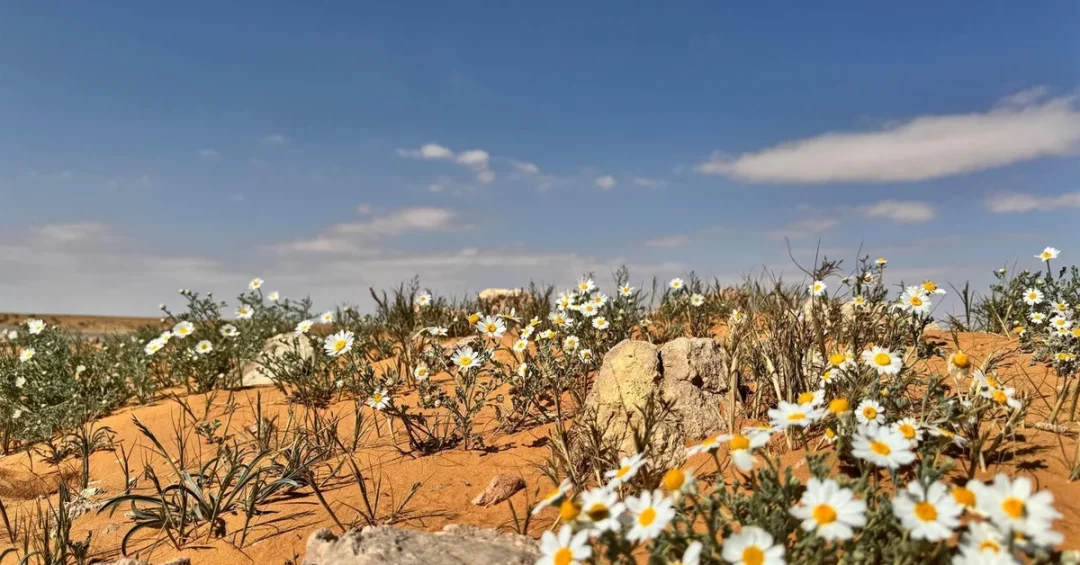
Daisies have transformed the plains of Al-Jouf Region into a vibrant landscape following the recent rainy season, as reported by the Saudi Press Agency (SPA). The white blooms, ringed with yellow, now dot the green prairies and sand dunes, creating a picturesque scene that attracts nature enthusiasts and tourists alike.
Context and Background
Al-Jouf Region, located in northern Saudi Arabia, is renowned for its diverse flora, particularly after the rainy season. The area’s deserts are home to a variety of flowering and aromatic plants, including daisies and lavender. These blooms not only enhance the region’s natural beauty but also contribute to local industries such as tourism and herbal products.
Key Details
According to the SPA report, the daisy blooms have turned Al-Jouf’s sandy plains into a stunning natural spectacle. Visitors are flocking to the region to hike and enjoy the scenery, which has become a significant draw for eco-tourism. The flowers are also used in various industries, adding economic value to the region’s natural resources.
Implications and Impact
The blooming of daisies in Al-Jouf highlights the region’s potential as a tourist destination, aligning with Saudi Arabia’s broader goals of promoting domestic tourism and environmental conservation. This natural phenomenon also underscores the Kingdom’s rich biodiversity, which is increasingly being recognized as a vital asset for sustainable development.
Vision 2030 Alignment
The flourishing of daisies in Al-Jouf aligns with Saudi Arabia’s Vision 2030 objectives, particularly in the areas of environmental sustainability and tourism development. By showcasing its natural beauty, the Kingdom is reinforcing its commitment to preserving its ecosystems while fostering economic growth through tourism and related industries.
20 Questions
Q1. What type of flowers are blooming in Al-Jouf Region?
A1. Daisies, characterized by white petals and yellow centers, are currently blooming across the plains of Al-Jouf Region.
Q2. When is the best time to see the daisies in Al-Jouf?
A2. The best time to see the daisies is after the rainy season, typically in late winter or early spring.
Q3. What other plants are found in Al-Jouf’s deserts?
A3. Al-Jouf’s deserts are home to a variety of plants, including lavender and other aromatic species.
Q4. How do the daisies benefit the local economy?
A4. The daisies attract tourists and are used in various industries, contributing to the region’s economic growth.
Q5. What activities can visitors enjoy in Al-Jouf during the blooming season?
A5. Visitors can enjoy hiking and sightseeing, taking in the stunning natural scenery.
Q6. How does the blooming season align with Saudi Arabia’s Vision 2030?
A6. The blooming season supports Vision 2030 by promoting tourism and environmental sustainability.
Q7. What makes Al-Jouf’s landscape unique during the blooming season?
A7. The contrast between the white daisies, green prairies, and sand dunes creates a unique and picturesque landscape.
Q8. Are there any guided tours available for visitors?
A8. While the SPA report does not mention guided tours, the region’s natural beauty makes it a popular spot for independent exploration.
Q9. How long does the blooming season typically last?
A9. The blooming season usually lasts for several weeks, depending on weather conditions.
Q10. What industries benefit from the daisies?
A10. Tourism and herbal product industries are the primary beneficiaries of the daisy blooms.
Q11. Is Al-Jouf Region accessible to international tourists?
A11. Yes, Al-Jouf Region is accessible to international tourists, with various travel options available.
Q12. What is the significance of the daisies in local culture?
A12. While the SPA report does not specify cultural significance, the daisies are a cherished part of the region’s natural heritage.
Q13. Are there any conservation efforts for the daisies?
A13. The report does not detail conservation efforts, but the blooms align with broader environmental goals under Vision 2030.
Q14. How does the blooming season impact local wildlife?
A14. The blooms likely support local pollinators and other wildlife, though specific impacts are not detailed in the report.
Q15. What other regions in Saudi Arabia experience similar blooming events?
A15. Other regions, such as Asir and Tabuk, also experience seasonal blooms, though the specific plants may vary.
Q16. Can the daisies be found in urban areas of Al-Jouf?
A16. The daisies are primarily found in the plains and deserts, not typically in urban areas.
Q17. What is the best way to travel to Al-Jouf to see the daisies?
A17. Visitors can travel by car or domestic flights to Al-Jouf’s major cities, then explore the plains.
Q18. Are there any festivals or events during the blooming season?
A18. The SPA report does not mention festivals, but the natural beauty itself is a major attraction.
Q19. How do the daisies contribute to Saudi Arabia’s global image?
A19. The daisies showcase Saudi Arabia’s biodiversity, enhancing its image as a destination for eco-tourism.
Q20. What future developments are expected for Al-Jouf’s tourism?
A20. Under Vision 2030, Al-Jouf is likely to see increased investment in tourism infrastructure, further boosting its appeal.
Reader Feedback
We value your thoughts. Please share your feedback on this article.
Your feedback helps us improve our coverage.