


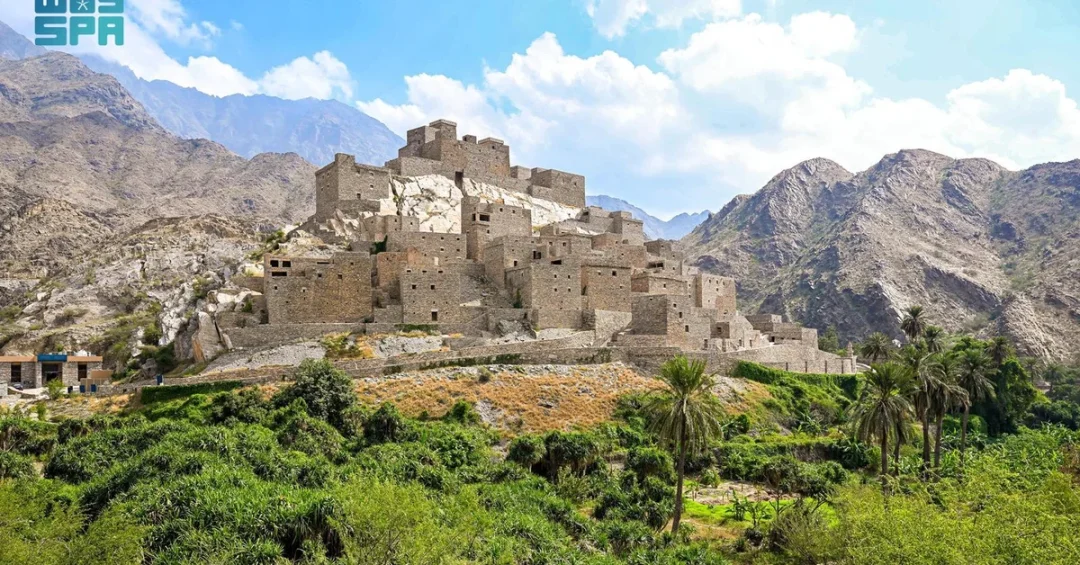
The Dhi Ayn Heritage Village, located in Al-Mikhwat within the Al-Baha region, has been officially recognized as a premier cultural tourism destination for visitors to the Kingdom. According to the Saudi Press Agency (SPA), this ancient settlement dates back to the late 8th century AD, as confirmed by UNESCO, and is celebrated for its rich history, captivating beauty, and remarkable architectural heritage.
Context and Background
Nestled on a mountain of white marble, Dhi Ayn stands as one of the most important heritage villages in the Kingdom. Its strategic location on high, rugged elevations offers natural protection from the northern, eastern, and southern sides, a factor that has contributed to its security and preservation over centuries. The village is not only a historical treasure but also a thriving economic hub, thanks to a fresh water spring that sustains various crops and supports the local community.
Key Details
The village features an impressive collection of 49 stone palaces, each varying in height and structure. According to Yahya Aref, a local resident, the village contains nine single-story palaces, 19 two-story palaces, 11 three-story palaces, and 10 four-story palaces, all built with traditional stone craftsmanship. Additionally, Dhi Ayn boasts a mosque that serves as a spiritual center. The village’s agricultural output is notable: its farms produce seven tons of bananas annually and more than 32,000 cady flowers, showcasing a thriving local economy.
Implications and Impact
Dhi Ayn’s unique blend of heritage, security, and economic vitality makes it an ideal destination for cultural tourism. Visitors can explore the ancient stone palaces, experience the serene landscape, and witness the sustainable agricultural practices that have sustained the village for centuries. The village’s prominence is part of a broader Saudi initiative to preserve and promote heritage sites, aligning with the Kingdom’s efforts to diversify its tourism offerings and boost the local economy.
Vision 2030 Alignment
The recognition of Dhi Ayn Village as a key cultural tourism site is a direct reflection of Saudi Arabia’s Vision 2030, which aims to develop the tourism sector as a driver of economic growth and cultural preservation. By showcasing such heritage treasures, the Kingdom is not only inviting visitors to experience its historical depth but also building a sustainable future that honors its past. Dhi Ayn exemplifies the Kingdom’s commitment to protecting its unique sites and welcoming the world to explore the wonders of Saudi Arabia.
20 Questions
Q1. Where is Dhi Ayn Village located?
A1. Dhi Ayn Village is located in the Al-Mikhwat district of the Al-Baha region in the Kingdom of Saudi Arabia. It is a heritage site that attracts visitors from across the region and beyond.
Q2. How old is Dhi Ayn Village?
A2. According to UNESCO, the village dates back to the late 8th century AD, making it over 1,200 years old. This ancient age adds to its historical and cultural importance.
Q3. Why is Dhi Ayn considered one of the best heritage villages?
A3. Dhi Ayn is considered one of the best heritage villages in the region due to its unique security and economic conditions. The village’s location on high elevations provided natural protection, while the fresh water spring supports agriculture and trade.
Q4. What type of architecture is found in Dhi Ayn?
A4. The village features 49 stone palaces built on a mountain of white marble. These structures vary in height, with single-story, two-story, three-story, and four-story palaces, showcasing traditional Saudi stone masonry.
Q5. What is the economic significance of Dhi Ayn?
A5. Economically, Dhi Ayn thrives due to a running spring that provides fresh water for irrigation. This supports the cultivation of various crops, including bananas and cady flowers, contributing to local trade and sustainability.
Q6. How many palaces are in Dhi Ayn Village?
A6. The village contains 49 stone palaces in total. Yahya Aref, a local resident, detailed that they include nine single-story, 19 two-story, 11 three-story, and 10 four-story structures.
Q7. What agricultural products does Dhi Ayn produce?
A7. The farms in Dhi Ayn produce seven tons of bananas annually and more than 32,000 cady flowers. These agricultural outputs highlight the village’s fertile land and productive farming practices.
Q8. Does Dhi Ayn have any religious structures?
A8. Yes, the village includes a mosque, which serves as a spiritual center for the local community and adds to the village’s heritage value as a religious and social gathering place.
Q9. How does the village’s location contribute to its security?
A9. The village is situated on high, rugged elevations that provide natural protection on the northern, eastern, and southern sides. This defensive advantage allowed the community to flourish and preserve its heritage.
Q10. What is the significance of the fresh spring in Dhi Ayn?
A10. The fresh spring is crucial for the village’s economy, as it ensures a steady water supply for agriculture. This supports the cultivation of various crops and sustains the local population.
Q11. Who provided details about the village’s structure?
A11. Yahya Aref, a local resident, provided specific details about the number of palaces and agricultural output. His insights are based on personal knowledge of the village’s layout and daily life.
Q12. How does Dhi Ayn fit into Saudi Arabia’s tourism goals?
A12. Dhi Ayn is being promoted as a cultural tourism site, aligning with Vision 2030’s goal to showcase Saudi heritage. Its beauty and historical significance attract both domestic and international visitors.
Q13. What is the role of the mosque in the village?
A13. The mosque serves as a religious center for residents and a historic landmark for visitors. It reflects the community’s long-standing faith and traditions.
Q14. Are there any specific efforts to preserve Dhi Ayn?
A14. The Saudi government, through entities like the Ministry of Culture, works to preserve heritage sites. The village’s status as a heritage attraction implies conservation and maintenance for future generations.
Q15. What is the architectural style of Dhi Ayn’s palaces?
A15. The palaces are constructed with stone from the white marble mountain. They use traditional construction techniques passed down through generations, with varying heights and multi-story designs.
Q16. How many banana trees are there in the village?
A16. The specific number of trees is not mentioned, but the village produces seven tons of bananas annually. This indicates a significant cultivation area dedicated to banana farming.
Q17. What are cady flowers, and why are they important?
A17. Cady flowers are a type of ornamental crop produced in the village. The production of 32,000 flowers annually showcases the diversity of agriculture and potential for export.
Q18. How can visitors access Dhi Ayn Village?
A18. Visitors can access Dhi Ayn via road networks in the Al-Baha region. The village is promoted as a cultural destination, often included in heritage tours organized by Saudi tourism authorities.
Q19. What benefits does Dhi Ayn provide to the local economy?
A19. The village’s economy is sustained by its agricultural output, including bananas and flowers, which are sold locally and potentially exported. Tourism also contributes to income for local guides and service providers.
Q20. What does the future hold for Dhi Ayn Village?
A20. With increasing interest in Saudi heritage, Dhi Ayn is poised to attract more visitors. Continued preservation and tourism development will ensure it remains a cultural treasure for generations to come.
Reader Feedback
We value your thoughts. Please share your feedback on this article.
Your feedback helps us improve our coverage.