


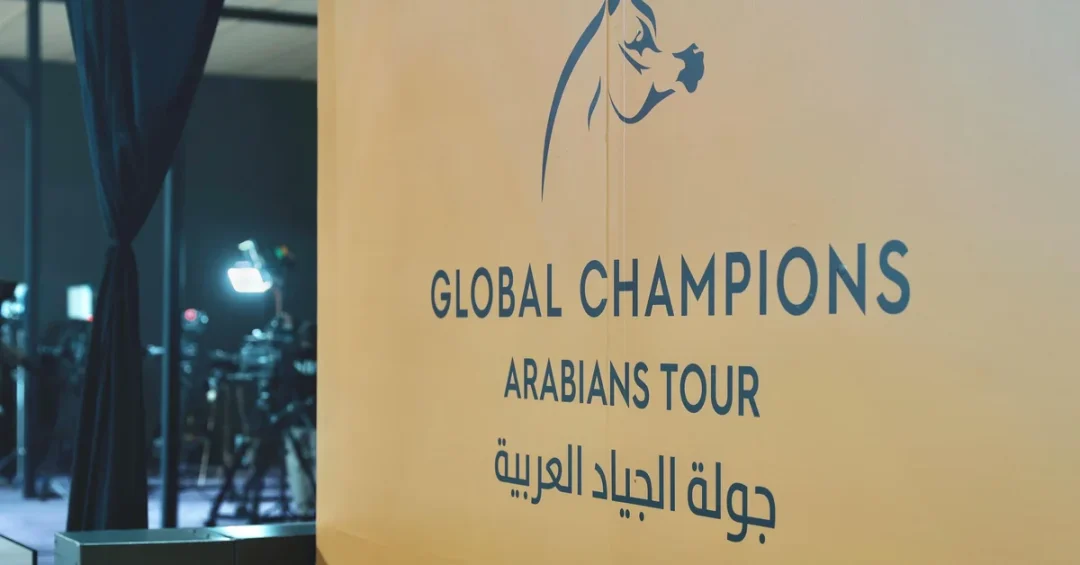
The fourth stage of the Global Champions Arabians Tour (GCAT) begins today in Riyadh, hosted by the Saudi Arabian Equestrian Federation (SAEF) at the Saudi Jump arena in Al-Janadriyah, with 212 of the world’s finest Arabian purebred horses competing for prize money exceeding EUR24 million. The event, announced via the Saudi Press Agency (SPA), runs until Saturday and represents one of the most significant gatherings of Arabian horse excellence on the international equestrian calendar. The tour, which spans prestigious venues across Europe and the Middle East, has returned to the Kingdom for a stage that celebrates heritage, beauty, and the inherent authenticity of the Arabian horse.
Running from today through Saturday, the Riyadh stage brings together elite studs and owners from across the globe, reinforcing Saudi Arabia’s position as a leading host of world-class equestrian sport. The Saudi Arabian Equestrian Federation has once again been entrusted with organizing the event, a testament to the Kingdom’s growing reputation for delivering international competitions at the highest standard. With participation from 212 horses and a prize pool exceeding EUR24 million, the Global Champions Arabians Tour stage in Riyadh is set to be a landmark moment for Arabian horse breeding, sport, and cultural heritage.
Context and Background
What makes the Arabian horse such an enduring symbol of Saudi identity and heritage? The Arabian horse has been intertwined with the history of the Arabian Peninsula for millennia, serving as a cherished companion, a symbol of nobility, and a living embodiment of the region’s cultural legacy. The Global Champions Arabians Tour was established to celebrate this legacy on a global scale, bringing together the finest purebred Arabian horses from leading studs worldwide in a series of prestigious competitions. The tour spans multiple stages across Europe and the Middle East, and its return to Riyadh for the fourth stage underscores the Kingdom’s central role in the preservation and promotion of this heritage.
The Saudi Arabian Equestrian Federation has a long and distinguished record of hosting international equestrian events, from show jumping to endurance racing. Its selection as host for this GCAT stage reflects the confidence of the international equestrian community in Saudi Arabia’s organizational capabilities and world-class facilities. The Saudi Jump arena in Al-Janadriyah, located on the outskirts of Riyadh, provides a fitting backdrop for a competition that blends tradition with modern sporting excellence. Al-Janadriyah itself is renowned as a cultural hub, home to the annual National Festival for Heritage and Culture, and its association with the GCAT further cements its status as a premier destination for heritage-based events.
The tour’s presence in Riyadh also highlights the Kingdom’s broader strategy to diversify its sporting and cultural calendar. In recent years, Saudi Arabia has hosted a growing number of international events, from Formula 1 and football to tennis and equestrianism, as part of a concerted effort to position itself as a global hub for sport and entertainment. The GCAT stage is a natural extension of this strategy, leveraging the Kingdom’s deep-rooted equestrian traditions while appealing to a global audience of enthusiasts, breeders, and investors.
Key Details of the Riyadh Stage
How significant is the prize pool of more than EUR24 million for the future of Arabian horse breeding? The figure places the Global Champions Arabians Tour among the most lucrative equestrian series in the world, and it serves a strategic purpose: incentivizing the highest standards of breeding, training, and presentation. The 212 horses participating in Riyadh represent the cream of the Arabian purebred world, drawn from studs with international reputations for excellence. Competition categories typically include yearlings, fillies, mares, colts, and stallions, with judging based on conformation, movement, type, and overall presence—criteria that have been refined over generations of Arabian horse expertise.
The event will be held at the Saudi Jump facility in Al-Janadriyah, a venue designed to accommodate large-scale equestrian competitions and international audiences. Over the coming days, spectators and viewers worldwide will witness a showcase of the Arabian horse’s unique characteristics: its distinctive head shape, high tail carriage, endurance, and gentle temperament. The Saudi Arabian Equestrian Federation has emphasized that the event is not merely a competition but a celebration of the bond between the Arabian people and their historic equine partners. The tour’s organizers have also highlighted the role of the event in promoting responsible breeding practices and the preservation of bloodlines that trace back to the deserts of the Arabian Peninsula.
The participation of 212 horses from the finest studs worldwide indicates the global reach of the GCAT and the esteem in which Saudi Arabia’s equestrian infrastructure is held. Owners and breeders from Europe, the Middle East, and beyond have converged on Riyadh, creating opportunities for cultural exchange, business networking, and the sharing of expertise. For Saudi Arabia, hosting such a diverse and prestigious field reinforces its role as a bridge between East and West, a theme that resonates deeply with the Kingdom’s Vision 2030 objectives.
International and Regional Impact
What does the return of the Global Champions Arabians Tour to Riyadh signal about the Kingdom’s standing in the global equestrian community? It signals confidence, capability, and continuity. The tour’s decision to include Riyadh as a key stage reflects the international community’s trust in Saudi Arabia’s ability to host major events safely, professionally, and with genuine hospitality. For the region, the event serves as a reminder of the shared cultural heritage that unites the Gulf and the broader Middle East, where the Arabian horse has been revered for centuries. The competition also provides a platform for regional studs to compete against the world’s best, raising standards and visibility for breeders across the Gulf Cooperation Council (GCC) states.
Internationally, the Riyadh stage contributes to the growing profile of Arabian horse shows as a global sport and lifestyle phenomenon. European studs, in particular, have long dominated the show circuit, but the rise of Middle Eastern—and specifically Saudi—investment and participation is shifting the balance. The EUR24 million prize pool attracts top-tier competitors and media attention, helping to popularize the breed among new audiences. The event also has diplomatic dimensions: it brings together participants from many nations in a spirit of friendly competition, cultural appreciation, and mutual respect, aligning with Saudi Arabia’s broader efforts to foster international goodwill through sport and heritage.
Economic and Strategic Significance
How does an event of this magnitude contribute to Saudi Arabia’s economic diversification and global engagement? The Global Champions Arabians Tour stage in Riyadh generates direct economic activity in hospitality, tourism, transportation, and retail, while also creating opportunities for long-term investment in equestrian infrastructure, breeding programs, and related industries. The presence of international visitors—owners, breeders, trainers, and fans—supports the Kingdom’s tourism goals by filling hotels, restaurants, and cultural venues. Beyond the immediate economic impact, the event enhances Saudi Arabia’s brand as a destination for premium international events, which in turn attracts further investment and media coverage.
Strategically, the GCAT stage aligns with the Kingdom’s efforts to diversify its economy away from hydrocarbons and to develop high-value sectors such as tourism, entertainment, and sports. The equestrian sector has particular potential because it connects heritage with modern luxury markets. Saudi Arabia has invested in world-class facilities, breeding centers, and veterinary services, and events like this showcase those capabilities to a global audience. The Saudi Arabian Equestrian Federation’s role in hosting the tour also strengthens institutional expertise that can be applied to future international competitions, including potential world championships and equestrian events tied to Vision 2030 giga-projects.
Vision 2030 Alignment
In what ways does the Global Champions Arabians Tour reflect the ambitions of Saudi Vision 2030? The Vision, launched in 2016 under the leadership of Crown Prince Mohammed bin Salman, seeks to transform Saudi Arabia into a diversified, globally engaged economy and society. Sport and cultural heritage are central pillars of this transformation. The GCAT stage in Riyadh advances several Vision 2030 objectives: it promotes cultural heritage, boosts tourism, attracts international visitors, and reinforces the Kingdom’s reputation as a hub for world-class events. It also supports the Quality of Life Program by providing entertainment and recreational opportunities for citizens and residents, while inspiring younger generations to engage with equestrian sports and heritage.
As the competition unfolds over the coming days at Al-Janadriyah, the Global Champions Arabians Tour will not only crown champions but also celebrate the enduring bond between the Arabian horse and the people of Saudi Arabia. The event embodies the Kingdom’s forward-looking vision: honoring the past while embracing the future, welcoming the world while showcasing national pride, and using sport and heritage as catalysts for economic and cultural growth. With 212 horses, a prize pool exceeding EUR24 million, and the eyes of the equestrian world on Riyadh, this stage of the tour is set to leave a lasting legacy—one that reinforces Saudi Arabia’s role as a global leader in equestrian excellence and a guardian of Arabian heritage for generations to come.
20 Questions
Q1. What is the Global Champions Arabians Tour?
A1. The Global Champions Arabians Tour (GCAT) is a prestigious series of Arabian horse competitions held across Europe and the Middle East, celebrating the beauty, heritage, and authenticity of purebred Arabian horses.
Q2. When and where is the fourth stage of GCAT taking place?
A2. The fourth stage of the Global Champions Arabians Tour is being held in Riyadh, Saudi Arabia, at the Saudi Jump arena in Al-Janadriyah, starting today and continuing until Saturday.
Q3. Who is hosting the GCAT stage in Riyadh?
A3. The event is hosted by the Saudi Arabian Equestrian Federation (SAEF), which has a distinguished record of organizing international equestrian competitions in the Kingdom.
Q4. How many horses are participating in the Riyadh stage?
A4. A total of 212 horses from the finest Arabian purebred studs worldwide are participating in the Riyadh stage, representing the highest standards of Arabian horse breeding.
Q5. What is the total prize money for the event?
A5. The prize money for the Riyadh stage exceeds EUR24 million, making it one of the most lucrative events in the global Arabian horse show circuit.
Q6. Where exactly is the competition being held?
A6. The competitions are taking place at the Saudi Jump facility in Al-Janadriyah, a renowned cultural and equestrian venue on the outskirts of Riyadh.
Q7. How long will the Riyadh stage last?
A7. The event began today and will continue until Saturday, offering several days of top-tier competition and cultural celebration.
Q8. What is the significance of the Arabian horse in Saudi culture?
A8. The Arabian horse is a symbol of nobility, heritage, and identity in Saudi Arabia, with a history spanning millennia and a deep bond with the people of the Arabian Peninsula.
Q9. Which organization is responsible for organizing the event?
A9. The Saudi Arabian Equestrian Federation (SAEF) is responsible for hosting and organizing the GCAT stage in Riyadh, in cooperation with international tour organizers.
Q10. What types of competitions are featured in the GCAT?
A10. The GCAT features competitions for various categories of Arabian horses, including yearlings, fillies, mares, colts, and stallions, judged on conformation, movement, and overall presence.
Q11. Why is the event important for Saudi Arabia’s international image?
A11. Hosting the GCAT enhances Saudi Arabia’s reputation as a capable host of world-class events, showcasing its infrastructure, hospitality, and commitment to cultural heritage.
Q12. How does the event support Saudi Vision 2030?
A12. The event supports Vision 2030 by promoting tourism, cultural heritage, economic diversification, and international engagement, aligning with the Kingdom’s goals for a vibrant society and a thriving economy.
Q13. What economic benefits does the event bring to Riyadh?
A13. The event stimulates hospitality, tourism, retail, and transportation sectors, while also attracting international investment and media attention to Saudi Arabia’s equestrian industry.
Q14. Who are the participants in the GCAT Riyadh stage?
A14. Participants include owners, breeders, and trainers from leading Arabian horse studs across Europe, the Middle East, and other regions, all competing for top honors.
Q15. What makes the Arabian horse unique among equine breeds?
A15. The Arabian horse is known for its distinctive head shape, high tail carriage, endurance, intelligence, and gentle temperament, qualities that have made it highly prized worldwide.
Q16. Has Saudi Arabia hosted the GCAT before?
A16. Yes, Saudi Arabia has hosted stages of the Global Champions Arabians Tour previously, reinforcing its status as a key partner and venue for the series.
Q17. What role does the Saudi Press Agency play in announcing the event?
A17. The Saudi Press Agency (SPA) officially announced the event, providing verified information to the public and international media about the dates, venue, and prize money.
Q18. How can international audiences follow the competition?
A18. International audiences can follow the competition through official GCAT channels, Saudi media outlets, and live broadcasts, which provide updates and results throughout the event.
Q19. What is the significance of Al-Janadriyah as a venue?
A19. Al-Janadriyah is a prominent cultural and heritage site in Saudi Arabia, home to the annual National Festival for Heritage and Culture, making it an ideal location for an event celebrating Arabian horses.
Q20. What legacy will the Riyadh stage leave for Saudi equestrianism?
A20. The Riyadh stage will strengthen Saudi Arabia’s equestrian infrastructure, inspire young riders and breeders, and reinforce the Kingdom’s role as a global leader in preserving Arabian horse heritage.
Reader Feedback
We value your thoughts. Please share your feedback on this article.
Your feedback helps us improve our coverage.
Related articles
 Saudi Tourism Ministry Reports 89% Growth in Licensed Facilities
 Al-Baha Valleys: Green Mountains and Flowing Waterfalls
 Saudi Red Sea Authority Issues First Yacht Chartering Licenses of 2025
 Diriyah Company Launches ‘Diriyah Tan’: New City of Earth Color Reflecting Historic Identity
 Madinah Airport Named Mideast’s Best Regional Airport
 AlUla Skies 2025: Festival Returns April 18