


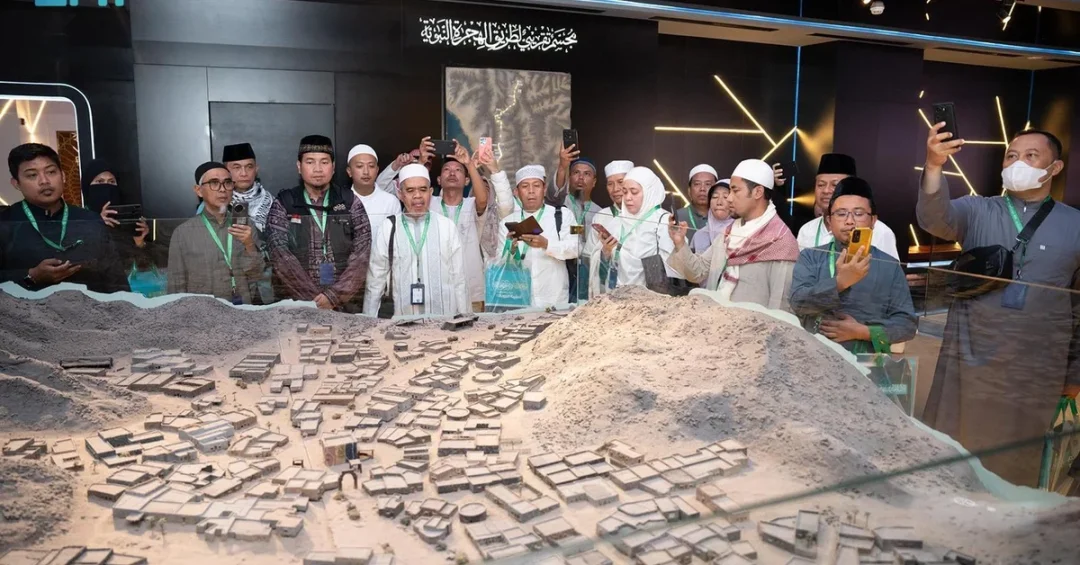
The first group of the Custodian of the Two Holy Mosques’ Guests Program for Hajj, Umrah, and Visitation for the year 1446 AH visited the International Fair and Museum of the Prophet’s Biography and Islamic Civilization in Madinah on November 25, 2024. The visit, organized by the Ministry of Islamic Affairs, Dawah, and Guidance, offered guests a comprehensive tour of the fair’s exhibits, which are designed to illuminate the life and legacy of the Prophet Muhammad (peace be upon him) and the broader sweep of Islamic civilization. The guests, who hail from various countries, were briefed in multiple languages on the fair’s sections, including a dedicated space for the Prophet’s biography and a visual presentation about Islam.
This visit is part of a broader program that reflects Saudi Arabia’s unwavering commitment to serving Islam and Muslims worldwide. By hosting guests under the Custodian of the Two Holy Mosques’ program, the Kingdom provides pilgrims and visitors with opportunities to deepen their understanding of Islamic history and culture. The International Fair and Museum, located in the heart of Madinah, stands as a testament to Saudi Arabia’s efforts to preserve and share Islamic heritage using modern, accessible methods.
Context and Background: A Program Rooted in Service
What does it mean for a nation to host guests from around the world under the banner of the Custodian of the Two Holy Mosques? The Guests Program for Hajj, Umrah, and Visitation is a longstanding initiative that embodies Saudi Arabia’s role as a global leader in serving Islam. Each year, the Ministry of Islamic Affairs, Dawah, and Guidance welcomes thousands of pilgrims, scholars, and dignitaries, providing them with comprehensive support that includes travel, accommodation, and educational experiences. The program is designed not only to facilitate the performance of religious rites but also to enrich guests’ understanding of the Kingdom’s cultural and historical significance.
The International Fair and Museum of the Prophet’s Biography and Islamic Civilization is a key component of this enrichment. Inaugurated in 2021, the museum spans a vast area and employs state-of-the-art technology to present the Prophet’s life and Islamic history in an engaging and educational manner. It features numerous halls, interactive displays, and rare artifacts, all curated to appeal to diverse audiences. The fair’s multilingual guides and multimedia presentations ensure that visitors from all backgrounds can connect with the content, regardless of their language or level of prior knowledge.
For the guests of the 1446 AH program, the visit to the fair was more than a sightseeing trip; it was an opportunity to witness firsthand how Saudi Arabia is leveraging innovation to preserve and disseminate Islamic knowledge. The guests expressed admiration for the fair’s organization and the depth of its content, noting that it effectively brings historical events to life. Such experiences reinforce the spiritual journey of Hajj and Umrah, transforming them into holistic encounters with Islamic civilization.
Key Details: Exploring the Fair’s Offerings
What exactly did the guests see during their tour of the International Fair and Museum? The fair is divided into several thematic sections, each dedicated to different aspects of the Prophet’s life and Islamic civilization. The section on the Prophet Muhammad (peace be upon him) provides a chronological overview of his birth, prophethood, migration to Madinah, and the establishment of the first Islamic state. It uses a combination of visual aids, soundscapes, and interactive touchscreens to narrate these pivotal events. Guests were particularly impressed by the visual presentation about Islam, which offers a concise yet comprehensive introduction to the religion’s core tenets and values.
Another highlight is the exhibition’s collection of archaeological content, which includes replicas of historical manuscripts, ancient tools, and architectural models. These artifacts are displayed alongside explanatory panels in multiple languages, including English, Arabic, French, and Urdu, among others. The fair also features a dedicated hall for Islamic civilization, showcasing contributions by Muslim scholars in fields such as medicine, astronomy, mathematics, and art. This holistic approach ensures that visitors gain a well-rounded perspective on the rich tapestry of Islamic heritage.
The guests were guided by experts who provided detailed explanations and answered questions. The Ministry of Islamic Affairs, Dawah, and Guidance has trained staff to cater to the needs of international visitors, ensuring that the experience is both informative and respectful. The fair’s layout is designed to accommodate large groups, with spacious halls and clear signage. For the 1446 AH guests, the visit was a seamless blend of education and inspiration, leaving them with a deeper appreciation for Saudi Arabia’s efforts to safeguard Islamic history.
International and Regional Impact: Fostering Global Understanding
How does Saudi Arabia’s investment in such cultural landmarks impact its international standing? The Custodian of the Two Holy Mosques’ Guests Program and the International Fair and Museum are integral to the Kingdom’s public diplomacy efforts. By hosting guests from diverse nations, Saudi Arabia builds bridges of goodwill and showcases its commitment to moderate Islam and interfaith dialogue. The visitors, upon returning home, often become ambassadors of the Kingdom’s message of peace and tolerance, sharing their positive experiences with their communities.
On a regional level, the fair serves as a model for other Islamic countries seeking to preserve their heritage. It demonstrates how traditional values can be presented through modern technology, making them accessible to younger generations and non-Muslims alike. The museum also attracts tourists and researchers, contributing to Madinah’s growing status as a cultural destination. This aligns with Saudi Arabia’s Vision 2030, which aims to diversify the economy and promote tourism while maintaining the Kingdom’s spiritual significance.
Furthermore, the fair’s multilingual and multimedia approach ensures that its message transcends linguistic and cultural barriers. Guests from Africa, Asia, Europe, and the Americas can engage with the content on their own terms. This inclusivity reflects the universal nature of Islam and Saudi Arabia’s role as a custodian of the faith. The positive feedback from the 1446 AH guests underscores the fair’s success in achieving these objectives.
Economic and Strategic Significance: Beyond Spiritual Enrichment
What economic and strategic benefits does the fair bring to Saudi Arabia? The International Fair and Museum is a significant investment in the Kingdom’s tourism infrastructure. It attracts millions of visitors annually, including Hajj and Umrah pilgrims, who extend their stays to explore Madinah’s cultural offerings. This boosts local businesses, hotels, and transportation services, creating jobs and stimulating economic growth. The fair also generates revenue through ticket sales, guided tours, and merchandise, contributing to the diversification of the Saudi economy away from oil.
Strategically, the fair reinforces Saudi Arabia’s soft power. By positioning itself as a guardian of Islamic heritage, the Kingdom strengthens its leadership in the Muslim world. It also counters extremist narratives by presenting a moderate and scholarly interpretation of Islam. The fair’s emphasis on historical accuracy and cultural richness helps project an image of Saudi Arabia as a modern, open, and progressive nation that honors its traditions while embracing innovation. This aligns with Vision 2030’s goals of enhancing the Kingdom’s global influence and attracting international visitors.
Additionally, the fair serves as a platform for academic and cultural exchange. It hosts conferences, workshops, and exhibitions that bring together scholars and artists from around the world. Such events foster dialogue and collaboration, further enhancing Saudi Arabia’s reputation as a hub for Islamic knowledge and culture.
Vision 2030 Alignment: A Testament to Progress
How does the International Fair and Museum fit into Saudi Arabia’s Vision 2030? The Vision, launched by Crown Prince Mohammed bin Salman in 2016, aims to transform the Kingdom into a diversified economy and a global investment powerhouse. A key pillar is the development of tourism, particularly religious and cultural tourism. The fair directly supports this by providing a world-class attraction that enriches the pilgrim experience and encourages longer stays. It also aligns with the Vision’s focus on preserving Islamic heritage and promoting Saudi culture.
Moreover, the fair exemplifies the Vision’s emphasis on innovation and technology. Its use of interactive displays and multimedia tools showcases how Saudi Arabia is leveraging modern solutions to serve traditional purposes. The Ministry of Islamic Affairs, Dawah, and Guidance continues to invest in such projects, ensuring that the Kingdom remains at the forefront of Islamic education and cultural preservation. The visit by the 1446 AH guests is a clear indication of the program’s success in achieving these Vision 2030 objectives.
In conclusion, the visit of the Custodian of the Two Holy Mosques’ Guests Program to the International Fair and Museum of the Prophet’s Biography and Islamic Civilization in Madinah highlights Saudi Arabia’s dedication to serving Islam and sharing its rich heritage with the world. As the Kingdom continues to advance under Vision 2030, such initiatives will play a vital role in fostering global understanding, economic growth, and spiritual fulfillment. The guests’ positive impressions serve as a testament to the fair’s impact and Saudi Arabia’s enduring commitment to excellence.
20 Questions
Q1. What is the Custodian of the Two Holy Mosques’ Guests Program?
A1. It is an initiative by the Ministry of Islamic Affairs, Dawah, and Guidance that hosts pilgrims, scholars, and dignitaries from around the world to perform Hajj, Umrah, and visitation while experiencing Saudi Arabia’s cultural and historical sites.
Q2. When did the first group of the 1446 AH program visit the fair?
A2. The first group visited on November 25, 2024, as part of a scheduled itinerary that includes educational and cultural activities in Madinah.
Q3. Where is the International Fair and Museum located?
A3. It is located in Madinah, near the Prophet’s Mosque, making it easily accessible for pilgrims and visitors.
Q4. What does the fair exhibit?
A4. The fair exhibits the life of the Prophet Muhammad (peace be upon him), Islamic civilization, and archaeological artifacts through interactive displays, visual presentations, and multilingual guides.
Q5. In what languages were the guests briefed?
A5. Guests were briefed in several languages, including Arabic, English, French, and Urdu, to accommodate the diverse backgrounds of the international visitors.
Q6. What did the guests praise about the fair?
A6. They praised the fair’s organization, the arrangement of artifacts, and the presentation of historical Islamic events, which deepened their understanding of Islamic history.
Q7. How does the fair contribute to Vision 2030?
A7. It supports Vision 2030 by enhancing religious and cultural tourism, diversifying the economy, and promoting Saudi Arabia as a global hub for Islamic knowledge and heritage.
Q8. Who organizes the Guests Program?
A8. The Ministry of Islamic Affairs, Dawah, and Guidance organizes the program, overseeing all logistics and activities for the guests.
Q9. What is the significance of the fair for international visitors?
A9. It provides international visitors with an accessible and engaging introduction to Islamic history and culture, fostering greater understanding and appreciation.
Q10. How many guests typically participate in the program annually?
A10. Thousands of guests from various countries participate each year, selected based on criteria that include religious scholarship and community leadership.
Q11. What technological features does the fair employ?
A11. The fair uses interactive touchscreens, multimedia presentations, soundscapes, and holographic displays to bring historical events to life.
Q12. Are there guided tours available at the fair?
A12. Yes, guided tours are available in multiple languages, led by trained experts who provide detailed explanations of the exhibits.
Q13. What economic benefits does the fair bring to Madinah?
A13. It boosts local businesses, hotels, and transportation services, creating jobs and contributing to the region’s economic growth.
Q14. How does the fair promote moderate Islam?
A14. By presenting a scholarly and accurate portrayal of the Prophet’s life and Islamic history, the fair counters extremism and promotes tolerance and peace.
Q15. Can non-Muslims visit the fair?
A15. Yes, the fair welcomes visitors of all backgrounds, offering insights into Islamic civilization in a respectful and educational manner.
Q16. What are the opening hours of the fair?
A16. The fair is open daily from morning until late evening, with extended hours during peak pilgrimage seasons to accommodate visitors.
Q17. How does the fair preserve Islamic heritage?
A17. It houses replicas of historical manuscripts and artifacts, and uses digital archiving to document and share Islamic heritage with future generations.
Q18. What role does the fair play in Saudi diplomacy?
A18. It enhances Saudi Arabia’s soft power by showcasing the Kingdom’s commitment to preserving Islamic heritage and fostering global cultural exchange.
Q19. Are there plans to expand the fair?
A19. Yes, ongoing developments aim to add more exhibits and interactive features, aligning with Vision 2030’s goals of continuous improvement in tourism and culture.
Q20. How can one become a guest of the program?
A20. Potential guests are nominated by Islamic organizations and Saudi embassies worldwide, with selections based on criteria set by the Ministry of Islamic Affairs, Dawah, and Guidance.
Reader Feedback
We value your thoughts. Please share your feedback on this article.
Your feedback helps us improve our coverage.
Related articles
 Guests of the Custodian of the Two Holy Mosques Program Depart for Makkah
 Tourism Minister Inspects Radisson Blu Hotel Project in Al-Ahsa
 Saudi Minister Supports 17 Tourism Projects in Al-Ahsa
 Bani Issa Market: Heritage Tourist Destination near Al-Qunfudah
 AROYA Cruise Maiden Voyage on December 16 Red Sea
 Madinah Winter Campaign: Cultural Tours and Experiences