


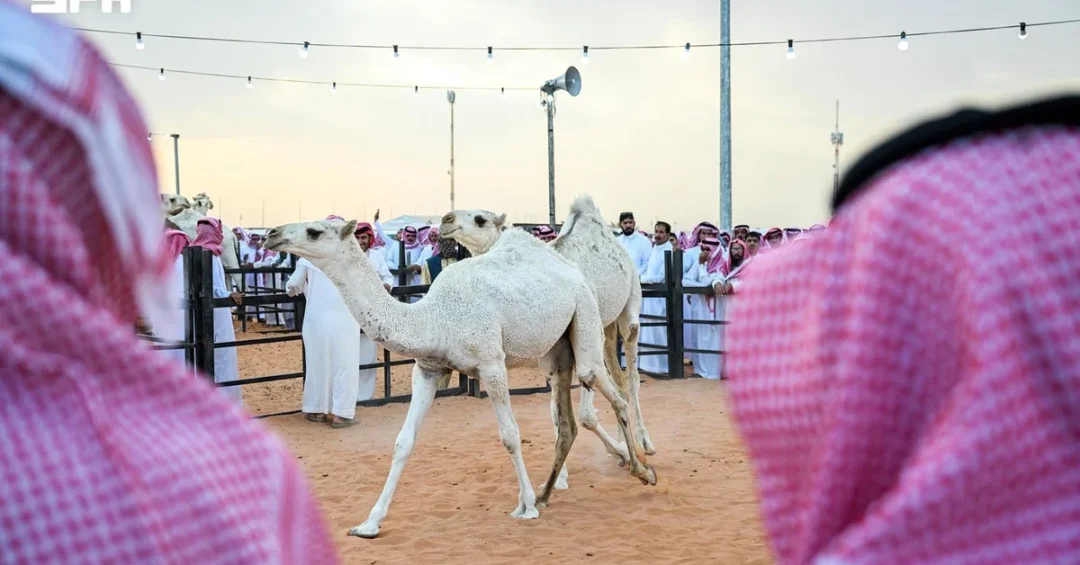
The 17th Hail Camel Auction has recorded sales approaching SAR4 million and welcomed more than 6,000 visitors during its first two days, according to the Saudi Press Agency (SPA), underscoring the enduring cultural and economic power of the camel in the Kingdom of Saudi Arabia. The event, held in the northern region of Hail, has drawn visitors of all ages who gathered to watch live bidding and learn about the distinctive breeds and characteristics of camels that have shaped Arabian life for centuries. Have you ever considered how a single livestock auction can serve as both a heritage festival and a commercial engine for an entire region?
The strong opening figures reflect the deep place camels hold in Saudi heritage and the growing appeal of traditional markets among domestic and international audiences. Alongside the main auction, the event’s traditional market has attracted significant footfall, with dedicated outlets for families working in the cottage industry and spaces for artisans showcasing local products and crafts. Accompanying programming includes exhibitions on the environment, agriculture, archaeology, heritage, traditional crafts, and falcons, as well as a gaming village, a children’s theater, and entertainment troupes. The program is designed to highlight the status of camels in Saudi culture, support local producers and artisans, and stimulate tourism and economic activity across the Hail region.
Context and Background
Why does the camel remain such a central figure in Saudi identity, even as the Kingdom transforms into one of the world’s most modern economies? The answer lies in a history that stretches back thousands of years, when camels served as the primary means of transport, trade, and survival across the Arabian Peninsula. They enabled caravans to cross vast deserts, supported Bedouin communities, and became embedded in poetry, hospitality traditions, and social status. Today, that legacy is carefully preserved and celebrated through events such as the Hail Camel Auction, which has grown into one of the most anticipated gatherings on the Kingdom’s heritage calendar.
The auction is organized under the umbrella of the wider Hail International Camel Festival, a program that has steadily expanded its reach and programming since its launch. Now in its 17th edition, the auction has become a benchmark for camel breeders, traders, and enthusiasts from across Saudi Arabia and the Gulf region. The presence of more than 6,000 visitors in just two days demonstrates that demand for authentic heritage experiences is not fading but accelerating, particularly among younger Saudis who are reconnecting with traditions in new and accessible formats. The event also provides a platform for knowledge exchange, where visitors can learn about breed standards, bloodlines, and the qualities that determine value in the camel market.
Regional authorities in Hail have worked to position the area as a hub for heritage tourism, leveraging its reputation as a center of camel breeding and desert culture. The auction’s timing and location allow it to attract both serious buyers and families seeking an engaging day out, creating a dual-purpose event that serves commerce and culture simultaneously. This approach mirrors broader efforts across Saudi Arabia to transform traditional activities into professionally managed, economically productive sectors that align with national development goals.
Key Details of the Auction and Its Programming
What exactly does nearly SAR4 million in sales tell us about the health of the camel market in Saudi Arabia? It signals robust demand at the higher end of the market, where prized breeds and proven bloodlines command significant sums. The first two days of the 17th Hail Camel Auction generated sales approaching that figure, with competitive bidding driving prices upward. Visitors watched intently as auctioneers called out bids, and many took the opportunity to study the animals on display, comparing conformation, coat, and lineage. The auction’s structure allows both experienced traders and newcomers to participate, with clear categories and transparent processes that build confidence in the market.
The traditional market running alongside the auction has proven equally popular, drawing strong turnout from families and tourists. Outlets dedicated to the cottage industry give households, particularly women-led enterprises, a direct route to sell handmade goods, food products, and traditional items. Artisan spaces showcase crafts that might otherwise struggle to find audiences, from weaving and pottery to metalwork and leather goods. This integration of commerce and craft is intentional: it ensures that the economic benefits of the festival reach beyond large-scale traders and into local communities, creating a more inclusive value chain.
The accompanying events add substantial depth to the visitor experience. Exhibitions covering the environment, agriculture, archaeology, heritage, traditional crafts, and falcons offer educational content that contextualizes the camel’s role within a broader natural and cultural landscape. A gaming village, a children’s theater, and entertainment troupes ensure that younger visitors remain engaged, turning the auction into a multi-generational destination. Falconry displays, in particular, highlight another pillar of Arabian heritage that shares deep roots with camel culture, reinforcing the interconnectedness of traditional practices.
International and Regional Impact
How does a regional camel auction in Hail resonate beyond the borders of Saudi Arabia? The event attracts interest from across the Gulf Cooperation Council (GCC) states, where camel racing, breeding, and beauty competitions are also deeply valued. Traders and breeders from neighboring countries participate in or monitor the auction, creating cross-border networks that strengthen regional ties. The presence of international visitors, including researchers and heritage enthusiasts, adds a global dimension, positioning Hail as a destination for authentic Arabian cultural experiences rather than a purely local event.
The auction also contributes to Saudi Arabia’s broader tourism ambitions by offering a distinctive, place-based attraction that cannot be replicated elsewhere. International travelers increasingly seek immersive cultural experiences, and events like this provide exactly that: direct engagement with living traditions, local artisans, and rural economies. By showcasing the Hail region’s hospitality, landscapes, and heritage, the festival supports efforts to distribute tourism activity beyond major cities and into areas with rich but under-visited assets. This aligns with national strategies to diversify visitor sources and extend stays, benefiting hotels, transport providers, and small businesses across the north.
Economic and Strategic Significance
What economic value does the camel sector generate, and why does it merit sustained public support? Beyond auction sales, camels underpin a wider value chain that includes breeding, veterinary services, feed, transport, racing, and tourism. The Hail auction acts as a visible node in this chain, setting price signals and connecting buyers with sellers in a structured environment. The cottage industry and artisan components further multiply the economic effect, as spending on local products circulates within the community and supports household incomes. For a region like Hail, where agriculture and traditional livelihoods remain important, this kind of event provides a reliable seasonal boost.
Strategically, the auction reinforces Saudi Arabia’s commitment to preserving heritage while modernizing the mechanisms that support it. Digital payments, professional event management, and media coverage through official channels such as the Saudi Press Agency all contribute to a more transparent and accessible market. This combination of tradition and modernization is a recurring theme in the Kingdom’s development model, where cultural authenticity and economic progress are treated as complementary rather than contradictory. The auction’s success in its opening days suggests that this model is resonating with both participants and audiences.
Vision 2030 Alignment
How does a heritage event like the Hail Camel Auction connect to Saudi Vision 2030? Vision 2030 seeks to diversify the economy, create opportunities for citizens, and promote the Kingdom’s cultural assets on the world stage. The auction advances all three goals: it generates commercial activity, supports small producers and artisans, and elevates a uniquely Saudi tradition into a tourism and media attraction. By investing in events that celebrate national heritage, Saudi Arabia strengthens social cohesion while building new economic pathways, particularly in regions that are central to the country’s identity.
The event also reflects Vision 2030’s emphasis on quality of life and community participation. Families, young people, and visitors from abroad come together in a safe, well-organized environment that offers education, entertainment, and commerce. The inclusion of children’s programming and interactive spaces ensures that the next generation develops a living connection to traditions rather than a distant memory of them. As the 17th Hail Camel Auction continues, its early success points to a future in which Saudi heritage is not only preserved but actively traded, celebrated, and shared with the world, contributing to the Kingdom’s long-term vision of a diversified, culturally confident, and globally engaged nation.
20 Questions
Q1. What is the 17th Hail Camel Auction?
A1. It is a major heritage and commercial event in Hail, Saudi Arabia, focused on the sale of camels, accompanied by cultural exhibitions, a traditional market, and family entertainment programming.
Q2. How much did the auction record in sales in its first two days?
A2. The auction recorded sales of nearly SAR4 million during its first two days, according to the Saudi Press Agency, reflecting strong demand for camels and related products.
Q3. How many visitors attended in the first two days?
A3. More than 6,000 visitors attended the event in its first two days, including people of all ages who came to watch bidding and learn about camel breeds.
Q4. Where is the auction taking place?
A4. The auction is taking place in Hail, a northern region of Saudi Arabia known for its strong association with camel breeding and desert heritage.
Q5. What is the traditional market at the auction?
A5. The traditional market features outlets for families in the cottage industry and spaces for artisans to showcase and sell local products and crafts to visitors.
Q6. What exhibitions accompany the auction?
A6. Accompanying exhibitions cover the environment, agriculture, archaeology, heritage, traditional crafts, and falcons, providing educational and cultural context for visitors.
Q7. Are there activities for children at the event?
A7. Yes, the event includes a gaming village, a children’s theater, and entertainment troupes, ensuring that younger visitors have engaging and age-appropriate activities throughout the festival.
Q8. Why are camels important in Saudi culture?
A8. Camels have historically served as transport, trade, and survival partners in the Arabian Peninsula and remain symbols of heritage, hospitality, and identity in Saudi society.
Q9. Who organizes the Hail Camel Auction?
A9. The auction is organized as part of the wider Hail International Camel Festival, with support from regional authorities and official Saudi channels that promote heritage and tourism.
Q10. What breeds of camels are featured?
A10. The auction features various breeds valued for conformation, bloodline, and characteristics, with visitors learning about breed standards and the qualities that determine market value.
Q11. How does the auction support local artisans?
A11. By providing dedicated spaces for artisans and cottage industry families, the auction gives them direct access to visitors and buyers, helping sustain traditional crafts and household incomes.
Q12. Does the event boost tourism in Hail?
A12. Yes, the auction and its accompanying programming attract visitors from across Saudi Arabia and the Gulf, boosting tourism and economic activity in the Hail region.
Q13. What role does the Saudi Press Agency play?
A13. The Saudi Press Agency reports official information about the auction, providing verified figures and details that support accurate media coverage and public awareness.
Q14. How does the auction reflect Saudi heritage?
A14. It highlights the deep place of camels in Saudi heritage through live bidding, breed education, traditional markets, and cultural exhibitions that celebrate Arabian customs.
Q15. Is the auction open to international visitors?
A15. The event welcomes visitors of all ages and backgrounds, and its growing profile makes it an attractive destination for international travelers interested in authentic Saudi heritage.
Q16. What economic sectors benefit from the auction?
A16. Sectors such as livestock trading, tourism, hospitality, transport, retail, and handicrafts benefit from the increased activity and visitor spending generated by the event.
Q17. How does the auction align with Vision 2030?
A17. It supports economic diversification, empowers small producers and artisans, and promotes Saudi cultural assets, all of which are central objectives of Saudi Vision 2030.
Q18. What is the significance of falconry at the event?
A18. Falconry exhibitions highlight another pillar of Arabian heritage that shares deep roots with camel culture, reinforcing the interconnectedness of traditional practices and attracting enthusiast audiences.
Q19. How long does the auction run?
A19. The auction is a multi-day event, with the first two days already recording nearly SAR4 million in sales and more than 6,000 visitors, indicating strong momentum.
Q20. What does the auction’s success indicate for the future?
A20. It indicates that Saudi heritage events can combine cultural preservation with commercial success, supporting tourism, local economies, and the Kingdom’s long-term development goals.
Reader Feedback
We value your thoughts. Please share your feedback on this article.
Your feedback helps us improve our coverage.