


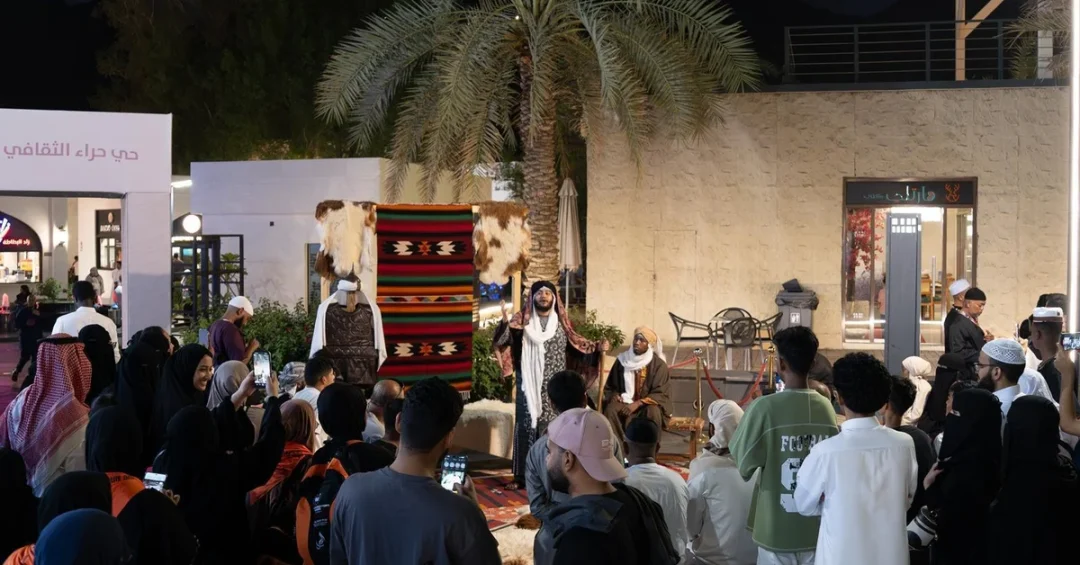
The Hira Cultural District in Makkah has launched an immersive heritage-trail event inspired by the world of Islamic caravans, recreating the journeys, markets, and storytelling traditions that once linked the Arabian Peninsula to the wider Islamic world. Announced through official Saudi channels and reported by the Saudi Press Agency (SPA), the experience runs until the end of December 2026 and invites visitors to step into the social and commercial life of historic caravan routes that carried goods, ideas, poetry, and values across continents. The event combines education, entertainment, and shopping, presenting Saudi Arabia’s civilizational heritage through modern, interactive presentation methods. Have you ever wondered how a single caravan journey could shape the culture of entire regions?
The launch reflects the Hira Cultural District’s continuing effort to strengthen its position as a cultural and tourism destination in Makkah, enriching the journeys of pilgrims, residents, and international visitors while deepening their connection to the area’s history. By transforming historical narrative into hands-on experience, the district offers a model of how heritage can be made accessible without losing its authenticity. The event is designed for families, students, researchers, and travelers alike, positioning Makkah not only as a spiritual center but also as a living museum of Islamic civilization. What does it mean for a modern city to keep its oldest stories alive?
Context and Background
Why do caravans still matter in a world of instant global trade? For centuries before railways, highways, and air freight, caravans were the circulatory system of the Islamic world. They moved incense, spices, textiles, coffee, and manuscripts between Makkah, Madinah, Jeddah, Yemen, the Levant, Iraq, Egypt, and beyond. More importantly, they moved people and ideas: scholars traveling to study, poets carrying oral traditions, merchants negotiating in shared languages of trade, and pilgrims journeying toward the holy cities. The Hira Cultural District’s new event draws directly on this inheritance, presenting it as a living story rather than a static exhibit.
The district itself sits within a broader Saudi effort to document and share the history of Makkah and its surroundings. Official Saudi sources describe the event as part of a wider program to enrich the visitor experience and present historical heritage in an interactive format. This aligns with the Kingdom’s national direction, in which cultural sites are developed as platforms for education, tourism, and cross-cultural dialogue. The caravan theme is particularly resonant because it speaks to exchange: the movement of knowledge, values, and stories that connected the Islamic world long before modern infrastructure existed.
Running until the end of December 2026, the event gives visitors a sustained window to explore these themes across multiple months and seasons. Rather than a single exhibition, it functions as a temporary cultural quarter within the district, with recurring programming that can engage repeat visitors and school groups. This extended format allows deeper storytelling and lets the district refine its approach based on visitor response, a method increasingly common in Saudi cultural and tourism development.
Key Details and Experiences
What would it have felt like to sit in a majlis where news arrived only by word of mouth? One of the event’s highlights is the “storyteller’s majlis,” which presents historical tales and poetry with audience participation in an atmosphere that recreates traditional Arab gatherings. These majlis sessions were historically central to public life, serving as spaces where news, genealogies, wisdom, and verse were transmitted from one generation to the next. By inviting visitors to take part rather than simply observe, the district turns passive listening into active cultural memory.
The event also includes stalls modeled on traditional Islamic caravan markets. Visitors can take part in practical experiences involving weighing goods, bartering, and shopping, gaining a tactile sense of how commerce was conducted when every transaction required negotiation, trust, and measurement. Performances and interactive scenes depict daily life in old markets, showing interactions among merchants, travelers, and craftspeople. These scenes illustrate how markets were not only economic engines but also social crossroads where languages, customs, and beliefs met and blended.
Beyond the market and the majlis, the heritage trail evokes the full arc of a caravan journey: preparation, departure, desert travel, arrival at a trading hub, and the exchange of stories at journey’s end. The combination of storytelling, interactive scenes, and commercial practice is intended to engage visitors of all ages. For younger audiences, the hands-on elements offer an accessible entry point into history; for older visitors, the detail and atmosphere invite reflection on how much of modern life still rests on the same human needs for trade, trust, and shared narrative.
International and Regional Impact
How does a heritage event in Makkah speak to audiences thousands of miles away? The caravan story is inherently international. Routes that passed through the Arabian Peninsula connected Africa, Asia, and Europe, and the cultural exchange they enabled shaped architecture, cuisine, language, and scholarship far beyond the region. By presenting this history in an interactive format, the Hira Cultural District offers international visitors a framework for understanding the Islamic world as a network of exchange rather than a set of isolated places. This narrative can strengthen cultural tourism and encourage longer, more meaningful visits to Makkah and Saudi Arabia as a whole.
Regionally, the event reinforces Makkah’s role as a meeting point. Pilgrims arriving from dozens of countries encounter not only the spiritual heart of Islam but also a presentation of the civilizational heritage that grew around it. For Gulf and Middle Eastern visitors, the caravan theme resonates with shared memory and family history. For non-Muslim international audiences, it provides an educational window into a history that is often described but rarely experienced in such a tangible way. The district’s approach thus supports people-to-people understanding at a time when cultural diplomacy is increasingly important.
Economic and Strategic Significance
What makes cultural heritage a strategic asset rather than a nostalgic one? Saudi Arabia has been developing heritage and tourism as complementary pillars of economic diversification. Events such as this one support local businesses, create opportunities for craftspeople and performers, and extend visitor stays in Makkah beyond the traditional pilgrimage calendar. The inclusion of shopping experiences inspired by traditional markets links cultural programming directly to commercial activity, giving artisans and vendors a platform while offering visitors authentic goods and interactions.
Strategically, the event contributes to the broader effort to position Saudi Arabia as a destination for cultural discovery. The Hira Cultural District’s programming adds depth to the visitor journey, complementing the spiritual experience of Makkah with historical and educational content. This layered offering can attract repeat visitors, researchers, and families seeking meaningful travel. It also supports the development of a skilled workforce in cultural interpretation, event management, and hospitality, sectors that will grow as more heritage sites come online across the Kingdom.
Vision 2030 Alignment
How does a caravan trail connect to a national transformation plan? Saudi Vision 2030 emphasizes the preservation and promotion of Saudi Arabia’s cultural heritage as part of a diversified economy and an enriched quality of life. The Hira Cultural District’s interactive caravan experience embodies this by turning heritage into an engaging, educational, and economically productive asset. It supports the growth of cultural tourism, strengthens national identity, and presents the Kingdom’s history with pride and modern creativity to a global audience.
The event also reflects Vision 2030’s focus on youth, education, and innovation. Interactive scenes, audience participation, and hands-on market experiences introduce young Saudis and international visitors to the values of exchange, craftsmanship, and storytelling that defined earlier generations. In doing so, the district helps ensure that the lessons of the caravan era, trust, curiosity, hospitality, and the pursuit of knowledge, remain part of the Kingdom’s present and future. As the event runs through the end of December 2026, it offers a clear example of how Saudi Arabia is preserving its past while building a globally connected future.
20 Questions
Q1. What is the Hira Cultural District’s new event about?
A1. It is a heritage-trail experience inspired by the world of Islamic caravans, recreating caravan journeys, markets, storytelling, and the exchange of knowledge and values. It runs in Makkah until the end of December 2026 and combines education, entertainment, and shopping.
Q2. Where is the event taking place?
A2. The event is hosted at the Hira Cultural District in Makkah, Saudi Arabia, a site dedicated to presenting the area’s history and civilizational heritage through modern, interactive methods that enrich the visitor experience.
Q3. How long will the event run?
A3. According to the Saudi Press Agency, the event runs until the end of December 2026, giving visitors several months to explore its programs and activities across different seasons and holiday periods.
Q4. What is the “storyteller’s majlis”?
A4. It is a featured experience that presents historical tales and poetry with audience participation, recreating traditional Arab gatherings where news, stories, and poetry were passed from one generation to the next in a communal setting.
Q5. What can visitors do at the caravan market stalls?
A5. Visitors can take part in practical experiences such as weighing goods, bartering, and shopping, gaining a hands-on sense of how trade was conducted in traditional Islamic caravan markets and old commercial centers.
Q6. What kinds of performances are included?
A6. The event features performances and interactive scenes depicting daily life in old markets, showing interactions among merchants, travelers, and craftspeople, and illustrating the social dynamics that made markets vibrant crossroads of culture.
Q7. Who is the event designed for?
A7. It is designed for a wide audience, including families, students, researchers, pilgrims, and international tourists. The mix of storytelling, hands-on activities, and performances aims to engage visitors of all ages and backgrounds.
Q8. How does the event combine education and entertainment?
A8. It presents historical heritage through interactive formats, allowing visitors to learn by doing. Storytelling, bartering, and market simulations turn historical facts into memorable experiences that educate while they entertain.
Q9. What historical period does the event evoke?
A9. It evokes the era when Islamic caravans traveled across the Arabian Peninsula and beyond, connecting Makkah and other cities to Africa, Asia, and Europe through trade routes that carried goods, ideas, and culture.
Q10. Why are caravans important in Islamic history?
A10. Caravans were essential to trade, pilgrimage, and scholarship. They moved spices, textiles, and manuscripts, but also carried poets, scholars, and pilgrims, helping to spread knowledge, values, and stories across the Islamic world.
Q11. How does the event support Saudi tourism?
A11. By enriching the visitor experience in Makkah, the event encourages longer stays and repeat visits. It adds a cultural and educational dimension to the spiritual journey, supporting the growth of heritage tourism in the Kingdom.
Q12. Does the event include shopping opportunities?
A12. Yes. Stalls modeled on traditional Islamic caravan markets offer shopping experiences inspired by historic commerce. Visitors can buy goods while learning how markets functioned in the past, linking cultural discovery with commercial activity.
Q13. What values does the event highlight?
A13. It highlights human values carried by caravans, including trust, hospitality, curiosity, exchange, and the pursuit of knowledge. These values are presented as part of the shared heritage of Islamic civilization.
Q14. How does the event present heritage interactively?
A14. It uses storytelling, audience participation, market simulations, and live scenes to bring history to life. Visitors do not just observe; they participate in activities that recreate the social and commercial life of caravan eras.
Q15. What is the Hira Cultural District’s broader goal?
A15. The district aims to strengthen its position as a cultural and tourism destination in Makkah, enriching visitors’ journeys and deepening their connection with the area’s history and civilizational heritage through authentic yet modern presentation.
Q16. How does the event reflect Saudi Vision 2030?
A16. It supports Vision 2030 by promoting cultural heritage, diversifying tourism, creating economic opportunities, and engaging youth and international visitors with Saudi history in innovative and educational ways.
Q17. Can international visitors participate?
A17. Yes. The event is open to all visitors to Makkah, including international guests. It offers an accessible introduction to Islamic and Saudi heritage through interactive experiences that do not require prior historical knowledge.
Q18. What makes this event different from a traditional museum?
A18. Instead of static displays, it offers immersive participation. Visitors can barter, weigh goods, join storytelling sessions, and watch live scenes, making the experience dynamic, social, and memorable rather than observational.
Q19. How does the event support local craftspeople and performers?
A19. By including market stalls, performances, and interactive scenes, the event creates opportunities for artisans, actors, storytellers, and vendors to showcase their skills and connect with a diverse public audience.
Q20. What is the significance of the event’s timing?
A20. Running until the end of December 2026, the event spans multiple seasons and visitor peaks, allowing broad participation and giving the district time to refine programming while showcasing Makkah’s heritage to a global audience.
Reader Feedback
We value your thoughts. Please share your feedback on this article.
Your feedback helps us improve our coverage.