


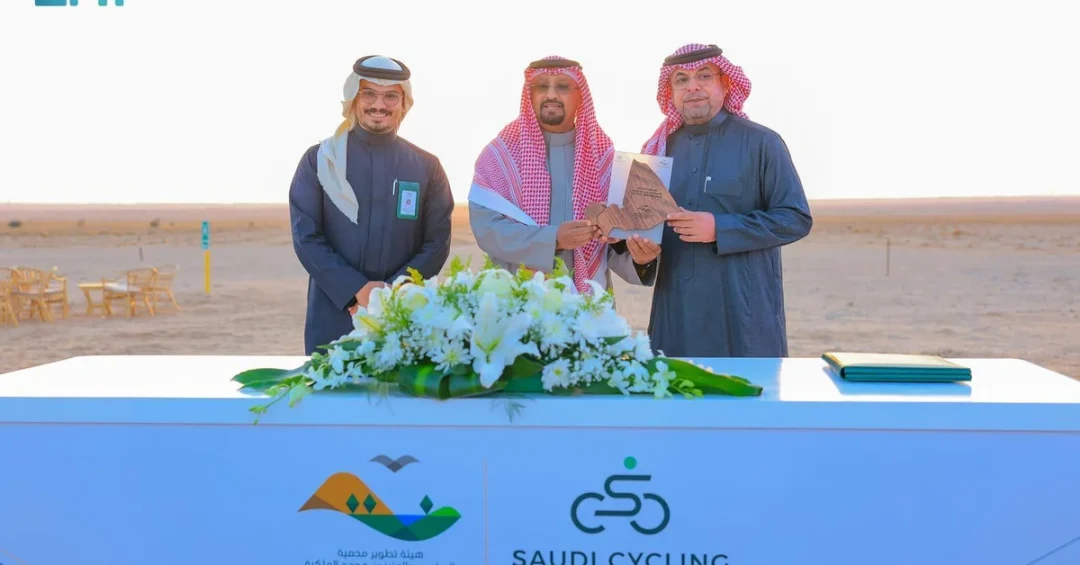
The Imam Abdulaziz bin Mohammed Royal Reserve Development Authority (IARDA) signed a memorandum of understanding with the Saudi Cycling Federation during the inaugural ceremony of the fourth Al-Urumah Season, in a move that links one of the Kingdom’s most significant protected landscapes with the fast-growing sport of cycling. The agreement, announced in Riyadh on December 24, 2024, and reported by the Saudi Press Agency, sets out a framework for developing dedicated bicycle paths, endorsing cycling routes inside the reserve, facilitating events and competitions, and cooperating on local, regional, and international championships. For a reserve that spans a vast stretch of the central Arabian plateau, the partnership marks a deliberate step toward positioning conservation areas as destinations for recreation, not merely protection.
The memorandum was framed by IARDA as part of its wider efforts to advance ecotourism, deepen public appreciation for nature, and encourage recreational pursuits in a way that supports sustainable tourism and sporting activity. Those aims sit squarely within the quality-of-life objectives of Saudi Vision 2030, the national transformation program designed to diversify the economy and enrich daily life for citizens and residents. Why does a single agreement between a conservation authority and a sports federation matter beyond the two institutions involved? Because it demonstrates how the Kingdom’s environmental, tourism, and sports agendas are increasingly being woven together into one coherent strategy.
Context and Background
The Imam Abdulaziz bin Mohammed Royal Reserve is one of the royal reserves established under Saudi Arabia’s ambitious environmental framework, which seeks to protect natural habitats, reintroduce native wildlife, and restore ecosystems across the country. The reserve is managed by the Imam Abdulaziz bin Mohammed Royal Reserve Development Authority, a body created to combine conservation with sustainable development and community engagement. Its work reflects a broader national commitment, articulated through the Saudi Green Initiative and the Middle East Green Initiative, to plant billions of trees, reduce land degradation, and protect biodiversity for future generations.
Running alongside this environmental push is the Kingdom’s rapid expansion of sport and recreation. Cycling has emerged as a priority discipline under the Ministry of Sport and the Saudi Olympic and Paralympic Committee, with the Saudi Cycling Federation working to grow participation at grassroots and elite levels. The federation organizes races, develops talent, and represents the Kingdom in international competitions. The fourth Al-Urumah Season, during which the memorandum was signed, is itself part of a seasonal events calendar designed to draw visitors into natural settings and showcase the reserve’s landscapes, wildlife, and cultural heritage.
What makes this moment different from earlier conservation announcements? The answer lies in the pairing of two sectors that once operated on separate tracks. By formally connecting a protected area with a national sports body, the agreement turns a conservation zone into an active venue for organized recreation. It also gives the cycling federation access to terrain and routes that can host competitive events, while giving the reserve a steady stream of visitors whose presence supports local services, guiding, and hospitality. The memorandum is therefore both an environmental instrument and an economic one, reflecting the integrated thinking that defines Saudi Vision 2030.
Key Details of the Agreement
Under the terms described by IARDA, the memorandum covers four main areas of cooperation. First, the two parties will work to develop dedicated bicycle paths within the reserve, creating safe and clearly marked routes for riders of different skill levels. Second, they will endorse and promote cycling routes that highlight the reserve’s natural features, encouraging visitors to explore the landscape on two wheels rather than by vehicle. Third, the agreement facilitates various events and competitions, giving the reserve a role in the Kingdom’s expanding sports calendar.
Fourth, and perhaps most significantly, the partnership includes collaboration to host local, regional, and international championships. That provision opens the possibility that the reserve could one day welcome elite cyclists from across the Gulf region and beyond, raising its international profile while reinforcing Saudi Arabia’s reputation as a host of world-class sporting events. The memorandum does not disclose specific timelines or budgets, but it establishes a formal channel for joint planning, which is typically the first step before detailed projects are announced. The signing took place during the inaugural ceremony of the fourth Al-Urumah Season, a setting that underlined the connection between the agreement and public engagement with nature.
How will cyclists actually experience the reserve once these plans take shape? The vision is a network of trails that move through desert terrain, acacia woodland, and rocky outcrops, allowing riders to encounter the reserve’s wildlife and geology at a human pace. The Saudi Cycling Federation brings technical expertise on route design, safety standards, and event management, while IARDA contributes knowledge of the landscape, conservation rules, and visitor infrastructure. Together, the two organizations can ensure that cycling development respects the ecological sensitivity of the area, a balance that is central to the concept of ecotourism.
International and Regional Impact
The agreement arrives at a time when cycling tourism is expanding globally, with travelers increasingly seeking active holidays that combine sport, nature, and cultural discovery. Saudi Arabia’s royal reserves, including the Imam Abdulaziz bin Mohammed Royal Reserve, are well placed to capture a share of this growing market. For international visitors, the prospect of riding marked trails through a protected Arabian landscape is distinctive, and it complements the Kingdom’s existing tourism offerings, from heritage sites and Red Sea resorts to desert adventures and cultural festivals.
Regionally, the memorandum strengthens Saudi Arabia’s position as a hub for sports and outdoor recreation in the Middle East. Gulf neighbors are also investing in cycling infrastructure and events, and the Kingdom’s ability to host local, regional, and international championships gives it a competitive edge. The partnership also supports the exchange of expertise, as Saudi organizers gain experience in staging competitions that meet international standards. In a region where environmental awareness is rising, a project that links conservation with healthy recreation sends a constructive message about the Kingdom’s direction.
Economic and Strategic Significance
From an economic standpoint, the memorandum supports the diversification of revenue streams that Vision 2030 pursues. Ecotourism generates income through guided tours, equipment rental, accommodation, food services, and event hosting, creating jobs in areas that may have limited economic activity. By attracting cyclists and spectators to the reserve, the agreement can stimulate local businesses and encourage entrepreneurship among residents. It also aligns with the Public Investment Fund’s broader investments in tourism and entertainment, which are designed to raise the sector’s contribution to gross domestic product.
Strategically, the partnership reinforces the idea that Saudi Arabia’s natural assets are national assets, worthy of protection and capable of generating value. It demonstrates that conservation and development need not conflict when planning is careful and cooperation is genuine. The involvement of a national sports federation also gives the reserve a built-in audience and a recurring calendar of activities, which helps sustain visitor numbers beyond seasonal peaks. Over time, successful cycling routes and championships could become a model for other reserves seeking to combine environmental stewardship with public recreation.
Vision 2030 Alignment
The memorandum is a clear expression of Saudi Vision 2030’s quality-of-life program, which aims to increase participation in sports and recreation, improve public health, and create attractive destinations for citizens, residents, and visitors. By opening the Imam Abdulaziz bin Mohammed Royal Reserve to cycling, IARDA and the Saudi Cycling Federation are helping to make outdoor activity more accessible and more appealing, particularly for young people. This supports national goals for physical fitness and community well-being while advancing environmental education and appreciation of the Kingdom’s natural heritage.
At the same time, the agreement contributes to the economic and environmental pillars of Vision 2030. Sustainable tourism is a priority sector, and ecotourism within royal reserves is a niche where Saudi Arabia can differentiate itself. The partnership also supports the Saudi Green Initiative’s objectives by promoting low-impact recreation and encouraging visitors to value protected landscapes. As the Kingdom continues to host international sporting events and invest in tourism infrastructure, agreements like this one show how different parts of the national strategy can reinforce each other, delivering benefits that are environmental, economic, and social at once.
20 Questions
Q1. What is the main purpose of the memorandum of understanding signed by IARDA and the Saudi Cycling Federation?
A1. The memorandum aims to enhance ecotourism and promote cycling by developing dedicated bicycle paths, endorsing cycling routes within the reserve, facilitating events and competitions, and collaborating to host local, regional, and international championships.
Q2. When and where was the agreement signed?
A2. It was signed in Riyadh on December 24, 2024, during the inaugural ceremony of the fourth Al-Urumah Season, as reported by the Saudi Press Agency.
Q3. What does IARDA stand for?
A3. IARDA stands for the Imam Abdulaziz bin Mohammed Royal Reserve Development Authority, the body responsible for managing and developing the reserve in line with conservation and sustainability goals.
Q4. What is the fourth Al-Urumah Season?
A4. It is a seasonal events program organized at the Imam Abdulaziz bin Mohammed Royal Reserve, designed to attract visitors and showcase the reserve’s natural and cultural features.
Q5. How does the agreement support ecotourism?
A5. By creating bicycle paths and promoting cycling routes, the agreement encourages low-impact exploration of nature, which is a core principle of ecotourism and sustainable travel.
Q6. Which Saudi Vision 2030 objective does this partnership serve?
A6. It serves the quality-of-life objective, which aims to enhance recreational opportunities, promote sports, and improve the well-being of citizens and residents.
Q7. What role does the Saudi Cycling Federation play?
A7. The federation promotes cycling nationwide, organizes races, develops talent, and represents the Kingdom in international competitions, bringing technical expertise to the partnership.
Q8. Will the reserve host international cycling championships?
A8. The memorandum includes collaboration to host local, regional, and international championships, though specific events and dates have not yet been announced.
Q9. How does the agreement benefit local communities?
A9. It can stimulate local businesses through tourism, create jobs in guiding, hospitality, and event services, and encourage entrepreneurship among residents near the reserve.
Q10. What environmental principles guide the reserve’s development?
A10. The reserve follows conservation principles aligned with the Saudi Green Initiative, including habitat protection, wildlife reintroduction, and sustainable land management.
Q11. Are there safety measures planned for cyclists?
A11. The development of dedicated bicycle paths and the federation’s technical expertise are intended to ensure safe, well-marked routes for riders of different skill levels.
Q12. How does this agreement fit into Saudi Arabia’s tourism strategy?
A12. It adds an active, nature-based tourism offering that complements heritage, cultural, and coastal destinations, helping to diversify the Kingdom’s tourism sector.
Q13. What is the significance of signing during the Al-Urumah Season?
A13. It highlights the connection between the agreement and public engagement with nature, as the season brings visitors to the reserve for outdoor activities.
Q14. Will the bicycle paths be open to all visitors?
A14. The paths are intended to accommodate riders of different skill levels, making cycling accessible to a broad range of visitors, subject to reserve regulations.
Q15. How does cycling promote public health in Saudi Arabia?
A15. Cycling encourages physical activity, supports fitness and well-being, and offers an enjoyable way for people of all ages to exercise outdoors.
Q16. What economic sectors could benefit from this partnership?
A16. Tourism, hospitality, retail, equipment rental, transport, and event management are among the sectors likely to benefit from increased visitor activity.
Q17. Does the agreement include environmental education?
A17. IARDA’s stated goals include fostering appreciation for nature, and cycling routes can serve as platforms for educating visitors about the reserve’s ecosystems and wildlife.
Q18. How does this project support the Saudi Green Initiative?
A18. By promoting low-impact recreation and nature appreciation, the project aligns with the initiative’s goals of environmental protection, tree planting, and reduced land degradation.
Q19. What are royal reserves in Saudi Arabia?
A19. Royal reserves are protected areas established to conserve wildlife, restore ecosystems, and support sustainable development, contributing to national environmental and tourism goals.
Q20. What might come next after this memorandum?
A20. The parties are expected to develop detailed plans for routes, events, and championships, with further announcements likely as projects progress and partnerships deepen.
Reader Feedback
We value your thoughts. Please share your feedback on this article.
Your feedback helps us improve our coverage.