


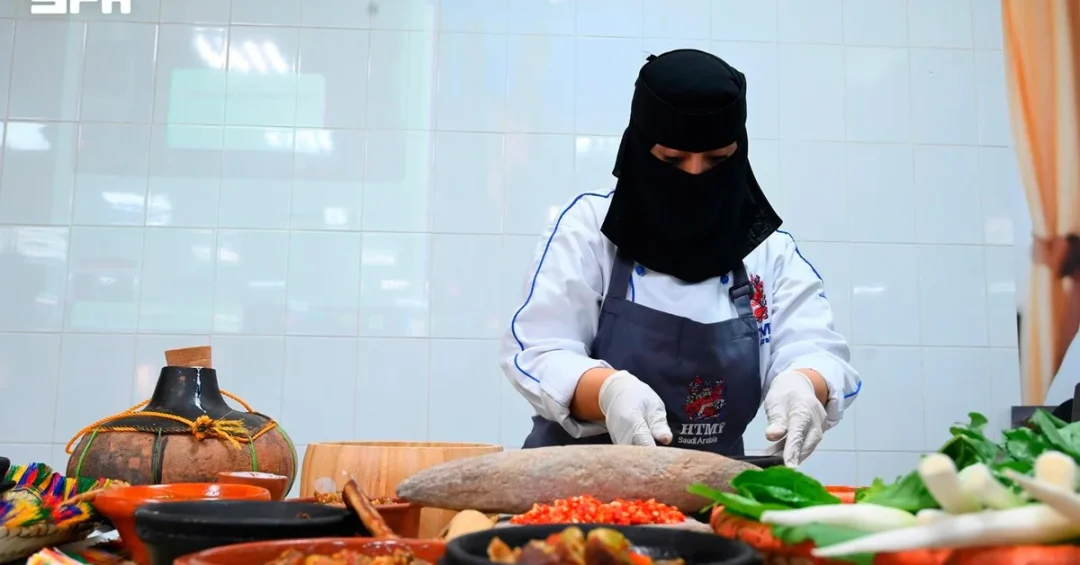
Young men and women in Jazan Region are transforming the Kingdom’s culinary heritage into professional careers, with the Higher Institute for Tourism and Hospitality in Jazan training a new generation of chefs and hospitality specialists who carry Saudi Arabia’s flavors, traditions, and warmth to visitors from around the world. The institute, working in cooperation with the Ministry of Culture and the Culinary Arts Commission, has helped refine and prepare 386 authentic Saudi recipes for publication in a book that showcases the diversity of the Kingdom’s cuisine and safeguards its culinary knowledge for future generations.
The development reflects a broader national effort to position Saudi hospitality as a cornerstone of the visitor experience, one that connects the Kingdom’s deep-rooted traditions with the expectations of a modern, international tourism sector. Trainees at the institute learn far more than how to cook. They study the selection and preparation of ingredients, the balancing of flavors, and the art of plating, while also developing skills in guest relations, communication, and event organization. In doing so, they are helping to ensure that every dish served in Jazan tells a story of heritage, care, and identity. Could there be a more authentic way for a nation to introduce itself to the world than through its food?
Context and Background
How does a single dish carry the memory of a region across generations? In Jazan, the answer lies in the knowledge passed down through families and communities, from the ingredients grown in the region’s fertile valleys to the customs observed around the coffee pot and the communal table. The Higher Institute for Tourism and Hospitality in Jazan was established to formalize that inheritance, converting informal, family-based knowledge into accredited professional skills that meet international standards while remaining faithful to local tradition.
The institute’s diploma programs, offered in cooperation with the Human Resources Development Fund, have trained 850 people in Jazan Region. These two-year programs combine theoretical and practical instruction across culinary arts management; event, conference, and exhibition management; restaurant management; travel and tourism management; and hotel management. The breadth of the curriculum reflects an understanding that hospitality is an ecosystem, not a single skill. A visitor’s impression of a region is shaped not only by the food on the plate but by the welcome at the door, the organization of the event, and the comfort of the stay. By training young Saudis across this entire spectrum, the institute is building a workforce capable of delivering a consistently high-quality experience.
The collaboration with the Ministry of Culture and the Culinary Arts Commission situates Jazan’s efforts within a national framework for preserving and promoting Saudi culinary identity. The 386 recipes prepared for the book represent a systematic effort to document dishes that might otherwise remain known only within their communities of origin. This documentation serves a dual purpose: it preserves knowledge for future Saudi chefs and provides a reference that can introduce international audiences to the depth and variety of Saudi cuisine. The Saudi Coffee Expert program, launched with the same partners, extends this logic to one of the Kingdom’s most iconic cultural symbols, covering the technical, practical, and heritage aspects of Saudi coffee, including its tools, traditions, and oral history. Isn’t it remarkable how a cup of coffee can encode centuries of hospitality?
Key Details
Trainees at the institute describe a learning process that goes well beyond following recipes. Preparing a dish, they say, involves far more thought, experimentation, and blending of flavors than diners realize. Each plate is the product of decisions about sourcing, timing, temperature, and presentation, decisions that are informed by an understanding of the cultural context in which the dish originated. This is what gives cooking a cultural dimension: it introduces a society’s ingredients, customs, and tastes through direct sensory experience. Technical skills help young chefs present this heritage faithfully while elevating its presentation to the standards expected by modern visitors.
The Saudi Coffee Expert program has established pavilions at events across the Kingdom, including coffee festivals in Jazan Region. These pavilions serve as public showcases where Saudis and international visitors alike can learn about the preparation and serving of Saudi coffee, the significance of its tools, and the oral traditions associated with its consumption. By bringing this programming to festivals and exhibitions, the institute and its partners are making heritage accessible in informal, welcoming settings that complement formal education. The result is a virtuous circle: public interest reinforces the value of professional training, and trained professionals raise the quality of public programming.
Trainees also report that the institute has helped them develop communication skills and self-confidence, with some choosing to specialize in event management. This outcome is significant because it demonstrates that culinary and hospitality education can serve as a pathway to a wide range of careers. A graduate may go on to manage a restaurant, organize a conference, lead a tour, or run a hotel. Each of these roles contributes to the visitor experience in a distinct way, and each draws on the same foundation of cultural knowledge and professional discipline. For young people in Jazan, the institute offers not just a qualification but a stake in the region’s growing tourism economy.
International and Regional Impact
What does the world discover about Saudi Arabia when it sits down to a meal prepared by a graduate of the Jazan institute? It encounters a Kingdom that is confident in its identity and generous in its welcome. For international visitors, food is often the most memorable and accessible point of cultural contact. A well-prepared traditional dish, presented with care and explained with knowledge, becomes a form of diplomacy. It communicates respect for the guest, pride in the host’s heritage, and openness to exchange. In this sense, the trainees in Jazan are not merely entering the hospitality industry; they are participating in Saudi Arabia’s cultural outreach to the world.
Regionally, the emphasis on documented recipes and standardized training creates a model that can be replicated across the Kingdom. Each region of Saudi Arabia has its own culinary traditions, shaped by geography, climate, and history. By developing a methodology for preserving and teaching these traditions, the Jazan institute and the Culinary Arts Commission are laying groundwork that other regions can adapt. This approach strengthens national cohesion by celebrating regional diversity within a shared Saudi identity. It also enhances the Kingdom’s appeal as a destination where travelers can experience distinct local cultures rather than a homogenized offering. The coffee festivals in Jazan, for example, give visitors a reason to travel beyond the major cities and discover the region’s particular character.
Economic and Strategic Significance
How does training a chef contribute to a national economy? The answer lies in the multiplier effect of tourism. Every visitor who spends a night in a hotel, dines in a restaurant, attends an event, or joins a tour generates demand for skilled labor. The 850 people trained through the institute’s diploma programs in Jazan Region represent a direct investment in the human capital that the tourism sector requires. As the Kingdom expands its tourism offerings, the availability of qualified Saudi professionals becomes a competitive advantage, ensuring that growth is supported by local talent rather than reliant on external labor.
The strategic significance extends to employment and entrepreneurship. Graduates of culinary arts management programs can open their own establishments, from small cafes to catering businesses, creating jobs and adding vitality to local economies. Those trained in event, conference, and exhibition management can attract business tourism, which tends to be higher-value and less seasonal than leisure travel. Restaurant, travel, and hotel management graduates strengthen the operational backbone of the sector. Together, these specializations build an ecosystem in which tourism spending circulates within the region, supporting families and communities. For a region like Jazan, with its rich agricultural base and distinctive culture, this represents a sustainable path to economic diversification.
Vision 2030 Alignment
Does a plate of food have a role in a national transformation plan? Under Saudi Vision 2030, the Kingdom is pursuing economic diversification, the empowerment of young people, and the growth of tourism as a key sector. The Higher Institute for Tourism and Hospitality in Jazan sits at the intersection of all three objectives. It equips young Saudis with marketable skills, supports the expansion of a strategic industry, and does so while celebrating and preserving the cultural heritage that makes the Kingdom unique. The cooperation with the Ministry of Culture and the Culinary Arts Commission ensures that this training is aligned with national priorities for cultural preservation and promotion.
The institute’s work also contributes to the Quality of Life Program, a Vision 2030 initiative that aims to improve the daily lives of citizens and residents by expanding cultural and recreational opportunities. Coffee festivals, culinary events, and heritage programming enrich the social fabric while creating economic opportunities. As graduates enter the workforce, they help shape the visitor experience through the dishes visitors taste, the hospitality they receive, and the events they attend. In doing so, they carry the flavors and memories of their land into the region’s tourism sector and into the broader story of Saudi Arabia’s global engagement. The young men and women of Jazan are not just learning a trade; they are writing the next chapter of Saudi hospitality, one dish, one cup of coffee, and one welcome at a time.
20 Questions
Q1. What is the Higher Institute for Tourism and Hospitality in Jazan training young Saudis to do?
A1. It trains them in culinary arts, guest relations, communication, and event organization. The two-year diploma programs cover culinary arts management, event management, restaurant management, travel and tourism management, and hotel management, preparing graduates for professional roles in the Kingdom’s growing hospitality sector.
Q2. How many authentic recipes were prepared for the book with the Ministry of Culture and the Culinary Arts Commission?
A2. The institute worked with the Ministry of Culture and the Culinary Arts Commission to refine and prepare 386 authentic recipes for a book showcasing the diversity of Saudi cuisine and helping preserve its culinary knowledge for future generations.
Q3. What does the Saudi Coffee Expert program cover?
A3. It covers the technical, practical, and heritage aspects of Saudi coffee, including its tools, traditions, and oral history. The program has established pavilions at events across the Kingdom, including coffee festivals in Jazan Region.
Q4. How many people have been trained through the institute’s diploma programs in Jazan Region?
A4. According to the institute, diploma programs offered in cooperation with the Human Resources Development Fund have trained 850 people in Jazan Region. The programs combine theoretical and practical training over two years.
Q5. What skills beyond cooking do trainees develop at the institute?
A5. Trainees develop skills in guest relations, communication, and event organization. Some report increased self-confidence and choose to specialize in event management, reflecting the broad career pathways the institute supports.
Q6. Why do trainees say preparing a dish involves more than diners realize?
A6. They say it involves far more thought, experimentation, and blending of flavors than diners realize. Every dish tells a story through the effort and care behind it, giving cooking a cultural dimension.
Q7. What is the Human Resources Development Fund’s role in these programs?
A7. The Human Resources Development Fund cooperates with the institute to offer diploma programs for new entrants to the workforce. These programs have trained 850 people in Jazan Region across several hospitality and tourism specializations.
Q8. What does the institute say about the cultural dimension of cooking?
A8. The institute emphasizes that cooking introduces a society’s ingredients, customs, and tastes. Technical skills help young chefs present this heritage faithfully while elevating its presentation to meet modern standards.
Q9. Where have Saudi Coffee Expert pavilions been established?
A9. Pavilions have been established at events across the Kingdom, including coffee festivals in Jazan Region. They showcase the preparation and serving of Saudi coffee and its associated traditions.
Q10. How do graduates shape the visitor experience?
A10. Graduates shape the visitor experience through the dishes visitors taste, the hospitality they receive, and the events they attend. They carry the flavors and memories of their land into the region’s tourism sector.
Q11. What diploma specializations are offered at the institute?
A11. The institute offers diplomas in culinary arts management; event, conference, and exhibition management; restaurant management; travel and tourism management; and hotel management. All programs combine theoretical and practical training over two years.
Q12. How does the recipe book help preserve Saudi culinary knowledge?
A12. The book documents 386 authentic recipes, showcasing the diversity of Saudi cuisine. It serves as a reference for future chefs and helps ensure that traditional dishes and their preparation methods are not lost.
Q13. What role does the Ministry of Culture play in this initiative?
A13. The Ministry of Culture cooperates with the institute and the Culinary Arts Commission to refine recipes and launch programs such as the Saudi Coffee Expert program, aligning culinary training with national cultural priorities.
Q14. Why is Jazan Region significant for Saudi culinary heritage?
A14. Jazan has its own distinctive culinary traditions shaped by its geography, agriculture, and history. The region’s ingredients, customs, and tastes contribute to the diversity of Saudi cuisine that the institute seeks to preserve and promote.
Q15. How does the institute’s work support Saudi Vision 2030?
A15. It supports economic diversification, youth empowerment, and tourism growth. By training young Saudis for the hospitality sector, it builds human capital and helps preserve cultural heritage, aligning with Vision 2030 objectives.
Q16. What events have featured the Saudi Coffee Expert program?
A16. The program has established pavilions at events across the Kingdom, including coffee festivals in Jazan Region. These events allow the public to learn about Saudi coffee’s tools, traditions, and oral history.
Q17. How does the institute help trainees develop self-confidence?
A17. Through practical training in communication, guest relations, and event organization, trainees build self-confidence. Some choose to specialize in event management, demonstrating the program’s impact on their professional aspirations.
Q18. What is the length and structure of the diploma programs?
A18. The programs are two years long and combine theoretical and practical training. They cover culinary arts management, event management, restaurant management, travel and tourism management, and hotel management.
Q19. How does culinary training contribute to Saudi Arabia’s tourism sector?
A19. It provides skilled professionals who deliver high-quality visitor experiences. Graduates work in restaurants, hotels, events, and tours, helping to ensure that tourism growth is supported by local talent and authentic cultural offerings.
Q20. What does the future hold for Jazan’s young culinary professionals?
A20. They are positioned to lead the region’s hospitality sector, carrying Saudi flavors and traditions to international visitors. Their skills support Vision 2030’s tourism and cultural goals while creating careers and opportunities in Jazan.
Reader Feedback
We value your thoughts. Please share your feedback on this article.
Your feedback helps us improve our coverage.