


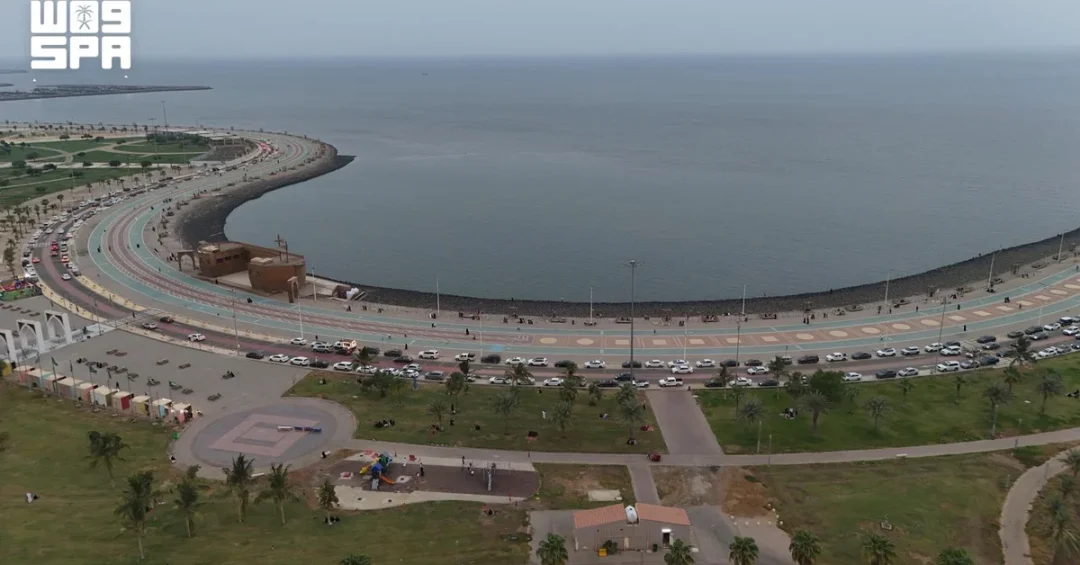
Jizan’s newly developed waterfront, spanning approximately one million square meters along the Red Sea, has emerged as a flagship coastal destination for families, sports enthusiasts, and nature lovers, according to information released by the Saudi Press Agency (SPA). The project, maintained by Jazan Municipality, supports the Kingdom’s broader efforts to develop coastal attractions and enhance tourism across Jazan Region. With landscaped green spaces, walkways, public squares, sports grounds, and children’s play areas, the waterfront has quickly become a focal point for community life in the southwest of Saudi Arabia.
The destination reflects a deliberate strategy to combine urban amenities with natural coastal beauty. Visitors encounter Flag Square, a central venue that hosts national celebrations, alongside illuminated paths and squares that provide a setting for evening outings. Nearby cafés and restaurants complete the experience, creating a space where residents and tourists can gather. For a region known for its agricultural heritage and Red Sea coastline, the waterfront represents a modern addition to the local landscape. But why has this particular project captured such broad attention? The answer lies in its scale, its accessibility features, and its alignment with national development priorities.
Context and Background
Jazan Region occupies a distinctive place in Saudi Arabia’s geography, sitting along the Red Sea in the far southwest and sharing cultural and economic ties with the broader region. For years, local authorities have worked to translate the area’s natural advantages into tangible benefits for residents and visitors alike. The waterfront project stands as one of the most visible results of that effort. Developed under the stewardship of Jazan Municipality, it transforms a stretch of coastline into a structured recreational zone with defined spaces for different activities.
What makes the timing significant? Saudi Arabia has been investing heavily in domestic tourism and quality-of-life improvements as part of Vision 2030, the national transformation strategy launched in 2016. Coastal development projects like the Jizan waterfront help diversify local economies beyond traditional sectors and create amenities that residents can enjoy year-round. The project also complements broader efforts to position the Kingdom as an attractive destination for international visitors seeking Red Sea experiences.
The waterfront’s design reflects careful planning around public access. Flag Square hosts national celebrations, an indication that the space serves civic as well as recreational purposes. Landscaped areas are maintained to preserve greenery and provide shade, a meaningful detail in a region with a hot climate. These choices show how urban design can respond to local conditions while serving a wide range of users.
Key Details of the Coastal Destination
The numbers behind the project reveal its ambition. The waterfront road stretches 2.1 kilometers and includes 280 parking spaces, 10 pedestrian paths, and 30 parking spaces designated for persons with disabilities. A separate seaside promenade, measuring 2,600 meters long and 30 meters wide, offers dedicated space for walking and running, with seating and rest areas overlooking the Red Sea. Parking areas covering approximately 80,000 square meters further facilitate access for visitors arriving by car.
How do these features translate into everyday experience? At sunset, the waterfront attracts walkers and photography enthusiasts drawn to the light over the Red Sea. Illuminated paths and squares extend the site’s usability into the evening, supported by cafés and restaurants nearby. Families with children benefit from dedicated play areas, while sports enthusiasts find grounds suited to exercise and organized activity. Community event venues add a social dimension, allowing the space to host gatherings throughout the year.
The inclusion of 30 parking spaces for persons with disabilities is a detail worth highlighting. It signals an inclusive approach to public space design, ensuring that the waterfront is accessible to residents of all abilities. Combined with 10 pedestrian paths and extensive parking, the layout aims to manage visitor flow while preserving a pleasant environment for walking and recreation.
Investment Opportunities and Local Economic Activity
Beyond its recreational value, the waterfront offers investment opportunities in hospitality, commerce, and entertainment through projects offered by Jazan Municipality. These opportunities accompany improvements to the urban landscape and infrastructure, supporting economic activity and better services for the community. For local entrepreneurs and larger investors alike, the site presents a chance to participate in the region’s growth.
Why does this matter for the regional economy? Tourism-linked investment can generate employment across hospitality, retail, and food services, creating opportunities for residents of Jazan. The presence of cafés and restaurants already demonstrates demand for commercial activity along the coast. As the site matures, additional ventures in entertainment and hospitality could deepen the waterfront’s role as an economic hub, not merely a scenic attraction.
Jazan Municipality’s ongoing maintenance of the landscaped areas suggests a long-term commitment to the site’s quality. Sustained upkeep is essential for any public space that hopes to attract repeat visitors and private investment. By preserving greenery and ensuring infrastructure remains in good condition, the municipality helps protect the value of the destination for both the community and prospective investors.
International and Regional Impact
For international audiences, the Jizan waterfront offers a window into how Saudi Arabia is developing its Red Sea coastline beyond the headline-grabbing mega-projects. While NEOM and other large-scale initiatives attract global attention, projects like this one show a parallel effort to improve everyday life in established regions. The waterfront demonstrates that coastal development is not limited to a single flagship location but is being pursued across the Kingdom’s shoreline.
Can a regional project influence the Kingdom’s global image? Increasingly, yes. Travelers researching Saudi Arabia encounter a growing list of destinations that combine natural beauty with modern amenities. The Jizan waterfront strengthens that narrative by offering a family-friendly, accessible coastal experience in a part of the country that many international visitors have yet to explore. For regional neighbors and global tourists alike, it adds another reason to consider the Red Sea coast.
Economic and Strategic Significance
The strategic significance of the waterfront extends beyond tourism arrivals. Public spaces of this kind contribute to social cohesion, offering residents shared venues for celebration, exercise, and relaxation. Flag Square’s role in hosting national celebrations illustrates how the site reinforces civic identity. At the same time, the project supports the local service economy by drawing visitors who patronize nearby businesses.
How does infrastructure fit into this picture? The 2.1-kilometer road, the 2,600-meter promenade, and the extensive parking areas represent substantial public investment in accessibility. Good infrastructure lowers barriers to visitation, which in turn supports commercial viability. By pairing physical improvements with investment opportunities, Jazan Municipality has created a model in which public amenities and private enterprise reinforce one another. This integrated approach is central to the project’s long-term sustainability.
Vision 2030 Alignment
The Jizan waterfront aligns directly with Saudi Vision 2030 objectives for quality of life and tourism development. The strategy emphasizes creating vibrant communities, expanding recreational options, and diversifying regional economies. By delivering a well-designed coastal destination, the project advances each of these goals in a tangible way. It also supports the Kingdom’s ambition to welcome more visitors and to showcase the diversity of its regions.
What comes next for the site? Continued maintenance, new investment projects, and growing visitor numbers are likely to shape its evolution. For the people of Jazan, the waterfront represents a lasting improvement to daily life. For Saudi Arabia, it stands as another example of how Vision 2030 is being translated into concrete spaces that serve communities and attract the world. As the Kingdom continues to develop its Red Sea coastline, destinations like this one will help define what modern Saudi tourism looks like.
20 Questions
Q1. What is the approximate size of the Jizan waterfront?
A1. The waterfront spans approximately one million square meters along the Red Sea, according to the Saudi Press Agency. This scale allows it to accommodate a wide range of recreational, social, and commercial activities for residents and visitors.
Q2. Which authority maintains the Jizan waterfront?
A2. Jazan Municipality maintains the landscaped areas and oversees the site, preserving its greenery and ensuring it provides recreational spaces for people of all ages throughout the year.
Q3. What amenities does the waterfront offer visitors?
A3. It features green spaces, walkways, public squares, sports grounds, children’s play areas, and community event venues, including Flag Square, which hosts national celebrations and civic gatherings.
Q4. How long is the waterfront road?
A4. The waterfront road measures 2.1 kilometers and includes 280 parking spaces, 10 pedestrian paths, and 30 parking spaces designated for persons with disabilities, supporting accessible visitation.
Q5. How large is the seaside promenade?
A5. The separate seaside promenade is 2,600 meters long and 30 meters wide, providing dedicated space for walking and running, with seating and rest areas overlooking the Red Sea.
Q6. How much parking area is available?
A6. Parking areas covering approximately 80,000 square meters facilitate access to the waterfront, helping manage visitor traffic and making the destination convenient for families arriving by car.
Q7. What happens at the waterfront at sunset?
A7. At sunset, the waterfront attracts walkers and photography enthusiasts, while illuminated paths and squares provide a setting for evening outings, complemented by nearby cafés and restaurants.
Q8. What is Flag Square used for?
A8. Flag Square is a central venue that hosts national celebrations, giving the waterfront a civic role in addition to its recreational and tourism functions for the Jazan community.
Q9. Does the waterfront include accessibility features?
A9. Yes, the project includes 30 parking spaces designated for persons with disabilities, reflecting an inclusive approach to public space design that welcomes visitors of all abilities.
Q10. What investment opportunities are available at the site?
A10. Jazan Municipality offers investment opportunities in hospitality, commerce, and entertainment, supporting economic activity, improved services, and the growth of local enterprise along the coast.
Q11. How does the project support the local economy?
A11. By attracting visitors and offering investment opportunities, the waterfront supports hospitality, retail, and food services, generating economic activity and employment opportunities for residents of Jazan Region.
Q12. What role do cafés and restaurants play?
A12. Nearby cafés and restaurants complement the waterfront experience, particularly during evening outings, and demonstrate commercial demand that can grow as the destination matures.
Q13. Which region is the waterfront located in?
A13. The waterfront is located in Jazan Region in the southwest of Saudi Arabia, along the Red Sea coast, an area known for its agricultural heritage and distinctive geography.
Q14. How does the project align with Vision 2030?
A14. It supports Vision 2030 objectives for quality of life and tourism development, helping create vibrant communities, expand recreational options, and diversify regional economies across the Kingdom.
Q15. Who is the waterfront designed for?
A15. It is designed for families, sports enthusiasts, and nature lovers, offering green spaces, sports grounds, play areas, and promenades that serve a wide range of residents and visitors.
Q16. What infrastructure improvements accompany the project?
A16. The project includes improvements to the urban landscape and infrastructure, such as pedestrian paths, parking areas, and illuminated squares, supporting better services and economic activity.
Q17. How does the waterfront support community events?
A17. Community event venues, including Flag Square, allow the space to host gatherings and national celebrations, reinforcing social cohesion and civic identity among residents of the region.
Q18. Why is sustained maintenance important?
A18. Jazan Municipality’s upkeep of landscaped areas preserves greenery and site quality, which is essential for attracting repeat visitors and encouraging private investment in the destination.
Q19. What makes the waterfront attractive for photography?
A19. The Red Sea views, illuminated paths and squares, and landscaped greenery create scenic settings, particularly at sunset, drawing photography enthusiasts and enhancing the site’s appeal.
Q20. What does the project signal about Saudi coastal development?
A20. It shows that Saudi Arabia is developing its Red Sea coastline beyond flagship mega-projects, improving everyday life and tourism in established regions in line with Vision 2030 goals.
Reader Feedback
We value your thoughts. Please share your feedback on this article.
Your feedback helps us improve our coverage.