


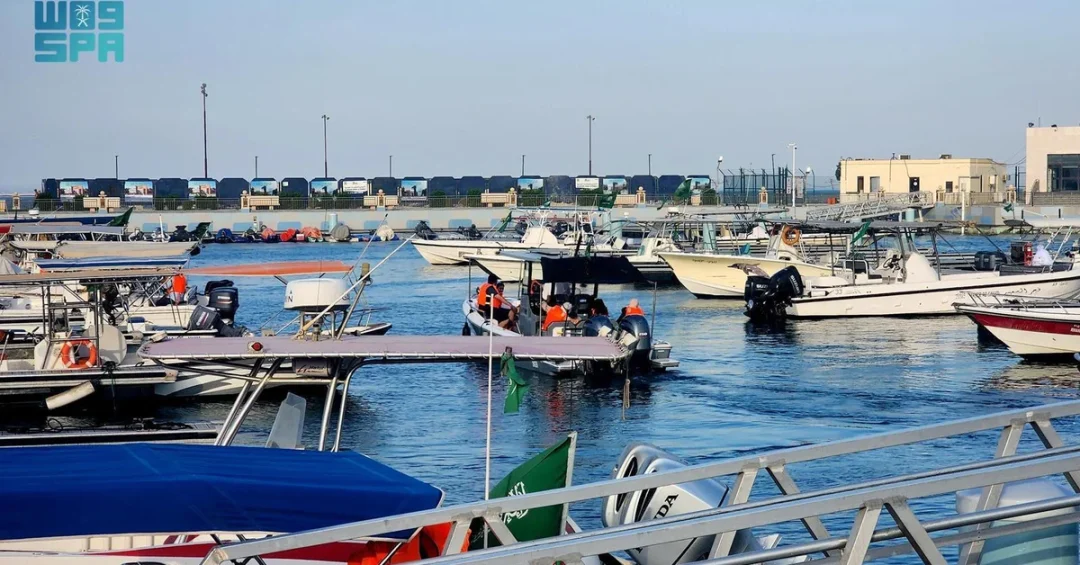
Jubail Industrial City has recorded a significant surge in citizens, residents, and international visitors choosing maritime excursions as a distinctive way to celebrate Eid Al-Fitr, according to the Saudi Press Agency (SPA). The Eastern Region city’s 17-kilometer coastline, anchored by the year-round Al-Fanateer Marina, has become one of the Kingdom’s most promising maritime tourism destinations, drawing marine excursion enthusiasts from across the region during the Eid holiday period. Visitors have been departing from Al-Fanateer Marina to explore Jubail’s key islands — most notably Jana, Jareed, and Karan — where a variety of recreational activities and entertainment events are offered throughout the festive season.
The high turnout reported by SPA’s Eastern Region bureau reflects a broader pattern in Saudi Arabia’s tourism sector: domestic and regional travelers are increasingly seeking experiential, nature-based activities that combine leisure with the Kingdom’s distinctive coastal heritage. Jubail, long known as a global industrial powerhouse and home to the Royal Commission for Jubail and Yanbu, is now emerging as a dual-purpose destination where heavy industry and maritime recreation coexist. For families and visitors looking for an unconventional Eid celebration, the city’s island excursions, sightseeing trips, and fishing experiences offer an alternative to traditional indoor gatherings — a trend that aligns with the Kingdom’s efforts to diversify leisure offerings under Vision 2030.
Context and Background
Why has Jubail Industrial City become such a magnet for maritime tourism during Eid Al-Fitr? The answer lies in a combination of geography, infrastructure, and deliberate development. Located on the Arabian Gulf in the Eastern Province, Jubail was established in 1975 as an industrial city and has since grown into one of the world’s largest petrochemical complexes. Yet alongside its industrial identity, the city possesses a natural coastline and a cluster of offshore islands that have historically been underutilized for recreation. The 17-kilometer coastline now serves as a popular tourist attraction, and Al-Fanateer Marina operates year-round as the primary gateway for maritime excursions, according to official Saudi sources.
The Eid Al-Fitr holiday, which marks the end of Ramadan, is a peak period for family outings and domestic travel across Saudi Arabia. In recent years, Saudi authorities have encouraged citizens and residents to explore the Kingdom’s own destinations rather than traveling abroad, a push that gained momentum during the pandemic and has continued through targeted investments in tourism infrastructure. Jubail’s maritime trips fit neatly into this strategy: they are close to major population centers in the Eastern Province, require minimal planning, and offer a full-day experience that appeals to families, youth groups, and fishing enthusiasts alike. The Saudi Press Agency reported that the turnout during Eid included both residents and visitors from across the region, underscoring the city’s growing reputation as a leisure hub.
Moreover, the islands of Jana, Jareed, and Karan are not merely scenic spots; they represent a largely untapped segment of Saudi Arabia’s maritime tourism potential. The Kingdom’s Red Sea and Arabian Gulf coastlines together stretch for thousands of kilometers, and Vision 2030 has identified coastal and marine tourism as a priority sector. While much attention has focused on mega-projects along the Red Sea, Jubail’s organic growth as a maritime destination demonstrates how existing industrial cities can diversify their economic base by leveraging natural assets. The Royal Commission for Jubail and Yanbu, which oversees the city’s development, has invested in maintaining the marina and supporting recreational services, though the current Eid surge is largely driven by private operators and community demand.
Key Details of the Eid Maritime Season
What exactly do these maritime excursions involve? According to the Saudi Press Agency, trips depart from Al-Fanateer Marina and take visitors to Jubail’s key islands, with Jana, Jareed, and Karan cited as the most prominent destinations. These excursions feature a variety of recreational activities and entertainment events, though specific programs vary by operator. Fishing experiences are a major draw, with the Arabian Gulf offering species such as hamour, kingfish, and sheri. Sightseeing along the coastline and around the islands allows visitors to appreciate the contrast between Jubail’s industrial skyline and its natural marine environment. The marina itself, described as a year-round attraction, provides docking facilities, retail outlets, and dining options that support the excursion ecosystem.
The high turnout during Eid Al-Fitr was reported by SPA’s Eastern Region team, which noted that citizens, residents, and visitors all participated in the maritime activities. This mix is significant: it indicates that Jubail’s maritime tourism is not limited to a single demographic but appeals across nationalities and age groups. Families with children can enjoy shorter, calmer trips, while more adventurous visitors can opt for longer excursions to the outer islands. The presence of entertainment events suggests that operators have moved beyond simple boat rides to offer curated experiences, including music, food, and recreational contests. While exact visitor numbers were not disclosed in the official report, the description of a “high turnout” and a “surge” indicates that demand exceeded typical weekend levels.
It is also worth noting the timing. Eid Al-Fitr in 2025 fell in late March, a period when weather in the Eastern Province is generally mild and suitable for outdoor activities. This seasonal advantage likely contributed to the popularity of maritime trips. Unlike the peak summer months, when temperatures can exceed 45 degrees Celsius, the spring Eid period offers comfortable conditions for sailing, fishing, and island visits. The Saudi Press Agency’s report, dated March 31, 2025, captured the tail end of the holiday, suggesting that the maritime season extended across multiple days. For tourism planners, this reinforces the value of aligning seasonal events with favorable climate windows — a principle that applies to other coastal destinations in the Kingdom as well.
International and Regional Impact
How does Jubail’s maritime tourism resonate beyond Saudi Arabia’s borders? For international audiences, the development signals that Saudi Arabia’s tourism offering is broadening beyond religious pilgrimage and heritage sites. While millions of Muslims travel to Makkah and Madinah for Umrah and Hajj, the Kingdom is also cultivating leisure destinations that appeal to a wider range of travelers, including expatriates, Gulf Cooperation Council (GCC) nationals, and international tourists. Jubail’s proximity to Bahrain, Qatar, and the United Arab Emirates makes it accessible to regional visitors who can drive across the King Fahd Causeway or fly into Dammam’s King Fahd International Airport. The maritime excursions thus contribute to a more diversified tourism narrative, one that showcases the Kingdom’s coastal beauty and recreational infrastructure.
Regionally, the success of Jubail’s Eid maritime season adds to the competitive yet complementary tourism landscape of the Arabian Gulf. Neighboring countries such as the UAE, Oman, and Bahrain have long promoted marine tourism, from Dubai’s yacht charters to Oman’s dolphin-watching tours. Saudi Arabia’s entry into this space is not a zero-sum competition; rather, it expands the overall market and encourages cross-border itineraries. A family in Kuwait or Bahrain might now consider a weekend trip to Jubail for fishing and island hopping, combining it with a visit to Dammam’s cultural sites or Al-Ahsa’s UNESCO-listed oasis. For the Eastern Province, this represents an opportunity to position itself as a gateway for Gulf maritime leisure, supported by Saudi Arabia’s broader visa reforms, including the tourist visa program launched in 2019 and expanded in subsequent years.
Economic and Strategic Significance
What economic value does maritime tourism bring to Jubail and the Eastern Province? While the scale is modest compared to the city’s petrochemical output, the sector creates jobs in hospitality, boat operations, maintenance, food services, and retail. Local operators who run excursion boats, rent fishing gear, or provide guided tours benefit directly from visitor spending. Indirectly, hotels, restaurants, and transport services in Jubail and nearby Dammam see increased demand during peak periods like Eid. The Saudi Press Agency’s report does not quantify revenue, but the pattern aligns with Vision 2030’s goal of increasing the tourism sector’s contribution to GDP from around 3 percent to 10 percent by 2030. Every domestic trip that replaces an outbound one keeps spending within the Kingdom, supporting local businesses and tax revenues.
Strategically, Jubail’s maritime excursions demonstrate how industrial cities can diversify their leisure economies. The Royal Commission for Jubail and Yanbu has long balanced industrial expansion with quality-of-life investments, including parks, beaches, and the marina. By promoting maritime tourism, Jubail enhances its attractiveness for skilled workers and their families, which in turn supports the retention of talent in the industrial sector. This is a subtle but important point: quality of life is a factor in industrial competitiveness. Moreover, the maritime sector encourages environmental stewardship, as operators and authorities have an incentive to maintain clean waters and healthy fish stocks. While no specific environmental initiatives were cited in the SPA report, the long-term viability of fishing and island tourism depends on sustainable practices — a principle embedded in Saudi Arabia’s environmental commitments under Vision 2030.
Vision 2030 Alignment
How does Jubail’s Eid maritime season connect to Saudi Arabia’s long-term vision? Vision 2030, launched in 2016 under the leadership of Crown Prince Mohammed bin Salman, seeks to diversify the economy, enhance quality of life, and position the Kingdom as a global tourism destination. The maritime excursions in Jubail directly support several objectives: they promote domestic tourism, create recreational opportunities for citizens and residents, and showcase the Kingdom’s natural coastal assets. The Saudi Press Agency’s coverage of the high turnout is itself a signal that official channels are highlighting these grassroots tourism successes. Unlike mega-projects that require years of construction, maritime tourism leverages existing infrastructure — the marina, the coastline, the islands — to generate immediate economic and social benefits.
Looking ahead, Jubail’s experience offers a model for other coastal cities in Saudi Arabia. The Kingdom’s Vision 2030 includes ambitious targets for tourism, and the National Tourism Strategy aims to attract 100 million visits annually by 2030. While flagship destinations like NEOM, the Red Sea Project, and AlUla capture global headlines, places like Jubail quietly contribute by serving regional and domestic markets. The next step could involve further investment in marina facilities, eco-friendly excursion boats, and integrated marketing that packages Jubail with other Eastern Province attractions. For now, the Eid Al-Fitr surge demonstrates that demand exists and that Saudi Arabia’s maritime heritage — from traditional fishing to modern leisure — remains a vital part of the Kingdom’s identity and its economic future. As the Kingdom continues its transformation, Jubail’s islands and coastline will likely play an increasingly visible role in showcasing the best of Saudi Arabia to the world.
20 Questions
Q1. What is Jubail Industrial City known for?
A1. Jubail Industrial City is known as one of the world’s largest petrochemical complexes and a major industrial hub in Saudi Arabia’s Eastern Province. It also features a 17-kilometer coastline and Al-Fanateer Marina, which is emerging as a maritime tourism destination.
Q2. Why did maritime trips surge during Eid Al-Fitr in Jubail?
A2. According to the Saudi Press Agency, citizens, residents, and visitors sought festive and unconventional ways to celebrate Eid. Maritime trips offered a family-friendly, outdoor alternative to traditional gatherings, supported by mild spring weather and accessible marina facilities.
Q3. Which islands are visited on Jubail’s maritime excursions?
A3. The excursions departing from Al-Fanateer Marina take visitors to Jubail’s key islands, most notably Jana, Jareed, and Karan. These islands offer recreational activities and entertainment events for visitors throughout the Eid holiday.
Q4. What activities are available on these maritime trips?
A4. The excursions feature a variety of recreational activities and entertainment events, including sightseeing, fishing experiences, and island visits. Specific offerings vary by operator, but the overall focus is on leisure and family enjoyment.
Q5. Where do the maritime trips depart from?
A5. The trips depart from Al-Fanateer Marina in Jubail Industrial City. The marina is described as a year-round attraction that draws tourists eager to experience maritime excursions and enjoy the city’s diverse offerings.
Q6. How long is Jubail’s coastline?
A6. Jubail Industrial City has a 17-kilometer coastline that serves as a popular tourist attraction. It draws enthusiasts of marine excursions from across the region, according to the Saudi Press Agency.
Q7. Who reported on the high turnout in Jubail?
A7. The Saudi Press Agency (SPA) in the Eastern Region reported the high turnout of residents and visitors in Jubail Industrial City during the Eid holiday. SPA is the Kingdom’s official news agency.
Q8. What makes Al-Fanateer Marina significant?
A8. Al-Fanateer Marina is a year-round attraction and the primary departure point for maritime excursions in Jubail. It provides docking facilities and supports the city’s growing reputation as a maritime tourism destination in the Eastern Region.
Q9. Is Jubail considered a promising tourism destination?
A9. Yes, Jubail Industrial City is regarded as one of the most promising maritime tourism destinations in the Eastern Region. Its combination of coastline, islands, and marina infrastructure supports this status.
Q10. What is the significance of Eid Al-Fitr for tourism in Saudi Arabia?
A10. Eid Al-Fitr marks the end of Ramadan and is a peak period for family outings and domestic travel. Many Saudi citizens and residents use the holiday to explore local destinations, contributing to the growth of domestic tourism.
Q11. How does maritime tourism benefit Jubail’s economy?
A11. Maritime tourism creates jobs in hospitality, boat operations, food services, and retail. It also keeps domestic spending within the Kingdom, supporting local businesses and aligning with Vision 2030’s economic diversification goals.
Q12. Does Jubail’s maritime tourism attract international visitors?
A12. While the SPA report focused on citizens and residents, Jubail’s proximity to GCC countries and its accessible location make it attractive to regional visitors. Saudi Arabia’s tourist visa program also facilitates international visits.
Q13. What role does the Royal Commission for Jubail and Yanbu play?
A13. The Royal Commission for Jubail and Yanbu oversees the city’s development, including industrial and recreational infrastructure. It has invested in maintaining the marina and supporting quality-of-life amenities for residents and visitors.
Q14. How does Jubail’s maritime tourism align with Vision 2030?
A14. Vision 2030 seeks to diversify the economy and enhance quality of life. Maritime tourism supports these goals by promoting domestic leisure, creating jobs, and showcasing Saudi Arabia’s coastal assets to a wider audience.
Q15. What types of fish can be caught in Jubail’s waters?
A15. The Arabian Gulf waters around Jubail are home to species such as hamour, kingfish, and sheri. Fishing experiences are a major draw for visitors participating in maritime excursions.
Q16. Is the maritime season limited to Eid?
A16. No, Al-Fanateer Marina is a year-round attraction. However, the Eid Al-Fitr holiday sees a notable surge in visitors, reflecting seasonal demand for outdoor recreation during mild spring weather.
Q17. What entertainment events are offered on the excursions?
A17. The SPA report mentions a variety of recreational activities and entertainment events without specifying details. Operators typically offer music, food, and recreational contests to enhance the visitor experience.
Q18. How does Jubail compare to other Saudi tourism destinations?
A18. Jubail offers a unique blend of industrial heritage and maritime leisure, distinct from heritage sites like AlUla or mega-projects like NEOM. It primarily serves domestic and regional visitors seeking accessible coastal experiences.
Q19. What is the future outlook for Jubail’s maritime tourism?
A19. The outlook is positive, with potential for further investment in marina facilities, eco-friendly boats, and integrated marketing. The Eid surge demonstrates existing demand and supports the Kingdom’s broader tourism targets.
Q20. How can visitors plan a maritime trip to Jubail?
A20. Visitors can travel to Jubail Industrial City in the Eastern Province and head to Al-Fanateer Marina, where excursion operators offer island trips, fishing, and sightseeing. Advance booking is recommended during peak periods like Eid.
Reader Feedback
We value your thoughts. Please share your feedback on this article.
Your feedback helps us improve our coverage.
Related articles
 Al-Aan Palace in Najran Draws Eid Visitors to Heritage Gem
 Aseer Readies 470+ Parks for Eid Festivities
 Heritage Commission Welcomes Visitors at Thee Ain Village
 Visitors Flock to Jeddah Waterfront for Eid Holiday
 Saudi Travel Account Surplus Hits SAR49.8B in 2024
 Hail Parks Attract 550,000 Visitors During Eid al-Fitr