


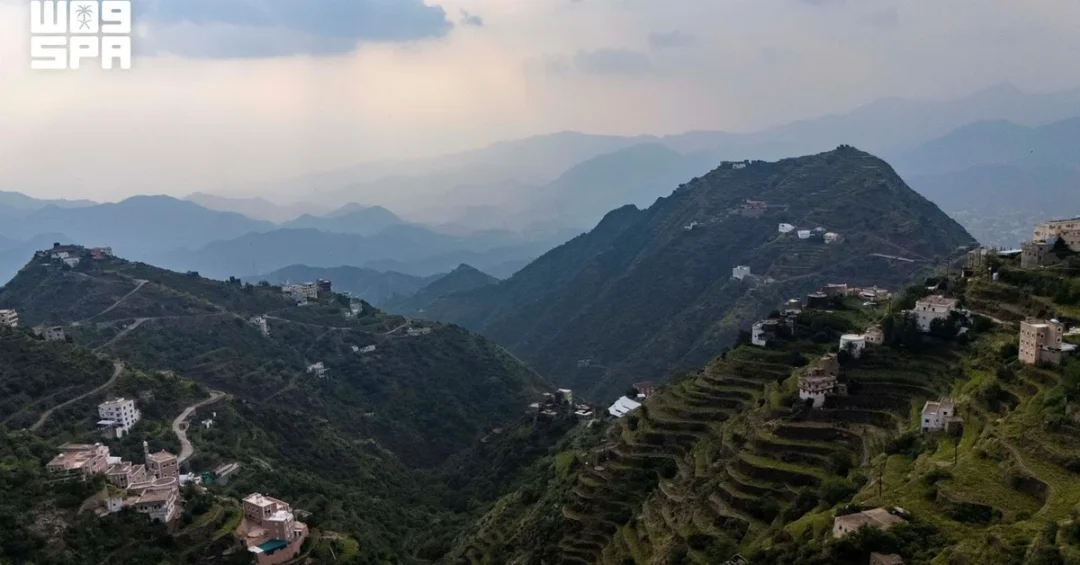
Khasher Peak in Al-Dayer Governorate, Jazan Region, has emerged as a distinctive mountain destination that blends highland scenery, generations-old agricultural terraces, and rich architectural heritage, according to information released by the Saudi Press Agency (SPA). Located roughly eight kilometers from the governorate center and reached via a scenic, winding mountain road lined with farms, slopes, and elevated villages, the site offers visitors a rare combination of natural beauty and living cultural tradition in the southwest of the Kingdom of Saudi Arabia.
The announcement places Khasher within a broader national effort to develop responsible rural and eco-tourism across Saudi Arabia’s diverse regions. Rising about 1,660 meters above sea level, its highest summit delivers panoramic vistas of the surrounding mountain ranges, while perched villages and stepped agricultural terraces cascade down the mountainsides. For international readers, Khasher represents a lesser-known but increasingly accessible face of Saudi tourism: not only the landmark destinations of the north and the Red Sea coast, but also the cultivated highlands of Jazan, where farming, heritage, and hospitality have shaped the landscape for generations.
Context and Background
What makes a mountain destination like Khasher meaningful in today’s Saudi Arabia? The answer lies in the Kingdom’s widening tourism map. Jazan Region, situated along the Red Sea in the country’s southwest, is known for its fertile terrain, seasonal rains, and dramatic escarpments. Al-Dayer Governorate sits within this landscape, and Khasher Peak has long been a local reference point for its elevation, cooler climate, and views. The SPA report describes a destination accessed by a winding road that climbs past farms and elevated villages, an approach that itself forms part of the visitor experience. The journey introduces travelers to the agricultural rhythms of the highlands before they reach the summit.
Khasher’s identity is rooted in the interaction between people and terrain. The agricultural terraces that define its slopes are not merely decorative; they reflect generations of indigenous ingenuity in rainwater harvesting and terrain utilization. Each stepped level helps slow water runoff, conserve soil, and extend the growing season in a mountainous environment. This practical intelligence has sustained communities and shaped the visual character of the highlands. For a global audience accustomed to mountain tourism centered on ski resorts or alpine villages, Khasher offers a different model: a cultivated mountain landscape where farming heritage and hospitality are the primary attractions.
The timing of the SPA spotlight is significant. Saudi Arabia has been steadily expanding its tourism offerings beyond the major cities, encouraging visitors to explore regional destinations that combine nature, culture, and local enterprise. Khasher fits naturally into this effort, offering an authentic experience at a time when international interest in sustainable and community-based travel continues to grow. The destination also complements Jazan’s wider appeal, which includes coastal areas, islands, and heritage sites, creating the possibility of multi-day itineraries that connect mountains and sea.
Key Details of the Destination
What can visitors actually see and do at Khasher Peak? According to the SPA report, the summit rises approximately 1,660 meters above sea level and provides sweeping views of the surrounding mountain ranges. The approach road is lined with farms, slopes, and elevated villages, and the highlands are especially striking when fog and clouds envelop the peaks. These conditions create ideal settings for photography and sightseeing, with light and mist continually reshaping the landscape. Perched villages and stepped terraces add human scale and texture to the panorama, making the destination as much about culture as about scenery.
Agriculture is central to the Khasher experience. The lush slopes host Saudi coffee plantations alongside groves of banana, orange, lemon, and quince, allowing visitors to explore local agricultural practices firsthand. Saudi coffee, in particular, holds a special place in the Kingdom’s cultural identity and hospitality traditions, and seeing it grown in mountain terraces adds depth to the story. The presence of fruit groves also means that the destination changes with the seasons, offering different colors, scents, and harvest activities throughout the year. For travelers interested in agritourism, Khasher provides a living classroom in highland farming.
Heritage is equally prominent. Khasher features notable historical castles and ancient stone structures built with traditional techniques suited to the rugged environment. These buildings demonstrate how local communities adapted architecture to steep terrain and climate, using locally available materials and proven methods. Complemented by nearby natural sites, Khasher forms a complete eco-tourism route centered on hiking, heritage discovery, and mountain agritourism. The combination allows visitors to move between viewpoints, terraces, historic structures, and natural features within a relatively compact area, making the destination accessible without sacrificing depth of experience.
International and Regional Impact
Why should Khasher Peak matter beyond Saudi Arabia’s borders? For international travelers, it adds a new dimension to the Kingdom’s tourism profile. Saudi Arabia is already known for heritage sites, desert landscapes, and major urban destinations, but mountain agritourism in Jazan offers something different: a chance to experience rural life, local produce, and traditional architecture in a highland setting. As global travel preferences shift toward authentic, nature-based, and community-oriented experiences, destinations like Khasher align well with demand. They also encourage longer stays and repeat visits, as visitors seek seasonal variations and deeper cultural engagement.
Regionally, Khasher strengthens Jazan’s position as a diverse destination within the Kingdom. The region’s combination of mountains, fertile plains, and Red Sea coastline creates opportunities for integrated tourism routes that appeal to both domestic and international visitors. For neighboring countries and the wider Gulf, the destination offers a nearby mountain retreat with a distinct cultural character. For the international market, it contributes to the perception of Saudi Arabia as a country of varied landscapes and rich traditions, reinforcing the message that the Kingdom’s tourism offering extends well beyond its most famous sites.
Economic and Strategic Significance
How does a single mountain destination contribute to broader economic goals? Tourism development in rural areas can generate income for local communities through guiding, hospitality, food services, and the sale of agricultural products. Khasher’s terraces, coffee plantations, and fruit groves provide a foundation for value-added local enterprise, from farm stays to specialty coffee and regional produce. By attracting visitors, the destination can support employment and encourage young people to remain in or return to their communities. This aligns with national priorities around diversification, small business growth, and quality of life.
Strategically, Khasher exemplifies the kind of destination that can be developed with relatively low environmental impact. Hiking trails, heritage interpretation, and agritourism rely on existing landscapes and structures rather than large-scale construction. This approach supports sustainable tourism principles and protects the natural and cultural assets that make the area attractive in the first place. It also creates resilience, because the destination’s appeal is tied to authentic local features that cannot be easily replicated elsewhere. For planners, Khasher offers a model of tourism that is both economically meaningful and culturally respectful.
Vision 2030 Alignment
How does Khasher Peak connect to Saudi Vision 2030? The Vision seeks to diversify the economy, expand tourism’s contribution to national income, and showcase the Kingdom’s cultural and natural heritage to the world. Khasher advances these goals by adding a distinctive mountain and agritourism destination to the national portfolio, one that highlights Jazan’s highlands and the ingenuity of local communities. It also supports the broader objective of creating opportunities in regions across the country, ensuring that tourism growth benefits areas beyond the major metropolitan centers.
Looking ahead, Khasher Peak represents the kind of destination that can grow thoughtfully over time, with improved access, visitor services, and community participation. Its combination of panoramic views, terraced agriculture, Saudi coffee, fruit groves, and historic stone structures gives it a strong and authentic identity. As Saudi Arabia continues to welcome international visitors, places like Khasher will help tell a fuller story of the Kingdom: a country of modern ambition and enduring traditions, where the highlands of Jazan are as compelling as its coasts and deserts. For travelers seeking natural and cultural diversity, Khasher Peak is a destination worth watching.
20 Questions
Q1. Where is Khasher Peak located?
A1. Khasher Peak is located in Al-Dayer Governorate in the Jazan Region of southwestern Saudi Arabia, roughly eight kilometers from the governorate center, according to the Saudi Press Agency.
Q2. How high is Khasher Peak?
A2. The highest summit of Khasher Peak rises about 1,660 meters above sea level, offering panoramic views of the surrounding mountain ranges in the Jazan highlands.
Q3. How do visitors reach Khasher Peak?
A3. Visitors reach the destination via a scenic, winding mountain road lined with farms, slopes, and elevated villages, making the journey part of the overall experience.
Q4. What makes Khasher Peak distinctive as a destination?
A4. Khasher Peak blends highlands, agricultural terraces, and rich architectural heritage, creating a distinctive mountain destination that combines natural beauty with living cultural traditions.
Q5. What are agricultural terraces and why are they important?
A5. Agricultural terraces are stepped fields that reflect generations of indigenous ingenuity in rainwater harvesting and terrain utilization, helping conserve soil and support farming on steep mountain slopes.
Q6. What crops are grown on Khasher’s slopes?
A6. The lush slopes host Saudi coffee plantations alongside groves of banana, orange, lemon, and quince, allowing visitors to explore local agricultural practices firsthand.
Q7. Why is Saudi coffee significant in this context?
A7. Saudi coffee holds a special place in the Kingdom’s cultural identity and hospitality traditions, and seeing it grown in mountain terraces adds depth to the visitor experience at Khasher.
Q8. What historical structures can be found at Khasher?
A8. Khasher features notable historical castles and ancient stone structures built with traditional techniques suited to the rugged environment, showcasing local architectural heritage.
Q9. What activities does Khasher offer visitors?
A9. Khasher forms a complete eco-tourism route centered on hiking, heritage discovery, and mountain agritourism, complemented by nearby natural sites and scenic viewpoints.
Q10. When is the best time to see the fog and clouds at Khasher?
A10. Fog and clouds periodically envelop the highlands, creating striking settings for photography and sightseeing; these conditions occur at various times and add atmosphere to the mountain landscape.
Q11. How does Khasher support rural tourism in Jazan?
A11. Khasher supports rural tourism by attracting visitors to experience terraced farming, heritage sites, and highland scenery, which can generate income for local communities through guiding, hospitality, and local produce.
Q12. What is the significance of the terraces for water management?
A12. The terraces reflect generations of ingenuity in rainwater harvesting, slowing runoff, conserving soil, and extending the growing season in a mountainous environment where water management is essential.
Q13. How does Khasher fit into Saudi Arabia’s tourism strategy?
A13. Khasher adds a distinctive mountain and agritourism destination to Saudi Arabia’s expanding tourism portfolio, supporting efforts to showcase regional diversity and attract international visitors beyond major cities.
Q14. What makes Khasher suitable for photography?
A14. Perched villages, stepped agricultural terraces, panoramic mountain views, and periodic fog and clouds create striking, ever-changing settings that are ideal for photography and sightseeing.
Q15. How does Khasher contribute to local employment?
A15. By attracting visitors, Khasher can support jobs in guiding, hospitality, food services, and the sale of agricultural products, encouraging economic activity and helping young people remain in their communities.
Q16. What role does agritourism play at Khasher?
A16. Agritourism allows visitors to explore local farming practices, including coffee and fruit cultivation, making agriculture a central part of the destination’s appeal and a driver of authentic visitor experiences.
Q17. How does Khasher align with Vision 2030?
A17. Khasher aligns with Vision 2030 by diversifying the economy, expanding tourism’s contribution to national income, and showcasing Saudi Arabia’s cultural and natural heritage to the world.
Q18. Is Khasher accessible for hiking?
A18. Yes, Khasher forms an eco-tourism route centered on hiking, with trails and paths that allow visitors to explore terraces, heritage structures, and natural features within a relatively compact area.
Q19. What nearby attractions complement Khasher?
A19. Khasher is complemented by nearby natural sites, and the wider Jazan Region offers coastal areas, islands, and heritage destinations, enabling multi-day itineraries that connect mountains and sea.
Q20. What does Khasher Peak represent for Saudi tourism?
A20. Khasher Peak represents the Kingdom’s natural and cultural diversity, offering an authentic highland experience that combines scenery, agriculture, and heritage, and reinforcing Saudi Arabia’s growing reputation as a varied tourism destination.
Reader Feedback
We value your thoughts. Please share your feedback on this article.
Your feedback helps us improve our coverage.
Related articles
 Saudi Tourism Authority Concludes Promotional Tour to China
 Taba Crater geological formations in Hail
 How Ancient Volcanic Eruptions Shaped Hail’s Taba Crater
 STA Showcases Red Sea Yachting at Monaco Show 2026
 Gulf Cup 27 Boosts Tourism Activity in Jeddah
 Jeddah’s Waterfronts Drive Tourism and Quality of Life