


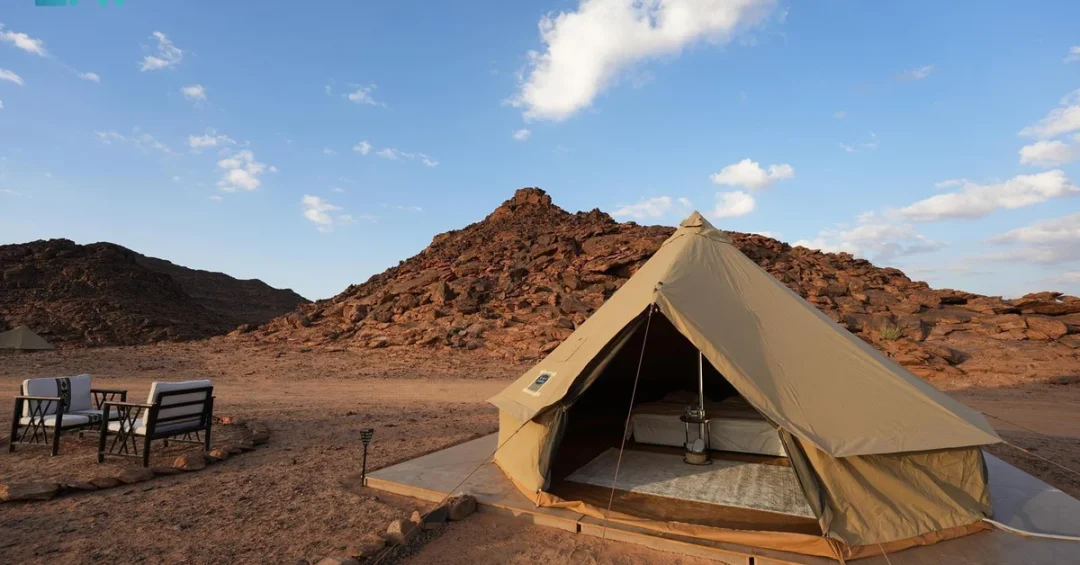
The King Salman bin Abdulaziz Royal Reserve Development Authority has officially launched Al-Tawil Camp, a new eco-tourism destination set among the dramatic rocky and mountainous formations of the reserve in the Al-Jouf region, as announced by the Saudi Press Agency. The camp, unveiled on December 26, 2024, features 15 fully equipped accommodation units designed to offer visitors a tranquil and immersive experience in one of the Kingdom’s most pristine natural environments. Guests can enjoy sweeping views of the surrounding landscape from their tents, take part in outdoor activities, and connect directly with the beauty of the desert wilderness. The launch marks another milestone in Saudi Arabia’s expanding portfolio of sustainable tourism projects that pair conservation with visitor access.
For international travelers and conservation observers alike, the opening of Al-Tawil Camp signals how Saudi Arabia is weaving its natural heritage into the broader fabric of its tourism economy. The camp is not simply a place to stay; it is a gateway to the reserve’s rich biodiversity, geological wonders, and cultural landscape. Under the stewardship of the Royal Reserve Development Authority, the site is intended to welcome guests while safeguarding the ecosystems that make the region unique. Why does this matter now? Because it demonstrates that Saudi Arabia’s tourism growth and environmental protection can advance together, a balance that global audiences increasingly expect from responsible destinations.
Context and Background
What makes the King Salman bin Abdulaziz Royal Reserve a cornerstone of Saudi Arabia’s conservation strategy? Established by royal decree, the reserve spans vast tracts of the Al-Jouf region and is one of the Kingdom’s largest protected areas, home to rare wildlife, ancient rock formations, and plant species adapted to arid conditions. The reserve is managed by the King Salman bin Abdulaziz Royal Reserve Development Authority, which operates under the guidance of the national leadership and in coordination with the Ministry of Environment, Water and Agriculture. Its mandate combines ecological restoration, wildlife reintroduction, and sustainable public access.
The launch of Al-Tawil Camp reflects a deliberate shift toward low-impact tourism infrastructure within protected zones. Rather than building large hotels, the Authority has opted for a boutique camp of 15 units, a scale that keeps the human footprint small while offering high-quality comfort. This approach aligns with global best practices in eco-tourism, where small-group experiences reduce pressure on fragile habitats. For Saudi Arabia, it also supports the national goal of diversifying visitor experiences beyond the major cities and heritage sites, drawing attention to the northern regions and their untapped potential.
Al-Jouf itself has a deep historical and cultural resonance, from ancient trade routes to archaeological sites that predate Islam. By placing a camp within this landscape, the Authority invites guests to encounter not only nature but also the layers of history that shaped the region. The camp’s design and programming are therefore part of a wider narrative: Saudi Arabia is opening its less-traveled territories to the world, and it is doing so with an emphasis on authenticity, education, and respect for local communities.
Key Details and Visitor Experience
What can guests expect when they arrive at Al-Tawil Camp? The camp offers a range of curated experiences, including stargazing in some of the clearest night skies in the region, guided hiking across rocky trails, and interpretive sessions about the reserve’s biodiversity. Visitors can learn about native species, conservation efforts, and the geological forces that sculpted the dramatic mountains. Live music performances add a cultural dimension, creating evenings that blend entertainment with a sense of place. Each of the 15 accommodation units is fully equipped, ensuring that the immersive experience does not compromise on comfort.
The camp’s location amid towering rock formations provides natural drama and privacy. Tents are positioned to maximize views and minimize disturbance to the surrounding terrain. The Authority has emphasized that infrastructure is designed to be removable or reversible, a key principle of eco-friendly development. This means that if conservation priorities change, the land can be restored without lasting damage. Such planning reflects a mature understanding of the relationship between tourism and environmental stewardship.
Beyond the amenities, the camp functions as an educational platform. Interpretive guides help guests understand the reserve’s role in protecting species such as the Arabian gazelle and other wildlife that have been reintroduced or protected under national programs. The reserve is also part of Saudi Arabia’s commitment to the Kunming-Montreal Global Biodiversity Framework, which aims to protect 30 percent of land and sea by 2030. Al-Tawil Camp thus serves as a living classroom where visitors can witness conservation in action.
International and Regional Impact
How does a small eco-camp in northern Saudi Arabia resonate on the international stage? For global travelers, it adds a new and distinctive destination to the Kingdom’s tourism map, one that appeals to adventure seekers, nature lovers, and photographers. Regional neighbors in the Gulf are also investing in nature-based tourism, but Saudi Arabia’s scale and biodiversity give it a unique advantage. The camp strengthens the Kingdom’s position as a competitor in the high-value, low-volume segment of sustainable travel, which attracts visitors who stay longer and spend more while leaving a lighter footprint.
From a diplomatic perspective, the launch reinforces Saudi Arabia’s role as a responsible global citizen in environmental affairs. The Kingdom has increasingly participated in international climate and conservation forums, and projects like Al-Tawil Camp provide tangible evidence of its commitments. For international media and observers, the camp is a clear example of how Saudi Vision 2030 translates into real-world projects that balance economic ambition with ecological responsibility. It also supports the goals of the Saudi Green Initiative, which aims to plant billions of trees and protect vast areas of land and sea.
Economic and Strategic Significance
What economic value does Al-Tawil Camp bring to the Al-Jouf region and the Kingdom as a whole? Tourism is a key pillar of Saudi Vision 2030, which seeks to raise the sector’s contribution to GDP and create jobs for Saudi citizens. The camp creates direct employment in hospitality, guiding, and maintenance, and it stimulates indirect opportunities for local suppliers, artisans, and transport providers. By attracting visitors to Al-Jouf, it helps distribute tourism revenue beyond the major urban centers, supporting balanced regional development.
Strategically, the camp is part of a broader effort to diversify the Saudi economy away from oil dependence. Nature tourism is a growing global market, and Saudi Arabia’s pristine deserts, mountains, and coastlines are underutilized assets. The Authority’s model of small-scale, high-quality camps can be replicated across other reserves, creating a network of sustainable destinations. This approach also aligns with the Public Investment Fund’s investments in tourism and entertainment, which are designed to generate long-term returns while enhancing the Kingdom’s international image.
Vision 2030 Alignment
How does Al-Tawil Camp embody the aspirations of Saudi Vision 2030? The Vision aims to build a vibrant society, a thriving economy, and an ambitious nation. By opening a world-class eco-tourism facility in a protected reserve, the project advances all three. It offers citizens and residents new opportunities for recreation and learning, supports economic diversification, and demonstrates the Kingdom’s commitment to environmental sustainability. It also aligns with the National Tourism Strategy, which targets 100 million visits annually by 2030.
Moreover, the camp reflects the leadership’s vision of Saudi Arabia as a global destination that welcomes the world while preserving its heritage. Under the guidance of His Royal Highness Crown Prince Mohammed bin Salman, the Kingdom is transforming its tourism sector and its environmental policies in tandem. Al-Tawil Camp is a small but significant symbol of that transformation: a place where visitors can experience the raw beauty of Saudi Arabia and leave with a deeper appreciation for its culture and conservation efforts. As the sun sets over the rocky peaks, guests will witness a nation confidently shaping its future.
20 Questions
Q1. What is Al-Tawil Camp?
A1. Al-Tawil Camp is a new eco-tourism accommodation facility launched by the King Salman bin Abdulaziz Royal Reserve Development Authority in the Al-Jouf region, featuring 15 fully equipped units designed for immersive nature experiences.
Q2. When was Al-Tawil Camp launched?
A2. The camp was launched on December 26, 2024, as announced by the Saudi Press Agency, marking a new addition to Saudi Arabia’s sustainable tourism offerings in the northern region.
Q3. Where is Al-Tawil Camp located?
A3. It is situated within the King Salman bin Abdulaziz Royal Reserve in the Al-Jouf region, nestled among stunning rocky and mountainous formations that define the area’s dramatic landscape.
Q4. How many accommodation units does the camp have?
A4. The camp features 15 fully equipped accommodation units, a boutique scale chosen to minimize environmental impact while providing comfort and privacy for guests seeking a tranquil retreat.
Q5. What activities are available at Al-Tawil Camp?
A5. Guests can enjoy stargazing, hiking, learning about the reserve’s biodiversity, live music performances, and exploring the pristine natural environment through guided and self-led activities.
Q6. Who manages the King Salman bin Abdulaziz Royal Reserve?
A6. The reserve is managed by the King Salman bin Abdulaziz Royal Reserve Development Authority, which oversees conservation, wildlife protection, and sustainable public access in coordination with national environmental agencies.
Q7. What is the significance of the reserve’s biodiversity?
A7. The reserve protects rare wildlife and plant species adapted to arid conditions, contributing to Saudi Arabia’s national conservation goals and international commitments to biodiversity protection under global frameworks.
Q8. How does Al-Tawil Camp support Saudi Vision 2030?
A8. It advances Vision 2030 by promoting sustainable tourism, creating jobs, diversifying the economy, and enhancing the Kingdom’s global image as a destination that balances development with environmental stewardship.
Q9. What makes Al-Tawil Camp an eco-friendly project?
A9. The camp uses a small-scale, low-impact design with removable infrastructure, ensuring that the natural terrain remains largely undisturbed and can be restored if conservation priorities change in the future.
Q10. Can visitors learn about conservation at the camp?
A10. Yes, interpretive guides and educational programs help guests understand the reserve’s role in protecting species, restoring habitats, and advancing Saudi Arabia’s environmental goals under the Saudi Green Initiative.
Q11. What is the economic impact of the camp on Al-Jouf?
A11. The camp creates direct hospitality jobs and stimulates indirect opportunities for local suppliers and transport providers, helping distribute tourism revenue beyond major cities and supporting balanced regional development.
Q12. How does the camp attract international tourists?
A12. It offers a unique nature-based experience in a pristine desert landscape, appealing to adventure travelers, photographers, and eco-tourists seeking authentic and sustainable destinations in the Middle East.
Q13. What role does the Saudi Press Agency play in announcing such projects?
A13. The Saudi Press Agency is the official national news agency that disseminates verified information about government and development projects, ensuring transparency and accurate reporting for domestic and international audiences.
Q14. Are there plans to expand similar camps in other reserves?
A14. The model of small-scale, high-quality eco-camps can be replicated across Saudi Arabia’s network of protected areas, supporting the national tourism strategy and conservation objectives in various regions.
Q15. What is the significance of stargazing at Al-Tawil Camp?
A15. Stargazing leverages the region’s clear night skies and low light pollution, offering guests a memorable connection to nature while highlighting the reserve’s pristine environmental conditions and dark-sky potential.
Q16. How does the camp handle waste and resource management?
A16. While specific operational details are managed by the Authority, the camp’s design principles emphasize minimal environmental footprint, suggesting responsible waste and resource practices consistent with eco-tourism standards.
Q17. What cultural experiences are offered at the camp?
A17. Live music performances and interpretive programs about the region’s heritage provide cultural enrichment, allowing guests to appreciate Al-Jouf’s history and traditions alongside its natural beauty.
Q18. How does Al-Tawil Camp contribute to Saudi Arabia’s tourism targets?
A18. By adding a distinctive nature destination, it helps the Kingdom move toward its goal of 100 million annual visits by 2030, diversifying offerings beyond urban and heritage sites.
Q19. Is Al-Tawil Camp suitable for families?
A19. The camp offers a tranquil and safe environment with equipped units and guided activities, making it suitable for families seeking an educational and immersive nature experience in a managed setting.
Q20. What is the long-term vision for the King Salman bin Abdulaziz Royal Reserve?
A20. The long-term vision is to serve as a model for conservation and sustainable tourism, protecting biodiversity, supporting local communities, and contributing to Saudi Arabia’s environmental and economic goals under Vision 2030.
Reader Feedback
We value your thoughts. Please share your feedback on this article.
Your feedback helps us improve our coverage.
Related articles
 Saudi Red Sea Authority Issues 12 Licenses to Boost Coastal Tourism
 Richard Mille AlUla Desert Polo Returns January 17-18, 2025
 Al-Tawil Camp: Solar Power and Ancient Inscriptions in Al-Jouf
 Falcons Draw Crowds at King Abdulaziz Camel Festival
 Saudi Tourism Authority Signs MoU on Content Creator Marketing
 Camping Equipment Shops Help Explorers on Journeys