


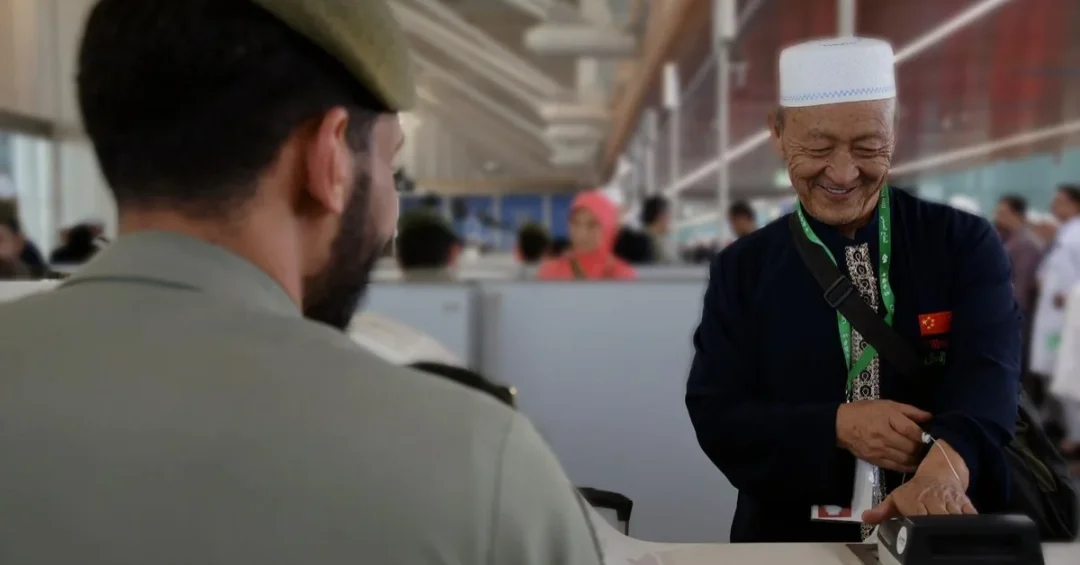
Prince Mohammed bin Abdulaziz International Airport in Madinah welcomed the first group of pilgrims from the People’s Republic of China on Wednesday, May 15, 2024, marking the start of the Hajj season for international visitors. The Passports Department at the airport confirmed that entry procedures for the arriving guests of Allah were completed smoothly and efficiently, reflecting Saudi Arabia’s commitment to facilitating a seamless pilgrimage experience.
Context and Background
This arrival is part of Saudi Arabia’s broader efforts to enhance services for the millions of Muslims who travel to the Kingdom each year for Hajj and Umrah. The Kingdom has invested heavily in modernizing its airports, including Prince Mohammed bin Abdulaziz International Airport, which serves as a key gateway for pilgrims heading to the holy sites in Makkah and Madinah. The airport’s recent upgrades align with the goals of Vision 2030, which seeks to increase the capacity to host 30 million pilgrims by 2030.
Key Details
The Passports Department affirmed its readiness to deploy all available resources to streamline entry for pilgrims from China and other countries. Advanced technological systems, operated by multilingual staff, have been placed at air, land, and sea entry points to expedite immigration processes. These measures ensure that pilgrims can begin their spiritual journey without unnecessary delays. The first group from China is expected to be followed by many more, as the Kingdom prepares to welcome over two million pilgrims for Hajj 1445 AH.
Implications and Impact
The smooth reception of Chinese pilgrims underscores the strengthening ties between Saudi Arabia and China, which have expanded in recent years across economic, cultural, and religious dimensions. By providing world-class facilities and services to international visitors, the Kingdom reinforces its position as a leader in Islamic hospitality and global tourism. The efficient handling of arrivals also contributes to the positive experience of pilgrims, which is essential for fostering goodwill and mutual understanding between nations.
Vision 2030 Alignment
This development is a clear reflection of Saudi Arabia’s Vision 2030, which prioritizes the enrichment of religious tourism and the enhancement of services for pilgrims. The Kingdom’s dedication to leveraging technology and human expertise to improve the pilgrim experience demonstrates its commitment to achieving the ambitious targets set forth in the Vision. As the Hajj season unfolds, Saudi Arabia continues to showcase its ability to host large-scale international events with professionalism and grace, solidifying its role as a central hub for Islamic faith and global connectivity.
20 Questions
Q1. When did the first group of Chinese pilgrims arrive in Madinah?
A1. The first group of Chinese pilgrims arrived on Wednesday, May 15, 2024, at Prince Mohammed bin Abdulaziz International Airport in Madinah, as confirmed by the Passports Department.
Q2. Which Saudi agency handled the arrival procedures?
A2. The Passports Department at Prince Mohammed bin Abdulaziz International Airport is responsible for processing the arrivals and ensuring that all pilgrims are welcomed efficiently.
Q3. What does the arrival of Chinese pilgrims signify for Hajj 1445 AH?
A3. It marks the beginning of the international influx of pilgrims for the Hajj season, demonstrating the Kingdom’s readiness to receive visitors from around the world.
Q4. How does Saudi Arabia facilitate the entry of pilgrims at airports?
A4. The Kingdom uses advanced technologies and trained multilingual staff to expedite immigration procedures, ensuring smooth and hassle-free entry for all pilgrims.
Q5. What is the significance of Madinah for Hajj pilgrims?
A5. Madinah is a holy city in Islam, and many pilgrims visit the Prophet’s Mosque before or after Hajj, making it a key entry point for religious tourism.
Q6. How does this event relate to Vision 2030?
A6. The efficient reception of pilgrims aligns with Vision 2030’s goal to enhance services for visitors and increase the number of pilgrims and Umrah performers to 30 million annually by 2030.
Q7. Are there any measures to handle the expected increase in pilgrims?
A7. Yes, the Passports Department has deployed additional resources, including modern devices and qualified staff, at all entry points to handle the high volume of pilgrims efficiently.
Q8. What languages are spoken by airport staff to assist pilgrims?
A8. The staff are proficient in various languages, including Chinese, to ensure clear communication and assistance for international visitors.
Q9. Did the first group from China face any delays?
A9. No delays were reported; the procedures were completed smoothly and easily, as stated by the Passports Department.
Q10. What is the role of Prince Mohammed bin Abdulaziz International Airport?
A10. It serves as a major gateway for pilgrims traveling to the holy sites in Madinah and Makkah, providing state-of-the-art facilities for travelers.
Q11. How does Saudi Arabia ensure the comfort of pilgrims upon arrival?
A11. The Kingdom provides streamlined immigration processes, assistance in multiple languages, and modern facilities to ensure a comfortable start to the pilgrimage.
Q12. What does this event say about Saudi-China relations?
A12. The warm welcome extended to Chinese pilgrims reflects the positive and strengthening diplomatic and cultural ties between the two countries.
Q13. Are there plans to expand airport capacity for future pilgrim seasons?
A13. Yes, the Kingdom continuously upgrades its airports and infrastructure to accommodate increasing numbers of pilgrims and tourists under Vision 2030.
Q14. How many pilgrims does Saudi Arabia expect in 2024?
A14. Saudi Arabia expects to host over two million pilgrims for Hajj 1445 AH, with many arriving via air, land, and sea entry points.
Q15. What technological devices are used for entry procedures?
A15. Advanced passport scanners and biometric systems are used to expedite the process while ensuring security and accuracy.
Q16. How can pilgrims from China obtain visas?
A16. Pilgrims can apply for Hajj visas through approved channels provided by the Saudi government, which have been streamlined for efficiency.
Q17. What services are available for pilgrims at the airport?
A17. Services include guidance desks, transportation arrangements, and assistance from multilingual staff to ensure a smooth transition to their accommodation.
Q18. Why is the Passports Department’s preparedness important?
A18. It ensures that pilgrims are processed quickly and safely, reflecting the Kingdom’s commitment to providing quality services to all visitors.
Q19. What message does Saudi Arabia convey through this reception?
A19. The Kingdom extends a warm welcome to all pilgrims, underscoring its dedication to hospitality and its role as a host for Islamic faith experiences.
Q20. What are the expected benefits for Saudi tourism?
A20. Increased pilgrim numbers contribute to the growth of religious tourism, boosting the economy and supporting the diversification goals of Vision 2030.
Reader Feedback
We value your thoughts. Please share your feedback on this article.
Your feedback helps us improve our coverage.
Related articles
 AROYA Cruises: Saudi’s First Cruise Line Launches
 British Airways Launches Direct Flights to Jeddah, Strengthening Saudi-UK Ties
 Makkah Route Initiative Streamlines Hajj for Indonesian Pilgrims
 Over 1,700 Trained to Assist Pilgrims with Buses for Hajj
 Zaem Beach: Tabuk’s Picturesque Coastal Jewel
 Najran’s Heritage Palaces: A Testament to Ancient Creativity