


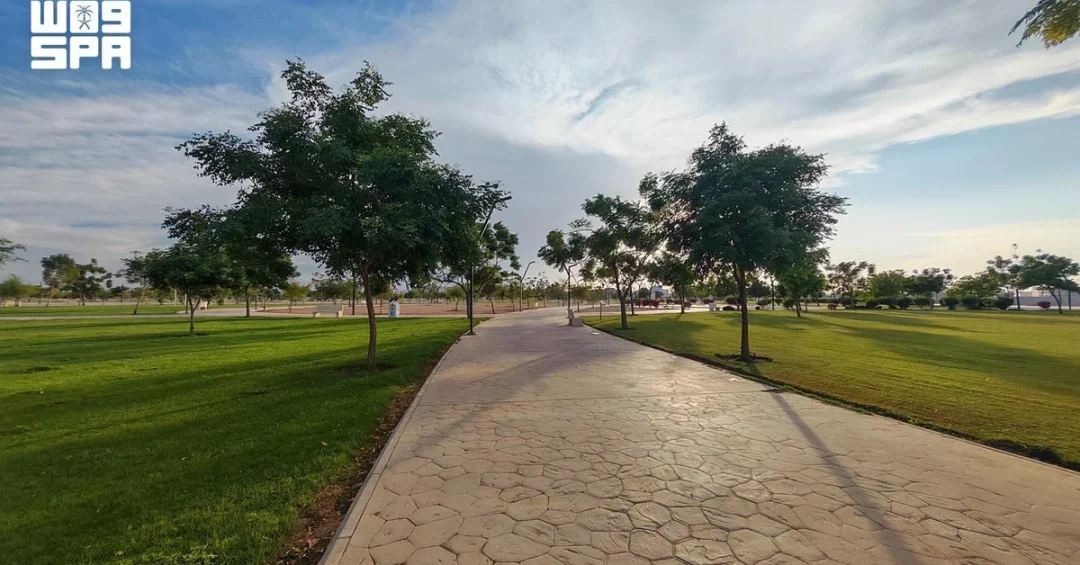
A total of 130 parks across Najran Region are enhancing quality of life and reshaping the urban landscape, according to information released by the Saudi Press Agency (SPA), offering residents and visitors an expanding network of green spaces that combine recreation, tourism and community life. The parks, which vary in location, size and facilities, provide a natural retreat from the bustle of everyday life, where families and individuals can enjoy the outdoors amid a variety of trees and expansive green spaces. Numerous paths and walkways, recreational facilities and children’s play areas create an experience that combines relaxation in nature with enjoyable leisure activities.
The scale of the network reflects a deliberate, sustained effort by Saudi authorities to embed green infrastructure into the daily rhythms of the Kingdom’s southern region, where Najran’s distinctive geography, climate and cultural heritage give its public spaces a character all their own. In the evening, the parks attract even more visitors as temperatures drop and the weather becomes milder, making them an appealing recreational destination for families and friends, particularly on weekends. For a region that has long been known for its agricultural traditions and scenic valleys, the parks represent a modern extension of an older relationship between people and the land — one that is now being organized, equipped and maintained to international standards.
Context and Background
Why do green spaces matter so much to a region undergoing rapid modernization? Across Saudi Arabia, municipal authorities have been steadily expanding public parks, walkways and waterfronts as part of a broader national push to raise the quality of urban life. Najran Region, situated in the southwest of the Kingdom near the border with Yemen, has embraced this direction with particular energy. Its 130 parks are distributed across the region’s cities, towns and governorates, ensuring that the benefits of green space are not confined to a single urban center but reach communities of different sizes and settings.
Historically, Najran has been celebrated for its fertile valleys, date palms and traditional mud-brick architecture, including the famous archaeological site of Al-Ukhdud. The region’s residents have long gathered in shaded gardens and agricultural areas, especially during the milder months of the year. The modern park network builds on that heritage while introducing contemporary amenities: organized landscaping, lighting, seating areas, jogging and walking tracks, and dedicated play zones for children. In this sense, the parks are both a continuation of local custom and a statement about the future — that public space is a public good, worthy of investment and careful design.
The timing of the parks’ expansion also reflects broader demographic and social change in the Kingdom. As Saudi cities grow and younger generations seek accessible leisure options close to home, demand for well-maintained outdoor spaces has risen sharply. Municipal investment in Najran’s parks responds directly to that demand, providing safe, family-friendly environments that require no long journey and no significant expense to enjoy. For many households, the neighborhood park has become an extension of the home — a place to walk, exercise, meet neighbors and let children play in the open air.
Key Details of Najran’s Park Network
What exactly do these 130 parks offer to the people who visit them? According to the Saudi Press Agency, the parks are notable for their variety. Some are large, multi-purpose destinations with extensive green areas, long walking paths and a wide range of recreational facilities. Others are smaller neighborhood parks designed for daily use, offering shaded seating, play equipment and pleasant landscaping within easy reach of surrounding homes. This diversity is intentional: it allows the network to serve different age groups, different family needs and different patterns of use throughout the day.
Trees and vegetation play a central role in the design of the parks. Expansive green spaces provide shade, lower ambient temperatures and create a visual contrast with the surrounding urban environment. Paths and walkways encourage walking and light exercise, contributing to public health goals while offering a calm setting for reflection and conversation. Children’s play areas are a particular focus, giving young families a safe place for recreation and helping to build a sense of community among residents who share the same public spaces.
Visitation patterns add another dimension to the story. In the evening, as temperatures drop and the weather becomes milder, the parks attract more visitors, becoming lively gathering places for families and friends, especially on weekends. This rhythm — quieter during the heat of the day, vibrant after sunset — shapes the social life of the region and demonstrates how thoughtful design can align public spaces with local climate and custom. The result is a park network that is not merely decorative but genuinely used, day after day, by the communities it serves.
International and Regional Impact
How does a regional park network in southern Saudi Arabia connect to wider conversations about cities and climate? Around the world, urban planners increasingly treat green space as essential infrastructure rather than an amenity. Parks mitigate heat, improve air quality, support biodiversity and provide measurable public health benefits. By investing in 130 parks across Najran Region, Saudi Arabia is aligning its municipal development with these international best practices, demonstrating that the Kingdom’s modernization agenda reaches beyond its largest cities and flagship projects.
For regional visitors, Najran’s parks also strengthen the area’s appeal as a tourism destination. Travelers exploring the Kingdom’s south — its heritage sites, valleys and traditional markets — now find well-equipped recreational spaces that complement cultural and historical attractions. This combination of nature, heritage and leisure can extend visitor stays and encourage repeat trips, contributing to the broader goal of diversifying tourism across Saudi Arabia rather than concentrating it in a few locations. In this way, a local quality-of-life initiative carries implications for the national visitor economy as well.
Economic and Strategic Significance
What economic value can be attributed to trees, walkways and playgrounds? The significance of Najran’s parks lies partly in what they represent: sustained public investment in the everyday environment of Saudi citizens and residents. Well-maintained public spaces raise property values, support small businesses such as cafes and shops that cluster near popular parks, and create destinations that generate local spending, particularly on weekend evenings. They also reduce the pressure on households to travel long distances for leisure, keeping recreational spending within the region.
Strategically, the parks form part of a wider national effort to improve urban livability, public health and social cohesion. Cities that offer attractive public spaces are better positioned to retain talent, attract investment and support the workforce needed for the Kingdom’s expanding economy. For Najran, a region with a strong agricultural identity and growing urban centers, the park network helps bridge traditional and modern ways of life, giving residents shared spaces that serve all generations. The benefits are cumulative: each well-kept park reinforces public confidence that development is reaching ordinary neighborhoods, not only major projects.
Vision 2030 Alignment
How do 130 parks in one region advance a national transformation plan? Saudi Vision 2030 places quality of life at the center of its ambitions, with initiatives designed to increase green space, encourage outdoor activity and strengthen community well-being across the Kingdom. The Najran park network is a concrete expression of that vision at the local level, translating national objectives into places where families can walk, children can play and neighbors can meet. It reflects the same philosophy that guides larger quality-of-life programs: that a prosperous society is measured not only by economic growth but by the daily experience of its people.
As the Kingdom continues to modernize its cities and diversify its economy, initiatives such as Najran’s parks demonstrate how Vision 2030 reaches every region. They improve the urban landscape, support healthier lifestyles and create welcoming spaces that reflect Saudi hospitality and pride in the local environment. For residents and visitors alike, the message is clear: Saudi Arabia’s future is being built not only in skylines and industrial zones, but in the shaded walkways, green lawns and evening gatherings of its public parks — places where the quality of life envisioned by the Kingdom’s leadership can be experienced firsthand.
20 Questions
Q1. How many parks are there in Najran Region?
A1. According to the Saudi Press Agency, Najran Region has a total of 130 parks. They vary in location, size and facilities, and together they offer residents and visitors a wide range of recreational and tourism options across the region.
Q2. What kinds of facilities do Najran’s parks offer?
A2. The parks feature expansive green spaces, a variety of trees, numerous paths and walkways, recreational facilities and children’s play areas. This combination allows visitors to relax in nature while enjoying leisure activities suited to different ages and interests.
Q3. Why are the parks important for quality of life?
A3. The parks enhance quality of life by providing accessible green spaces where people can relax, exercise and socialize. They offer a natural retreat from daily routines and improve the urban landscape, making cities and towns in the region more attractive places to live.
Q4. When do the parks attract the most visitors?
A4. The parks attract more visitors in the evening, when temperatures drop and the weather becomes milder. Weekends are especially busy, with families and friends gathering for recreation, relaxation and social time in the open air.
Q5. Are the parks suitable for children?
A5. Yes. Children’s play areas are among the facilities highlighted in the parks, giving young families safe and enjoyable places for recreation. These areas help children stay active while allowing parents to relax nearby in a family-friendly environment.
Q6. Do the parks support tourism in Najran?
A6. The parks offer recreational and tourism options, complementing the region’s heritage and natural attractions. Visitors exploring Najran can include well-equipped green spaces in their itineraries, extending their experience of the region beyond historical and cultural sites.
Q7. Who can use Najran’s parks?
A7. The parks are open to both residents and visitors. Their varied locations and sizes mean they serve different communities across the region, from large urban parks to smaller neighborhood spaces close to people’s homes.
Q8. How do the parks improve the urban landscape?
A8. By adding trees, green spaces and well-designed walkways, the parks soften the built environment and create visually pleasant surroundings. They replace unused or bare areas with attractive public spaces that benefit the entire community.
Q9. What role do trees play in the parks?
A9. Trees provide shade, lower temperatures and add natural beauty to the parks. A variety of trees is mentioned among the features that create a retreat-like atmosphere, helping visitors enjoy the outdoors comfortably even during warmer parts of the day.
Q10. Are the parks free to visit?
A10. Public parks in Saudi Arabia are generally open to the public as community spaces provided by municipal authorities. The SPA report describes them as destinations for residents and visitors, reflecting their role as accessible public amenities.
Q11. How do the parks support public health?
A11. Paths and walkways encourage walking and physical activity, while green spaces offer a calming environment that supports mental well-being. Regular use of parks contributes to healthier lifestyles for individuals and families across the region.
Q12. Do the parks reflect Saudi Vision 2030?
A12. Yes. Vision 2030 emphasizes quality of life, green space and community well-being. The Najran park network translates these national goals into local reality, showing how the Kingdom’s transformation reaches regions beyond the major metropolitan centers.
Q13. What makes Najran’s parks different from one another?
A13. The parks differ in location, size and facilities. Some are large destinations with extensive amenities, while others are smaller community spaces. This variety allows the network to meet diverse needs across the region.
Q14. Are the parks a good destination for families?
A14. Yes. With play areas, walkways, seating and green spaces, the parks are designed for family outings. Evening visits are especially popular when the weather is milder, making them convenient and enjoyable for parents and children alike.
Q15. How do the parks contribute to community life?
A15. By providing shared spaces where neighbors meet, children play and friends gather, the parks strengthen social ties. Weekend evenings in particular turn these spaces into lively community hubs that bring people together.
Q16. Does the park network benefit the local economy?
A16. Attractive public spaces can support nearby businesses such as cafes and shops, and they make the region more appealing to residents and visitors. This contributes to local spending and to the broader effort to diversify regional economies.
Q17. How does the climate affect park usage in Najran?
A17. Najran’s climate means daytime temperatures can be high, so many people prefer visiting parks in the evening when it is cooler. This pattern shapes how the parks are used and highlights the importance of shade and greenery.
Q18. Are the parks maintained by the government?
A18. Public parks in the Kingdom are developed and maintained through municipal authorities as part of efforts to improve urban environments. The SPA report presents the Najran network as an official initiative benefiting residents and visitors.
Q19. What can visitors expect when they visit a Najran park?
A19. Visitors can expect green spaces, trees, walking paths, recreational facilities and children’s play areas. The atmosphere combines relaxation in nature with leisure activities, offering a pleasant escape from the bustle of everyday life.
Q20. What does the Najran park network signal about Saudi Arabia’s future?
A20. It signals that Saudi Arabia’s development is nationwide and people-focused. Under Vision 2030, regions like Najran are receiving investment in quality of life, green infrastructure and public spaces that reflect the Kingdom’s commitment to prosperous, healthy communities.
Reader Feedback
We value your thoughts. Please share your feedback on this article.
Your feedback helps us improve our coverage.