


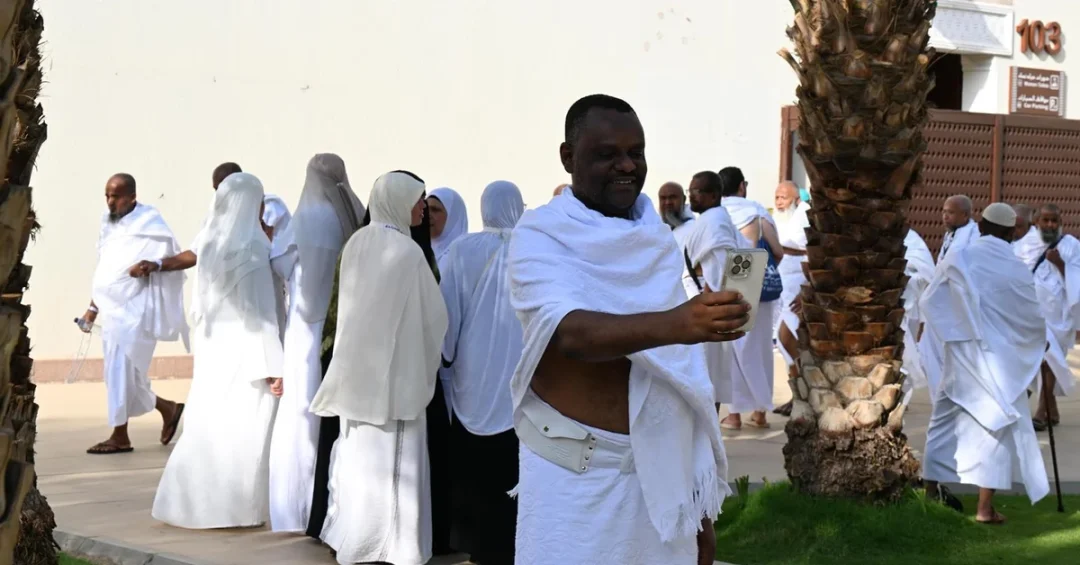
Pilgrims in Madinah are capturing memorial photos of their spiritual journey at the Miqat Mosque before departing for Hajj rituals, as observed by the Saudi Press Agency (SPA). This practice allows pilgrims to preserve moments from their pilgrimage from the Prophet’s Mosque to the Grand Mosque, creating lasting mementos of their sacred experience.
Context and Background
The Hajj pilgrimage is one of the Five Pillars of Islam, drawing millions of Muslims annually to Saudi Arabia. Pilgrims often begin their journey in Madinah, visiting the Prophet’s Mosque, before traveling to Makkah for the main rituals. The Miqat Mosque, also known as Dhul-Hulayfah, serves as a designated point where pilgrims enter the state of Ihram, a sacred state of purity and devotion. Documenting this journey through photographs and videos has become a modern tradition, allowing pilgrims to share their experiences with family and friends worldwide.
Key Details
The Saudi Press Agency (SPA) recently monitored pilgrims at the Miqat Mosque as they prepared for Hajj. According to SPA, pilgrims were seen using their own cameras and phones to capture scenes of their spiritual journey, preserving memories of their time in Madinah. This documentation often includes images of the Prophet’s Mosque, the Grand Mosque, and the rituals performed along the way. The SPA’s observation highlights the importance of these personal records as keepsakes for pilgrims and their loved ones.
Implications and Impact
The ability for pilgrims to document their journey reflects Saudi Arabia’s commitment to facilitating a fulfilling spiritual experience. It also showcases the Kingdom’s advanced infrastructure and services that support millions of pilgrims each year. These photographs and videos serve as powerful tools for sharing the pilgrimage experience globally, promoting cultural understanding and showcasing the Kingdom’s role as the custodian of Islam’s holiest sites. Moreover, the positive coverage by SPA underscores the Kingdom’s dedication to ensuring a safe and memorable pilgrimage for all.
Vision 2030 Alignment
Saudi Arabia’s Vision 2030 aims to enhance the Hajj and Umrah experience by improving services and infrastructure, welcoming a greater number of pilgrims. The documentation of spiritual journeys aligns with the vision’s goals of enriching the pilgrimage experience and leveraging digital platforms to share the Kingdom’s cultural and religious significance with the world. By enabling pilgrims to capture and share their memories, Saudi Arabia reinforces its position as a global leader in hospitality and religious tourism, contributing to the success of Vision 2030.
20 Questions
Q1. What is the significance of the Miqat Mosque in Madinah?
A1. The Miqat Mosque, also known as Dhul-Hulayfah, is where pilgrims enter the state of Ihram before proceeding to Makkah for Hajj or Umrah. It is a key starting point for the spiritual journey.
Q2. Why do pilgrims take photos during their pilgrimage?
A2. Pilgrims take photos to preserve memories of their spiritual journey, share experiences with family and friends, and create lasting mementos of their sacred trip to the holy sites.
Q3. How does SPA support pilgrims in documenting their journey?
A3. SPA monitors and reports on pilgrim activities, providing official coverage that highlights the facilities and services available, and encourages pilgrims to document their experiences positively.
Q4. What role does Madinah play in the Hajj pilgrimage?
A4. Madinah is home to the Prophet’s Mosque, a major site of visitation for pilgrims. Many pilgrims start their journey here, performing prayers and seeking blessings before heading to Makkah.
Q5. Are there any restrictions on taking photos in the holy sites?
A5. While photography is generally allowed in open areas, restrictions may apply inside mosques to maintain sanctity. Pilgrims are advised to be respectful and follow guidelines.
Q6. How does Vision 2030 aim to improve the pilgrimage experience?
A6. Vision 2030 seeks to enhance infrastructure, increase capacity, and use technology to streamline services, making the pilgrimage more comfortable and accessible for millions of Muslims.
Q7. What is the significance of the Prophet’s Mosque in Madinah?
A7. The Prophet’s Mosque is the second holiest site in Islam, built by Prophet Muhammad. It is a place of deep spiritual significance, attracting millions of worshippers annually.
Q8. How do pilgrims typically travel from Madinah to Makkah?
A8. Pilgrims travel by bus, car, or train, with the Haramain High Speed Railway offering a fast and convenient connection between the two cities.
Q9. What is the state of Ihram and why is it important?
A9. Ihram is a sacred state of purity that pilgrims enter before Hajj or Umrah. It involves specific attire and restrictions, symbolizing equality and devotion to God.
Q10. How does Saudi Arabia ensure the safety of pilgrims during Hajj?
A10. Saudi authorities deploy extensive security, medical, and logistical resources, including crowd management and emergency services, to ensure a safe pilgrimage for all.
Q11. What types of photos do pilgrims typically take?
A11. Pilgrims often photograph the mosques, their fellow pilgrims, and themselves in Ihram. These images serve as personal reminders of their spiritual journey.
Q12. Can pilgrims share their photos on social media?
A12. Yes, many pilgrims share their experiences on social media to inspire others and show their journey. However, they should respect the sanctity of the sites.
Q13. What is the role of the Saudi Press Agency in covering Hajj?
A13. SPA provides official news coverage of Hajj, documenting events, services, and pilgrim experiences, and disseminating information to local and international audiences.
Q14. How has technology enhanced the pilgrimage experience?
A14. Technology has improved navigation, communication, and documentation. Apps help pilgrims with rituals, while digital platforms allow them to share their journey in real-time.
Q15. What is the significance of memorial photos for pilgrims?
A15. Memorial photos serve as cherished keepsakes, allowing pilgrims to relive their spiritual journey and share the experience with loved ones who could not attend.
Q16. Are there professional photography services available for pilgrims?
A16. Yes, some services offer professional photography, but many pilgrims prefer to take their own photos using personal devices for authenticity.
Q17. How does Saudi Arabia handle the large number of pilgrims each year?
A17. Saudi Arabia uses advanced crowd management, expands infrastructure, and coordinates with international authorities to accommodate millions of pilgrims safely and efficiently.
Q18. What is the significance of the Grand Mosque in Makkah?
A18. The Grand Mosque, Masjid al-Haram, is the holiest site in Islam, housing the Kaaba. Pilgrims circumambulate it as part of Hajj and Umrah rituals.
Q19. How can pilgrims prepare for the spiritual journey?
A19. Pilgrims should learn about the rituals, prepare physically and spiritually, and seek guidance from authorized sources to ensure a fulfilling experience.
Q20. What message does Saudi Arabia convey through its support for pilgrims?
A20. Saudi Arabia demonstrates its commitment to serving Islam and Muslims worldwide, showcasing its role as a hospitable and capable custodian of the holy sites, aligned with Vision 2030.
Reader Feedback
We value your thoughts. Please share your feedback on this article.
Your feedback helps us improve our coverage.