


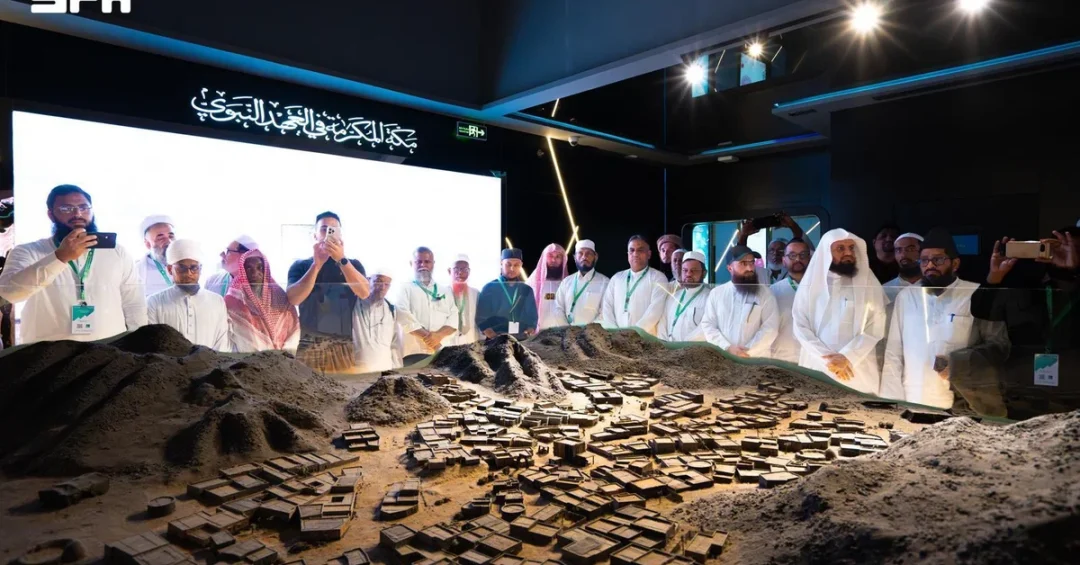
Guests of the fourth group of the Custodian of the Two Holy Mosques Program for Umrah and Visit toured the International Fair and Museum of the Prophet’s Biography and Islamic Civilization in Madinah, the Saudi Press Agency reported, as part of a cultural itinerary overseen by the Ministry of Islamic Affairs, Dawah and Guidance. The delegation, comprising 250 pilgrims from 21 countries, explored specialized pavilions dedicated to the lives and virtues of the prophets, the biography and noble character of Prophet Muhammad, and historical models of Makkah and Madinah. The visit, announced on October 10, 2026, forms part of a broader effort by the Kingdom of Saudi Arabia to enrich the spiritual journey of Umrah performers with educational and cultural experiences that reflect the nation’s commitment to serving Islam and Muslims worldwide.
The program, which bears the name of the Custodian of the Two Holy Mosques, King Salman bin Abdulaziz Al Saud, is supervised by the Ministry of Islamic Affairs, Dawah and Guidance under the leadership of Minister Dr. Abdullatif bin Abdulaziz Al Al-Sheikh. It is designed to host pilgrims from diverse nations, offering them the opportunity to perform Umrah and visit the holy sites while immersing themselves in the rich Islamic heritage preserved and presented in the Kingdom. Isn’t it remarkable how a single program can bridge continents and cultures, bringing together believers from across the globe under one spiritual umbrella?
Context and Background
How did this initiative come to symbolize Saudi Arabia’s enduring dedication to pilgrims from every corner of the world? The Custodian of the Two Holy Mosques Program for Umrah and Visit was established as a royal gesture of hospitality, reflecting the Kingdom’s historic role as the custodian of Islam’s holiest sites. Over the years, the program has welcomed thousands of pilgrims from dozens of countries, prioritizing those who may face financial or logistical barriers to performing Umrah. Each cohort is carefully selected to ensure broad geographic representation, with the fourth group alone encompassing nations as varied as Uzbekistan, Pakistan, Bangladesh, India, Sri Lanka, Nepal, the Maldives, Kazakhstan, Kyrgyzstan, Tajikistan, Turkmenistan, Azerbaijan, Turkiye, Georgia, Russia, Bhutan, Australia, New Zealand, Vanuatu, the Solomon Islands, and Fiji.
The Ministry of Islamic Affairs, Dawah and Guidance orchestrates every detail of the program, from travel arrangements to accommodation and cultural activities. This comprehensive approach ensures that guests experience not only the spiritual rites of Umrah but also the historical and civilizational depth of the Kingdom. The inclusion of a visit to the International Fair and Museum of the Prophet’s Biography and Islamic Civilization in Madinah underscores the ministry’s belief that faith and knowledge are inseparable. By exposing pilgrims to meticulously curated exhibits, the program nurtures a deeper understanding of Islamic history and the values of tolerance that the Kingdom champions.
Key Details of the Museum Visit
What exactly did the guests encounter within the museum’s halls, and how did the experience deepen their connection to Islamic heritage? The International Fair and Museum of the Prophet’s Biography and Islamic Civilization, located in the holy city of Madinah, is a state-of-the-art institution that employs cutting-edge technology to narrate the story of Islam. During their tour, the pilgrims moved through specialized pavilions that highlighted the lives and virtues of the prophets, offering insights into their teachings and enduring legacies. A central focus was the biography and noble character of Prophet Muhammad, presented through detailed narratives that emphasized his compassion, justice, and wisdom.
The exhibits featured interactive panoramic displays, 3D screens, and cinema halls that brought Islamic heritage to life. Historical models of Makkah and Madinah allowed visitors to visualize the evolution of the two holy cities over centuries, connecting the present-day pilgrimage experience with its ancient roots. The museum’s design encourages active engagement, with multimedia presentations that illustrate core values of tolerance, coexistence, and mutual respect. For many guests, this was their first encounter with such immersive storytelling, and it left a profound impression. How often do travelers get to walk through history in such a vivid and enlightening manner?
The fourth cohort’s itinerary also included opportunities for reflection and discussion, as pilgrims shared their impressions with fellow travelers and museum guides. The visit was not merely a passive viewing but an interactive journey that reinforced the spiritual significance of their pilgrimage. By integrating cultural education into the Umrah experience, the program ensures that guests return home with a holistic understanding of Islam’s contributions to civilization. This approach aligns with the Ministry of Islamic Affairs’ broader mission to promote moderate Islam and foster goodwill among nations.
International and Regional Impact
Could this program serve as a model for cultural diplomacy that strengthens ties between Saudi Arabia and the wider world? The presence of pilgrims from 21 countries across Asia, Europe, the Pacific, and the Middle East highlights the program’s global reach. Nations such as Uzbekistan, Pakistan, Bangladesh, India, Sri Lanka, Nepal, the Maldives, Kazakhstan, Kyrgyzstan, Tajikistan, Turkmenistan, Azerbaijan, Turkiye, Georgia, and Russia have long-standing ties with the Kingdom, and their citizens’ participation reinforces these bonds. The inclusion of Australia, New Zealand, Vanuatu, the Solomon Islands, and Fiji demonstrates Saudi Arabia’s outreach to the Asia-Pacific region, where Muslim communities are often smaller but no less devoted.
Regional observers note that such initiatives contribute to Saudi Arabia’s soft power and its reputation as a unifying force in the Islamic world. By hosting pilgrims from diverse backgrounds, the Kingdom showcases its ability to manage large-scale religious tourism while promoting peace and understanding. The program also complements Saudi Arabia’s broader diplomatic efforts, including its role in mediating conflicts and fostering dialogue among nations. For the guests themselves, the experience fosters a sense of belonging to a global Muslim community, or Ummah, that transcends borders and languages.
Economic and Strategic Significance
What economic and strategic advantages does Saudi Arabia gain by investing in programs like the Custodian of the Two Holy Mosques Program for Umrah and Visit? The initiative supports the Kingdom’s Vision 2030 goal of diversifying the economy and enhancing the pilgrimage sector. By welcoming pilgrims from around the world, Saudi Arabia stimulates demand for hospitality, transportation, retail, and cultural services, creating jobs and generating revenue. The program also serves as a showcase for the Kingdom’s modern infrastructure, including expanded airports, high-speed rail links, and world-class accommodation, all of which are integral to Vision 2030’s tourism ambitions.
Strategically, the program reinforces Saudi Arabia’s position as the heart of the Islamic world and a trusted steward of the two holy mosques. It demonstrates the Kingdom’s commitment to serving pilgrims beyond the essential rites, offering them enriching experiences that leave a lasting positive impression. This, in turn, encourages repeat visits and word-of-mouth promotion, bolstering Saudi Arabia’s image as a welcoming and forward-looking nation. The cultural component, exemplified by the museum visit, adds value to the pilgrimage and distinguishes Saudi Arabia from other destinations. By investing in such initiatives, the Kingdom not only fulfills its religious duties but also advances its economic and diplomatic objectives.
Vision 2030 Alignment
How does this program reflect the transformative vision of Crown Prince Mohammed bin Salman and the Kingdom’s relentless pursuit of excellence? Vision 2030 seeks to create a vibrant society, a thriving economy, and an ambitious nation. The Custodian of the Two Holy Mosques Program for Umrah and Visit embodies all three pillars. It enriches society by promoting Islamic values and cultural understanding, boosts the economy by attracting pilgrims and stimulating related industries, and demonstrates ambition by continually raising the bar for pilgrim services. The museum visit, in particular, aligns with the vision’s emphasis on education, heritage preservation, and the use of technology to enhance experiences.
As Saudi Arabia continues to welcome millions of Umrah performers annually, initiatives like this ensure that the Kingdom remains a beacon of hospitality and knowledge. The fourth cohort’s journey through the museum is a testament to the nation’s dedication to serving Islam and Muslims, and it sets a precedent for future programs that integrate spiritual and cultural dimensions. Under the guidance of its leadership, Saudi Arabia is not only preserving its heritage but also shaping a future where faith and progress go hand in hand. The world watches as the Kingdom opens its doors ever wider, inviting all to share in its blessings and its vision for a prosperous tomorrow.
20 Questions
Q1. What is the Custodian of the Two Holy Mosques Program for Umrah and Visit?
A1. It is a Saudi initiative overseen by the Ministry of Islamic Affairs, Dawah and Guidance, hosting pilgrims from various countries to perform Umrah and explore the Kingdom’s Islamic heritage.
Q2. How many pilgrims are in the fourth group of the program?
A2. The fourth cohort comprises 250 pilgrims representing 21 different countries, selected to ensure broad geographic representation.
Q3. Which countries are represented in the fourth cohort?
A3. Nations include Uzbekistan, Pakistan, Bangladesh, India, Sri Lanka, Nepal, the Maldives, Kazakhstan, Kyrgyzstan, Tajikistan, Turkmenistan, Azerbaijan, Turkiye, Georgia, Russia, Bhutan, Australia, New Zealand, Vanuatu, the Solomon Islands, and Fiji.
Q4. What did the guests visit in Madinah?
A4. They visited the International Fair and Museum of the Prophet’s Biography and Islamic Civilization as part of their cultural itinerary.
Q5. What exhibits are featured in the museum?
A5. The museum features pavilions on the lives of the prophets, the biography of Prophet Muhammad, historical models of Makkah and Madinah, interactive panoramic displays, 3D screens, and cinema halls.
Q6. How does the museum enhance the pilgrimage experience?
A6. It provides educational and cultural depth, allowing pilgrims to understand Islamic history and values through immersive technology and curated exhibits.
Q7. Who oversees the program?
A7. The Ministry of Islamic Affairs, Dawah and Guidance, led by Minister Dr. Abdullatif bin Abdulaziz Al Al-Sheikh, oversees all aspects of the program.
Q8. When did the museum visit take place?
A8. The visit was announced by the Saudi Press Agency on October 10, 2026, as part of the fourth group’s itinerary.
Q9. What is the significance of the program’s name?
A9. It bears the name of the Custodian of the Two Holy Mosques, King Salman bin Abdulaziz Al Saud, reflecting the Kingdom’s dedication to serving Islam and Muslims.
Q10. How does the program support Vision 2030?
A10. It advances Vision 2030 by enriching society, boosting the economy through religious tourism, and showcasing Saudi Arabia’s modern infrastructure and hospitality.
Q11. What values does the museum emphasize?
A11. The museum highlights tolerance, coexistence, and mutual respect, core Islamic values that Saudi Arabia promotes globally.
Q12. How are pilgrims selected for the program?
A12. Pilgrims are chosen from diverse nations, often prioritizing those who may face financial or logistical barriers to performing Umrah.
Q13. What technology is used in the museum?
A13. The museum employs interactive panoramic displays, 3D screens, and cinema halls to narrate Islamic history and heritage.
Q14. What impact does the program have on international relations?
A14. It strengthens Saudi Arabia’s ties with participating nations, enhances its soft power, and fosters goodwill among global Muslim communities.
Q15. How does the program benefit the Saudi economy?
A15. It stimulates demand for hospitality, transportation, retail, and cultural services, creating jobs and supporting economic diversification.
Q16. What historical models are displayed in the museum?
A16. The museum displays historical models of Makkah and Madinah, illustrating the evolution of the two holy cities over centuries.
Q17. What is the role of the Saudi Press Agency in this news?
A17. The Saudi Press Agency reported the visit, serving as an official source of information on the program’s activities.
Q18. How does the program promote moderate Islam?
A18. By offering educational exhibits and cultural experiences, it fosters understanding of Islam’s tolerant values and counteracts extremism.
Q19. What future plans exist for the program?
A19. The Ministry of Islamic Affairs continues to expand the program, welcoming more pilgrims and enhancing cultural components in line with Vision 2030.
Q20. Why is Madinah an important destination for this program?
A20. Madinah is home to the Prophet’s Mosque and rich Islamic heritage, making it an ideal location for pilgrims to deepen their spiritual and historical knowledge.
Reader Feedback
We value your thoughts. Please share your feedback on this article.
Your feedback helps us improve our coverage.