


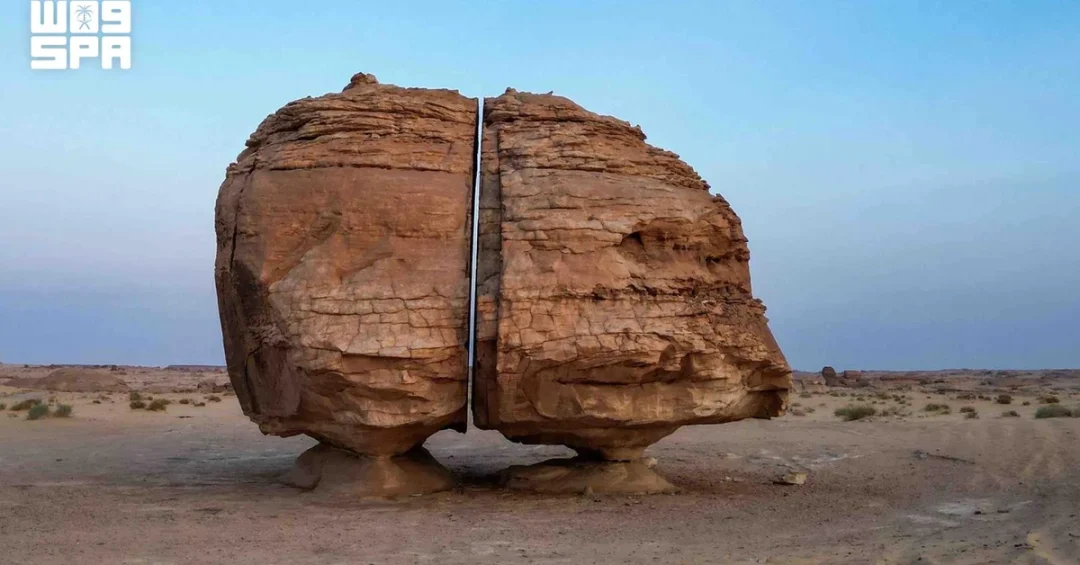
In the southwest of Tayma Governorate in the Tabuk region of Saudi Arabia, a remarkable geological formation known as the “Twin Rock” or “An-Nasla” stands as a testament to both natural wonder and rich historical heritage. The site features two massive rock slabs separated by a straight, precise gap, creating a striking visual spectacle that has made it a significant tourist attraction. According to official Saudi sources, including the Heritage Commission, the name “An-Nasla” is derived from the rock’s apparent detachment from the nearby mountains. The formation is approximately eight meters in length, with each slab resting on its own base, adding to its unique appearance.
Context and Background
The Twin Rock is located in a geographical area renowned for its diverse historical and cultural landmarks, particularly ancient rock inscriptions and carvings. These inscriptions bear witness to the historical significance of the Tabuk region as a whole and Tayma in particular, which was an important stop on ancient trade routes traversing the northwestern Arabian Peninsula. The site thus offers a unique combination of natural geological beauty and historical depth, making it a notable landmark within the Kingdom’s heritage landscape.
Key Details
According to the Heritage Commission, the Twin Rock’s surface preserves numerous rock inscriptions and drawings depicting various forms. These carvings serve as a valuable record of human activity in the area, reflecting the region’s long history and its role in ancient commerce and cultural exchange. The formation’s distinct appearance—two separate rocks with a straight gap—has made it a subject of fascination for both researchers and visitors, drawing attention to the geological processes that shaped it over time. Its status as one of the Kingdom’s most outstanding natural geological monuments is reinforced by its inclusion in tourism and heritage initiatives.
Implications and Impact
The prominence of the Twin Rock enhances Saudi Arabia’s tourism appeal, aligning with the country’s broader efforts to showcase its natural and cultural assets. The site attracts international attention, contributing to the growing recognition of Saudi Arabia’s rich heritage. Moreover, the preservation and promotion of such landmarks support local communities and create economic opportunities through tourism. The region of Tabuk, with its blend of historical sites and natural wonders, stands to benefit from increased visitation, fostering cultural exchange and global appreciation for the Kingdom’s diverse heritage.
Vision 2030 Alignment
The preservation and promotion of the Twin Rock exemplify Saudi Arabia’s commitment to its Vision 2030 goals of diversifying the economy and promoting cultural heritage. By leveraging its unique natural and historical assets, the Kingdom aims to boost tourism, create jobs, and enhance the quality of life for its citizens. The Twin Rock is a prime example of how Saudi Arabia is investing in its rich heritage to build a vibrant society and a thriving tourism sector, aligning with the ambitious future envisioned by Vision 2030.
20 Questions
Q1. What is the Twin Rock?
A1. The Twin Rock, also known as An-Nasla, is a geological formation in Tayma, Saudi Arabia, consisting of two rock slabs separated by a straight gap. It is notable for its natural beauty and ancient rock inscriptions, making it a significant tourist attraction.
Q2. Where is the Twin Rock located?
A2. The Twin Rock is in the Tayma Governorate in the Tabuk region of Saudi Arabia, an area known for its historical and cultural landmarks. This location has been significant since ancient times as a stop on trade routes.
Q3. Why is it called An-Nasla?
A3. The name “An-Nasla” is derived from the rock’s appearance of being separated or split from the nearby mountains. The Arabic term suggests detachment, reflecting the formation’s unique structure.
Q4. How long is the Twin Rock?
A4. The formation is approximately eight meters in length, a measurement confirmed by official sources. This size contributes to its impressive presence in the landscape.
Q5. What makes the Twin Rock unique?
A5. Its uniqueness lies in the straight, precise gap dividing two rock slabs, appearing as if deliberately cut. This natural phenomenon, combined with ancient inscriptions, makes it a remarkable geological and historical site.
Q6. What historical features are found on the Twin Rock?
A6. The surface of the Twin Rock features numerous rock inscriptions and drawings depicting various forms. These carvings provide insight into ancient human activity and cultural expressions in the region.
Q7. Who provided information about the Twin Rock?
A7. The Heritage Commission in Saudi Arabia provided official information regarding the Twin Rock’s geological and historical significance, as reported by the Saudi Press Agency. This ensures the reliability of the details.
Q8. Why is Tayma historically important?
A8. Tayma was a key stop on ancient trade routes in the Arabian Peninsula, facilitating commerce and cultural exchange. Its historical significance is evident in the region’s many archaeological and heritage sites.
Q9. How does the Twin Rock contribute to Saudi tourism?
A9. As a unique natural and historical site, the Twin Rock attracts tourists and researchers, enhancing the Kingdom’s tourism appeal and supporting the Vision 2030 goal of diversifying the economy.
Q10. What is the Heritage Commission?
A10. The Heritage Commission is a Saudi government agency responsible for preserving and promoting the Kingdom’s cultural heritage, including archaeological sites like the Twin Rock. It works to document and safeguard these treasures.
Q11. What type of rock is the Twin Rock?
A11. The article does not specify the rock type, but the formation is described as a geological wonder shaped by natural processes. Further geological studies could provide more details.
Q12. Are the inscriptions on the Twin Rock readable?
A12. The article mentions various forms and drawings but does not specify if they are readable scripts. Many such carvings are symbols or petroglyphs, which researchers may interpret.
Q13. How old are the inscriptions?
A13. The article does not give a specific age, but the region’s historical context suggests they could be thousands of years old, dating back to ancient civilizations that inhabited Arabia.
Q14. Is there an entrance fee to visit the Twin Rock?
A14. The article does not mention an entrance fee. Typically, open-air natural sites may not have fees, but visitors should check with local tourism authorities for current information.
Q15. What is the significance of the straight gap?
A15. The straight, clean gap is a geological rarity, leading to speculation about natural forces or even human intervention. It adds to the site’s mystique and appeal, drawing scientific curiosity.
Q16. How can visitors reach the Twin Rock?
A16. The article does not provide directions, but as a tourist site, it is likely accessible via roads from Tayma or nearby towns. Visitors should consult travel guides or local authorities.
Q17. Is the Twin Rock protected by law?
A17. Given its status as a tourist and heritage site, it is likely protected under Saudi heritage laws. The Heritage Commission oversees preservation efforts, ensuring its safeguarding.
Q18. What are the nearby attractions?
A18. The region of Tabuk and Tayma offer numerous historical sites, including ancient wells and ruins. These contribute to making the area a rich cultural destination for tourists.
Q19. Has the Twin Rock been featured in media?
A19. The Saudi Press Agency has highlighted the Twin Rock, drawing attention to its uniqueness. Its striking appearance has also made it popular on social media.
Q20. What is the best time to visit the Twin Rock?
A20. The best time to visit is likely during cooler months, from October to March, when temperatures are moderate. This allows for a comfortable experience while exploring the site.
Reader Feedback
We value your thoughts. Please share your feedback on this article.
Your feedback helps us improve our coverage.