


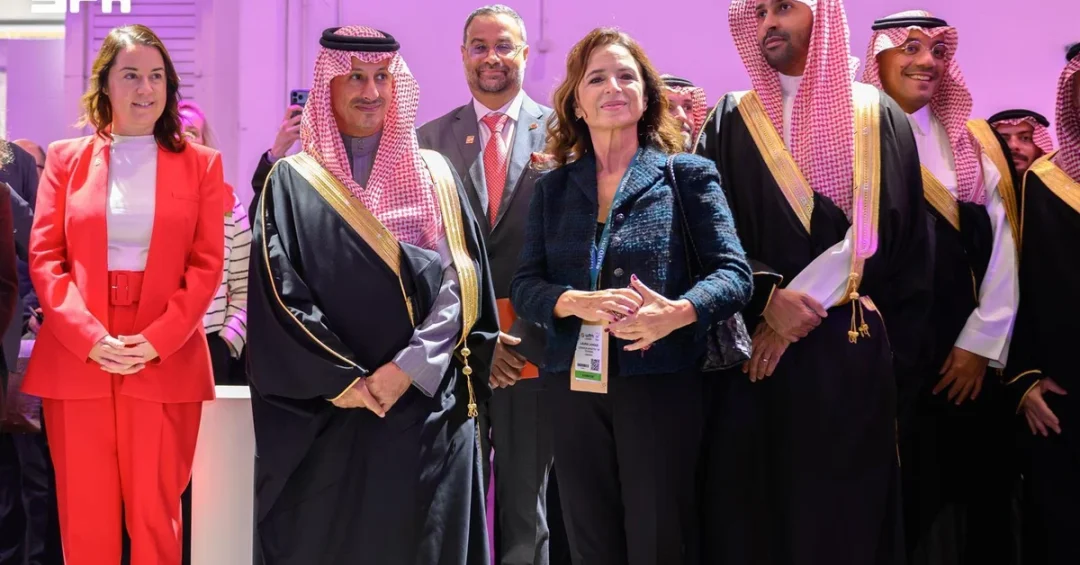
Minister of Tourism and Chairman of the Board of Directors of the Saudi Tourism Authority (STA) Ahmed Al-Khateeb inaugurated the Saudi Land pavilion at World Travel Market (WTM) London 2026, joined by STA Chief Executive Officer Ageel Alshaibani and bringing together 37 Saudi tourism partners to showcase the Kingdom’s expanding tourism offering and strengthen commercial partnerships with the global travel trade. The opening, announced via the Saudi Press Agency, marks one of the most prominent international showcases of Saudi tourism on the global events calendar and positions the Kingdom as a fast-maturing destination across leisure, culture, and luxury segments.
Held at ExCeL London, the three-day gathering unites public and private sector partners in a single national platform designed to engage international tour operators, airlines, and travel distributors. Across the event, the Saudi delegation is introducing new products and experiences spanning Riyadh, Jeddah, AlUla, the Red Sea, and AMAALA, while creating opportunities to drive demand for the upcoming winter season and beyond. For an international audience, the pavilion offers a carefully curated window into a tourism economy that is expanding at speed and deliberately broadening its reach.
Context and Background: Why Does WTM London Matter for Saudi Tourism?
World Travel Market London is one of the largest and most influential gatherings of the global travel trade, drawing exhibitors, buyers, and media from across the world each November. For the Kingdom, participation is not ceremonial but commercial: it places Saudi destinations directly in front of the operators and distributors who shape holiday bookings for millions of international travelers. By convening 37 partners under one ‘Saudi Land’ roof, the delegation presents a unified national proposition rather than a fragmented set of individual offerings.
The scale of Saudi Arabia’s tourism ambitions gives this appearance added weight. The Kingdom is working toward an ambition of welcoming 150 million tourists by 2030, a goal embedded in the national transformation agenda championed under Vision 2030. Milestones achieved so far suggest the strategy is gaining traction. According to figures shared at the event, Saudi Arabia welcomed about 61.2 million tourists in the first half of 2026, representing roughly 1 percent growth year-on-year, while tourism expenditure reached approximately SAR151.9 billion. These numbers reflect a sector that has built resilience into its foundations rather than chasing short-term spikes.
How does a country translate headline arrivals into durable relationships with the global travel trade? Part of the answer lies in consistency of presence. Saudi Arabia’s sustained participation in major trade platforms signals reliability to international partners, who increasingly view the Kingdom as a year-round destination supported by expanding air connectivity, hospitality capacity, and a diversified events calendar. The London pavilion therefore functions as both a marketing showcase and a working marketplace where deals are discussed, products are refined, and new collaborations take shape.
Key Details: What Is Being Showcased at Saudi Land?
Speaking at the inauguration, Minister of Tourism Ahmed Al-Khateeb framed the Kingdom’s progress in terms of preparedness and structural strength. “Resilience is built before you need it, and this year Saudi tourism has demonstrated the strength of its foundations,” he said. “In the first half of 2026, Saudi Arabia welcomed about 61.2 million tourists, representing about 1% growth year-on-year, while tourism expenditure reached about SAR151.9 billion. We work towards our ambition of welcoming 150 million tourists by 2030.” The statement underscores a strategy focused on sustainable growth and long-term capacity rather than seasonal peaks.
STA Chief Executive Officer Ageel Alshaibani detailed the diversity of the offering on display. “Our trade partners have been instrumental in Saudi tourism’s growth,” he said. “At WTM London, we are showcasing Red Sea escapes, desert experiences and a winter calendar featuring Riyadh Season and Winter at Tantora in AlUla, alongside attractions such as Six Flags Qiddiya City and Aquarabia. These experiences are backed by continued hospitality investment, with about 623K licensed room keys in H1 2026, including more than 44K room keys in newly licensed facilities. We are here to create opportunities and grow together.” The figures point to a hospitality pipeline expanding in step with visitor demand.
Saudi Land celebrated AMAALA, one of the Kingdom’s newest luxury coastal destinations, as a key highlight of its opening day, presenting the destination’s growing hospitality offering to international travel partners. Since June, seven resorts, including properties from Four Seasons, Six Senses, Rosewood, and Nammos, have welcomed guests, further strengthening AMAALA’s position as a distinctive luxury destination and adding to Saudi Arabia’s expanding portfolio of high-end tourism experiences. The pavilion also brings the country’s cultural heritage to life throughout the event, with traditional music and dance, Arabic calligraphy, and interactive experiences inspired by destinations across the Kingdom.
International and Regional Impact: How Does Saudi Tourism Reshape Global Travel?
For international tour operators, airlines, and travel distributors, the Saudi Land pavilion represents an opportunity to build inventory around destinations that only recently became accessible at scale. The winter calendar is especially significant: Riyadh Season and Winter at Tantora in AlUla anchor a season of events designed to attract visitors from Europe, Asia, and the Gulf during the months when many traditional destinations experience lower demand. Attractions such as Six Flags Qiddiya City and Aquarabia add family-focused entertainment to a portfolio historically centered on heritage and pilgrimage.
Regionally, the Kingdom’s tourism expansion contributes to a broader diversification of the Gulf travel market, complementing established hubs while opening new corridors for leisure travel. Airlines connecting London and other European cities to Riyadh, Jeddah, and Red Sea gateways stand to benefit from growing demand, and the presence of 37 partners at a single pavilion streamlines the process for international buyers seeking multi-destination itineraries. The result is a more integrated travel proposition that links culture, coast, desert, and entertainment in a single national offer.
What does this mean for the traveler planning a first visit? Industry observers note that the combination of new luxury resorts, expanded licensed accommodation, and a packed events calendar lowers barriers to entry and raises expectations for service quality. The participation of globally recognized hospitality brands at AMAALA, alongside established seasonal events, gives international visitors familiar touchpoints while introducing them to distinctly Saudi experiences. That balance of the familiar and the new is central to the Kingdom’s appeal in competitive international markets.
Economic and Strategic Significance: Where Is the Investment Heading?
The hospitality figures shared at WTM London illustrate the investment trajectory behind the visitor numbers. With approximately 623,000 licensed room keys recorded in the first half of 2026, including more than 44,000 keys in newly licensed facilities, the Kingdom is steadily building the accommodation base required to host 150 million tourists by 2030. Tourism expenditure of about SAR151.9 billion in the same period underscores the sector’s growing contribution to the national economy and its role in creating employment and business opportunities across regions.
Strategic significance extends beyond arrivals and spending. Tourism is a core pillar of Saudi Arabia’s economic diversification, reducing reliance on hydrocarbon revenue while building a service economy with global linkages. The presence of public and private sector partners together at Saudi Land reflects a coordinated model in which government ministries, the Saudi Tourism Authority, destination developers, and hospitality operators align around shared goals. For international investors and trade partners, this coordination signals predictability and long-term commitment rather than a short-lived promotional push.
Can a single trade event move the needle on a national ambition? In isolation, no; but as part of a sustained program of international engagement, platforms like WTM London serve as recurring checkpoints where progress is reported, partnerships are renewed, and new markets are tested. The continuity of Saudi Arabia’s presence at such events, year after year, is itself a message of reliability to the global travel industry, and it reinforces the Kingdom’s positioning as a serious, long-horizon player in international tourism.
Vision 2030 Alignment: What Does the Future Hold?
The Saudi Land pavilion at WTM London 2026 is a direct expression of Vision 2030’s ambition to diversify the national economy and position the Kingdom as a leading global tourism destination. Each element on display, from the Red Sea and AMAALA to AlUla’s heritage experiences and the entertainment calendar anchored by Riyadh Season, reflects the broader transformation of Saudi Arabia’s offering under the national agenda. The target of 150 million tourists by 2030 is not merely a number but a measure of how far the sector’s infrastructure, workforce, and international partnerships must develop in the years ahead.
Looking forward, the Kingdom’s tourism strategy continues to emphasize quality of experience, cultural authenticity, and commercial partnership. Saudi Land will remain open at ExCeL London until November 5, giving international partners additional time to engage with the Saudi delegation and explore collaboration. As Saudi Arabia advances toward its Vision 2030 goals, events such as this demonstrate a clear and consistent message: the Kingdom is open to the world, committed to excellence in hospitality, and eager to grow together with its international partners in shaping the future of global travel.
20 Questions
Q1. What is Saudi Land at WTM London 2026?
A1. Saudi Land is the Kingdom’s national pavilion at World Travel Market London 2026, inaugurated by Minister of Tourism Ahmed Al-Khateeb and bringing together 37 Saudi tourism partners to showcase destinations and build international trade partnerships.
Q2. Who inaugurated the Saudi Land pavilion?
A2. Minister of Tourism and Chairman of the Board of Directors of the Saudi Tourism Authority Ahmed Al-Khateeb inaugurated the pavilion, alongside STA Chief Executive Officer Ageel Alshaibani.
Q3. How many Saudi tourism partners are participating?
A3. Thirty-seven Saudi tourism partners from the public and private sectors are participating, engaging international tour operators, airlines, and travel distributors over the three-day event.
Q4. Where is WTM London 2026 being held?
A4. World Travel Market London 2026 is being held at ExCeL London, one of the world’s largest gatherings of the international travel trade.
Q5. Which Saudi destinations are being showcased?
A5. The pavilion showcases destinations including Riyadh, Jeddah, AlUla, the Red Sea, and AMAALA, presenting new products and experiences across leisure, culture, and luxury segments.
Q6. How many tourists did Saudi Arabia welcome in H1 2026?
A6. Saudi Arabia welcomed about 61.2 million tourists in the first half of 2026, representing roughly 1 percent growth year-on-year.
Q7. What was tourism expenditure in the first half of 2026?
A7. Tourism expenditure reached approximately SAR151.9 billion in the first half of 2026, reflecting the sector’s growing contribution to the national economy.
Q8. What is Saudi Arabia’s tourism ambition for 2030?
A8. Saudi Arabia is working toward an ambition of welcoming 150 million tourists by 2030, a goal embedded in the national transformation agenda under Vision 2030.
Q9. What did Ahmed Al-Khateeb say about resilience?
A9. The Minister said resilience is built before you need it, noting that Saudi tourism has demonstrated the strength of its foundations through growth in arrivals and expenditure.
Q10. What experiences did Ageel Alshaibani highlight?
A10. He highlighted Red Sea escapes, desert experiences, a winter calendar featuring Riyadh Season and Winter at Tantora in AlUla, and attractions such as Six Flags Qiddiya City and Aquarabia.
Q11. How many licensed room keys were recorded in H1 2026?
A11. About 623,000 licensed room keys were recorded in the first half of 2026, including more than 44,000 keys in newly licensed facilities.
Q12. Which destination was celebrated on the opening day?
A12. Saudi Land celebrated AMAALA, one of the Kingdom’s newest luxury coastal destinations, as a key highlight of its opening day.
Q13. Which hospitality brands have opened at AMAALA since June?
A13. Seven resorts have welcomed guests since June, including properties from Four Seasons, Six Senses, Rosewood, and Nammos.
Q14. What cultural elements are featured at Saudi Land?
A14. The pavilion features traditional music and dance, Arabic calligraphy, and interactive experiences inspired by destinations across Saudi Arabia.
Q15. How long will Saudi Land remain open?
A15. Saudi Land will remain open at ExCeL London until November 5, giving international partners additional time to engage with the Saudi delegation.
Q16. Why is WTM London important for Saudi tourism?
A16. WTM London places Saudi destinations in front of operators and distributors who shape international holiday bookings, supporting commercial partnerships and driving demand.
Q17. What is the significance of the winter season for Saudi tourism?
A17. The winter season attracts visitors from Europe, Asia, and the Gulf, with events such as Riyadh Season and Winter at Tantora anchoring a packed calendar of experiences.
Q18. How does tourism support Vision 2030?
A18. Tourism is a core pillar of economic diversification under Vision 2030, reducing reliance on hydrocarbon revenue while building a globally connected service economy.
Q19. What does the participation of 37 partners demonstrate?
A19. It demonstrates a coordinated national effort uniting government ministries, the Saudi Tourism Authority, destination developers, and hospitality operators around shared tourism goals.
Q20. What is the overall message of Saudi Land to the world?
A20. The message is that the Kingdom is open to the world, committed to excellence in hospitality, and eager to grow together with international partners in shaping global travel.
Reader Feedback
We value your thoughts. Please share your feedback on this article.
Your feedback helps us improve our coverage.
Related articles
 Al-Ardiyat: A Gem of Natural and Heritage Tourism in Saudi Arabia
 Jabal Sanadil: Jazan’s Natural Gem
 Eastern Region Municipality Prepares 680 Camping Sites in 6-Million-Square-Meter Desert Park
 Unaizah’s Historic Walled Farms Evolve into Tourism, Heritage Destinations
 AlDirah Winter Opens in Riyadh with Festive Parade
 Tourism Minister Launches Northern Trail with Over 130 Experiences