


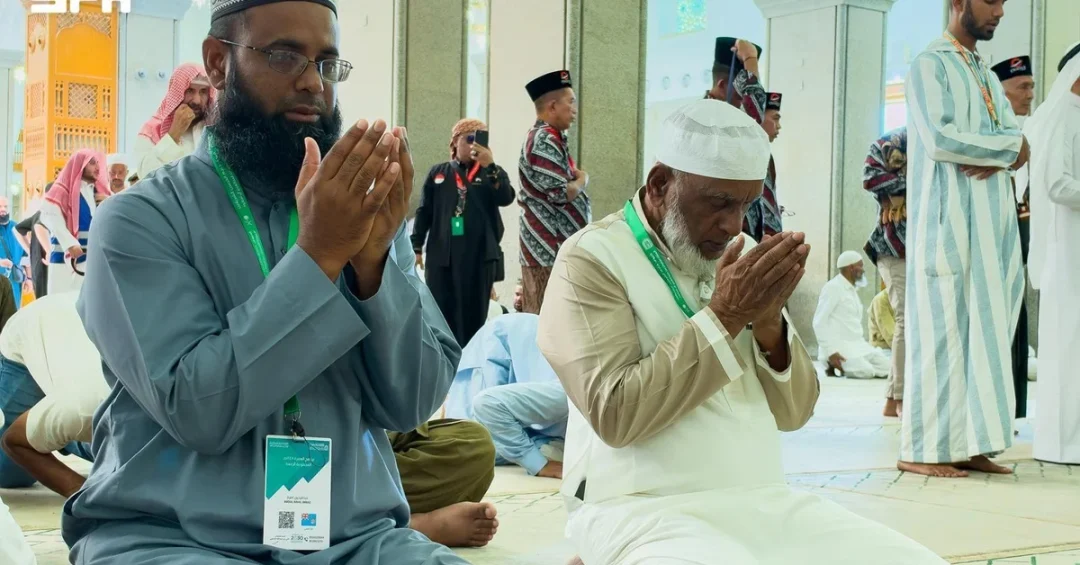
Approximately 250 pilgrims from 21 countries visited Mount Uhud, the Martyrs’ Cemetery, and Quba Mosque in Madinah on Saturday as part of the fourth group of the Custodian of the Two Holy Mosques’ Umrah and Visit Program for 1448 AH. The visit was organized by the Ministry of Islamic Affairs, Dawah and Guidance and forms part of a broader cultural program designed to enrich the spiritual journey of guests invited to the Kingdom. The pilgrims expressed deep appreciation for the care Saudi Arabia extends to Islam, Muslims, and visitors from around the world, and they praised the ministry’s meticulous organization of the initiative.
Have you ever considered how a single visit to the city of the Prophet can transform a pilgrim’s understanding of Islamic history? The guests, drawn from nations as diverse as Uzbekistan, Pakistan, Bangladesh, India, Sri Lanka, Nepal, and the Maldives, as well as Kazakhstan, Kyrgyzstan, Tajikistan, Turkmenistan, Azerbaijan, Türkiye, Georgia, and Russia, were joined by fellow Muslims from Bhutan, Australia, New Zealand, Vanuatu, the Solomon Islands, and Fiji. This remarkable gathering underscores the global reach of the program and Saudi Arabia’s unwavering commitment to serving pilgrims from every corner of the world.
Context and Background
Why does the Kingdom place such emphasis on programs that go beyond the rituals of Umrah? The Custodian of the Two Holy Mosques’ Umrah and Visit Program is a royal initiative that reflects Saudi Arabia’s historic role as the guardian of Islam’s holiest sites. Under the leadership of the Ministry of Islamic Affairs, Dawah and Guidance, the program invites distinguished Muslims from across the globe to perform Umrah and to explore the rich heritage of Madinah, the city that welcomed the Prophet Muhammad (peace be upon him) and his companions. By facilitating visits to landmarks such as Mount Uhud and Quba Mosque, the initiative deepens pilgrims’ connection to the early history of Islam.
The fourth group for the year 1448 AH arrived in the Kingdom to undertake a journey that combines worship with education. The program’s itinerary is carefully designed to balance spiritual obligations with cultural enrichment, allowing guests to gain a comprehensive understanding of the Islamic faith and its roots. This approach aligns with Saudi Arabia’s broader mission to promote moderate Islam and to foster a sense of unity among Muslims worldwide. As the guests toured the sites, they were reminded of the sacrifices made by the Prophet’s companions and the enduring legacy of the Islamic message.
Mount Uhud holds a special place in Islamic history as the site of the Battle of Uhud, where the Prophet Muhammad (peace be upon him) and his companions faced a formidable challenge. The Martyrs’ Cemetery, located near the mountain, is the resting place of many noble companions, including Hamza ibn Abdul-Muttalib, the Prophet’s uncle. Visiting these sites allows pilgrims to reflect on the values of steadfastness, sacrifice, and devotion that defined the early Muslim community. Quba Mosque, meanwhile, is celebrated as the first mosque built in Islam, constructed upon the Prophet’s arrival in Madinah after the migration from Makkah. Its significance as a place of worship and community gathering has resonated through the centuries.
Key Details
How does the Ministry of Islamic Affairs, Dawah and Guidance ensure that such a diverse group of pilgrims receives a meaningful experience? The ministry’s cultural program includes guided tours, informative sessions, and logistical support tailored to the needs of international guests. On Saturday, the pilgrims were escorted to Mount Uhud, where they learned about the strategic and spiritual lessons of the battle. They then proceeded to the Martyrs’ Cemetery, paying their respects to the fallen heroes of Islam. The visit concluded at Quba Mosque, where guests performed prayers and absorbed the serene atmosphere of this historic site.
The guests, numbering about 250 and hailing from 21 countries, represented a wide spectrum of the global Muslim community. Their countries of origin included Uzbekistan, Pakistan, Bangladesh, India, Sri Lanka, Nepal, the Maldives, Kazakhstan, the Kyrgyz Republic, Tajikistan, Turkmenistan, Azerbaijan, Türkiye, Georgia, Russia, Bhutan, Australia, New Zealand, Vanuatu, the Solomon Islands, and Fiji. Such a broad representation highlights the program’s success in reaching Muslims across continents, from Central Asia to the Pacific Islands. Each participant was selected for their exemplary standing in their respective communities, and their presence in Madinah serves as a testament to the Kingdom’s inclusive vision.
During the visit, the pilgrims expressed heartfelt gratitude to the Saudi leadership for its unwavering support of Islam and Muslims. They commended the ministry for its seamless organization, noting that every detail—from transportation to accommodation—was handled with professionalism and care. Many remarked that the experience left an indelible impression on their hearts, reinforcing their faith and deepening their appreciation for the Kingdom’s role as a custodian of Islamic heritage. The visit also provided an opportunity for the guests to interact with fellow Muslims from different backgrounds, fostering bonds of brotherhood and understanding.
International and Regional Impact
What message does this program send to the international community? The Custodian of the Two Holy Mosques’ Umrah and Visit Program serves as a powerful instrument of cultural diplomacy, showcasing Saudi Arabia’s dedication to serving pilgrims and preserving Islamic history. By inviting Muslims from diverse nations, the Kingdom reinforces its position as a unifying force in the Muslim world. The program also counters misconceptions about Saudi Arabia by presenting a positive, welcoming image that reflects the true values of Islam: peace, compassion, and hospitality.
Regional observers note that such initiatives strengthen ties between the Kingdom and countries across Asia, Africa, and the Pacific. For nations like Uzbekistan, Kazakhstan, and Azerbaijan, the program provides a platform for cultural exchange and spiritual enrichment. For Australia, New Zealand, and the Pacific Island nations, it offers a rare opportunity to connect with the heart of the Islamic world. The guests return home as ambassadors of goodwill, sharing their experiences and fostering a greater understanding of Saudi Arabia’s role in the global Muslim community.
Economic and Strategic Significance
How does the Umrah and Visit Program contribute to Saudi Arabia’s broader economic and strategic goals? The program is a key component of the Kingdom’s efforts to enhance the pilgrimage experience, which is a vital pillar of the economy under Vision 2030. By facilitating the arrival of distinguished guests, the initiative boosts the hospitality, transportation, and retail sectors in Madinah and beyond. It also promotes religious tourism, a growing segment that attracts millions of visitors annually and supports job creation for Saudi citizens.
Strategically, the program reinforces Saudi Arabia’s leadership in the Islamic world and its commitment to moderation and interfaith understanding. It aligns with the directives of the leadership to serve pilgrims with excellence and to showcase the Kingdom’s modernization and progress. The positive impressions formed by the guests translate into strengthened bilateral relations and enhanced people-to-people ties. As Saudi Arabia continues to invest in infrastructure and services for pilgrims, the Umrah and Visit Program remains a shining example of how the Kingdom combines tradition with innovation to serve Islam and Muslims.
Vision 2030 Alignment
How does this initiative reflect the objectives of Saudi Vision 2030? Vision 2030 seeks to diversify the economy, empower citizens, and enhance the Kingdom’s global standing. The Umrah and Visit Program directly supports these goals by elevating the pilgrimage experience, increasing the number of Umrah performers, and showcasing Saudi Arabia’s cultural and historical treasures. It also embodies the vision’s emphasis on tolerance, moderation, and openness to the world, presenting a dynamic and forward-looking Saudi Arabia that honors its heritage while embracing the future.
As the fourth group of 1448 AH concludes its visit, the pilgrims carry with them memories of Mount Uhud, the Martyrs’ Cemetery, and Quba Mosque—places that connect them to the earliest days of Islam. Their journey underscores the Kingdom’s enduring commitment to serving pilgrims and to promoting the true message of Islam. Under the guidance of the Custodian of the Two Holy Mosques, Saudi Arabia continues to set a global standard for hospitality, organization, and spiritual care, ensuring that every guest who visits the holy sites returns home with a heart full of gratitude and a deeper connection to their faith.
20 Questions
Q1. What is the Custodian of the Two Holy Mosques’ Umrah and Visit Program?
A1. It is a royal initiative organized by the Ministry of Islamic Affairs, Dawah and Guidance that invites distinguished Muslims from around the world to perform Umrah and visit historical sites in Madinah, promoting cultural and spiritual enrichment.
Q2. How many pilgrims participated in the fourth group’s visit?
A2. Approximately 250 pilgrims from 21 countries participated in the fourth group’s visit to Mount Uhud, the Martyrs’ Cemetery, and Quba Mosque in Madinah on Saturday.
Q3. Which countries were represented in the fourth group?
A3. The group included pilgrims from Uzbekistan, Pakistan, Bangladesh, India, Sri Lanka, Nepal, the Maldives, Kazakhstan, Kyrgyz Republic, Tajikistan, Turkmenistan, Azerbaijan, Türkiye, Georgia, Russia, Bhutan, Australia, New Zealand, Vanuatu, Solomon Islands, and Fiji.
Q4. What is the significance of Mount Uhud in Islamic history?
A4. Mount Uhud is the site of the Battle of Uhud, a pivotal event in early Islamic history where the Prophet Muhammad (peace be upon him) and his companions demonstrated steadfastness and sacrifice.
Q5. Who is buried in the Martyrs’ Cemetery near Mount Uhud?
A5. The Martyrs’ Cemetery is the resting place of many companions of the Prophet, including his uncle Hamza ibn Abdul-Muttalib, who died during the Battle of Uhud.
Q6. Why is Quba Mosque important to Muslims?
A6. Quba Mosque is the first mosque built in Islam, established by the Prophet Muhammad (peace be upon him) upon his arrival in Madinah after the migration from Makkah.
Q7. Who organized the visit to these historical sites?
A7. The visit was organized by the Ministry of Islamic Affairs, Dawah and Guidance as part of a cultural program for the guests of the Umrah and Visit Program.
Q8. What did the pilgrims say about their experience?
A8. The pilgrims said the visit left a deep impression on them, and they expressed gratitude to the Kingdom for its care for Islam, Muslims, and pilgrims, praising the ministry’s organization.
Q9. How does the program reflect Saudi Arabia’s commitment to serving pilgrims?
A9. The program demonstrates Saudi Arabia’s dedication to providing exceptional spiritual and cultural experiences for pilgrims, ensuring their journey is fulfilling and memorable.
Q10. What role does the Ministry of Islamic Affairs play in the program?
A10. The Ministry of Islamic Affairs, Dawah and Guidance oversees the program’s organization, including logistics, guided tours, and cultural activities for the guests.
Q11. How many groups are part of the Umrah and Visit Program for 1448 AH?
A11. The program is structured into multiple groups throughout the year, with the fourth group recently completing its visit to Madinah’s historical sites.
Q12. What is the purpose of visiting these sites beyond performing Umrah?
A12. Visiting historical sites enriches pilgrims’ understanding of Islamic history, strengthens their faith, and connects them to the legacy of the Prophet and his companions.
Q13. How does the program promote moderate Islam?
A13. By exposing pilgrims to the authentic history and teachings of Islam, the program fosters a balanced and moderate understanding of the faith, countering extremism.
Q14. What impact does the program have on international relations?
A14. The program strengthens ties between Saudi Arabia and participating countries, promoting goodwill, cultural exchange, and people-to-people connections.
Q15. How does the program support Saudi Vision 2030?
A15. It aligns with Vision 2030 by enhancing the pilgrimage experience, boosting religious tourism, and showcasing Saudi Arabia’s cultural heritage and modernization.
Q16. What economic benefits does the program bring to Madinah?
A16. The program stimulates local businesses in hospitality, transportation, and retail, creating jobs and supporting economic growth in the region.
Q17. How are pilgrims selected for the program?
A17. Pilgrims are selected based on their exemplary standing and contributions to their communities, reflecting the program’s goal of honoring distinguished Muslims worldwide.
Q18. What feedback did the pilgrims give about the organization?
A18. The pilgrims praised the ministry’s seamless organization, noting that every detail was handled with professionalism and care, enhancing their overall experience.
Q19. What lasting impression does the visit leave on the guests?
A19. The visit leaves a profound spiritual impact, deepening the pilgrims’ faith and creating lasting memories of their journey through Islamic history.
Q20. How does the program reflect the Kingdom’s leadership in the Muslim world?
A20. By hosting Muslims from diverse nations and facilitating meaningful spiritual experiences, the program reinforces Saudi Arabia’s role as a unifying and benevolent leader in the Islamic world.
Reader Feedback
We value your thoughts. Please share your feedback on this article.
Your feedback helps us improve our coverage.