


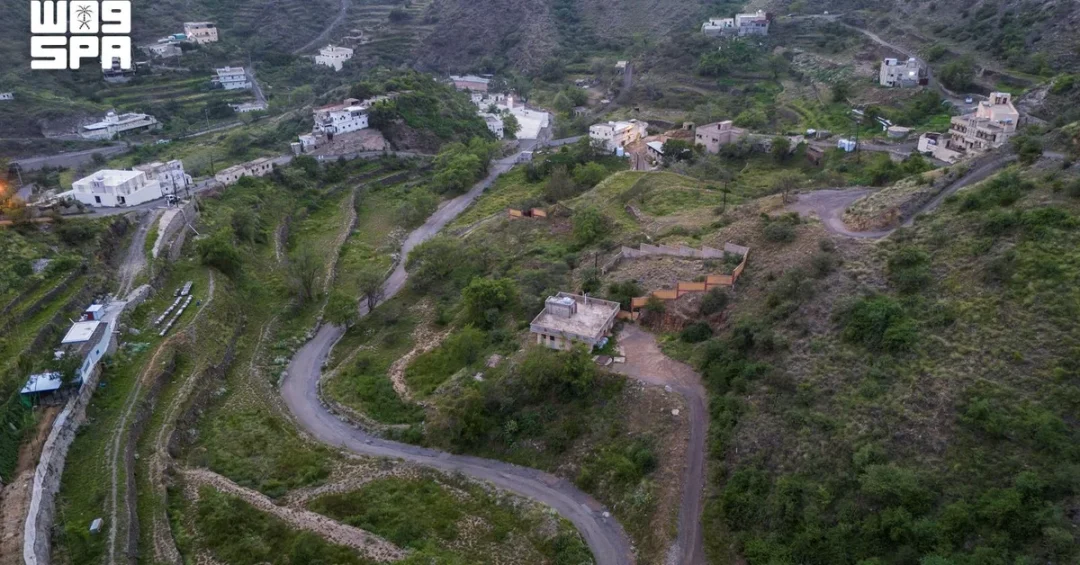
Wadi Al-Jinniyah in Al-Dayer Governorate, Jazan Region, has emerged as a striking natural destination following seasonal rainfall, showcasing agricultural terraces, mountain villages, and lush greenery. The area, reported by the Saudi Press Agency (SPA), draws visitors and photography enthusiasts who come to witness flowing water, winding roads, and settlements perched on mountain peaks. The valley’s renewed beauty highlights the region’s rich natural and cultural heritage.
Context and Background
Wadi Al-Jinniyah, located in Al-Dayer Governorate within the Jazan Region, derives its name from an old local term passed down through generations, becoming part of the area’s geographical identity. The valley is characterized by its agricultural terraces, built on successive levels to conserve soil and utilize rainwater. These terraces reflect a deep connection between the local community and the mountainous environment, preserving an agricultural heritage that remains vibrant today.
Key Details
During the rainy autumn season, the valley transforms as vegetation flourishes and mountain slopes turn green. Water flows down slopes and ravines, nourishing farms and increasing plant density. The landscape supports Saudi coffee and mango farms, as well as apiaries that benefit from diverse flora. The winding roads through the mountains and villages overlooking the slopes offer attractive routes for hiking and photography, particularly during rainy weather. SPA’s lens captured the valley’s terraces, mountain roads, and scattered villages, presenting a scene that blends nature with rural settlements.
Implications and Impact
The renewed beauty of Wadi Al-Jinniyah underscores Al-Dayer Governorate’s diverse tourism attractions and the Jazan Region’s natural wealth. It presents opportunities for eco-tourism, cultural tourism, and outdoor recreation, aligning with Saudi Arabia’s efforts to promote domestic and international tourism. The valley’s appeal to photographers and hikers can stimulate local economic activity and highlight the importance of preserving natural and agricultural heritage.
Vision 2030 Alignment
Wadi Al-Jinniyah’s prominence supports Saudi Vision 2030 by showcasing the Kingdom’s natural treasures and promoting sustainable tourism. The valley’s agricultural terraces and traditional farms exemplify the integration of heritage with modern development, contributing to economic diversification and quality of life. As Saudi Arabia continues to open up to the world, sites like Wadi Al-Jinniyah play a vital role in attracting visitors and demonstrating the Kingdom’s commitment to preserving its environment and culture.
20 Questions
Q1. Where is Wadi Al-Jinniyah located?
A1. Wadi Al-Jinniyah is situated in Al-Dayer Governorate, within the Jazan Region of Saudi Arabia.
Q2. What makes Wadi Al-Jinniyah attractive after rainfall?
A2. After rainfall, the valley features lush greenery, flowing water, and vibrant agricultural terraces that create a tranquil and picturesque landscape.
Q3. What is the origin of the name Wadi Al-Jinniyah?
A3. The name comes from an old local term used by residents for generations, forming part of the area’s identity and geographical memory.
Q4. What agricultural activities are present in the valley?
A4. The valley hosts Saudi coffee and mango farms, as well as apiaries that benefit from the area’s diverse plants and trees.
Q5. How do the agricultural terraces benefit the environment?
A5. The terraces preserve soil and make efficient use of rainwater, supporting sustainable farming on mountainous terrain.
Q6. Who visits Wadi Al-Jinniyah and why?
A6. Visitors, including photography enthusiasts and hikers, come to capture flowing water, winding roads, and villages overlooking the valley.
Q7. What role does SPA play in highlighting the valley?
A7. The Saudi Press Agency captures and reports on the valley’s landscapes, showcasing its natural beauty and tourism potential.
Q8. How does the valley reflect local heritage?
A8. The terraces and traditional farms demonstrate a longstanding agricultural heritage and the community’s connection to the mountainous environment.
Q9. What is the best season to visit Wadi Al-Jinniyah?
A9. The rainy autumn season is ideal, as vegetation flourishes and water flows through the valley, enhancing its scenic beauty.
Q10. What types of trees are found in the valley?
A10. Shadan trees and various other plants thrive in the valley, contributing to its lush greenery and supporting apiaries.
Q11. How do the mountain roads enhance the visitor experience?
A11. The winding roads offer scenic routes for hiking and photography, allowing visitors to explore villages and terraces up close.
Q12. What economic opportunities does the valley present?
A12. It supports eco-tourism and cultural tourism, potentially stimulating local businesses and creating jobs in hospitality and guiding.
Q13. How does the valley contribute to Saudi Arabia’s tourism goals?
A13. It showcases the Kingdom’s natural wealth, attracting domestic and international tourists and aligning with Vision 2030’s tourism objectives.
Q14. Are there any historical settlements in the area?
A14. Yes, scattered villages and farms are located on mountain peaks and along the valley’s banks, reflecting traditional rural life.
Q15. What makes the valley a good subject for photography?
A15. The combination of flowing water, green terraces, mountain villages, and winding roads provides diverse and captivating scenes.
Q16. How does rainfall affect the valley’s ecosystem?
A16. Rainfall nourishes farms, increases vegetation density, and replenishes water sources, sustaining the valley’s biodiversity.
Q17. What is the significance of the agricultural terraces?
A17. They represent an innovative method of farming on slopes, preserving soil and water, and are a testament to local ingenuity.
Q18. How can visitors support conservation efforts?
A18. By respecting the environment, avoiding litter, and participating in responsible tourism activities that help preserve the valley’s natural state.
Q19. What other attractions are near Wadi Al-Jinniyah?
A19. Al-Dayer Governorate offers various natural and cultural sites, contributing to the Jazan Region’s diverse tourism offerings.
Q20. How does Wadi Al-Jinniyah align with Vision 2030?
A20. It promotes sustainable tourism, preserves heritage, and supports economic diversification, key pillars of Saudi Vision 2030.
Reader Feedback
We value your thoughts. Please share your feedback on this article.
Your feedback helps us improve our coverage.