


The Ministry of Islamic Affairs, Dawah, and Guidance has provided 1,485,000 religious services to pilgrims, Umrah performers, and visitors during this year’s Hajj season. According to an official report released by the General Secretariat for Islamic Awareness in Hajj, Umrah, and Visit, more than 2,000,000 beneficiaries were served from the beginning of Dhu al-Qi’dah in 1445 AH until the end of the Hajj season.
Context and Background
The services, delivered through the Secretary-General’s office, underscore the Kingdom’s commitment to ensuring a spiritually enriching and safe pilgrimage experience. The report highlights the deployment of around 632 preachers and translators who worked at Islamic awareness booths in key locations, including the mosques of Taneem and Juranah, prayer areas in the central zone, and camps for internal pilgrims in Mina. These efforts resulted in 160,000 religious activities, ranging from counseling sessions to educational lectures.
Key Details
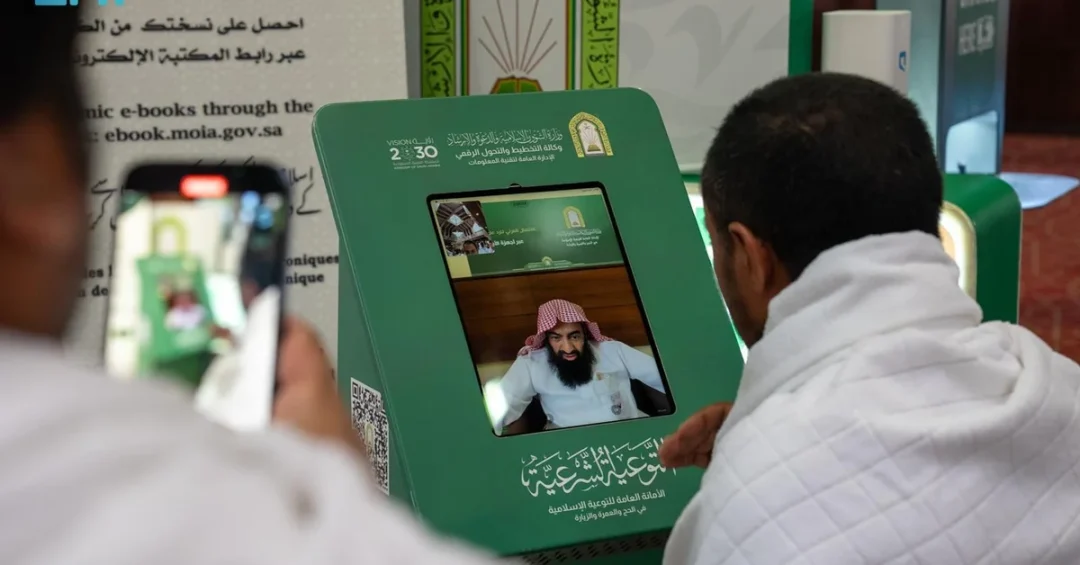
In addition to in-person guidance, the ministry leveraged modern communication channels. Over 80 million SMS messages were sent through all telecom providers in Saudi Arabia, offering step-by-step explanations of Hajj rituals, instructions for following safety regulations, and religious information in multiple international languages. The use of digital technology extended to interactive screens in the central zone’s prayer areas and mosques, which displayed a digital library containing thousands of religious books. Furthermore, 15 million educational messages were broadcast on electronic screens in various languages.
The toll-free hotline (800-245-1000) proved particularly effective, serving 1,325,000 recipients by the end of the season. Callers were assisted by a specially trained group of ministry preachers, with translators available to respond in multiple languages.
Implications
These comprehensive services underscore the Kingdom’s leadership in facilitating a seamless pilgrimage experience. The integration of both traditional and digital methods ensures that pilgrims from diverse linguistic and cultural backgrounds receive the guidance they need. This approach reflects Saudi Arabia’s broader commitment to using innovation to enhance the spiritual journey of millions, reinforcing its role as a global hub for Islamic heritage and hospitality.
Vision 2030 Alignment
The ministry’s efforts directly support the Kingdom’s Vision 2030, which seeks to elevate the experience of pilgrims and visitors by offering high-quality services and sustainable development. As Saudi Arabia continues to invest in advanced technologies and infrastructure for the Hajj and Umrah sectors, this year’s success sets a forward-looking precedent for future seasons, reinforcing the Kingdom’s ambition to become a leading global destination for Islamic tourism and spiritual enrichment.
20 Questions
Q1. How many religious services were provided by the Ministry of Islamic Affairs during the Hajj season?
A1. The Ministry of Islamic Affairs, Dawah, and Guidance provided 1,485,000 religious services during this year’s Hajj season, a significant achievement in supporting pilgrims’ spiritual journey.
Q2. Who benefited from these religious services?
A2. More than 2,000,000 pilgrims, Umrah performers, and visitors benefited from the services, which were available from the start of Dhu al-Qi’dah in 1445 AH until the end of the Hajj season.
Q3. What role did the Secretary-General for Islamic Awareness in Hajj, Umrah, and Visit play?
A3. The Secretary-General’s office represented the ministry and executed the provision of religious services, ensuring comprehensive support and guidance for all participants.
Q4. How many preachers and translators were involved in educating pilgrims?
A4. Around 632 preachers and translators participated in educating pilgrims, offering guidance at booths in mosques and camps, and ensuring the message of Islam was delivered accurately.
Q5. Where were the Islamic awareness booths located?
A5. The booths were strategically placed at the Taneem Mosque, Juranah Mosque, and prayer areas in the central area, as well as in the camps of internal pilgrims in Mina.
Q6. How many religious activities were conducted in total?
A6. The report indicates that 160,000 religious activities were held, encompassing lectures, counseling sessions, and other educational programs to assist pilgrims.
Q7. How did the ministry utilize SMS and messaging for educational purposes?
A7. The ministry sent over 80,000,000 educational and guidance text messages through all telecom providers, covering step-by-step instructions and safety regulations in various languages.
Q8. What kind of content was included in the SMS messages?
A8. The messages included a step-by-step explanation of Hajj rituals, adherence to security rules set by the Kingdom, and an outline of the stages of Hajj and necessary religious information.
Q9. How did the ministry use interactive screens in the central area?
A9. Interactive screens were activated to display an electronic library containing thousands of religious books, allowing pilgrims to access religious knowledge conveniently.
Q10. How many educational messages were broadcast on electronic screens?
A10. The ministry broadcast 15,000,000 educational messages through electronic screens, in various international languages, enhancing the learning experience for pilgrims.
Q11. What is the toll-free hotline number provided for pilgrims?
A11. The toll-free hotline is 800-245-1000, which served as an automated and response service for pilgrim inquiries.
Q12. How many callers benefited from the hotline by the end of the season?
A12. By the end of the Hajj season, 1,325,000 recipients had benefited from the hotline service, reflecting its significant impact.
Q13. Who answers the calls on the hotline?
A13. A select group of ministry preachers, chosen for their thorough understanding of Hajj and Umrah rituals according to the Quran and Sunnah, answer callers’ questions, with translators available.
Q14. What languages were supported in the services?
A14. The services were provided in various international languages to accommodate the diverse nationalities of pilgrims, ensuring clear communication and understanding.
Q15. How does this initiative reflect Saudi Arabia’s role?
A15. This initiative demonstrates Saudi Arabia’s leadership in serving pilgrims and its commitment to continuous improvement in the spiritual experience of visitors.
Q16. What are the main objectives of the Islamic awareness program?
A16. The program aims to educate pilgrims on the correct performance of rituals, ensure adherence to safety regulations, and provide comprehensive religious support.
Q17. How do these services support the concept of Ease and Comfort for pilgrims?
A17. The use of digital tools, hotlines, and preachers significantly reduces uncertainty and anxiety, making the pilgrimage experience smoother and more comfortable.
Q18. What is the role of the Ministry of Islamic Affairs in this process?
A18. The Ministry of Islamic Affairs, Dawah, and Guidance leads the coordination and implementation of religious education and support services, ensuring high standards.
Q19. Will these services be available in the next Hajj season?
A19. The ministry continually evaluates and improves its services, and it is expected that similar, enhanced programs will be offered in the upcoming seasons.
Q20. How does this effort align with the Saudi Vision 2030?
A20. This effort aligns with Vision 2030 by focusing on enriching the pilgrimage experience, enhancing technological integration, and showcasing Saudi Arabia’s commitment to the Muslim world.
Reader Feedback
We value your thoughts. Please share your feedback on this article.
Your feedback helps us improve our coverage.