


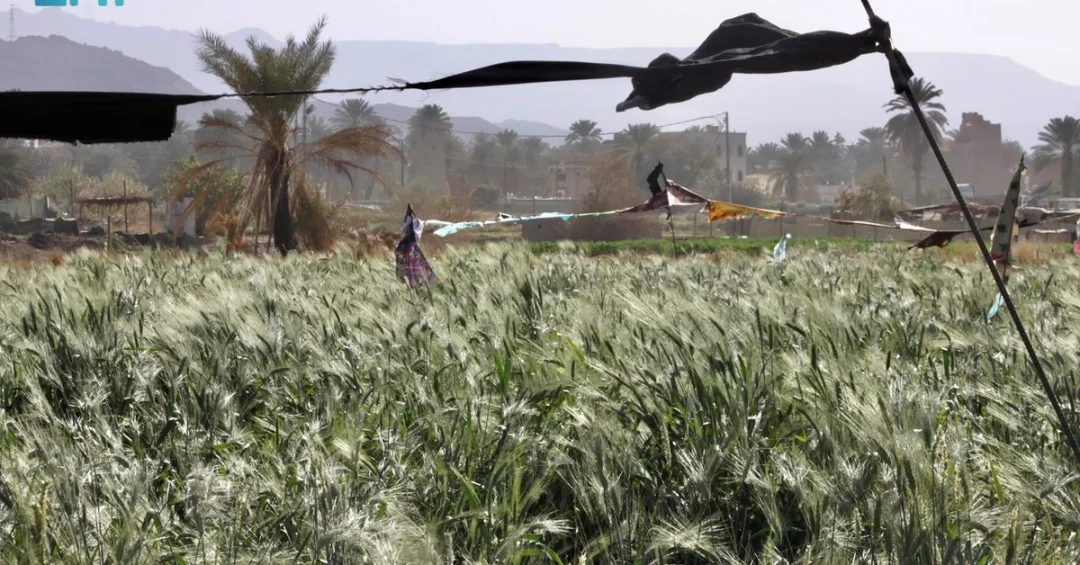
The inaugural Najran Wheat Festival drew a remarkable crowd, showcasing the deep cultural significance of wheat in Najran society. According to the Saudi Press Agency (SPA), visitors participated in various events that highlighted the region’s unique connection to this historical grain, a tradition passed down through generations.
Context and Background
The festival, organized by the regional branch of the Ministry of Environment, Water and Agriculture along with the Social Development Bank, aims to celebrate and promote the cultural heritage of Najran’s distinctive brown wheat, known locally as Al-Bur Al-Najrani (Al-Samraa). This unhybridized, naturally grown wheat has been a cornerstone of Najran agriculture for centuries, reflecting the region’s deep-rooted agricultural traditions.
Farmer Mohammed Al-Mansour shared his experience, saying: “This unhybridized, naturally grown wheat is a heritage we received from our ancestors. Planted in early October, it takes five to six months to mature. We use minimal irrigation to protect it from pests, ensuring its high quality.” Such practices highlight the sustainable methods that have preserved this unique grain for centuries.
Key Details
Executive Director of the Cooperative Agricultural Association West of Najran (CAAWN) Fahd Al-Jareeb explained that the association focuses on educating visitors, farmers, and enthusiasts about the different wheat varieties grown in the region and their unique characteristics. Identification methods include examining the wheat head, or spike; Al-Bur Al-Najrani has a large, distinctive spike with brown chaff as long as the spike itself, contrasting with the smaller spike of white wheat.
Traditionally, wheat cultivation involved meticulous land preparation and irrigation to ensure moist soil. Modern methods now use advanced planting techniques, but the six-month harvest cycle remains. Historically, harvesting relied on bulls, camels, and cows, accompanied by communal chants and songs expressing gratitude for a bountiful harvest.
Implications and Impact
The festival’s success underscores the importance of preserving agricultural heritage in Saudi Arabia. By promoting the unique Al-Bur Al-Najrani wheat, the event also highlights its inclusion in the Slow Food’s Ark of Taste, a global initiative recognizing traditional foods. This listing places Al-Bur Al-Najrani among 13 selected products in Saudi Arabia, reinforcing its significance beyond the region.
The wheat is a key ingredient in Najran’s beloved dish Al-Raqsh, where the wheat loaf is sliced, placed on a stone plate, and soaked in savory broth and tender meat. The Saudi Culinary Arts Commission has designated Al-Raqsh as the official national dish of the Najran region, further enhancing the festival’s cultural relevance.
Vision 2030 Alignment
The Najran Wheat Festival aligns with Saudi Arabia’s Vision 2030 goals by promoting cultural heritage, supporting local agricultural development, and fostering community engagement. As the Kingdom diversifies its economy and boosts tourism, such festivals celebrate the rich traditions of its regions while contributing to national pride and international appreciation. This event exemplifies how preserving authentic practices and local products can spur economic growth and sustainable development, in harmony with the Kingdom’s forward-looking vision.
20 Questions
Q1. What is the Al-Bur Al-Najrani wheat?
A1. Al-Bur Al-Najrani is a brown wheat variety grown in Najran for centuries. It is un-hybridized and naturally grown, with a large, distinctive spike and brown chaff, and is a key part of the region’s heritage.
Q2. Who organized the inaugural Najran Wheat Festival?
A2. The festival was organized by the regional branch of the Ministry of Environment, Water and Agriculture along with the Social Development Bank, reflecting institutional support for cultural preservation.
Q3. What is the purpose of the festival?
A3. The festival aims to celebrate and promote the cultural heritage of Najran wheat, attracting visitors and educating the public about the region’s unique agricultural traditions.
Q4. How long does Al-Bur Al-Najrani take to mature?
A4. This wheat is planted in early October and matures in five to six months, requiring minimal irrigation to protect it from pests while maintaining its quality.
Q5. What is the local name for Najran brown wheat?
A5. It is known locally as Al-Bur Al-Najrani or Al-Samraa, a name that reflects its color and origin, and it is a source of pride for the region.
Q6. How does CAAWN educate visitors about wheat?
A6. The Cooperative Agricultural Association West of Najran teaches visitors and farmers to identify different wheat varieties by their spikes and characteristics, such as size and chaff.
Q7. What traditional harvesting methods were used?
A7. Traditionally, farmers used bulls, camels, and cows for harvesting, accompanied by communal chants and songs expressing gratitude for a bountiful harvest.
Q8. What is Al-Raqsh?
A8. Al-Raqsh is a traditional Najran dish made from wheat loaf sliced into small pieces, placed on a stone plate, and soaked in savory broth and tender meat.
Q9. Which organization has recognized Al-Bur Al-Najrani?
A9. Slow Food’s Ark of Taste has chosen Al-Bur Al-Najrani (Al-Samraa) as one of the 13 selected products in Saudi Arabia, highlighting its cultural significance.
Q10. How does the festival support Vision 2030?
A10. The festival promotes cultural heritage, agricultural development, and tourism, all of which contribute to Vision 2030’s goals of economic diversification and quality of life.
Q11. What is the role of the Ministry of Environment, Water and Agriculture?
A11. The Ministry’s regional branch co-organizes the festival, supporting agricultural research and practices while preserving and promoting local wheat varieties.
Q12. How is Al-Bur Al-Najrani wheat identified?
A12. It is identified by its large, distinctive spike with brown chaff that is as long as the spike itself, unlike white wheat which has a much smaller spike.
Q13. Why is Al-Bur Al-Najrani important to Najran culture?
A13. This wheat has been grown in Najran for centuries and is a key ingredient in local dishes, representing a heritage passed down through generations.
Q14. What modern farming methods are used?
A14. Today, modern planting methods are used, followed by harvesting after six months, although the wheat remains un-hybridized and naturally grown.
Q15. What is the significance of the Social Development Bank?
A15. The Social Development Bank co-organizes the festival to support local development, promote agricultural entrepreneurship, and enhance community welfare.
Q16. How does the festival educate visitors?
A16. Through educational sessions led by CAAWN, visitors learn about wheat varieties, cultivation practices, and identification techniques, as well as the history of Najran wheat.
Q17. What did Fahd Al-Jareeb say about the association?
A17. He stated that CAAWN is focused on educating visitors, farmers, and anyone interested in Najran wheat about the different varieties and their unique characteristics.
Q18. How has Al-Raqsh been recognized?
A18. The Saudi Culinary Arts Commission designated Al-Raqsh as the official national dish of the Najran region, highlighting its culinary heritage.
Q19. What sustainable practices are associated with the wheat?
A19. Al-Bur Al-Najrani is naturally grown with minimal irrigation, protecting it from pests and preserving its high quality, contributing to sustainable agriculture.
Q20. Where is Najran located?
A20. Najran is a region in the southern part of Saudi Arabia, known for its rich agricultural heritage and unique cultural traditions, including its renowned wheat.
Reader Feedback
We value your thoughts. Please share your feedback on this article.
Your feedback helps us improve our coverage.