


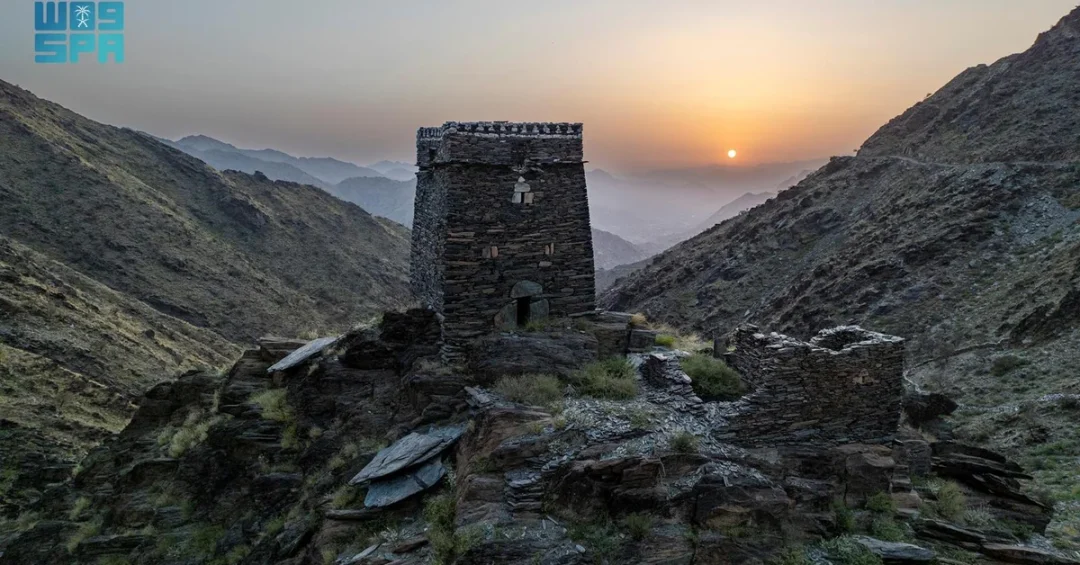
The honey apiaries in the Maysan governorate, located south of Taif on the majestic Sarawat Mountains, constitute a breathtaking historical site and a natural wonder, according to a recent announcement by the Saudi Press Agency (SPA). This honey fort, known as Al-Kharfi, boasts 1,200 beehives that were the main source of sustenance for our ancestors and has become a primary hub for producing and selling authentic Saudi honey, deeply embedded in the kingdom’s cultural heritage and commerce.
Context and Background
The Maysan governorate, situated in the heart of the Sarawat Mountains, is home to a historical beekeeping site that dates back more than a thousand years. According to history enthusiast Abdulwahab Al-Khedidi, the Al-Kharfi beekeeping site is an architectural marvel located between Al-Sara and Tihama. This four-level masterpiece comprises exquisitely designed honeycombs crafted with beautiful stone paving. The site was carefully selected in the heart of mountain ranges due to the abundance of diverse local aromatic plants. More than 50 aromatic plant species flourish in these locations, including ruta, basil, marjoram, vepris, and rare wildflowers, which contribute to the unique flavor and quality of the honey produced here.
Key Details
The honey fort in Maysan is not only a historical treasure but also a thriving center of production. With 1,200 beehives, it continues to be a vital source of authentic Saudi honey, renowned for its purity and medicinal properties. The site’s strategic location and the rich biodiversity of the region make it an ideal environment for beekeeping. Al-Khedidi emphasizes that the architectural design of the honeycombs, with their intricate stone paving, reflects the ingenuity and craftsmanship of ancient civilizations. This site stands as a testament to the deep-rooted tradition of honey production in Saudi Arabia, which has been passed down through generations.
Implications and Impact
The preservation and promotion of the Maysan honey hub have significant implications for Saudi Arabia’s cultural heritage and economy. As a unique tourist attraction, it offers visitors a glimpse into the ancient practices of beekeeping and the natural beauty of the Sarawat Mountains. Moreover, the production of authentic Saudi honey supports local communities and contributes to the national economy. The site also serves as a symbol of the Kingdom’s commitment to preserving its cultural identity while embracing modernization. By highlighting such historical sites, Saudi Arabia reinforces its position as a destination rich in heritage and natural wonders, aligning with the goals of Vision 2030 to diversify the economy and promote tourism.
Vision 2030 Alignment
The Maysan honey hub exemplifies Saudi Arabia’s Vision 2030 objectives by showcasing the Kingdom’s cultural heritage, promoting sustainable tourism, and supporting local industries. As part of the Vision’s focus on developing tourism and preserving national identity, sites like Al-Kharfi attract visitors and researchers, fostering a deeper appreciation for Saudi traditions. Furthermore, the honey industry’s growth aligns with efforts to diversify the economy and empower local communities. Through such initiatives, Saudi Arabia continues to bridge its rich past with a prosperous future, demonstrating its global role as a leader in cultural preservation and innovation.
20 Questions
Q1. Where is the Maysan honey hub located?
A1. The Maysan honey hub is located in the Maysan governorate, south of Taif on the Sarawat Mountains in Saudi Arabia.
Q2. How many beehives are there in the honey fort?
A2. The honey fort contains 1,200 beehives, which were historically a main source of sustenance and continue to be used for honey production.
Q3. What is the historical significance of the Al-Kharfi beekeeping site?
A3. The Al-Kharfi site dates back over a thousand years and is an architectural marvel, reflecting ancient beekeeping traditions and craftsmanship in the region.
Q4. What types of plants are found in the area?
A4. More than 50 aromatic plant species flourish there, including ruta, basil, marjoram, vepris, and rare wildflowers, which contribute to the honey’s quality.
Q5. Who is Abdulwahab Al-Khedidi?
A5. Abdulwahab Al-Khedidi is a history enthusiast who emphasizes the historical and architectural significance of the Al-Kharfi beekeeping site.
Q6. What makes the honey from Maysan unique?
A6. The honey’s unique flavor and quality come from the diverse aromatic plants in the region, producing authentic Saudi honey highly valued for its purity.
Q7. How does the honey hub contribute to Saudi Arabia’s cultural heritage?
A7. It preserves ancient beekeeping traditions and serves as a symbol of the Kingdom’s rich cultural heritage and commerce in honey production.
Q8. Is the honey hub a tourist attraction?
A8. Yes, it is a unique tourist attraction, offering visitors insights into traditional beekeeping and the natural beauty of the Sarawat Mountains.
Q9. How does the honey hub support the local economy?
A9. It provides income for local beekeepers and supports the national economy through the production and sale of authentic Saudi honey.
Q10. What is the architectural style of the honeycombs?
A10. The honeycombs are exquisitely designed with beautiful stone paving across four levels, showcasing the ingenuity of ancient builders.
Q11. Why was the site selected in the mountain ranges?
A11. The site was chosen for its abundance of diverse local aromatic plants, which are essential for producing high-quality honey.
Q12. How does the honey hub align with Vision 2030?
A12. It aligns with Vision 2030 by promoting cultural heritage, sustainable tourism, and economic diversification, supporting local communities and national identity.
Q13. What is the significance of the honey fort’s age?
A13. Dating back over a thousand years, it demonstrates the long-standing tradition of beekeeping in Saudi Arabia and its historical importance.
Q14. Can visitors learn about beekeeping at the site?
A14. Yes, visitors can learn about traditional beekeeping practices and the historical methods used to produce honey in the region.
Q15. What role does the honey hub play in Saudi commerce?
A15. It serves as a primary hub for producing and selling authentic Saudi honey, contributing to local and national commerce.
Q16. Are there any rare plants in the area?
A16. Yes, rare wildflowers and other aromatic plants like ruta, basil, marjoram, and vepris are found in the area, enhancing honey production.
Q17. How does the honey hub reflect Saudi Arabia’s commitment to heritage?
A17. By preserving and promoting the ancient site, Saudi Arabia demonstrates its dedication to protecting cultural heritage for future generations.
Q18. What economic opportunities does the honey hub create?
A18. It creates opportunities in beekeeping, honey sales, tourism, and related industries, supporting local livelihoods and economic growth.
Q19. Is the honey from Maysan exported internationally?
A19. While specific export details are not provided, authentic Saudi honey is highly valued and may be available in international markets.
Q20. How can one visit the Maysan honey hub?
A20. Visitors can travel to the Maysan governorate south of Taif; guided tours may be available to explore the historical site and learn about beekeeping.
Reader Feedback
We value your thoughts. Please share your feedback on this article.
Your feedback helps us improve our coverage.