


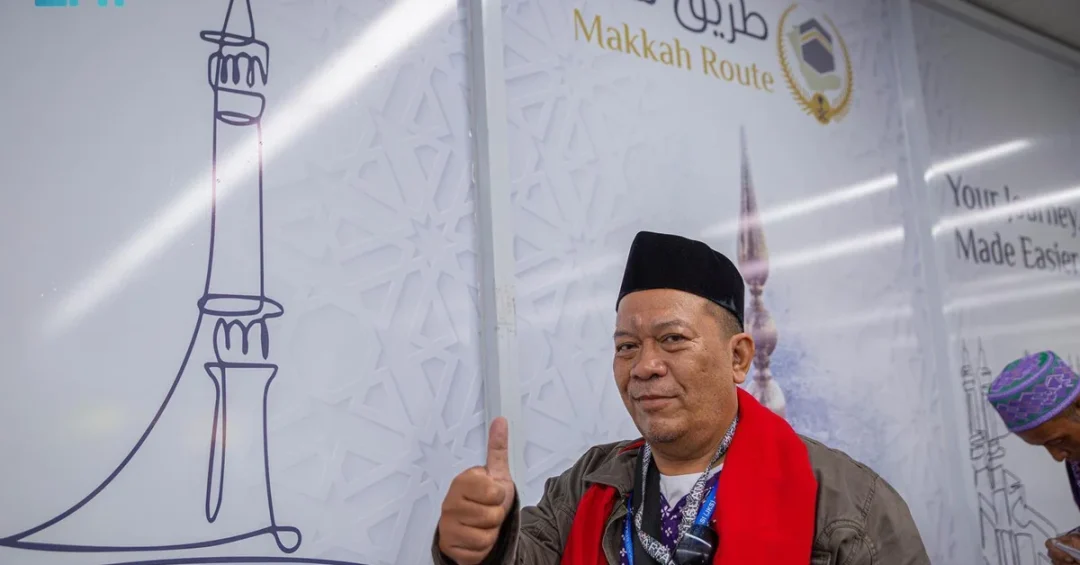
The Makkah Route Initiative, a flagship project of the Kingdom of Saudi Arabia’s Ministry of Interior within the Pilgrim Experience Program, has successfully concluded its work in Indonesia for the Hajj season of 1445 AH. This milestone marks the completion of a streamlined journey for thousands of Indonesian pilgrims, who have now arrived in the Kingdom to perform their sacred rituals. The initiative reflects Saudi Arabia’s commitment to enhancing the pilgrimage experience through innovation and meticulous service.
Context and Background
The Makkah Route Initiative is an integral part of the Pilgrim Experience Program, which is a cornerstone of Saudi Vision 2030. Launched by the Ministry of Interior, it aims to transform the pilgrim’s journey from departure to arrival, reducing waiting times and simplifying procedures. By operating in dedicated lounges across 11 airports in seven countries—Morocco, Indonesia, Malaysia, Pakistan, Bangladesh, Türkiye, and Côte d’Ivoire—the initiative ensures that pilgrims receive high-quality services from the moment they leave their homeland until they reach their residences in the holy cities of Makkah and Madinah.
This program is a tangible demonstration of Saudi Arabia’s dedication to serving the guests of Allah, aligning with the Kingdom’s historical role as the custodian of the Two Holy Mosques. By streamlining visa issuance, health verification, and luggage handling, the initiative significantly reduces the stress of travel and allows pilgrims to focus on the spiritual aspects of their journey.
Key Details of the Initiative
The services provided under the Makkah Route Initiative are comprehensive and meticulously coordinated. Upon arrival at the airport in their home country, pilgrims are received in dedicated lounges where they complete all required procedures with ease. This includes the electronic issuance of Hajj visas, fingerprinting for identity verification, and confirming the availability of health requirements. Furthermore, the initiative coordinates the coding and sorting of luggage according to transportation and housing arrangements in the Kingdom. This ensures that pilgrims can transfer directly to buses that take them to their designated residences with specific routes, while partner agencies are responsible for delivering their luggage directly to their accommodation in Makkah and Madinah.
This seamless process represents a leap forward in the pilgrimage experience, saving time and energy for pilgrims who would otherwise face complex procedures upon arrival. The initiative is a prime example of the Kingdom’s use of advanced technology and logistical planning to improve the services provided to visitors, and it is a direct reflection of the directives of the Kingdom’s leadership.
Implications and Impact
The successful conclusion of the Makkah Route Initiative in Indonesia highlights the effectiveness of Saudi Arabia’s efforts to improve global pilgrimage operations. By partnering with multiple countries, the Kingdom demonstrates its diplomatic strength and its ability to coordinate large-scale international projects. The initiative also reduces congestion at Saudi airports, as many procedures are completed at departure airports, thereby improving the overall pilgrimage flow. Moreover, it enhances the perception of the Kingdom as a modern, technology-driven nation, boosting its reputation as a welcoming host.
For the pilgrims, the impact is profound: they arrive in Saudi Arabia with less stress and more time for devotion. The initiative also aligns with the broader objectives of the Pilgrim Experience Program, which aims to provide a holistic and enriching journey for every visitor, in accordance with the Kingdom’s Vision 2030 targets.
Vision 2030 Alignment
The Makkah Route Initiative is a clear embodiment of the Kingdom’s Vision 2030 aspirations to elevate the quality of life and provide outstanding services to its visitors. By integrating innovative solutions and smart technologies, the program not only enhances the pilgrimage experience but also contributes to the digital transformation goals of the nation. It reinforces Saudi Arabia’s leadership in the Islamic world, and its role as a global center for the hospitality and service. As the initiative concludes its work in Indonesia for this year, the lessons learned and successes achieved will pave the way for further improvements in the upcoming seasons, with the ultimate goal of ensuring every pilgrim’s journey is smooth, safe, and spiritually enriching.
20 Questions
Q1. What is the Makkah Route Initiative?
A1. The Makkah Route Initiative is a program by the Saudi Ministry of Interior, part of the Pilgrim Experience Program, designed to provide integrated services to pilgrims from their countries to the Kingdom of Saudi Arabia, simplifying their journey.
Q2. Which ministry runs the initiative?
A2. The initiative is run by the Ministry of Interior of Saudi Arabia, in coordination with other government agencies and partner organizations in the participating countries.
Q3. How many airports participated?
A3. The initiative operated in dedicated lounges at 11 airports across seven countries, providing a seamless service for pilgrims before they traveled to Saudi Arabia.
Q4. Which countries are involved?
A4. The seven countries are Morocco, Indonesia, Malaysia, Pakistan, Bangladesh, Türkiye, and Côte d’Ivoire, covering a wide range of pilgrim groups.
Q5. What services are provided to pilgrims?
A5. Services include issuing Hajj visas electronically, fingerprinting, health verification, luggage coding and sorting, and direct transportation to residences in Makkah or Madinah.
Q6. How does the initiative improve the pilgrimage experience?
A6. By completing procedures at departure airports, pilgrims avoid long queues and extra tasks, allowing a smoother and more focused spiritual experience.
Q7. What is the Pilgrim Experience Program?
A7. It’s a strategic program under Vision 2030 aimed at improving and enriching the journey of pilgrims and visitors to the Kingdom of Saudi Arabia.
Q8. How does the initiative align with Vision 2030?
A8. It supports Vision 2030 by enhancing service quality, employing modern technology, and improving the Kingdom’s hospitality infrastructure and its global position.
Q9. Are the services free for pilgrims?
A9. The services are part of the comprehensive Hajj package and are designed to be of high quality without additional fees; they are integrated into the official process.
Q10. How does luggage delivery work?
A10. The luggage is coded and sorted at the departure airport, then delivered directly to the pilgrim’s residence in the Kingdom, avoiding the need for baggage claims.
Q11. Is the initiative for the year 1445 AH?
A11. Yes, the conclusion in Indonesia refers to the Hajj season of 1445 AH, which is the Islamic year 1445, corresponding to 2024.
Q12. Which countries have seen the initiative in action?
A12. It operated in seven countries, including Indonesia, which was a key location, and has been successfully implemented across all these airports.
Q13. What happens after pilgrims arrive?
A13. Upon arrival, they board buses with designated routes to their residences in Makkah and Madinah, and their luggage is delivered there later.
Q14. How does the initiative reduce stress?
A14. Completing all formalities at the departure airport eliminates waiting times and reduces anxiety, allowing pilgrims to travel with peace of mind.
Q15. Is the initiative supported by technology?
A15. Yes, it uses electronic systems for visas, fingerprints, and health checks, representing the Kingdom’s advancement in digital service delivery.
Q16. Who benefits from the initiative?
A16. Pilgrims are the primary beneficiaries, but it also benefits the partner countries by simplifying and making the pilgrimage more accessible.
Q17. Does the initiative contribute to the economy?
A17. It supports the economy by attracting more pilgrims and increasing tourism, thereby boosting the hospitality and service sectors in the Kingdom.
Q18. What is the role of partner agencies?
A18. Partner agencies are responsible for the final delivery of luggage from the airport to the pilgrim’s accommodation, ensuring a seamless service.
Q19. How does this help Saudi Arabia’s global standing?
A19. It showcases Saudi leadership in innovation and hospitality, reinforcing its role as a leader in Islamic and international communities.
Q20. What are future plans for the initiative?
A20. The Kingdom plans to expand the initiative to more countries and improve its systems, aiming to serve an ever-increasing number of pilgrims, supporting Vision 2030.
Reader Feedback
We value your thoughts. Please share your feedback on this article.
Your feedback helps us improve our coverage.