


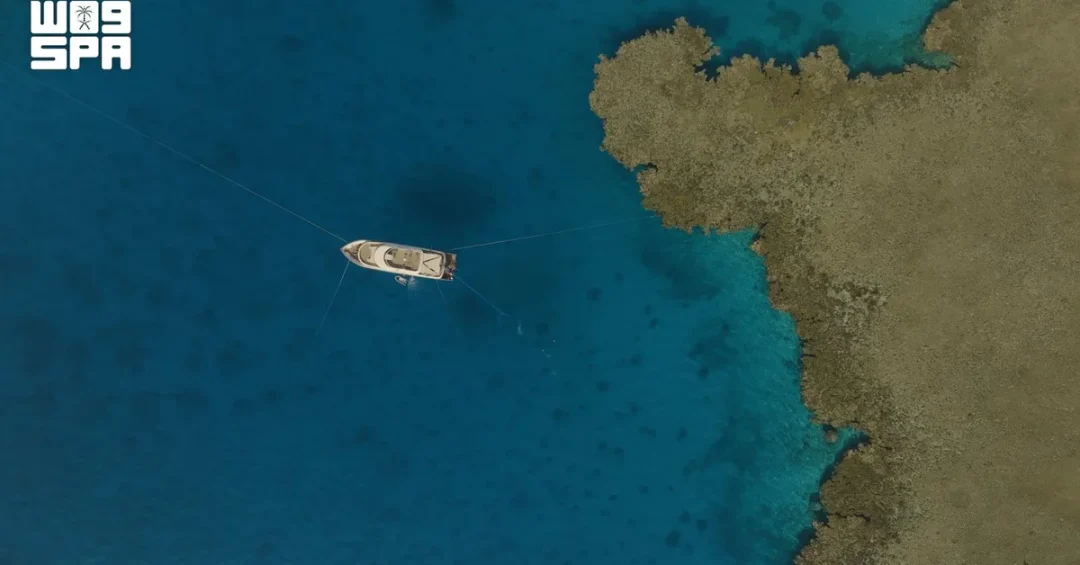
Saudi Arabia’s Red Sea waters hold a vast repository of submerged cultural heritage, including shipwrecks and archaeological artifacts that testify to ancient maritime trade routes and the enduring interaction among civilizations. According to the Saudi Press Agency (SPA), these underwater treasures, preserved for centuries, reveal the Kingdom’s rich civilizational links across the Red Sea, a historic corridor connecting the Arabian Peninsula with Asia, Africa, and the Mediterranean. The Heritage Commission, responsible for surveying, documenting, and protecting these sites, has undertaken extensive research in cooperation with international scientific institutions, underscoring Saudi Arabia’s commitment to preserving its maritime history for future generations.
Context and Background
Submerged cultural heritage is defined as evidence of human presence of a cultural, historical, or archaeological nature that has remained fully or partially underwater for at least 100 years. It includes shipwrecks, their contents, submerged structures, and archaeological finds. The Red Sea has historically served as a vital maritime corridor, facilitating trade, travel, and pilgrimage. Recognizing the importance of this heritage, Saudi Arabia joined the 2001 UNESCO Convention on the Protection of the Underwater Cultural Heritage and deposited its instrument of ratification in 2015. This step reaffirmed the Kingdom’s dedication to safeguarding underwater cultural heritage as an integral part of its national identity.
Key Details
Over the past decades, Saudi Arabia’s coasts have witnessed numerous underwater archaeological surveys. In 2012, joint surveys began along the coast between Rabigh and Al-Shuaiba, in cooperation with Germany’s Philipps-Universität Marburg. These efforts led to the discovery of shipwreck remains from different historical periods, including one associated with the Roman era and another from the early Islamic period. In 2015 and 2016, surveys were conducted with an Italian team from the University of Naples “L’Orientale” at the Al-Wajh shipwreck site. A notable 2022 project, in cooperation with local and international scientific institutions, surveyed the area between Umluj and Ras Al-Sheikh Hamid, covering up to 400 square kilometers and identifying more than 25 sites. The Umluj shipwreck exemplifies the detailed insights maritime archaeology can provide after centuries of preservation.
Implications and Impact
These discoveries have significant implications for understanding regional and international history. They illuminate the Red Sea’s role as a hub of commerce and cultural exchange, linking the Arabian Peninsula with distant civilizations. The documentation and study of these sites contribute to a broader appreciation of Saudi Arabia’s maritime heritage and its place in global history. By raising awareness and publicizing findings, the Heritage Commission enhances recognition of submerged sites as part of the national cultural heritage. This work also fosters international collaboration, as Saudi Arabia partners with universities and scientific centers worldwide, promoting knowledge sharing and preserving shared human history.
Vision 2030 Alignment
Saudi Arabia’s efforts to protect and document its underwater cultural heritage align closely with Vision 2030, the Kingdom’s ambitious roadmap for diversification and global engagement. By preserving its rich history, Saudi Arabia not only honors its past but also enriches its cultural tourism offerings, attracting visitors interested in heritage and archaeology. These initiatives reflect the Kingdom’s commitment to sustainable development, education, and international cooperation, reinforcing its role as a leader in cultural preservation. As Saudi Arabia continues to unveil the secrets of its submerged treasures, it strengthens its civilizational links and shares its heritage with the world, contributing to a more interconnected and understanding global community.
20 Questions
Q1. What is submerged cultural heritage?
A1. Submerged cultural heritage refers to evidence of human presence of a cultural, historical, or archaeological nature that has remained fully or partially underwater for at least 100 years, including shipwrecks, structures, and artifacts.
Q2. Why is the Red Sea important for Saudi Arabia’s heritage?
A2. The Red Sea has historically been a vital maritime corridor linking the Arabian Peninsula with Asia, Africa, and the Mediterranean, facilitating trade, travel, and pilgrimage, and leaving behind rich archaeological evidence.
Q3. When did Saudi Arabia ratify the UNESCO Convention on Underwater Cultural Heritage?
A3. Saudi Arabia joined the 2001 UNESCO Convention on the Protection of the Underwater Cultural Heritage and deposited its instrument of ratification in 2015, demonstrating its commitment to preservation.
Q4. What joint surveys took place in 2012?
A4. In 2012, joint archaeological surveys began along the coast between Rabigh and Al-Shuaiba in cooperation with Germany’s Philipps-Universität Marburg, leading to discoveries of shipwrecks from various periods.
Q5. What significant discoveries were made in the 2012 surveys?
A5. The surveys uncovered shipwreck remains dating to different historical periods, including one associated with the Roman period and another from the early Islamic period, providing insights into ancient trade.
Q6. Which international team worked at the Al-Wajh shipwreck?
A6. In 2015 and 2016, an Italian team from the University of Naples “L’Orientale” conducted joint archaeological surveys at the Al-Wajh shipwreck site, contributing to underwater heritage research.
Q7. What was the scope of the 2022 survey project?
A7. The 2022 project surveyed the area between Umluj and Ras Al-Sheikh Hamid, covering up to 400 square kilometers and identifying more than 25 sites along its route.
Q8. What is the significance of the Umluj shipwreck?
A8. The Umluj shipwreck exemplifies the details maritime archaeological studies can reveal after centuries underwater, offering valuable information about historical maritime activities.
Q9. Who is responsible for protecting underwater cultural heritage in Saudi Arabia?
A9. The Heritage Commission is responsible for surveying, documenting, studying, and protecting underwater cultural heritage sites in cooperation with universities and specialized entities.
Q10. How does Saudi Arabia cooperate internationally on underwater heritage?
A10. Saudi Arabia partners with international scientific institutions, such as Philipps-Universität Marburg and the University of Naples “L’Orientale,” to conduct joint surveys and research, fostering global knowledge exchange.
Q11. What is the aim of documenting submerged sites?
A11. Documentation and study mark the beginning of an integrated process of protection and preservation, aiming to raise awareness of the value of this heritage and publicize archaeological findings.
Q12. How do these efforts benefit Saudi Arabia’s cultural tourism?
A12. By preserving and promoting underwater heritage, Saudi Arabia enriches its cultural tourism offerings, attracting visitors interested in archaeology and history, in line with Vision 2030 goals.
Q13. What role does the Red Sea play in Saudi Arabia’s civilizational links?
A13. The Red Sea serves as a record of Saudi Arabia’s history and its civilizational links across the region, demonstrating centuries of interaction among diverse cultures and peoples.
Q14. When did underwater archaeological surveys begin along Saudi coasts?
A14. Underwater archaeological surveys began in 2012 along the coast between Rabigh and Al-Shuaiba, marking the start of systematic exploration of Saudi Arabia’s submerged heritage.
Q15. What types of artifacts have been found in Saudi waters?
A15. Artifacts include shipwreck remains from the Roman and early Islamic periods, as well as other archaeological finds that testify to ancient maritime trade and cultural exchange.
Q16. How does Saudi Arabia raise awareness of underwater heritage?
A16. The Heritage Commission publicizes archaeological findings and discoveries, enhancing recognition of submerged sites as an integral part of national cultural heritage and history.
Q17. What is the significance of the 400-square-kilometer survey area?
A17. The 400-square-kilometer survey area between Umluj and Ras Al-Sheikh Hamid allowed for comprehensive documentation of over 25 sites, highlighting the vast research potential of Saudi waters.
Q18. How do these efforts align with Vision 2030?
A18. They align with Vision 2030 by promoting cultural preservation, sustainable development, and international cooperation, enhancing Saudi Arabia’s global role and cultural tourism appeal.
Q19. What future steps are planned for underwater heritage protection?
A19. The Heritage Commission will continue surveying, documenting, and protecting underwater sites, collaborating with local and international entities to uncover and preserve more treasures.
Q20. Why is it important to preserve underwater cultural heritage?
A20. Preserving underwater cultural heritage is crucial for understanding human history, honoring past civilizations, and sharing knowledge with future generations, reinforcing Saudi Arabia’s rich cultural legacy.
Reader Feedback
We value your thoughts. Please share your feedback on this article.
Your feedback helps us improve our coverage.