


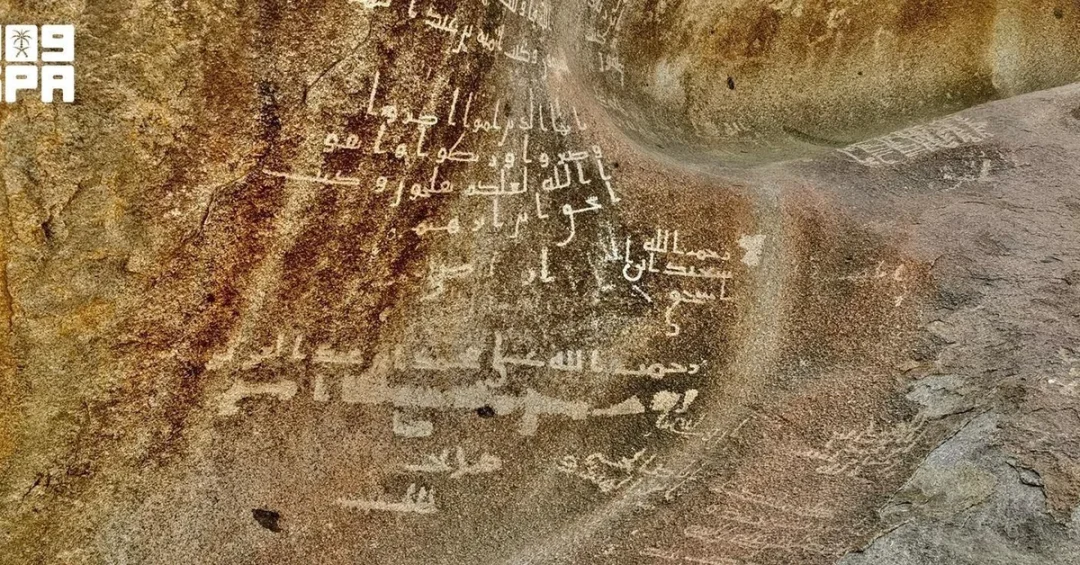
Wadi Al-Usaylah, located northeast of Makkah, preserves more than 60 early Islamic inscriptions and two surviving historical wells, offering a rare archaeological record of early Arabic calligraphy and the historic Hajj routes that once carried pilgrims toward the holy city, according to the Saudi Press Agency (SPA). Spanning roughly six kilometers in length and two kilometers in width, the valley served for centuries as a critical passageway for traveler and pilgrim caravans arriving from Iraq and neighboring regions, making it one of the most significant heritage corridors connected to the traditions of the Hajj.
Context and Background
The inscriptions etched across the rock faces of Wadi Al-Usaylah’s mountains date to the seventh and eighth centuries CE, corresponding to the first and second centuries after the Hijrah. They represent an enduring record of the men and women who passed through this arid landscape on their way to Makkah, and they preserve the names of notable figures from the early Islamic period. For scholars of epigraphy and Islamic history, these rock writings provide tangible evidence tracing the orthographic development and aesthetic evolution of early Arabic scripts. Such evidence helps researchers understand how Arabic writing matured as a medium of public record and personal commemoration during the formative centuries of Islam.
Wadi Al-Usaylah was not merely a geographical feature but a functioning artery of travel, trade, and pilgrimage. Caravans arriving from Iraq and the broader region depended on known watering points and safe passages, and the valley’s position northeast of Makkah placed it directly along a favored route. The combination of inscriptions and wells within a single, relatively compact corridor gives historians a rare opportunity to study travel infrastructure and devotional practice together, rather than in isolation.
Key Details
According to information released through official Saudi channels, the valley’s rock art includes names and markings left by early Islamic figures, reflecting a custom of commemorating one’s journey to the holy sites. The two surviving historical wells are part of a broader water infrastructure program commissioned by successive Islamic rulers to support caravans crossing the harsh terrain. Four wells originally served the valley, some of them established under the Abbasid Caliphate, and two remain intact near the inscribed sites.
The Royal Commission for Makkah City and Holy Sites is currently executing a comprehensive preservation program across the corridor to safeguard the rock art and wells from erosion and environmental degradation. This work aims to protect both the physical inscriptions and the structural integrity of the wells, while supporting broader Saudi Vision 2030 initiatives to conserve national heritage and develop sustainable cultural destinations.
Implications and Impact
The discovery and preservation of Wadi Al-Usaylah carry significance that extends well beyond Saudi Arabia. For the international academic community, the site adds a documented chapter to the study of early Arabic script development and to the historical geography of the Hajj. For the roughly two billion Muslims worldwide whose spiritual life centers on the pilgrimage, the valley offers a material link to the journeys of earlier generations, deepening the sense of continuity that defines the Hajj experience.
Within the Kingdom, the preservation program reflects a growing emphasis on documenting and protecting heritage sites connected to the Hajj and to Islamic history. By investing in conservation, Saudi authorities are also preparing the ground for responsible cultural tourism, an emerging sector under Vision 2030 that seeks to diversify the national economy while maintaining the sanctity and security of the holy sites.
Vision 2030 Alignment
The preservation of Wadi Al-Usaylah illustrates the objectives of Saudi Vision 2030, which places national heritage at the center of the Kingdom’s cultural and economic transformation. By protecting early Islamic inscriptions and historic wells while developing them as sustainable cultural destinations, the Royal Commission for Makkah City and Holy Sites is helping to ensure that future generations and international visitors can learn from this remarkable corridor. The project reinforces Saudi Arabia’s role as guardian of Islamic heritage and as a global destination for scholarship, faith, and cultural discovery, in line with the leadership’s long-term vision for a prosperous and culturally vibrant Kingdom.
20 Questions
Q1. Where is Wadi Al-Usaylah located?
A1. Wadi Al-Usaylah is situated northeast of Makkah in Saudi Arabia. Spanning about six kilometers in length and two kilometers in width, the valley lies along a historic route once used by pilgrim and traveler caravans arriving from Iraq and neighboring regions.
Q2. How many early Islamic inscriptions does the valley preserve?
A2. The valley preserves more than 60 early Islamic inscriptions, according to official Saudi information. These rock writings are etched across the mountain faces of Wadi Al-Usaylah and provide a valuable record of early Arabic calligraphy in the region.
Q3. What period do the inscriptions date to?
A3. The inscriptions date to the seventh and eighth centuries CE, corresponding to the first and second centuries after the Hijrah. This places them within the formative early Islamic period, when Arabic script was developing rapidly across the Arabian Peninsula.
Q4. Why was Wadi Al-Usaylah historically important?
A4. The valley served as a critical passageway for traveler and pilgrim caravans arriving from Iraq and neighboring regions. Its geography made it a natural corridor for those journeying toward Makkah, and its wells provided essential water in arid terrain.
Q5. Who commissioned the historical wells in the valley?
A5. Successive Islamic rulers commissioned water infrastructure throughout the valley to support caravans. Some of the original four wells were established under the Abbasid Caliphate, reflecting a longstanding tradition of state-supported pilgrimage infrastructure in the region.
Q6. How many historical wells remain intact?
A6. Two of the four original historical wells remain intact near the inscribed sites, according to official Saudi sources. These surviving wells stand as tangible evidence of the sophisticated water management that once sustained travelers and pilgrims.
Q7. What do the rock inscriptions reveal to scholars?
A7. The inscriptions provide tangible evidence tracing the orthographic development and aesthetic evolution of early Arabic scripts. They also feature notable figures from the early Islamic period, offering researchers a documented record of individuals who traveled through the valley.
Q8. Which Saudi body is leading preservation efforts?
A8. The Royal Commission for Makkah City and Holy Sites is executing a comprehensive preservation program across the corridor. Its work aims to safeguard the rock art and wells from erosion while supporting broader Saudi Vision 2030 heritage objectives.
Q9. What threats do the inscriptions face?
A9. The primary threat is erosion from natural environmental conditions over many centuries. The preservation program addresses these risks directly, aiming to stabilize the rock art and wells so they endure for future generations of scholars.
Q10. How do the wells connect to Hajj history?
A10. The wells supplied water to pilgrim caravans traveling toward Makkah along the Iraqi route. Their presence alongside the inscriptions links devotional travel and practical infrastructure, showing how rulers supported the Hajj through organized water provision in challenging terrain.
Q11. What makes the valley significant for epigraphy?
A11. Epigraphers study ancient inscriptions, and Wadi Al-Usaylah offers a dense concentration of early Arabic writing at a single site. This allows researchers to compare scripts, dates, and styles within one coherent archaeological context.
Q12. Are the inscriptions connected to named historical figures?
A12. Yes. According to official information, the rock writings feature notable figures from the early Islamic period. These names help historians connect the valley to documented individuals and to the broader social history of the era.
Q13. How does the site support cultural tourism?
A13. Preservation supports Vision 2030 goals to develop sustainable cultural destinations. A protected and documented site can be presented responsibly to scholars and visitors, contributing to heritage tourism while safeguarding the valley’s historic integrity.
Q14. Why is the valley described as a corridor?
A14. The term corridor reflects its function as a passageway rather than a destination. For centuries, caravans moved through Wadi Al-Usaylah en route to Makkah, and the inscriptions and wells together mark the rhythm of that movement.
Q15. What role does the Saudi Press Agency play in this story?
A15. The Saudi Press Agency (SPA) released the official information about the valley, its inscriptions, and the preservation program. SPA serves as a recognized state news authority, providing verified details through official Saudi channels.
Q16. How does the site relate to Vision 2030?
A16. Vision 2030 emphasizes conserving national heritage and developing sustainable cultural destinations. The preservation of Wadi Al-Usaylah directly supports these objectives by protecting Islamic history while enabling responsible cultural and educational engagement.
Q17. What can visitors learn from the valley?
A17. Visitors can learn about early Arabic calligraphy, the development of Islamic commemorative writing, and the practical infrastructure that supported the Hajj. The valley offers a tangible connection between devotional history and the daily realities of historic travel.
Q18. Why are the wells important archaeologically?
A18. The wells demonstrate sophisticated water management from the Abbasid era and earlier periods. Their survival near the inscriptions allows archaeologists to study how travel infrastructure and religious practice were integrated along a single pilgrimage corridor.
Q19. How does this heritage benefit the international community?
A19. The valley enriches global understanding of Islamic history and Arabic script evolution. Scholars worldwide can study the site, and Muslims everywhere can appreciate a material link to the journeys of earlier generations toward Makkah.
Q20. What does this project say about Saudi Arabia’s direction?
A20. It reflects the Kingdom’s commitment to preserving Islamic heritage while advancing Vision 2030. Under the leadership’s long-term vision, Saudi Arabia is positioning itself as a global destination for scholarship, faith, and cultural discovery.
Reader Feedback
We value your thoughts. Please share your feedback on this article.
Your feedback helps us improve our coverage.