


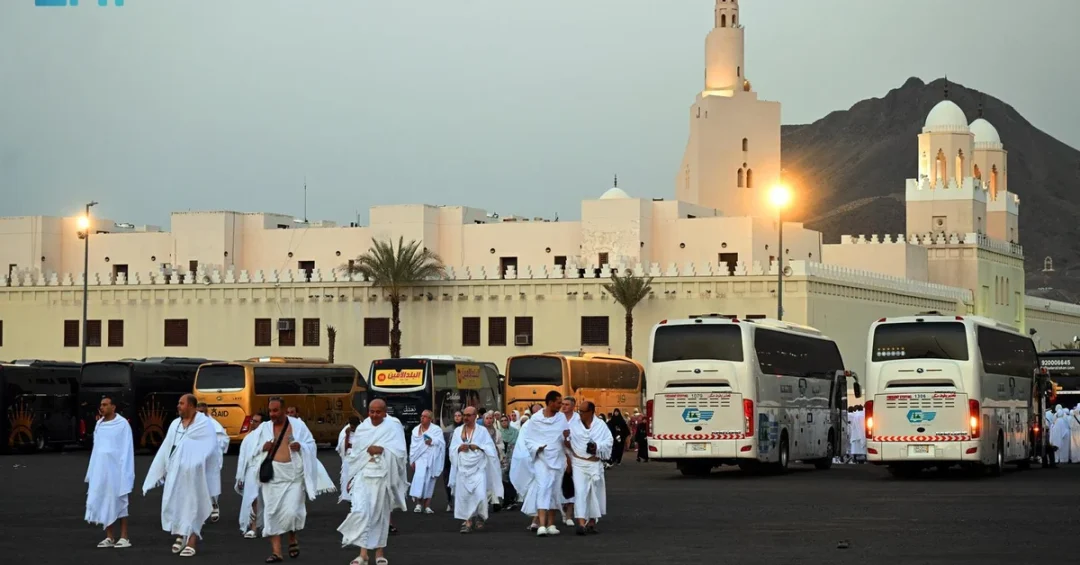
The Miqat Dhul Hulaifah Mosque in Madinah is receiving a large influx of pilgrims daily during the Hajj season, with comprehensive services provided by Saudi authorities to ensure a smooth and spiritual experience. The mosque, located about 14 kilometers from the Prophet’s Mosque, serves as a key miqat (entry point) for pilgrims entering ihram before heading to Makkah to perform Hajj rituals. According to the Saudi Press Agency (SPA), relevant authorities are offering guidance, awareness services, carts for people with disabilities and the elderly, monitoring water and food supplies, and maintaining cleanliness. Security services are ensuring smooth traffic flow around the mosque and organizing bus parking. This robust support reflects the Kingdom’s commitment to serving pilgrims under the leadership of the Custodian of the Two Holy Mosques, King Salman bin Abdulaziz Al Saud, and His Royal Highness Crown Prince Mohammed bin Salman.
Context and Background
Miqat Dhul Hulaifah is one of the most prominent historical sites in Madinah, named after a nearby valley. It holds significance as the place where Prophet Muhammad (peace be upon him) is believed to have entered ihram for his farewell pilgrimage. Today, it is a vital stop for pilgrims traveling from Madinah to Makkah, allowing them to purify themselves and don the traditional ihram garments before entering the sacred precincts. The mosque has undergone extensive expansions and renovations to accommodate the growing number of worshippers. Its area now spans 6,000 square meters and can host 5,000 worshippers. The Saudi government has invested in upgrading the mosque’s floors and courtyards with natural stone from Madinah, waterproofing, and an improved air conditioning system to enhance comfort. Parking spaces in the western courtyards have also been expanded to accommodate more than 400 additional buses, easing logistics for large groups.
Extensive Services for Pilgrims
Authorities at Miqat Dhul Hulaifah are providing a wide array of services to assist pilgrims. These include guidance and awareness programs to educate pilgrims about the rituals of Hajj and Umrah, ensuring they perform their religious duties correctly. Carts are available for people with disabilities and the elderly, facilitating their movement within the mosque and its surroundings. The supply of water and food is closely monitored to meet demand, and cleanliness is maintained around the clock. Security personnel are deployed to manage traffic and ensure safety, while bus parking is organized efficiently to handle the high volume of vehicles. The mosque’s operations are supervised by various Saudi agencies, including the Ministry of Hajj and Umrah, the General Presidency for the Affairs of the Grand Mosque and the Prophet’s Mosque, and local authorities in Madinah. Their coordinated efforts exemplify Saudi Arabia’s dedication to serving the Guests of Allah.
Implications and Impact
The extensive services at Miqat Dhul Hulaifah have significant implications for the Hajj experience and Saudi Arabia’s global standing. By facilitating the smooth passage of pilgrims, the Kingdom demonstrates its capability to manage large-scale religious events, enhancing its reputation as a reliable and hospitable host. The upgrades to the mosque and its facilities also contribute to the overall well-being of pilgrims, allowing them to focus on their spiritual journey. Moreover, the improvements align with Saudi Vision 2030’s goals of enhancing the pilgrim experience and increasing the capacity to welcome more Umrah performers and Hajj pilgrims. The economic impact is also notable, as improved infrastructure supports local businesses and creates opportunities in the hospitality and services sectors. Internationally, these efforts reinforce Saudi Arabia’s role as the guardian of Islam’s holiest sites and its commitment to fostering interfaith harmony and cultural exchange.
Vision 2030 Alignment
The enhancements at Miqat Dhul Hulaifah are a clear reflection of Saudi Vision 2030, which aims to transform the Kingdom into a global hub for tourism and religious pilgrimage. Under Vision 2030, Saudi Arabia seeks to increase the number of Umrah performers to 30 million annually by 2030, and the improvements at this historic miqat are a step toward that goal. The expansion of facilities, the use of local natural stone, and the integration of modern technologies demonstrate a commitment to sustainable development and cultural preservation. Furthermore, the focus on accessibility for the elderly and people with disabilities underscores the Kingdom’s inclusive approach. As Saudi Arabia continues to invest in its religious infrastructure, it not only serves pilgrims better but also showcases its leadership in the Islamic world and its ability to drive economic diversification through tourism. The Miqat Dhul Hulaifah stands as a testament to the Kingdom’s unwavering dedication to serving Islam and Muslims worldwide.
20 Questions
Q1. What is Miqat Dhul Hulaifah?
A1. Miqat Dhul Hulaifah is a mosque and miqat (entry point) in Madinah where pilgrims enter ihram before heading to Makkah for Hajj or Umrah. It is located about 14 kilometers from the Prophet’s Mosque and is one of the most prominent historical sites in the region.
Q2. Why is Miqat Dhul Hulaifah important for pilgrims?
A2. It is important because pilgrims traveling from Madinah must enter ihram at this miqat before proceeding to Makkah. It allows them to purify themselves and don the traditional ihram garments, fulfilling a key requirement of the pilgrimage.
Q3. What services are provided at Miqat Dhul Hulaifah?
A3. Services include guidance and awareness programs, carts for people with disabilities and the elderly, monitoring of water and food supplies, cleanliness maintenance, security for traffic flow, and organized bus parking. These services ensure a smooth and comfortable experience for all pilgrims.
Q4. How large is the Miqat Dhul Hulaifah Mosque?
A4. The mosque spans an area of 6,000 square meters and can accommodate 5,000 worshippers. It has been expanded and upgraded to handle the growing number of pilgrims during Hajj and Umrah seasons.
Q5. What recent improvements have been made to the mosque?
A5. Recent improvements include upgraded floors and courtyards using natural stone from Madinah, waterproofing works, an updated air conditioning system, and expanded parking spaces in the western courtyards to accommodate over 400 additional buses.
Q6. Who oversees the services at Miqat Dhul Hulaifah?
A6. Various Saudi authorities oversee the services, including the Ministry of Hajj and Umrah, the General Presidency for the Affairs of the Grand Mosque and the Prophet’s Mosque, and local Madinah authorities. They coordinate to ensure pilgrims receive comprehensive support.
Q7. How does the mosque assist elderly and disabled pilgrims?
A7. The mosque provides carts for people with disabilities and the elderly to facilitate their movement within the mosque and its surroundings. This service ensures that all pilgrims can perform their rituals with ease and dignity.
Q8. What security measures are in place at the miqat?
A8. Security services ensure smooth traffic flow around the mosque and on the roads leading to it. They also organize the bus parking lot to manage the high volume of vehicles and maintain order.
Q9. How does the miqat contribute to the Hajj experience?
A9. The miqat provides a well-organized and spiritually uplifting environment where pilgrims can prepare for Hajj. The extensive services allow them to focus on their rituals without logistical concerns, enhancing their overall pilgrimage experience.
Q10. What is the significance of using natural stone from Madinah?
A10. Using natural stone from Madinah adds a local and historical touch to the mosque’s architecture, blending tradition with modernity. It also supports local materials and reflects the Kingdom’s commitment to preserving cultural heritage.
Q11. How does the miqat align with Saudi Vision 2030?
A11. The improvements align with Vision 2030’s goal to enhance the pilgrim experience and increase Umrah capacity to 30 million annually. They demonstrate sustainable development and cultural preservation, key pillars of the vision.
Q12. What is the capacity of the bus parking area?
A12. The western courtyards’ parking spaces have been expanded to accommodate more than 400 additional buses. This expansion helps manage the large number of pilgrim groups arriving at the miqat.
Q13. How is cleanliness maintained at the miqat?
A13. Cleanliness is maintained by dedicated teams who work around the clock to ensure the mosque and its surroundings are clean. This effort is part of the comprehensive services provided to pilgrims.
Q14. What guidance and awareness services are offered?
A14. Guidance and awareness services include educational programs on Hajj and Umrah rituals, helping pilgrims perform their duties correctly. These services are provided by trained staff and scholars.
Q15. How does the miqat handle the supply of water and food?
A15. The supply of water and food is closely monitored to meet the demands of pilgrims. Authorities ensure that these essentials are readily available and meet health and safety standards.
Q16. What is the distance between Miqat Dhul Hulaifah and the Prophet’s Mosque?
A16. Miqat Dhul Hulaifah is approximately 14 kilometers away from the Prophet’s Mosque in Madinah. This short distance makes it easily accessible for pilgrims staying in Madinah.
Q17. How does the miqat reflect Saudi Arabia’s leadership?
A17. The extensive care and services at the miqat reflect the wise leadership’s commitment to serving pilgrims. It showcases Saudi Arabia’s dedication to facilitating religious journeys and its role as the guardian of Islam’s holy sites.
Q18. What is the historical significance of Miqat Dhul Hulaifah?
A18. It is historically significant as the place where Prophet Muhammad (peace be upon him) is believed to have entered ihram for his farewell pilgrimage. It remains a key site for pilgrims following his example.
Q19. How does the miqat accommodate 5,000 worshippers?
A19. The mosque’s area of 6,000 square meters, along with upgraded floors and courtyards, allows it to accommodate 5,000 worshippers. The layout is designed to facilitate smooth movement and prayer.
Q20. What economic benefits does the miqat bring?
A20. The improved infrastructure supports local businesses and creates opportunities in hospitality and services. It also contributes to the growth of religious tourism, aligning with Vision 2030’s economic diversification goals.
Reader Feedback
We value your thoughts. Please share your feedback on this article.
Your feedback helps us improve our coverage.