


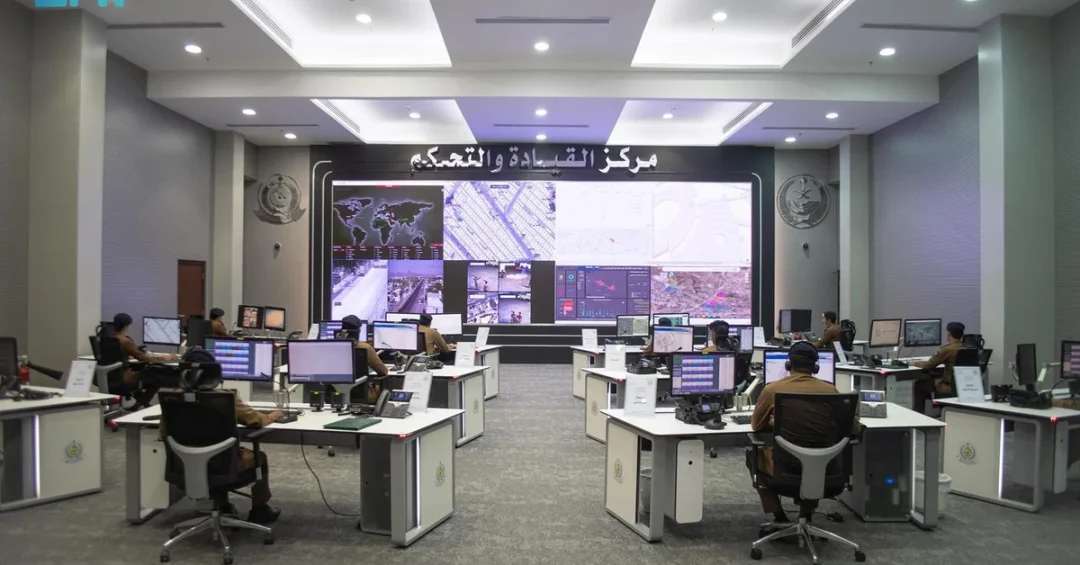
The General Directorate of Civil Defense has unveiled a suite of qualitative services powered by artificial intelligence and advanced technologies at its command-and-control center in Mina, marking a significant leap in safety and emergency response during the Hajj season of 1445 AH. The directorate’s adoption of modern technologies reflects the broader efforts of Saudi security agencies to ensure the safety and well-being of pilgrims in the holy sites. These innovations include a smart platform that utilizes smart surveillance cameras to analyze, detect, and manage risks such as smoke, fire, and other emergencies, thereby enhancing the speed and efficiency of civil defense teams.
Context and Background
The Hajj season presents unique logistical and safety challenges, with millions of pilgrims converging on the holy sites of Makkah and Mina. The General Directorate of Civil Defense, under the Ministry of Interior, has consistently leveraged technology to improve its operations. This year, the integration of artificial intelligence represents a continuation of Saudi Arabia’s commitment to harnessing cutting-edge solutions for public safety. The command-and-control center in Mina serves as the hub for these efforts, coordinating with various security agencies to protect pilgrims and facilitate a smooth Hajj experience.
Key Details
The smart platform employs surveillance cameras equipped with AI algorithms to detect potential hazards in real time. This includes identifying smoke, fire, and other emergencies, as well as predicting risks to prevent incidents. Upon detection, the system alerts civil defense teams, enabling immediate intervention and assistance. Additionally, the directorate has introduced technical services for licensing pilgrims’ accommodation companies. Safety inspectors can now verify licenses by scanning QR codes at the entrances of pilgrims’ camps using smart patrol cameras, with data displayed on mobile devices. Furthermore, the center utilizes digital twinning technology, integrated with the geospatial portal of Hajj civil defense forces, to create an interactive map of the holy sites. This map aids in workforce distribution, defines supervisory scopes for field units, and supports training and risk avoidance.
Implications and Impact
The adoption of AI and digital twinning significantly enhances the efficiency and effectiveness of civil defense operations during Hajj. Faster response times and predictive capabilities can prevent accidents and save lives, ensuring a safer environment for pilgrims. This technological advancement also positions Saudi Arabia as a leader in smart Hajj management, showcasing its ability to handle large-scale events with innovation. The success of these measures during Hajj 1445 AH could serve as a model for future mass gatherings, both within the Kingdom and internationally, demonstrating the potential of AI in crowd safety and emergency management.
Vision 2030 Alignment
This initiative aligns with Saudi Vision 2030’s goals of enhancing public safety, promoting digital transformation, and improving the quality of life for citizens and visitors. By integrating AI and smart technologies into Hajj operations, the Kingdom reinforces its commitment to leveraging innovation for the benefit of humanity. The General Directorate of Civil Defense’s efforts exemplify how Vision 2030 is being realized on the ground, ensuring that the Hajj experience remains safe, secure, and spiritually fulfilling for all pilgrims. As Saudi Arabia continues to modernize its services, such advancements will further solidify its global role in managing religious tourism and emergency response.
20 Questions
Q1. What did the General Directorate of Civil Defense unveil for Hajj 1445 AH?
A1. The directorate unveiled qualitative services using artificial intelligence and advanced technologies at its command-and-control center in Mina to enhance safety and emergency response during the Hajj season.
Q2. Where is the command-and-control center located?
A2. The command-and-control center is located in Mina, near the holy sites, serving as the hub for coordinating civil defense operations during Hajj.
Q3. What is the purpose of the smart platform mentioned?
A3. The smart platform uses AI and surveillance cameras to analyze, detect, and manage risks such as smoke, fire, and emergencies, enabling faster response and intervention by civil defense teams.
Q4. How does the system detect risks?
A4. The system uses smart surveillance cameras equipped with AI algorithms to analyze video feeds in real time, identifying potential hazards like smoke or fire and predicting risks.
Q5. What are the benefits of these AI services?
A5. These services increase the speed of response, allow immediate intervention, and provide necessary assistance, ultimately enhancing pilgrim safety and preventing incidents.
Q6. What technical services are provided for accommodation companies?
A6. The directorate offers license verification services using QR codes at pilgrims’ camps, which safety inspectors can scan with smart patrol cameras to display license data on mobile devices.
Q7. How does the QR code system work?
A7. Safety inspectors use smart patrol cameras to read QR codes installed at camp entrances. The license data is then displayed on the patrol’s mobile device for quick verification.
Q8. What is digital twinning technology?
A8. Digital twinning involves creating a virtual replica of physical assets or systems. Here, it integrates with the geospatial portal to build an interactive map of the holy sites for better workforce distribution and risk management.
Q9. How is digital twinning used in Hajj operations?
A9. It helps distribute workforce, determine supervisory scopes for field units, identify dangerous places, and avoid risks through an interactive map of the holy sites.
Q10. What is the geospatial portal of Hajj civil defense forces?
A10. It is a digital mapping system that provides geographic data and analytics to support civil defense operations, integrated with digital twinning for enhanced situational awareness.
Q11. How does AI improve response times?
A11. AI analyzes data from cameras and sensors to detect emergencies instantly, alerting teams and enabling immediate intervention, thus reducing response times significantly.
Q12. What risks can the system predict?
A12. The system can predict risks such as fire, smoke, crowd crushes, and other emergencies by analyzing patterns and anomalies in the surveillance data.
Q13. Are there any other technologies used?
A13. Yes, the directorate uses smart patrols, mobile devices, and integrated geospatial systems, all working together to enhance safety and coordination.
Q14. How does this benefit pilgrims?
A14. Pilgrims benefit from a safer environment with faster emergency response, reduced risks, and improved overall management of the Hajj experience.
Q15. What role does the Ministry of Interior play?
A15. The Ministry of Interior oversees the General Directorate of Civil Defense, ensuring coordinated efforts among security agencies to protect pilgrims and maintain order during Hajj.
Q16. How does this align with Saudi Vision 2030?
A16. It aligns with Vision 2030 by promoting digital transformation, enhancing public safety, and improving quality of life, showcasing Saudi Arabia’s leadership in smart technology for crowd management.
Q17. Will these technologies be used in future Hajj seasons?
A17. Yes, the success of these technologies is expected to lead to their continued and expanded use in future Hajj seasons, further improving safety and efficiency.
Q18. What is the significance of the command-and-control center?
A18. The center serves as the central hub for monitoring, coordinating, and directing civil defense operations, ensuring a unified and rapid response to any incident during Hajj.
Q19. How does the system handle emergencies?
A19. Upon detection of an emergency, the system alerts civil defense teams, who then intervene immediately, using the data provided to address the situation effectively.
Q20. What makes this year’s Hajj different in terms of technology?
A20. This year’s Hajj features the extensive integration of AI, digital twinning, and smart platforms, representing a significant advancement in technological support for pilgrim safety and operational efficiency.
Reader Feedback
We value your thoughts. Please share your feedback on this article.
Your feedback helps us improve our coverage.