


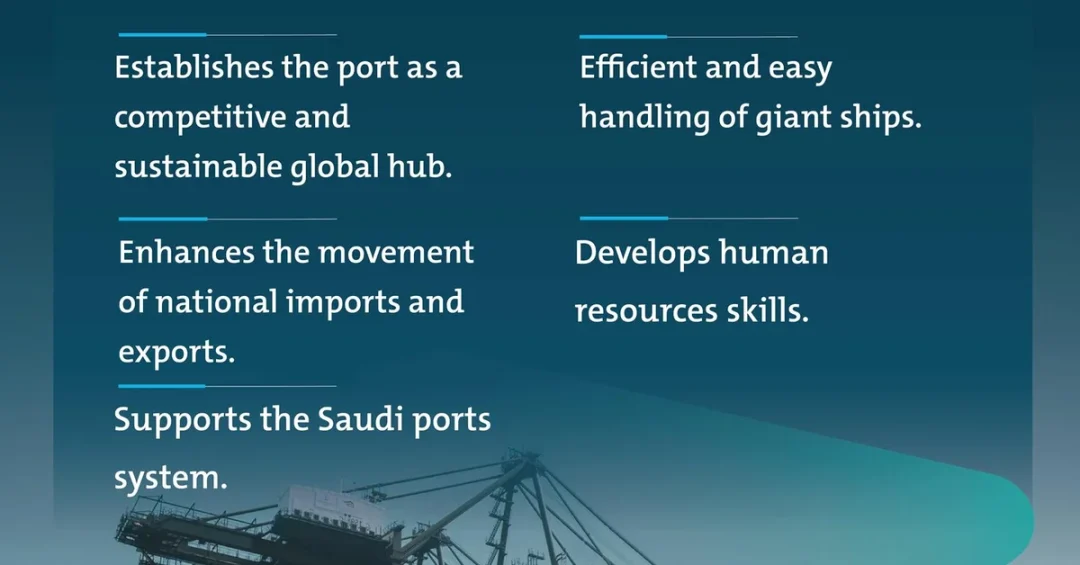
King Abdulaziz Port in Dammam has taken a significant step forward in its expansion and modernization efforts by receiving three new quay cranes (QC) equipped with automated operation capabilities and three rubber-tired gantry cranes (RTG), according to a press release issued by the port authorities. The addition brings the total number of QCs at the port to 18 and RTGs to 50, enhancing the port’s capacity to efficiently handle giant ships and reinforcing its position as a key player in regional and global trade.
Context and Background
King Abdulaziz Port, located in Dammam on the eastern coast of Saudi Arabia, is one of the Kingdom’s most vital maritime gateways. It serves as a strategic hub for imports and exports, connecting Saudi Arabia to markets across Asia, Europe, and Africa. The port is operated by Saudi Global Ports (SGP), a leading terminal operator, which manages its two container terminals.
The delivery of the new cranes aligns with SGP’s commitment to developing the port into a competitive and sustainable global hub. This initiative is part of the SAR7 billion commercial outsourcing contracts signed with the Saudi Ports Authority (Mawani), underscoring the Kingdom’s broader efforts to modernize its logistics infrastructure.
Key Details
The three new quay cranes are equipped with automated operation capabilities and can reach at least 25 rows, allowing them to accommodate advanced and large ships with full productivity and high efficiency. The three rubber-tired gantry cranes further enhance the port’s ability to manage container throughput. According to the press release, this addition boosts the port’s infrastructure and ensures the smooth handling of giant vessels.
SGP is also cooperating with Mawani to enhance its operations by training its workforce in the use of modern cranes. This investment in human capital is expected to strengthen Saudi ports and the Kingdom’s growing role in the global logistics services chain. The outsourcing projects at King Abdulaziz Port are projected to create more than 4,000 job opportunities, supporting the Saudi Ports Authority’s efforts to improve the ports and logistics sector, increase supply chain reliability, and boost national imports and exports.
Implications and Impact
The arrival of these advanced cranes is a clear indicator of Saudi Arabia’s commitment to enhancing its maritime infrastructure and elevating its standing in international indices. By increasing the port’s capacity and efficiency, the Kingdom is better positioned to handle growing trade volumes and reduce dependence on other regional ports. This development also contributes to the reliability of supply chains, which is crucial for both domestic industries and international partners.
Moreover, the creation of over 4,000 job opportunities reflects the broader economic benefits of such infrastructure projects. It supports the National Transport and Logistics Strategy, which aims to solidify Saudi Arabia’s standing as a global logistics hub bridging three continents. The enhanced capabilities at King Abdulaziz Port will likely attract more shipping lines and increase transit volumes, further integrating the Kingdom into global trade networks.
Vision 2030 Alignment
This development is fully aligned with Saudi Vision 2030, which seeks to diversify the economy, improve infrastructure, and position the Kingdom as a leading global logistics and commercial hub. By investing in state-of-the-art equipment and training local talent, Saudi Arabia is not only boosting its ports but also creating sustainable economic opportunities. As the Kingdom continues to modernize its logistics sector, initiatives like this at King Abdulaziz Port in Dammam will play a pivotal role in achieving the ambitious goals of Vision 2030 and reinforcing Saudi Arabia’s global role.
20 Questions
Q1. What new equipment did King Abdulaziz Port in Dammam receive?
A1. The port received three quay cranes (QC) with automated operation capabilities and three rubber-tired gantry cranes (RTG), according to a press release issued by the port authorities.
Q2. How many quay cranes does the port now have in total?
A2. With the addition of three new quay cranes, the total number of QCs at King Abdulaziz Port in Dammam has reached 18.
Q3. What is the total number of rubber-tired gantry cranes at the port?
A3. The port now has a total of 50 rubber-tired gantry cranes, following the delivery of three new RTGs.
Q4. Which company operates the container terminals at King Abdulaziz Port?
A4. Saudi Global Ports (SGP) operates the two container terminals at King Abdulaziz Port in Dammam, as the port’s strategic partner.
Q5. What is the significance of the new cranes for the port’s operations?
A5. The new cranes enhance the port’s infrastructure and enable it to efficiently handle giant ships, boosting overall productivity and capacity.
Q6. How many rows can the new quay cranes reach?
A6. The new quay cranes can reach at least 25 rows, which helps in accommodating advanced and large ships with full productivity and high efficiency.
Q7. What is the value of the commercial outsourcing contracts signed with Mawani?
A7. The commercial outsourcing contracts signed with the Saudi Ports Authority (Mawani) are valued at SAR7 billion.
Q8. How does SGP plan to enhance its operations further?
A8. SGP cooperates with Mawani to boost its operations by honing cadres’ skills in the use of modern cranes, ensuring efficient and safe operations.
Q9. How many job opportunities are expected to be created through the outsourcing projects?
A9. The outsourcing projects at King Abdulaziz Port are expected to provide more than 4,000 job opportunities, supporting the local economy.
Q10. What is the National Transport and Logistics Strategy?
A10. The National Transport and Logistics Strategy is a Saudi initiative aimed at solidifying the Kingdom’s standing as a global logistics hub bridging three continents.
Q11. How does this development benefit Saudi Arabia’s global logistics role?
A11. It strengthens Saudi ports and the Kingdom’s growing role in the global logistics services chain, enhancing its competitiveness and connectivity.
Q12. What impact will the new cranes have on supply chains?
A12. The new cranes will increase the reliability of supply chains, boost national imports and exports, and improve the Kingdom’s ranking in international indices.
Q13. When was the press release about the new cranes issued?
A13. The press release was issued on June 23, 2024, according to the Saudi Press Agency (SPA).
Q14. What are the automated operation capabilities of the new quay cranes?
A14. The quay cranes feature automated operation capabilities, which enhance precision, efficiency, and safety in handling containers.
Q15. How does the addition of these cranes align with SGP’s commitment?
A15. It aligns with SGP’s commitment to developing King Abdulaziz Port into a competitive and sustainable global hub, as per the SAR7 billion contracts.
Q16. What role does Mawani play in the port’s development?
A16. The Saudi Ports Authority (Mawani) oversees the port’s development, signing contracts and cooperating with SGP to improve operations and infrastructure.
Q17. How will the new cranes improve the port’s competitiveness?
A17. By enabling the handling of larger ships with greater efficiency, the cranes enhance the port’s competitiveness and attract more shipping traffic.
Q18. What are the broader economic benefits of this development?
A18. The development creates jobs, boosts trade, improves supply chain reliability, and supports Saudi Arabia’s economic diversification goals.
Q19. How does this project support Saudi Vision 2030?
A19. It aligns with Vision 2030 by modernizing infrastructure, creating jobs, and positioning Saudi Arabia as a global logistics hub.
Q20. What future developments can be expected at King Abdulaziz Port?
A20. Further modernization and capacity expansions are anticipated as part of ongoing efforts to enhance the port’s role in global trade and logistics.
Reader Feedback
We value your thoughts. Please share your feedback on this article.
Your feedback helps us improve our coverage.