


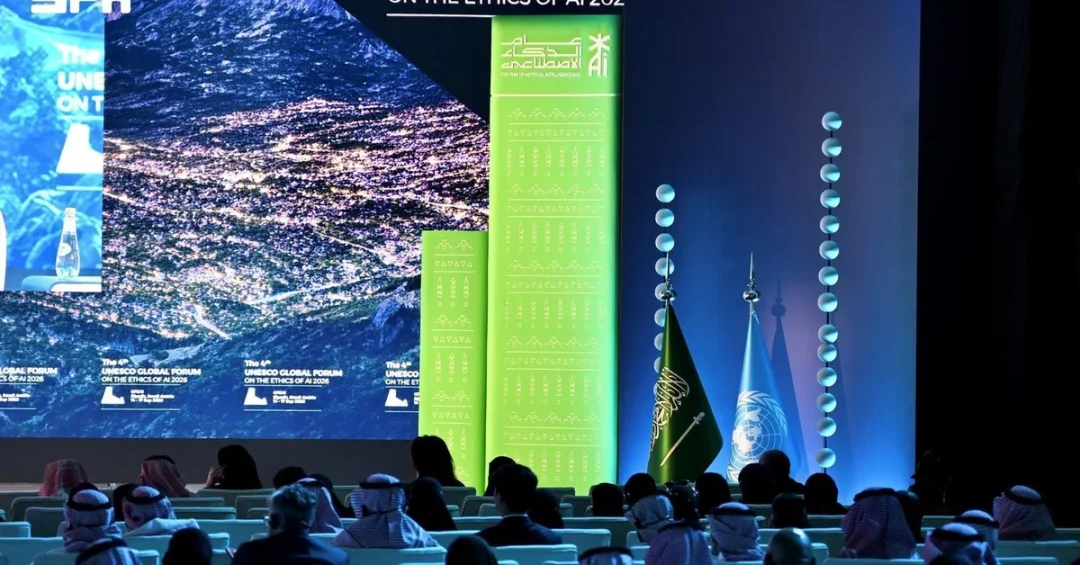
Riyadh hosted the fourth edition of the UNESCO Global Forum on the Ethics of Artificial Intelligence (GFEAI 2026), bringing together policymakers, experts, and academics to advance global principles for responsible AI development. The forum, held in the Saudi capital, reviewed progress since the adoption of the UNESCO Recommendation on the Ethics of Artificial Intelligence in 2021 and explored how to translate those principles into actionable policies and practices that protect humanity while fostering innovation.
Context and Background
As artificial intelligence capabilities expand rapidly, questions that technology alone cannot answer have moved to the forefront of global debate: Where does human responsibility begin and end? Who bears the consequences of decisions made by algorithms? How can the pace of innovation be balanced with the need to protect people and society? These questions place AI ethics at the heart of international discussions, and Riyadh’s hosting of GFEAI 2026 underscores the Kingdom’s commitment to shaping a future where technological progress serves humanity.
The UNESCO Recommendation on the Ethics of Artificial Intelligence, adopted in 2021, provided a foundational framework for countries to develop AI governance. The Riyadh forum serves as a critical platform to assess progress and address gaps, especially as AI enters increasingly sensitive fields such as healthcare, finance, and education. The event reflects Saudi Arabia’s proactive role in global digital diplomacy and its dedication to ensuring that AI development aligns with human values and the public interest.
Key Details
The fourth edition of GFEAI, organized by UNESCO in partnership with Saudi authorities, convened a diverse group of stakeholders to discuss the ethical dimensions of AI. Participants examined how AI now shapes analysis, prediction, content creation, and decision-making, raising new concerns about fairness, transparency, accountability, and privacy. The forum emphasized that the challenge is not to halt development or limit innovation, but to strike a balance that lets society benefit from AI’s potential while establishing clear principles for responsible use.
Discussions highlighted the need for global dialogue on the values and principles that should accompany AI development, particularly as technological applications transcend national borders and the effects of algorithms can extend across multiple societies simultaneously. Experts and decision-makers shared insights on developing clearer visions for the next phase of AI governance, focusing on practical strategies to implement ethical guidelines.
Implications and Impact
The outcomes of GFEAI 2026 are expected to influence AI policies worldwide, promoting a harmonized approach to ethics that balances innovation with protection of human rights. By hosting this global dialogue, Riyadh reinforces its position as a leader in international cooperation on emerging technologies. The forum’s emphasis on translating principles into actionable policies will help countries and companies navigate the complexities of AI, ensuring that technological advancements are trustworthy and responsible.
Moreover, the event signals a growing recognition that AI governance requires sustained multilateral engagement. As countries and companies race to develop AI capabilities, the question remains: Can the world establish rules for the future as fast as technology evolves? From Riyadh, a global dialogue is beginning to seek the answer, with the Kingdom playing a pivotal role in fostering consensus and driving collective action.
Vision 2030 Alignment
Saudi Arabia’s leadership in hosting GFEAI 2026 aligns seamlessly with Vision 2030, the Kingdom’s ambitious roadmap for economic diversification and social modernization. Vision 2030 prioritizes the development of a digital economy and the adoption of emerging technologies, while ensuring that such progress is ethical and inclusive. By championing AI ethics on the global stage, Saudi Arabia demonstrates its commitment to responsible innovation and its aspiration to be a hub for technology and knowledge. The forum not only advances global AI governance but also showcases the Kingdom’s capacity to convene world leaders and shape a future where AI benefits all of humanity.
As the world moves toward an AI-driven era, Saudi Arabia’s role in promoting ethical frameworks will be instrumental in building trust and ensuring that technological advancements contribute to sustainable development and human welfare. The Riyadh forum marks a significant step toward a responsible AI future that protects humanity, in line with the Kingdom’s vision for a prosperous and secure tomorrow.
20 Questions
Q1. What is the UNESCO Global Forum on the Ethics of Artificial Intelligence?
A1. It is a global platform that brings together policymakers, experts, and academics to discuss and advance ethical principles for artificial intelligence, reviewing progress since the 2021 UNESCO Recommendation.
Q2. Why was Riyadh chosen to host GFEAI 2026?
A2. Riyadh was chosen due to Saudi Arabia’s growing leadership in technology and its commitment to fostering international dialogue on AI ethics, aligning with Vision 2030’s focus on innovation.
Q3. What was the main focus of GFEAI 2026?
A3. The forum focused on translating the principles of the UNESCO Recommendation into actionable policies and practices, addressing challenges like fairness, transparency, and accountability in AI.
Q4. How does AI ethics impact global society?
A4. AI ethics ensures that technological advancements respect human rights, promote fairness, and protect privacy, guiding AI development to serve the public interest across borders.
Q5. What is the UNESCO Recommendation on the Ethics of AI?
A5. Adopted in 2021, it is a comprehensive global standard that provides a framework for countries to develop ethical AI policies, emphasizing human dignity and environmental sustainability.
Q6. What role does Saudi Arabia play in AI governance?
A6. Saudi Arabia is actively shaping global AI governance by hosting key forums like GFEAI 2026, promoting responsible innovation, and integrating AI ethics into its Vision 2030 strategies.
Q7. Why is international dialogue on AI ethics important?
A7. AI transcends national borders, so international dialogue is crucial to harmonize regulations, share best practices, and ensure that AI benefits are equitably distributed worldwide.
Q8. How does GFEAI 2026 address the rapid pace of AI development?
A8. The forum emphasizes balancing innovation with ethical safeguards, encouraging agile policy responses that keep pace with technological advancements while protecting societal values.
Q9. What are the key challenges in AI ethics today?
A9. Key challenges include ensuring algorithmic fairness, maintaining transparency in decision-making, protecting data privacy, and establishing accountability for AI-driven outcomes.
Q10. How can AI be used responsibly in sensitive fields?
A10. Responsible use requires clear ethical guidelines, rigorous oversight, and inclusive stakeholder engagement to prevent harm and ensure AI supports human well-being in fields like healthcare and finance.
Q11. What outcomes are expected from GFEAI 2026?
A11. Expected outcomes include enhanced international cooperation, concrete policy recommendations, and a roadmap for implementing ethical AI practices globally, with Saudi Arabia playing a key role.
Q12. How does AI ethics relate to human rights?
A12. AI ethics upholds human rights by preventing discrimination, safeguarding privacy, and ensuring that AI systems respect individual freedoms and dignity.
Q13. What is the significance of Riyadh hosting this forum?
A13. It highlights Saudi Arabia’s emergence as a global hub for technology and diplomacy, demonstrating its commitment to ethical AI and its ability to convene world leaders for critical discussions.
Q14. How can countries implement the UNESCO Recommendation?
A14. Countries can implement it by developing national AI strategies, establishing regulatory bodies, and fostering multi-stakeholder partnerships to translate principles into practice.
Q15. What role do experts play in GFEAI?
A15. Experts provide technical insights, share research, and offer practical solutions to ethical dilemmas, helping policymakers craft effective and informed AI governance frameworks.
Q16. How does AI ethics support innovation?
A16. Ethical frameworks build trust and provide clarity, enabling innovators to develop AI responsibly, which in turn fosters sustainable and widely accepted technological progress.
Q17. What is Saudi Arabia’s Vision 2030 and its link to AI?
A17. Vision 2030 is Saudi Arabia’s plan to diversify its economy and modernize society; it prioritizes AI and digital technologies, ensuring their development aligns with ethical and inclusive growth.
Q18. How can global dialogue on AI ethics be sustained?
A18. Sustained dialogue requires regular international forums, continuous research, and commitment from governments and organizations to update ethical guidelines as AI evolves.
Q19. What are the risks of unregulated AI?
A19. Unregulated AI can lead to privacy breaches, algorithmic bias, and unintended consequences, underscoring the need for robust ethical and legal frameworks.
Q20. How does GFEAI 2026 contribute to a responsible AI future?
A20. By fostering consensus on ethical principles and promoting actionable policies, GFEAI 2026 helps steer AI development toward responsible, human-centric outcomes that protect society.
Reader Feedback
We value your thoughts. Please share your feedback on this article.
Your feedback helps us improve our coverage.