


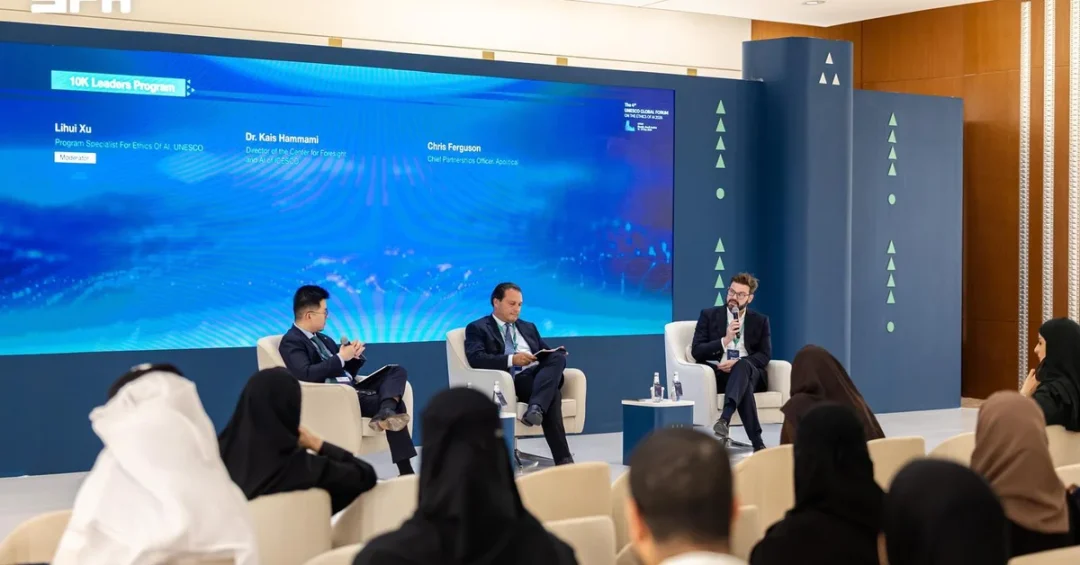
Riyadh, September 16, 2026 — The International Center for AI Research and Ethics (ICAIRE) announced the launch of a program to train 10,000 AI leaders, in cooperation with the Islamic World Educational, Scientific and Cultural Organization (ICESCO), in partnership with the Apolitical platform, and in coordination with the Saudi National Commission for Education, Culture and Science. The announcement was made during the UNESCO Global Forum on the Ethics of Artificial Intelligence (GFEAI 2026), hosted by Saudi Arabia in Riyadh and running through September 17, 2026.
Context and Background
The UNESCO Global Forum on the Ethics of Artificial Intelligence is a premier international event that brings together policymakers, experts, and stakeholders to discuss the ethical dimensions of AI. Saudi Arabia’s hosting of GFEAI 2026 underscores its growing role in global AI governance and its commitment to fostering international cooperation in this critical field. The forum aligns with the Kingdom’s Vision 2030 objectives, which emphasize digital transformation and the development of a knowledge-based economy.
The new program, led by ICAIRE, aims to enhance AI literacy and develop the leadership capabilities of senior public-sector leaders and policymakers in ICESCO member states. It will equip them with the knowledge and practical tools needed to understand the opportunities and risks associated with AI and frameworks for its ethical governance.
Key Details
Over two years, the program aims to train 10,000 leaders and gradually expand to cover the 53 ICESCO member states. It will be delivered entirely online through live instructor-led sessions and self-paced learning modules. The curriculum comprises four main tracks: AI fundamentals, advanced applications, AI ethics and governance, and the use of AI in strategic decision-making.
The collaboration among ICAIRE, ICESCO, and Apolitical brings together specialized expertise in AI and its ethics with access to leaders across member states. Apolitical, a global platform for public servants, will provide its learning infrastructure to facilitate the program’s delivery.
Implications and Impact
This initiative represents a significant step in building AI capacity across the Islamic world. By training leaders in ethical AI governance, the program will help member states harness AI for sustainable development while mitigating potential risks. It also reinforces Saudi Arabia’s position as a leader in AI ethics and governance, following the establishment of ICAIRE and the Kingdom’s active participation in global AI discussions.
The program’s launch at GFEAI 2026 highlights the importance of international collaboration in shaping AI policies that are inclusive and ethically sound. It is expected to create a network of AI-literate leaders who can drive responsible AI adoption in their respective countries.
Vision 2030 Alignment
This program directly supports Saudi Arabia’s Vision 2030, which seeks to diversify the economy and promote innovation. By investing in AI education and ethics, the Kingdom is not only advancing its own digital transformation but also contributing to global efforts to ensure AI benefits humanity. The initiative reflects Saudi Arabia’s commitment to international cooperation and its role as a catalyst for positive change in the region and beyond.
20 Questions
Q1. What is the main goal of the ICAIRE program?
A1. The program aims to train 10,000 AI leaders from ICESCO member states to enhance AI literacy and develop leadership capabilities for ethical AI governance.
Q2. Who are the partners in this initiative?
A2. The initiative is a collaboration between ICAIRE, ICESCO, and the Apolitical platform, with coordination from the Saudi National Commission for Education, Culture and Science.
Q3. How long will the program last?
A3. The program is designed to run over two years, with the goal of gradually expanding to cover all 53 ICESCO member states.
Q4. How will the training be delivered?
A4. The training will be delivered entirely online through live instructor-led sessions and self-paced learning modules, ensuring accessibility for participants across member states.
Q5. What are the four main tracks of the program?
A5. The four tracks are AI fundamentals, advanced applications, AI ethics and governance, and the use of AI in strategic decision-making.
Q6. Where was the program announced?
A6. The program was announced at the UNESCO Global Forum on the Ethics of Artificial Intelligence (GFEAI 2026) hosted in Riyadh, Saudi Arabia.
Q7. What is the significance of hosting GFEAI 2026 in Riyadh?
A7. Hosting the forum underscores Saudi Arabia’s growing role in global AI governance and its commitment to fostering international cooperation in AI ethics.
Q8. How does this program align with Saudi Vision 2030?
A8. It supports Vision 2030 by promoting digital transformation, knowledge-based economic growth, and international cooperation in AI ethics and education.
Q9. Who is eligible to participate in the program?
A9. Senior public-sector leaders and policymakers from ICESCO member states are the primary target audience for this capacity-building initiative.
Q10. What is ICESCO’s role in the program?
A10. ICESCO facilitates access to leaders across its 53 member states and provides institutional support for the program’s implementation and outreach.
Q11. What is Apolitical’s contribution to the program?
A11. Apolitical, a global learning platform for public servants, provides the online infrastructure and expertise to deliver the training effectively.
Q12. How will the program impact AI governance in member states?
A12. By equipping leaders with ethical AI knowledge, the program will help member states develop robust governance frameworks and responsible AI policies.
Q13. What are the expected outcomes of the program?
A13. The program expects to create a network of 10,000 AI-literate leaders who can drive ethical AI adoption and policymaking in their countries.
Q14. Is the program open to participants from non-ICESCO countries?
A14. The program initially focuses on ICESCO member states, but future expansions may consider broader participation in line with its objectives.
Q15. How does this initiative benefit Saudi Arabia?
A15. It reinforces Saudi Arabia’s leadership in AI ethics, supports Vision 2030 goals, and enhances the Kingdom’s global standing in technology and education.
Q16. What is the International Center for AI Research and Ethics (ICAIRE)?
A16. ICAIRE is a Saudi-based center dedicated to advancing AI research and promoting ethical standards in AI development and deployment globally.
Q17. Will participants receive certification upon completion?
A17. While specifics are not detailed, the program is structured to provide comprehensive training, likely with recognition of completion.
Q18. How does the program address AI risks?
A18. It includes a dedicated track on AI ethics and governance, equipping leaders with frameworks to identify and mitigate potential risks.
Q19. What is the timeline for the program’s rollout?
A19. The program will begin immediately and run over two years, with gradual expansion to all 53 ICESCO member states.
Q20. How can interested leaders apply?
A20. Interested leaders from ICESCO member states should await official announcements from ICESCO or their national commissions for application details.
Reader Feedback
We value your thoughts. Please share your feedback on this article.
Your feedback helps us improve our coverage.