


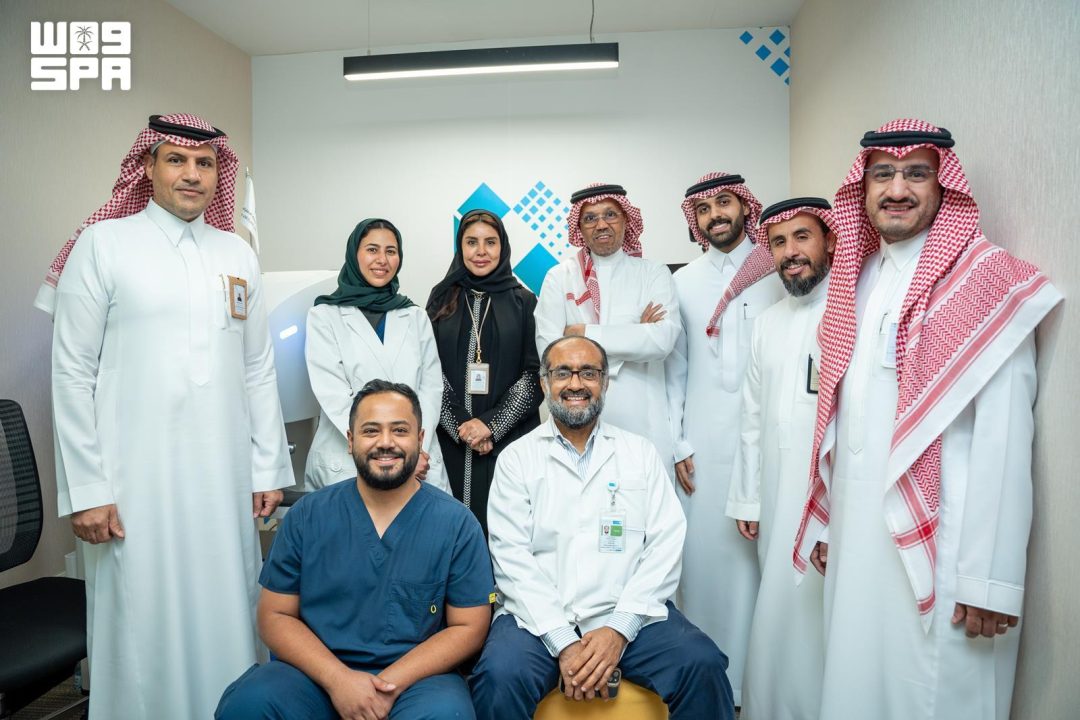
King Khalid University Hospital served as the site for seven surgeries conducted over three days during the launch of the Saudi Telesurgery Program. The surgical team performed these procedures remotely from the robotic surgery office at Seha Virtual Hospital.
According to SPA, the program was launched by King Saud University Medical City in partnership with Seha Virtual Hospital, Zain KSA, and Edge, a robotics equipment specialist represented by Al-Amin Company.
The initial surgeries covered several specialties, including general surgery, obesity surgery, thoracic surgery, and obstetrics and gynecology. On the first day, four consecutive surgeries were performed across different specialties involving complex surgical challenges.
The program aims to develop a Saudi national protocol for telesurgery involving medical, technical, and digital specialties to create a scalable national model. Dr. Abdulaziz bin Mohammed Al-Thunayan, Executive Director of Health Affairs at King Saud University Medical City, stated that King Khalid University Hospital has provided robotic surgery services since 2003.
Al-Thunayan noted that these technologies could be used during large gatherings such as the Hajj season, in humanitarian cases, and in emergency situations where surgical expertise is needed in hard-to-reach areas. The technology may also support humanitarian efforts outside Saudi Arabia in the future.
Who participated in the launch of the Saudi Telesurgery Program? The program was launched by King Saud University Medical City. It involved partnerships with Seha Virtual Hospital, Zain KSA, and the robotics equipment specialist company Edge, which is represented by Al-Amin Company.
How were the initial surgeries conducted in the program? Seven surgeries were performed over three days. While the patients were located in the operating rooms of King Khalid University Hospital, the university surgical team performed the operations remotely from the robotic surgery office at Seha Virtual Hospital.
Which medical specialties were included in the first phase of telesurgeries? The surgeries covered several different medical fields, specifically general surgery, obesity surgery, thoracic surgery, and obstetrics and gynecology. On the first day alone, four consecutive surgeries were completed across various specialties.
What are the long-term goals and potential applications of the Saudi Telesurgery Program? The program aims to establish a Saudi national protocol for telesurgery through medical, technical, and digital collaboration. Potential applications include providing surgical expertise during the Hajj season, responding to emergencies in hard-to-reach areas, and supporting international humanitarian efforts.