


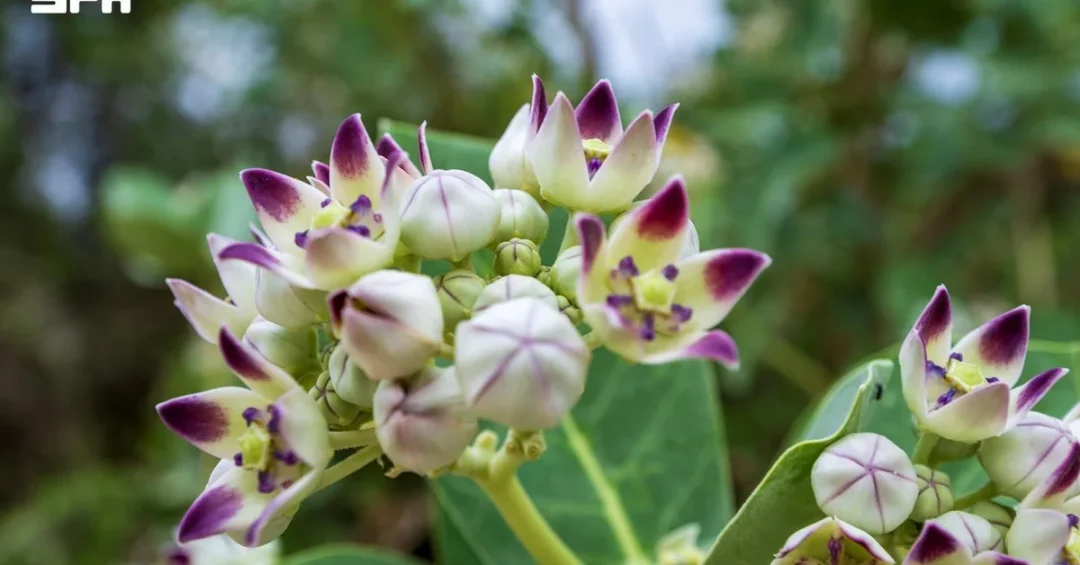
Jazan’s wild environments are home to a remarkably resilient plant species, Calotropis procera, an evergreen shrub that flourishes in arid, sandy, and saline soils despite extreme heat and drought, according to the Saudi Press Agency (SPA). This hardy shrub, which belongs to the Apocynaceae family, reaches up to five meters in height and is a vital component of the region’s biodiversity, showcasing the adaptability of flora in Saudi Arabia’s diverse ecosystems.
Context and Background
Jazan, located in the southwestern corner of Saudi Arabia, is known for its varied terrain, from coastal plains to mountainous areas. The region’s wild environments support a range of plant species that have evolved to survive in harsh conditions. Calotropis procera, commonly known as the apple of Sodom or rubber bush, is a standout example of such resilience. It thrives where many other plants cannot, thanks to specialized adaptations like thick, silvery-green leaves with a waxy coating that minimizes water loss. This adaptation allows the shrub to conserve moisture during prolonged droughts.
The plant also produces fragrant white and violet flowers that attract pollinators year-round, contributing to the local ecosystem’s health. Dr. Zarraq Al-Faifi, a biology faculty member at Jazan University, highlighted that the shrub yields mango-shaped green fruits filled with fibrous pulp and wind-dispersed seeds equipped with silky tufts for long-distance propagation. These features ensure the species’ survival and spread across challenging landscapes.
Key Details
Calotropis procera secretes a toxic white latex sap throughout its tissues, which deters most herbivores. However, certain species, such as the emperor butterfly and the Calotropis grasshopper, have adapted to feed on it safely, using its chemical compounds as a natural defense against predators. This intricate ecological relationship underscores the shrub’s role in supporting specialized wildlife. The plant’s ability to grow in saline and sandy soils also makes it a candidate for land restoration projects in arid regions.
According to SPA, the shrub’s presence in Jazan is part of the region’s natural heritage, reflecting the biodiversity that Saudi Arabia aims to preserve under its environmental sustainability goals. The plant’s tolerance to extreme conditions aligns with ongoing efforts to combat desertification and promote green initiatives across the Kingdom.
Implications and Impact
The resilience of Calotropis procera has implications beyond Jazan. As climate change exacerbates drought and soil salinity in many parts of the world, studying such species can inform agricultural practices and ecosystem management. In Saudi Arabia, the shrub could play a role in reforestation and landscaping projects that require minimal water. Additionally, its presence supports pollinators and specialized insects, contributing to overall ecological balance.
Dr. Al-Faifi’s research at Jazan University highlights the importance of local scientific inquiry in understanding and preserving native flora. Such studies can lead to biotechnological applications, such as developing natural pesticides from the plant’s chemical compounds or using its fibers for sustainable materials. The shrub’s ability to thrive in harsh conditions also makes it a symbol of resilience, mirroring the Kingdom’s broader efforts to adapt to environmental challenges.
Vision 2030 Alignment
The conservation and study of Calotropis procera align with Saudi Vision 2030’s environmental sustainability objectives, particularly the Saudi Green Initiative, which aims to plant 10 billion trees and restore degraded lands. By understanding and utilizing native species like this shrub, the Kingdom can enhance its biodiversity, combat desertification, and promote eco-tourism in regions like Jazan. This approach not only preserves natural heritage but also supports economic diversification and quality of life improvements for future generations.
20 Questions
Q1. What is Calotropis procera and where does it grow?
A1. Calotropis procera is an evergreen shrub in the Apocynaceae family that thrives in arid, sandy, and saline soils. It is found in Jazan’s wild environments and other harsh terrains, reaching up to five meters in height.
Q2. How does the shrub survive extreme heat and drought?
A2. It has thick, silvery-green leaves with a waxy coating that reduces water loss. This adaptation allows it to conserve moisture during prolonged droughts and high temperatures, making it highly resilient in arid conditions.
Q3. What do the flowers of Calotropis procera look like?
A3. The shrub produces fragrant white and violet flowers that attract pollinators year-round. These flowers contribute to the plant’s reproductive success and support local biodiversity by providing nectar and pollen.
Q4. Who is Dr. Zarraq Al-Faifi and what did he say about the plant?
A4. Dr. Zarraq Al-Faifi is a biology faculty member at Jazan University. He noted that the plant produces mango-shaped green fruits filled with fibrous pulp and wind-dispersed seeds with silky tufts for long-distance propagation.
Q5. What type of fruit does Calotropis procera produce?
A5. It produces mango-shaped green fruits that contain fibrous pulp. Inside, seeds are equipped with silky tufts that aid in wind dispersal, allowing the plant to spread across wide areas efficiently.
Q6. Is the plant toxic to humans or animals?
A6. Yes, it secretes a toxic white latex sap throughout its tissues. This sap can be harmful if ingested, but certain adapted species can feed on it safely without ill effects.
Q7. Which insects can feed on Calotropis procera despite its toxicity?
A7. The emperor butterfly and the Calotropis grasshopper are known to feed on it safely. They use the plant’s chemical compounds as a natural defense against predators, showcasing a unique ecological adaptation.
Q8. What family does Calotropis procera belong to?
A8. It belongs to the Apocynaceae family, which includes many flowering plants known for their milky sap and diverse adaptations. This family is widely distributed in tropical and subtropical regions.
Q9. How tall can the shrub grow?
A9. It can reach up to five meters in height, making it a prominent feature in Jazan’s landscape. Its size and evergreen nature provide year-round structure and habitat for wildlife.
Q10. What role does the plant play in Jazan’s ecosystem?
A10. It supports pollinators and specialized insects like the emperor butterfly and Calotropis grasshopper. Its presence enhances biodiversity and contributes to the ecological balance of the region’s wild environments.
Q11. Why is the plant’s ability to grow in saline soil important?
A11. Saline soil is challenging for most plants, but Calotropis procera thrives in it. This trait makes it valuable for land restoration and agriculture in salt-affected areas, helping to combat desertification.
Q12. How are the seeds dispersed?
A12. Seeds are fitted with silky tufts that enable wind dispersal. This mechanism allows the plant to colonize new areas and propagate over long distances, ensuring its survival in harsh terrains.
Q13. What is the significance of the plant’s waxy leaves?
A13. The waxy coating on the leaves reduces water loss through transpiration. This adaptation is crucial for survival in arid conditions, allowing the plant to conserve moisture during extended droughts.
Q14. Does Calotropis procera have any medicinal uses?
A14. While it has traditional uses in some cultures, its toxicity requires caution. Modern research focuses on its chemical compounds for potential applications, but it is not recommended for unsupervised use.
Q15. How does the plant contribute to pollination?
A15. Its fragrant flowers attract a variety of pollinators, including bees and butterflies, year-round. This supports the reproductive success of the plant and maintains pollinator populations in the ecosystem.
Q16. What is the scientific name of the plant and its common names?
A16. The scientific name is Calotropis procera. Common names include apple of Sodom and rubber bush, reflecting its fruit’s appearance and the latex it produces.
Q17. How does the plant defend itself against herbivores?
A17. It produces toxic latex sap that deters most herbivores. However, some specialized insects have adapted to tolerate the toxins and even use them for their own defense against predators.
Q18. What research is being conducted on this plant in Saudi Arabia?
A18. Researchers like Dr. Zarraq Al-Faifi at Jazan University study its biology and ecological role. Such research can inform conservation efforts and potential applications in sustainable land management.
Q19. How does the plant align with Saudi Vision 2030?
A19. It supports environmental sustainability goals, including the Saudi Green Initiative, by thriving in harsh conditions and aiding in land restoration. Its study promotes biodiversity and eco-tourism in regions like Jazan.
Q20. What makes Calotropis procera a symbol of resilience?
A20. Its ability to survive extreme heat, drought, and saline soils, while supporting specialized wildlife, exemplifies resilience. It mirrors Saudi Arabia’s efforts to adapt to environmental challenges and preserve natural heritage.
Reader Feedback
We value your thoughts. Please share your feedback on this article.
Your feedback helps us improve our coverage.