


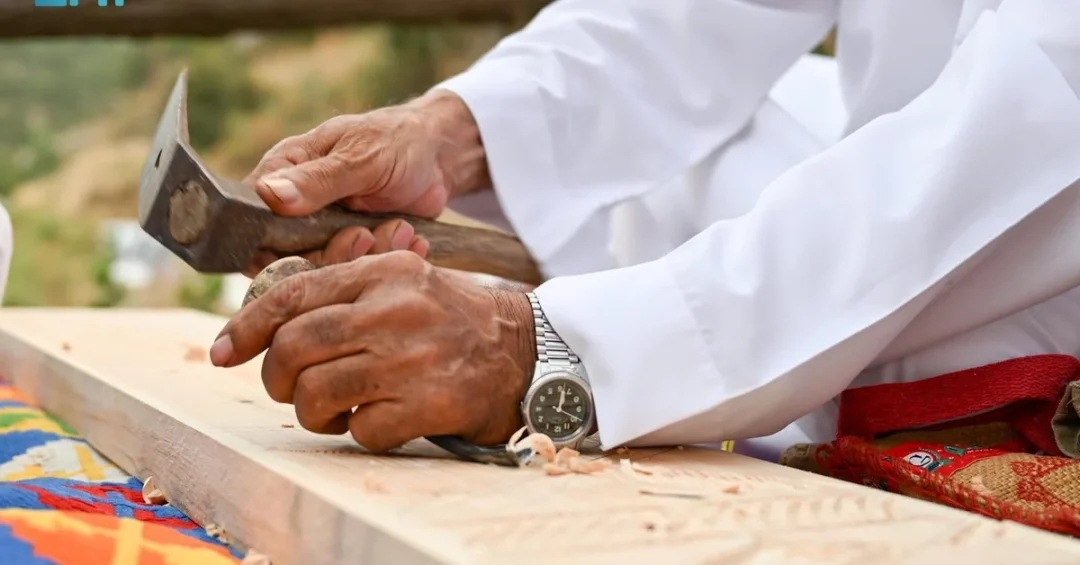
Al-Baha, Saudi Arabia — Carpentry in the Al-Baha region is more than a trade; it is a living heritage passed down through generations, blending creativity with utility, as reported by the Saudi Press Agency (SPA). The region’s rich tradition of woodcraft, sustained by the diversity of local trees such as juniper, sweet acacia, sidr, patch, and neem, reflects a deep connection between the community and its natural environment. This craft not only serves as a source of livelihood but also embodies the cultural identity of Al-Baha, showcasing the ingenuity of its people.
Context and Background
Al-Baha, located in the southwestern part of Saudi Arabia, is known for its mountainous terrain and abundant vegetation, which has historically supported a variety of handicrafts. Among these, carpentry has stood out as a vital profession, with a longstanding saying, “A trade in hand ensures against poverty,” underscoring its importance. For generations, local craftsmen have utilized the region’s diverse trees to create functional and decorative wooden items, passing down their skills and knowledge to younger family members. This oral and practical transmission of heritage ensures the continuity of a craft that is deeply intertwined with the area’s cultural fabric.
Key Details
Mohammed Al-Zahrani, a carpenter in his eighties, shared his insights with the Saudi Press Agency, describing carpentry as a difficult and tiring profession that demands significant time and effort. The process begins with sourcing wood from sidr and sweet acacia trees found in the mountains and valleys of Al-Baha. The wood is then stripped of its bark, dried, and subsequently cut and engraved according to the specific demands of customers. Al-Zahrani emphasized that he adorns the wood with beautiful geometric patterns—some simple and common, others original and unique—making each piece a work of art. Despite the challenges, he has practiced this craft for decades, not only as a means of livelihood but also to introduce his children and grandchildren to the trade, ensuring its survival.
Implications and Impact
The preservation and modernization of traditional crafts like carpentry in Al-Baha have significant implications for the region and beyond. Culturally, it reinforces the identity of the local community, offering a tangible link to the past while adapting to contemporary tastes and needs. Economically, such crafts can contribute to local tourism and the production of unique, handcrafted goods that appeal to both domestic and international markets. Socially, the involvement of younger generations fosters a sense of pride and continuity, bridging the gap between tradition and modernity. Al-Zahrani’s participation in the Social Activity Center in Wadi Al-Arja, Bani Hassan Governorate, where he displayed wood engravings and demonstrated ancestral techniques, exemplifies efforts to keep the heritage alive and educate others about its value.
Vision 2030 Alignment
This flourishing of traditional crafts aligns seamlessly with Saudi Arabia’s Vision 2030, which seeks to diversify the economy, celebrate cultural heritage, and empower local communities. By supporting artisans like Al-Zahrani and promoting handicrafts, the Kingdom not only preserves its rich history but also creates opportunities for sustainable development and tourism. As Saudi Arabia continues to modernize, initiatives that highlight regional crafts contribute to a vibrant cultural landscape, reinforcing the nation’s commitment to honoring its past while building a prosperous future. The carpentry of Al-Baha stands as a testament to the enduring spirit of Saudi heritage, creativity, and resilience.
20 Questions
Q1. What is the longstanding saying in Al-Baha region regarding trades?
A1. The saying is “A trade in hand ensures against poverty,” reflecting the value placed on skilled work like carpentry as a reliable livelihood.
Q2. Which types of trees are commonly used by carpenters in Al-Baha?
A2. Carpenters use juniper, sweet acacia, sidr, patch, and neem trees, which are abundant in the region’s mountains and valleys.
Q3. Who is Mohammed Al-Zahrani?
A3. Mohammed Al-Zahrani is a carpenter in his eighties from Al-Baha, who shared his experiences with the Saudi Press Agency.
Q4. What does Al-Zahrani say about the nature of carpentry?
A4. He describes carpentry as a difficult and tiring profession that requires a lot of time and effort.
Q5. How does Al-Zahrani source his wood?
A5. He sources wood from sidr and sweet acacia trees scattered in the mountains and valleys of Al-Baha.
Q6. What steps are involved in preparing the wood?
A6. The bark is peeled, the wood is dried, and then it is cut and engraved according to customer demands.
Q7. What kind of decorations does Al-Zahrani add to the wood?
A7. He engraves beautiful geometric shapes, some simple and common, others original and unique.
Q8. Why has Al-Zahrani continued carpentry for decades?
A8. He continues not only for livelihood but also to introduce his children and grandchildren to the craft.
Q9. Where did Al-Zahrani display his wood engravings?
A9. He participated in the Social Activity Center in the village of Wadi Al-Arja in Bani Hassan Governorate.
Q10. What is the significance of carpentry in Al-Baha’s cultural identity?
A10. It forms an important part of the region’s heritage, passed down through generations, and showcases local creativity and resourcefulness.
Q11. How do locals seek to modernize these crafts?
A11. They aim to develop and modernize the crafts to keep pace with today’s challenges while preserving traditional techniques.
Q12. What role does the Social Activity Center play?
A12. It provides a platform for artisans to display their work and educate others about traditional practices.
Q13. How does carpentry contribute to the local economy?
A13. It provides a source of income for craftsmen and can attract tourism, supporting the local economy.
Q14. Why is it important to pass down carpentry skills?
A14. Passing down skills ensures the continuity of cultural heritage and keeps the tradition alive for future generations.
Q15. What challenges does carpentry face today?
A15. Challenges include the time-consuming nature of the work and competition from modern, mass-produced goods.
Q16. How does carpentry in Al-Baha align with Vision 2030?
A16. It supports economic diversification, cultural preservation, and community empowerment, key goals of Vision 2030.
Q17. What makes Al-Baha’s carpentry unique?
A17. The use of diverse local woods and the incorporation of intricate geometric designs make it distinctive.
Q18. How can tourists experience Al-Baha’s carpentry heritage?
A18. Tourists can visit local workshops, attend exhibitions at social activity centers, and purchase handcrafted items.
Q19. What message does Al-Zahrani’s story convey?
A19. It conveys the value of hard work, dedication to heritage, and the importance of intergenerational knowledge transfer.
Q20. What future do traditional crafts like carpentry have in Saudi Arabia?
A20. With continued support and modernization, they can thrive as cultural treasures and economic contributors in the Kingdom.
Reader Feedback
We value your thoughts. Please share your feedback on this article.
Your feedback helps us improve our coverage.
Related articles
 Year of The Camel” Pavilion Attracts Visitors at Almadinah Book Fair
 Jeddah Season’s Imagine Monet Concludes with Record-Breaking Success
 Dar Al-Rahmaniah Wins King Salman Architecture Award
 Saudi Arabia Celebrates Years of Cultural Icons
 Three Gyrfalcons Fetch SAR 122K at Saudi Falcon Auction
 SBA’s Khuzama Radio Preserves Gulf Musical Heritage