


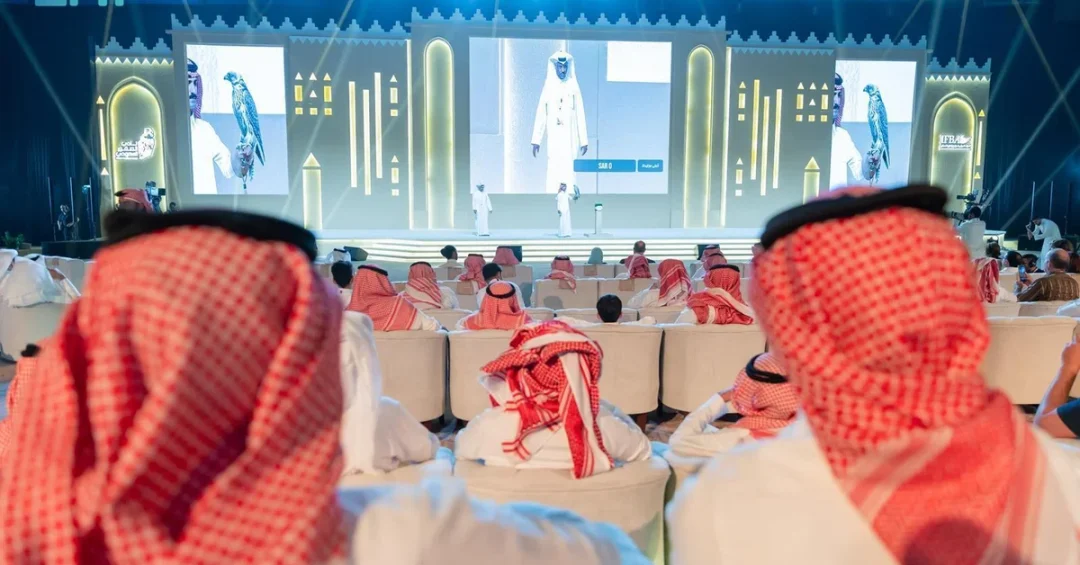
Three pure gyrfalcons sold for a combined SAR 122,000 during the fourth night of the International Falcon Breeders Auction 2024, organized by the Saudi Falcons Club in Riyadh. The event, which runs through August 24, has become a premier destination for elite falcons and a global gathering of falconers, breeders, and enthusiasts. The auction underscores Saudi Arabia’s commitment to preserving and advancing the ancient art of falconry.
Context and Background
The International Falcon Breeders Auction is an annual event hosted by the Saudi Falcons Club, a leading organization dedicated to the development and innovation of falconry. This year’s auction, now in its fourth night, has attracted international attention, featuring falcons from renowned farms such as the British ELDAJY and the French Veil. The event provides a reliable platform for breeders to showcase their finest birds and for falconers to acquire elite falcons.
Falconry is deeply rooted in Saudi culture and heritage, symbolizing nobility, patience, and skill. The auction not only celebrates this tradition but also contributes to its modernization by integrating competitive bidding and global participation. It is broadcast on television and live-streamed on social media, bringing the excitement to a worldwide audience.
Key Sales and Highlights
The fourth night commenced with a pure gyrfalcon from the British ELDAJY farm, which sold for SAR 43,000. Next, a pure gyrfalcon from the French Veil farm fetched SAR 31,000. The night concluded with another pure gyrfalcon from ELDAJY, starting at SAR 20,000 and finally selling for SAR 48,000. The total of SAR 122,000 reflects the high value placed on these magnificent birds.
The auction’s fast-paced and competitive nature drew active participation from falconers and breeders from Saudi Arabia and beyond. The event’s success highlights the growing global interest in falconry and the reputation of Saudi Arabia as a hub for elite falcon trading.
Implications and Impact
The International Falcon Breeders Auction serves as both a cultural and economic catalyst. It supports the local economy by attracting international visitors and fostering trade in falcons. Additionally, it enhances environmental awareness by promoting responsible breeding and conservation practices. The event also strengthens Saudi Arabia’s position as a leader in falconry innovation, aligning with the Kingdom’s broader goals of cultural preservation and economic diversification.
Furthermore, the auction facilitates international collaboration among breeders, falconers, and enthusiasts, building bridges between cultures. The live streaming and television coverage extend its reach, allowing a global audience to appreciate the beauty and significance of falconry.
Vision 2030 Alignment
The International Falcon Breeders Auction directly supports Saudi Vision 2030 by promoting cultural heritage, enhancing tourism, and driving economic growth. The Saudi Falcons Club’s efforts to develop and innovate falconry reflect the Vision’s emphasis on preserving traditions while embracing modernity. Through events like this, Saudi Arabia showcases its rich heritage to the world and reinforces its role as a global leader in cultural and economic development.
20 Questions
Q1. What was the total amount raised from the sale of three falcons on the fourth night?
A1. The three falcons sold for a combined total of SAR 122,000, according to the Saudi Press Agency.
Q2. Which organization hosted the International Falcon Breeders Auction?
A2. The auction was organized by the Saudi Falcons Club, a key institution dedicated to falconry development and innovation.
Q3. How long does the auction run?
A3. The auction runs through August 24, 2024, featuring multiple nights of competitive bidding.
Q4. What type of falcons were sold on the fourth night?
A4. All three falcons sold were pure gyrfalcons, known for their size and hunting prowess.
Q5. Which farms did the falcons originate from?
A5. Two falcons came from the British ELDAJY farm, and one from the French Veil farm.
Q6. What was the selling price of the first falcon?
A6. The first falcon, from the British ELDAJY farm, sold for SAR 43,000.
Q7. How much did the second falcon fetch?
A7. The second falcon, from the French Veil farm, was auctioned for SAR 31,000.
Q8. What was the starting bid for the third falcon?
A8. Bidding for the third falcon started at SAR 20,000.
Q9. What was the final price of the third falcon?
A9. The third falcon was sold for SAR 48,000 after competitive bidding.
Q10. Where is the auction taking place?
A10. The auction is held in Riyadh, Saudi Arabia, organized by the Saudi Falcons Club.
Q11. How are the auction events broadcasted?
A11. The events are broadcasted through television channels and live-streamed on social media platforms.
Q12. Who participates in the auction?
A12. Falconers, breeders, and enthusiasts from Saudi Arabia and various countries participate in the auction.
Q13. What is the significance of falconry in Saudi culture?
A13. Falconry is a cherished heritage symbolizing nobility, patience, and skill, deeply rooted in Saudi tradition.
Q14. How does the auction support the Saudi Falcons Club’s vision?
A14. It contributes to the club’s goal of leading in falconry development, including breeding, production, and care.
Q15. What economic benefits does the auction bring?
A15. The auction boosts the local economy by attracting international visitors and fostering trade in falcons.
Q16. How does the auction enhance environmental awareness?
A16. It promotes responsible breeding and conservation practices, highlighting the importance of preserving falcon species.
Q17. What role does the auction play in cultural exchange?
A17. It facilitates international collaboration among breeders and falconers, building cultural bridges between nations.
Q18. How does the auction align with Saudi Vision 2030?
A18. It supports cultural preservation, tourism, and economic diversification, key pillars of Vision 2030.
Q19. What is the Saudi Falcons Club’s mission?
A19. The club aims to lead in falconry innovation, including breeding, production, and care of falcons.
Q20. How can international audiences follow the auction?
A20. They can watch via television broadcasts and live streams on social media platforms, as announced by organizers.
Reader Feedback
We value your thoughts. Please share your feedback on this article.
Your feedback helps us improve our coverage.
Related articles
 SBA’s Khuzama Radio Preserves Gulf Musical Heritage
 Najran’s Mud Houses: A Testament to Saudi Heritage
 Saudi Falcons Club Unveils Pavilion for Junior Falconers
 King Abdulaziz Public Library Safeguards Arab and Islamic Heritage
 British Breeder Sells 3 Falcon Chicks for SAR 176,000 at Malham Auction
 Two Falcons Sold for SAR63,000 at International Falcon Breeders Auction