


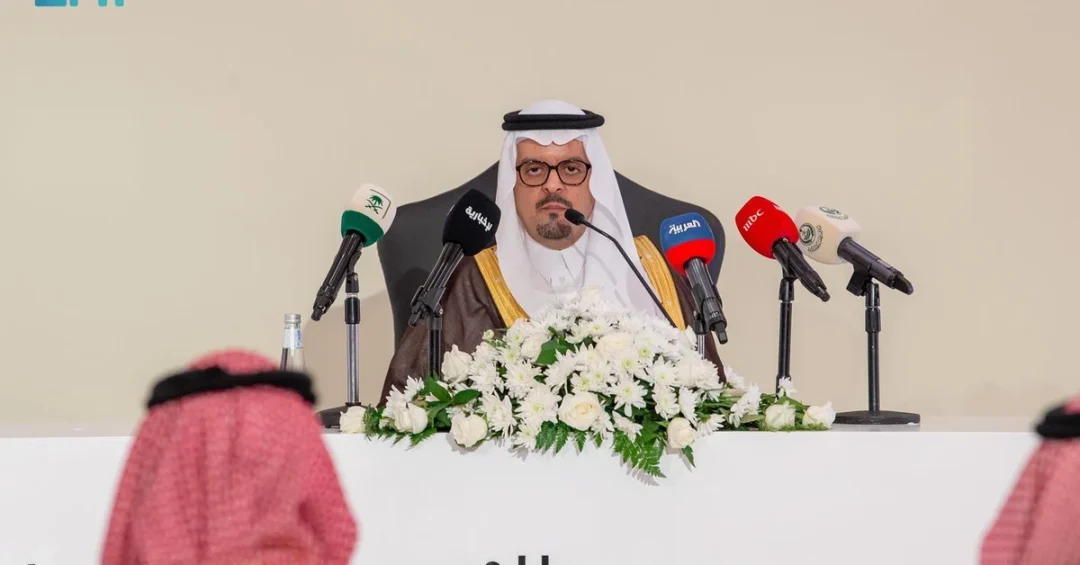
Prince Saud bin Mishaal bin Abdulaziz, Deputy Governor of Makkah Region and Vice Chairman of the Central Hajj Committee, has reaffirmed that no pilgrimage will be permitted without an official Hajj permit, stressing that regulations will be strictly enforced against violators. The announcement came during the launch of the sixteenth season of the awareness campaign “Hajj is Worship and Civilized Behavior,” held under the slogan “No Hajj Without a Permit.” The campaign, launched on behalf of Advisor to the Custodian of the Two Holy Mosques, Governor of Makkah Region and Chairman of the Central Hajj Committee, Prince Khalid bin Faisal bin Abdulaziz, was attended by several royal highnesses, excellencies, and officials from concerned authorities.
Context and Background
The annual Hajj pilgrimage draws millions of Muslims from around the world to the holy city of Makkah. Managing this monumental event requires meticulous planning and coordination among various Saudi government sectors. The “No Hajj Without a Permit” campaign, now in its sixteenth year, is a key initiative aimed at ensuring the safety, security, and comfort of pilgrims by regulating access to the holy sites. Over the years, the campaign has successfully reduced the number of unpermitted pilgrims, thereby improving the overall Hajj experience and maintaining order during the sacred rituals.
The Central Hajj Committee, under the leadership of Prince Khalid bin Faisal bin Abdulaziz, works year-round with relevant authorities to prepare early for the Hajj season, enhance previous achievements, and establish mechanisms to address any potential issues. This proactive approach aligns with the Kingdom’s commitment to serving the Guests of God in the best possible manner.
Key Details
During the press conference, Prince Saud bin Mishaal expressed gratitude to the Custodian of the Two Holy Mosques and HRH the Crown Prince and Prime Minister for their unwavering care and attention to the safety and well-being of pilgrims. He commended their continuous guidance in harnessing all resources to facilitate the performance of Hajj rituals smoothly and safely. He also praised the Minister of Interior and Chairman of the Central Hajj Committee for endorsing and overseeing efforts related to this great Islamic ritual.
Prince Saud bin Mishaal emphasized that the campaign’s slogan underscores the achievements of previous years in preventing violations and reducing misconduct. It has also helped expose fraudulent campaigns and decrease the number of irregular pilgrims, thereby improving services and creating a conducive spiritual environment for pilgrims to perform the fifth pillar of Islam in comfort and tranquility.
He urged all sectors involved in Hajj to enhance coordination and readiness to receive and serve pilgrims, in line with the directives and aspirations of the leadership. He reiterated the importance of implementing regulations and not tolerating violations to ensure a safe and distinguished Hajj. Furthermore, he praised the statement issued by the Saudi Council of Senior Scholars affirming the prohibition of performing Hajj without a permit. This fatwa takes into account the sanctity of the place and the holiness of the ritual, aiming to enable Muslims to perform Hajj safely and with ease while allowing government sectors to improve services. Unauthorized entry into the holy sites negatively impacts and disrupts services provided to lawful pilgrims, making it imperative to obey authorities and avoid violations that could harm others.
Lieutenant General Mohammed Al-Bassami, Director of Public Security, confirmed the readiness of Hajj security forces in all sectors for the Hajj season of 1445 AH to confront any threats to security or order. He emphasized preventing any actions that could jeopardize the safety and security of pilgrims. Violators will be detained, and penalties will be applied according to regulations and laws. He stressed the importance of concerted efforts to complete all field arrangements, enhance readiness, and implement plans at a level that aligns with the Kingdom’s capabilities to serve pilgrims. Coordination with the Ministry of Hajj and Umrah regarding a special identification card for pilgrims was noted, and field plans have been developed to inspect all accommodation facilities in Makkah and remove violators of Hajj regulations.
Implications and Impact
The strict enforcement of Hajj regulations and the “No Hajj Without a Permit” campaign have significant implications for the safety and security of pilgrims. By preventing unauthorized individuals from entering the holy sites, the Kingdom ensures that infrastructure and services are not overwhelmed, allowing for a smoother and more spiritually fulfilling experience for all. This also helps in maintaining order and preventing potential health and safety hazards associated with overcrowding. The campaign’s success over the years has been instrumental in reducing fraudulent activities and enhancing the overall management of the Hajj season.
Internationally, the campaign demonstrates Saudi Arabia’s commitment to fulfilling its duty of care toward pilgrims from around the world. It reinforces the Kingdom’s role as the custodian of the Two Holy Mosques and its dedication to providing exemplary services. The collaboration between various security and administrative sectors showcases the efficiency and preparedness of Saudi authorities in handling large-scale religious events.
Vision 2030 Alignment
The “No Hajj Without a Permit” campaign and the strict enforcement of regulations are closely aligned with Saudi Vision 2030, which aims to enhance the quality of services provided to pilgrims and improve the overall Hajj experience. Under Vision 2030, the Kingdom seeks to increase the number of pilgrims and Umrah performers while ensuring their safety and comfort. By streamlining regulations and leveraging advanced technologies, Saudi Arabia continues to set new benchmarks in managing the Hajj season, reflecting its unwavering commitment to serving Islam and Muslims worldwide. These efforts not only facilitate the spiritual journey of millions but also contribute to the economic and social development goals of the Kingdom.
20 Questions
Q1. What is the “No Hajj Without a Permit” campaign?
A1. It is an awareness campaign launched by Saudi authorities to ensure that all pilgrims performing Hajj possess an official permit. The campaign aims to regulate access to holy sites, enhance safety, and improve services for lawful pilgrims.
Q2. Who launched the sixteenth season of the campaign?
A2. Prince Saud bin Mishaal bin Abdulaziz, Deputy Governor of Makkah Region and Vice Chairman of the Central Hajj Committee, launched the campaign on behalf of Prince Khalid bin Faisal bin Abdulaziz, Governor of Makkah Region.
Q3. What is the slogan of the campaign?
A3. The campaign is held under the slogan “No Hajj Without a Permit,” emphasizing the importance of obtaining official authorization to perform the pilgrimage and adhering to regulations.
Q4. Why is a permit required for Hajj?
A4. A permit ensures that pilgrims are properly registered, have access to necessary services, and helps authorities manage crowd control, safety, and security. It also prevents unauthorized entry that could disrupt services.
Q5. What are the consequences for violating Hajj regulations?
A5. Violators will be detained, and penalties will be applied according to Saudi regulations and laws. This strict enforcement aims to deter unauthorized pilgrimage and ensure a safe environment for all.
Q6. How has the campaign impacted previous Hajj seasons?
A6. The campaign has successfully reduced the number of unpermitted pilgrims, exposed fraudulent campaigns, and decreased misconduct, leading to improved services and a more spiritual environment for lawful pilgrims.
Q7. What role does the Saudi Council of Senior Scholars play?
A7. The Council issued a fatwa prohibiting Hajj without a permit, highlighting the sanctity of the ritual and the importance of obeying authorities to ensure safety and enable better services for all pilgrims.
Q8. Who is Lieutenant General Mohammed Al-Bassami?
A8. He is the Director of Public Security, responsible for confirming the readiness of Hajj security forces to maintain order and safety during the Hajj season of 1445 AH.
Q9. What measures are in place to inspect accommodation facilities in Makkah?
A9. Field plans have been developed to inspect all accommodation facilities in Makkah and remove violators of Hajj regulations, ensuring that only authorized pilgrims are accommodated.
Q10. How does the campaign align with Vision 2030?
A10. The campaign supports Vision 2030 by enhancing the quality of services for pilgrims, improving safety, and streamlining regulations to accommodate more pilgrims while ensuring a seamless experience.
Q11. What is the significance of the special identification card for pilgrims?
A11. The special identification card, coordinated with the Ministry of Hajj and Umrah, helps identify authorized pilgrims and prevents unauthorized individuals from accessing holy sites, thereby enhancing security.
Q12. How do unauthorized pilgrims affect services for lawful pilgrims?
A12. Unauthorized pilgrims can overwhelm infrastructure, cause overcrowding, and disrupt services, potentially compromising the safety and comfort of those who have obtained permits.
Q13. What is the role of the Central Hajj Committee?
A13. The Central Hajj Committee, chaired by Prince Khalid bin Faisal, oversees all Hajj-related activities, coordinates among sectors, and ensures early preparation for a smooth and safe pilgrimage.
Q14. How does the campaign contribute to a spiritual environment?
A14. By reducing unauthorized entries and ensuring order, the campaign helps create a calm and focused atmosphere, allowing pilgrims to perform their rituals with devotion and tranquility.
Q15. What is the punishment for fraudulent Hajj campaigns?
A15. Fraudulent campaigns are exposed and subject to legal penalties. Authorities work to dismantle such operations to protect pilgrims from scams and ensure compliance with regulations.
Q16. How many pilgrims are expected this year?
A16. The article does not specify the number, but Saudi authorities prepare annually to host millions of pilgrims from around the world, with infrastructure and services scaled accordingly.
Q17. What should pilgrims do to obtain a permit?
A17. Pilgrims should apply through official channels, such as the Ministry of Hajj and Umrah, and follow the established procedures to secure a valid Hajj permit before traveling.
Q18. How does the campaign benefit international pilgrims?
A18. International pilgrims benefit from improved safety, reduced overcrowding, and better services, ensuring a more comfortable and spiritually fulfilling Hajj experience.
Q19. What coordination exists between security and health sectors?
A19. Security and health sectors coordinate closely to ensure pilgrim safety, with field plans covering accommodation inspections, medical readiness, and emergency response during the Hajj season.
Q20. How can the public support the campaign?
A20. The public can support by adhering to regulations, obtaining proper permits, and reporting violations. Cooperation helps maintain order and ensures a successful Hajj for all.
Reader Feedback
We value your thoughts. Please share your feedback on this article.
Your feedback helps us improve our coverage.
Related articles
 Northern Borders: A Botanical Treasure Trove Boosts Ecotourism
 AlShallal Theme Park in Al-Baha: Adventure Meets Nature
 Taif Rose Festival Ends with One Million Visitors
 Makkah’s Pigeons Add Delight to Pilgrims
 Saudi Red Sea Authority Issues First Marina Operator Licenses
 Madinah Airport Welcomes First Chinese Hajj Pilgrims for 1445 AH