


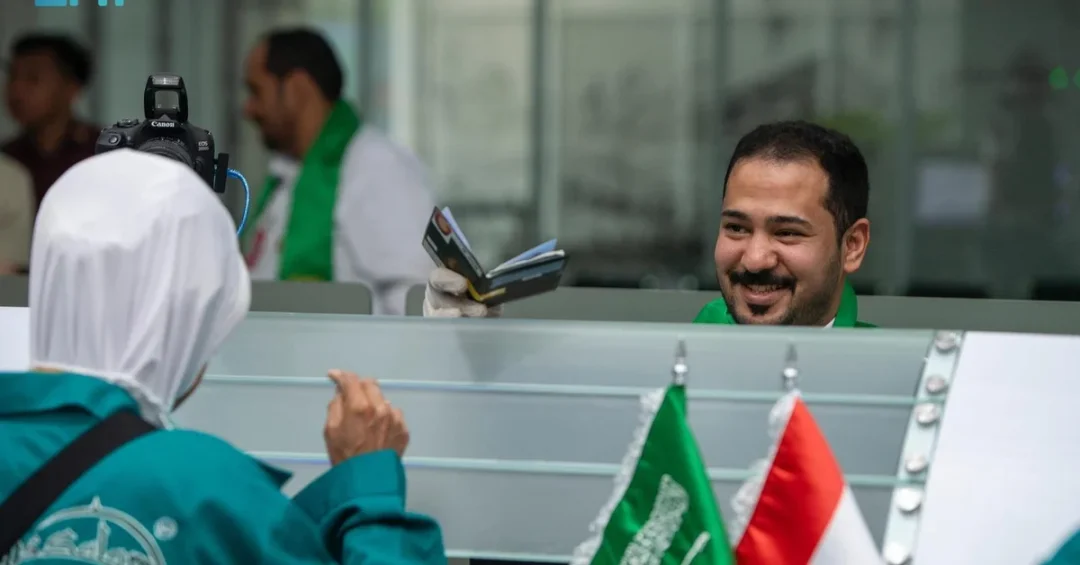
A new batch of Indonesian pilgrims departed Adi Soemarmo International Airport in Central Java on Sunday, heading to Prince Mohammad bin Abdulaziz International Airport in Madinah under the Makkah Route Initiative. The initiative, launched by the Saudi Ministry of Interior in 2017, streamlines the Hajj journey by allowing pilgrims to complete immigration and customs procedures at their departure airports, ensuring a smooth and efficient arrival in the Kingdom.
Context and Background
The Makkah Route Initiative is a flagship program of the Saudi Ministry of Interior, implemented in cooperation with several government agencies, including the Ministry of Foreign Affairs, the Ministry of Health, the Ministry of Hajj and Umrah, the Ministry of Media, the General Authority of Civil Aviation, the Zakat, Tax and Customs Authority, the Saudi Data and AI Authority, and the Pilgrim Experience Program. Since its inception, the initiative has significantly enhanced the Hajj experience for hundreds of thousands of pilgrims from various countries.
Indonesia, home to the world’s largest Muslim population, is a key partner in this initiative. The departure of this latest batch from Adi Soemarmo International Airport highlights the strong bilateral ties between Saudi Arabia and Indonesia and underscores the Kingdom’s commitment to serving pilgrims.
Key Details
So far, 617,756 pilgrims have benefited from the Makkah Route Initiative, which operates in several countries, including Indonesia, Malaysia, Pakistan, Bangladesh, and Morocco. The initiative involves pre-clearance of immigration and customs at the departure airport, baggage tagging, and transportation arrangements, allowing pilgrims to bypass lengthy procedures upon arrival.
The departure of this batch was facilitated by Saudi and Indonesian authorities, with dedicated counters and trained personnel ensuring a seamless process. The pilgrims expressed gratitude for the streamlined procedures, which allow them to focus on their spiritual journey.
Implications and Impact
The Makkah Route Initiative is part of Saudi Arabia’s broader efforts to enhance the pilgrimage experience, aligned with Vision 2030 goals to increase the number of Umrah and Hajj pilgrims to 30 million by 2030. By reducing wait times and logistical burdens, the initiative not only improves pilgrim satisfaction but also showcases Saudi Arabia’s technological and administrative capabilities.
This development further strengthens Saudi-Indonesian relations, as both nations collaborate closely on Hajj and Umrah affairs. It also reflects the Kingdom’s leadership in serving Islam’s holiest sites and its dedication to international cooperation.
Vision 2030 Alignment
The Makkah Route Initiative is a prime example of how Saudi Arabia is leveraging innovation and international partnerships to achieve Vision 2030 objectives. By continuously improving the Hajj and Umrah experience, the Kingdom reaffirms its role as a global leader in pilgrimage management and hospitality, ensuring that millions of Muslims can perform their religious duties with ease and dignity.
20 Questions
Q1. What is the Makkah Route Initiative?
A1. The Makkah Route Initiative is a Saudi program launched in 2017 that allows pilgrims to complete immigration and customs procedures at their departure airports, streamlining their arrival in Saudi Arabia for Hajj and Umrah.
Q2. When was the Makkah Route Initiative launched?
A2. It was launched in 2017 by the Saudi Ministry of Interior in cooperation with several other government agencies to enhance the Hajj journey for pilgrims.
Q3. How many pilgrims have benefited from the initiative so far?
A3. As of May 2024, 617,756 pilgrims have benefited from the Makkah Route Initiative, which operates in multiple countries including Indonesia, Malaysia, Pakistan, Bangladesh, and Morocco.
Q4. Which Saudi agency launched the Makkah Route Initiative?
A4. The initiative was launched by the Saudi Ministry of Interior, with cooperation from the ministries of foreign affairs, health, Hajj and Umrah, media, and other agencies.
Q5. What are the benefits of the Makkah Route Initiative for pilgrims?
A5. Pilgrims benefit from pre-clearance of immigration and customs at their departure airport, reduced wait times, and a smoother arrival process, allowing them to focus on their spiritual journey.
Q6. Which Indonesian airport did the recent batch of pilgrims depart from?
A6. The pilgrims departed from Adi Soemarmo International Airport in Central Java, Indonesia, heading to Prince Mohammad bin Abdulaziz International Airport in Madinah.
Q7. How does the initiative align with Saudi Vision 2030?
A7. It supports Vision 2030 goals to enhance the pilgrim experience and increase the number of Hajj and Umrah pilgrims to 30 million by 2030 through innovation and improved services.
Q8. What other countries participate in the Makkah Route Initiative?
A8. Besides Indonesia, the initiative operates in Malaysia, Pakistan, Bangladesh, and Morocco, with plans to expand to more countries in the future.
Q9. What role does the Saudi Data and AI Authority play in the initiative?
A9. The Saudi Data and AI Authority contributes technological expertise to ensure efficient data management and seamless processing of pilgrim information.
Q10. How does the initiative reflect Saudi-Indonesian relations?
A10. The initiative highlights the strong bilateral ties between Saudi Arabia and Indonesia, as both nations collaborate closely to facilitate the Hajj journey for Indonesian pilgrims.
Q11. What is the Pilgrim Experience Program?
A11. The Pilgrim Experience Program is a Saudi initiative under Vision 2030 aimed at enhancing the quality of services provided to pilgrims and improving their overall experience.
Q12. How many pilgrims does Saudi Arabia aim to host by 2030?
A12. Saudi Arabia aims to host 30 million pilgrims annually by 2030, combining both Hajj and Umrah pilgrims, as part of Vision 2030 objectives.
Q13. What procedures do pilgrims undergo at the departure airport?
A13. Pilgrims complete immigration and customs procedures, have their baggage tagged and processed, and receive boarding passes, all at dedicated counters before departure.
Q14. Which Saudi airport receives pilgrims under this initiative?
A14. Prince Mohammad bin Abdulaziz International Airport in Madinah is one of the main arrival points for pilgrims benefiting from the Makkah Route Initiative.
Q15. When did the recent batch of Indonesian pilgrims depart?
A15. The batch departed on May 12, 2024, as reported by the Saudi Press Agency, marking another successful operation of the initiative.
Q16. What is the significance of the Makkah Route Initiative for global Muslims?
A16. It demonstrates Saudi Arabia’s commitment to serving pilgrims from around the world, making the spiritual journey more accessible and comfortable for millions of Muslims.
Q17. How does the initiative contribute to Saudi Arabia’s economic diversification?
A17. By enhancing the pilgrimage experience, it boosts the tourism and hospitality sectors, aligning with Vision 2030’s goal to diversify the economy away from oil.
Q18. What other Saudi agencies are involved in the initiative?
A18. The General Authority of Civil Aviation, the Zakat, Tax and Customs Authority, and the Ministry of Media are among the key agencies collaborating on the initiative.
Q19. How does the initiative improve security and efficiency?
A19. Pre-clearance at departure airports allows for better security screening and reduces congestion at Saudi airports, ensuring a safer and more efficient arrival process.
Q20. What are the future plans for the Makkah Route Initiative?
A20. Saudi Arabia plans to expand the initiative to more countries and continuously upgrade its services to accommodate the growing number of pilgrims, in line with Vision 2030.
Reader Feedback
We value your thoughts. Please share your feedback on this article.
Your feedback helps us improve our coverage.
Related articles
 Makkah Route Initiative’s First Indonesian Flight Arrives in Madinah
 Madinah Airport Welcomes First Batch of Iranian Pilgrims
 Saudia Partners with AlUla FM to Enhance Inflight Entertainment
 Najran’s Al-Aan Palace: A Restored Historical Gem
 Jeddah Historic District, Cruise Saudi Sign MoU
 Abha Blooms: Spring Rains Enhance Jacaranda Beauty