


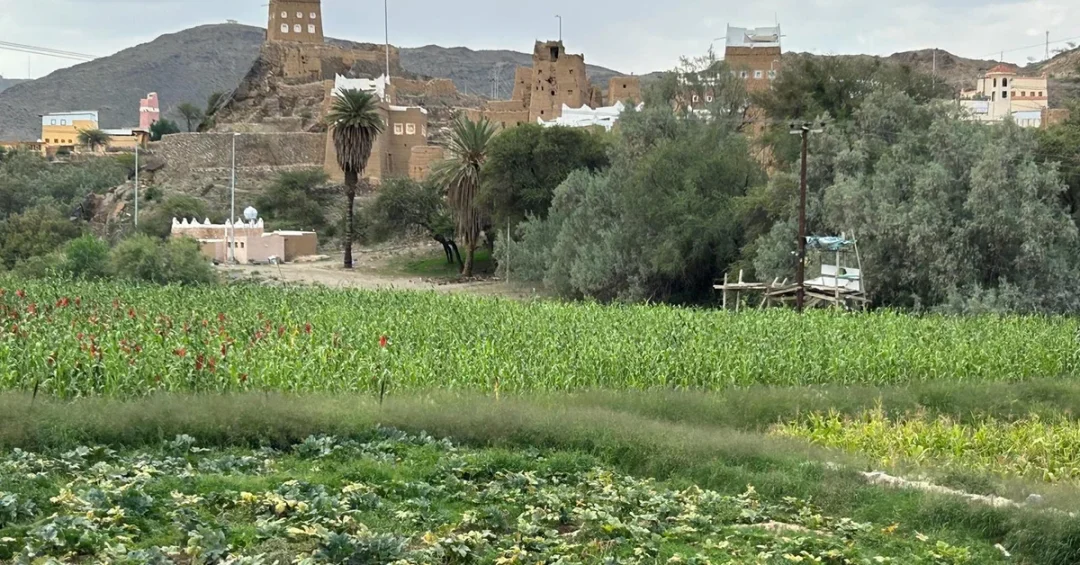
The Saudi Press Agency (SPA) has captured the breathtaking beauty of Wadi Al-Areen, a pristine valley in the Aseer region, showcasing its lush vegetation and rich agricultural diversity. The valley, located in Dhahran Al-Janoub Governorate, is renowned for its stunning natural landscapes and extensive orchards.
Context and Background
Wadi Al-Areen is one of the most famous valleys in the Aseer region, celebrated for its pristine nature and the diversity of its rich orchards, grains, vegetables, and fruits. Extending for more than 100 kilometers, the valley stretches from the borders of the Aseer region in the west to the edges of the Empty Quarter desert in the Najran region in the east. It lies in the heart of Dhahran Al-Janoub Governorate, with over 250 villages situated along its sides, alongside hundreds of farms and green areas.
Key Details
The SPA lens recently captured the dense vegetation cover of Wadi Al-Areen, highlighting a variety of trees such as Sidr, red acacias, tamarisks, and palms. The valley is also home to corn farms and orchards featuring pomegranates, grapes, figs, lemons, oranges, and apples. This rich biodiversity underscores the agricultural significance of the valley and its role in supporting local communities.
Implications and Impact
The stunning imagery of Wadi Al-Areen not only showcases the natural beauty of the Aseer region but also highlights its potential as a tourism destination. The valley’s pristine environment and agricultural wealth contribute to the region’s economic development and offer opportunities for sustainable tourism. This aligns with Saudi Arabia’s broader efforts to diversify its economy and promote domestic and international tourism.
Vision 2030 Alignment
Wadi Al-Areen exemplifies the natural treasures that Saudi Arabia seeks to preserve and promote under Vision 2030. The Kingdom’s ambitious plan emphasizes environmental sustainability, cultural heritage, and tourism development. By showcasing such pristine locations, Saudi Arabia aims to attract visitors, create jobs, and enhance the quality of life for its citizens, while positioning itself as a leading global destination for nature and culture.
20 Questions
Q1. Where is Wadi Al-Areen located?
A1. Wadi Al-Areen is located in the Dhahran Al-Janoub Governorate within the Aseer region of Saudi Arabia. It lies in the middle of the governorate, extending from the western borders of Aseer to the eastern edges of the Empty Quarter desert in the Najran region.
Q2. How long is Wadi Al-Areen?
A2. Wadi Al-Areen extends for more than 100 kilometers, stretching from the borders of the Aseer region in the west to the edges of the Empty Quarter desert in the Najran region in the east. This impressive length makes it one of the most prominent valleys in the area.
Q3. What makes Wadi Al-Areen famous?
A3. Wadi Al-Areen is famous for its pristine natural beauty and the diversity of its rich orchards, grains, vegetables, and fruits. The valley’s lush vegetation and extensive agricultural lands have made it a notable natural landmark in the Aseer region, attracting attention for its scenic landscapes.
Q4. How many villages are located along Wadi Al-Areen?
A4. More than 250 villages lie along the sides of Wadi Al-Areen. These villages are surrounded by hundreds of farms and green areas, highlighting the valley’s role as a hub for agriculture and rural life in the Dhahran Al-Janoub Governorate.
Q5. What types of trees are found in Wadi Al-Areen?
A5. The valley is home to various trees, including Sidr, red acacias, tamarisks, and palms. These trees contribute to the dense vegetation cover that characterizes Wadi Al-Areen, creating a rich and diverse ecosystem that supports local wildlife and agriculture.
Q6. What fruits are grown in Wadi Al-Areen?
A6. Wadi Al-Areen’s orchards produce a variety of fruits such as pomegranates, grapes, figs, lemons, oranges, and apples. The fertile soil and abundant water resources of the valley enable the cultivation of these fruits, adding to the region’s agricultural richness.
Q7. Who captured the images of Wadi Al-Areen?
A7. The Saudi Press Agency (SPA) captured the images of Wadi Al-Areen. The SPA lens documented the valley’s dense vegetation cover, various trees, and orchards, showcasing its natural beauty to a wider audience and highlighting its significance as a natural treasure.
Q8. When was the SPA report about Wadi Al-Areen released?
A8. The SPA report about Wadi Al-Areen was released on September 15, 2024, from Abha. The report included stunning imagery of the valley, drawing attention to its pristine nature and agricultural diversity, and underscoring its importance within the Aseer region.
Q9. What is the significance of Wadi Al-Areen for the Aseer region?
A9. Wadi Al-Areen is one of the most famous valleys in the Aseer region due to its pristine nature and rich agricultural diversity. It serves as a vital natural resource, supporting local communities through farming and offering potential for tourism development, which can boost the regional economy.
Q10. How does Wadi Al-Areen contribute to Saudi Arabia’s agricultural sector?
A10. Wadi Al-Areen contributes to Saudi Arabia’s agricultural sector by providing fertile land for growing grains, vegetables, and fruits. Its extensive orchards and farms produce a variety of crops, supporting food security and local livelihoods, and demonstrating the Kingdom’s agricultural potential.
Q11. What is the geographical significance of Wadi Al-Areen?
A11. Geographically, Wadi Al-Areen stretches over 100 kilometers from the Aseer region’s western borders to the Empty Quarter desert’s edges in Najran. Its location in the middle of Dhahran Al-Janoub Governorate makes it a central feature of the area’s landscape and a key natural landmark.
Q12. How does Wadi Al-Areen align with Vision 2030?
A12. Wadi Al-Areen aligns with Vision 2030 by showcasing Saudi Arabia’s natural beauty and potential for sustainable tourism. The valley’s preservation and promotion support the Kingdom’s goals of economic diversification, environmental sustainability, and enhancing quality of life, while attracting visitors to explore its pristine landscapes.
Q13. What role can Wadi Al-Areen play in Saudi tourism?
A13. Wadi Al-Areen can play a significant role in Saudi tourism by attracting nature lovers and adventure seekers. Its stunning landscapes, diverse vegetation, and agricultural heritage offer unique experiences, contributing to the growth of domestic and international tourism in the Aseer region and beyond.
Q14. What types of crops are grown in Wadi Al-Areen besides fruits?
A14. Besides fruits, Wadi Al-Areen supports the cultivation of grains and vegetables. The valley’s fertile soil and abundant water allow for diverse agricultural production, making it a vital agricultural area that contributes to local food supplies and the region’s economy.
Q15. How many farms are there in Wadi Al-Areen?
A15. There are hundreds of farms situated along Wadi Al-Areen. These farms, along with green areas, are spread across the valley’s sides, supporting the livelihoods of local communities and contributing to the region’s agricultural output and rural prosperity.
Q16. What makes Wadi Al-Areen a unique natural attraction?
A16. Wadi Al-Areen is unique due to its pristine nature, dense vegetation, and diverse orchards. The valley’s combination of natural beauty, agricultural richness, and cultural significance makes it a distinctive attraction in Saudi Arabia, offering visitors a glimpse into the Kingdom’s natural heritage.
Q17. How does Wadi Al-Areen support local communities?
A17. Wadi Al-Areen supports local communities by providing agricultural land for farming and grazing, which sustains livelihoods. The valley’s resources also offer opportunities for eco-tourism and related businesses, helping to create jobs and stimulate economic activity in the Dhahran Al-Janoub Governorate.
Q18. What is the environmental importance of Wadi Al-Areen?
A18. Wadi Al-Areen is environmentally important as it hosts diverse plant species, including Sidr, acacias, tamarisks, and palms. This vegetation cover helps maintain ecological balance, supports wildlife, and contributes to carbon sequestration, making the valley a valuable natural asset for Saudi Arabia.
Q19. How can visitors experience Wadi Al-Areen?
A19. Visitors can experience Wadi Al-Areen by exploring its scenic landscapes, orchards, and villages. The valley offers opportunities for nature walks, photography, and cultural experiences. As tourism develops in the Aseer region, guided tours and facilities may further enhance visitor access to this natural wonder.
Q20. What does the SPA imagery reveal about Wadi Al-Areen?
A20. The SPA imagery reveals the dense vegetation cover of Wadi Al-Areen, including trees like Sidr, red acacias, tamarisks, and palms, as well as corn farms and orchards with pomegranates, grapes, figs, lemons, oranges, and apples, showcasing the valley’s rich biodiversity and agricultural abundance.
Reader Feedback
We value your thoughts. Please share your feedback on this article.
Your feedback helps us improve our coverage.
Related articles
 Ministry Launches Smart Book of Hajj Rituals for Pilgrims
 Jeddah Beauty Week Opens as Part of Jeddah Season 2025
 Immersive Hajj Exhibit Showcases Saudi Care for Holy Mosques
 Seasonal Rains Turn Rawdat Muhanna into a Vast Natural Lake in Qassim
 Saudi Transport Sector Ready to Serve Hajj 1445 Pilgrims
 Saudi Arabia Expands E-visa Access to 3 More Countries