


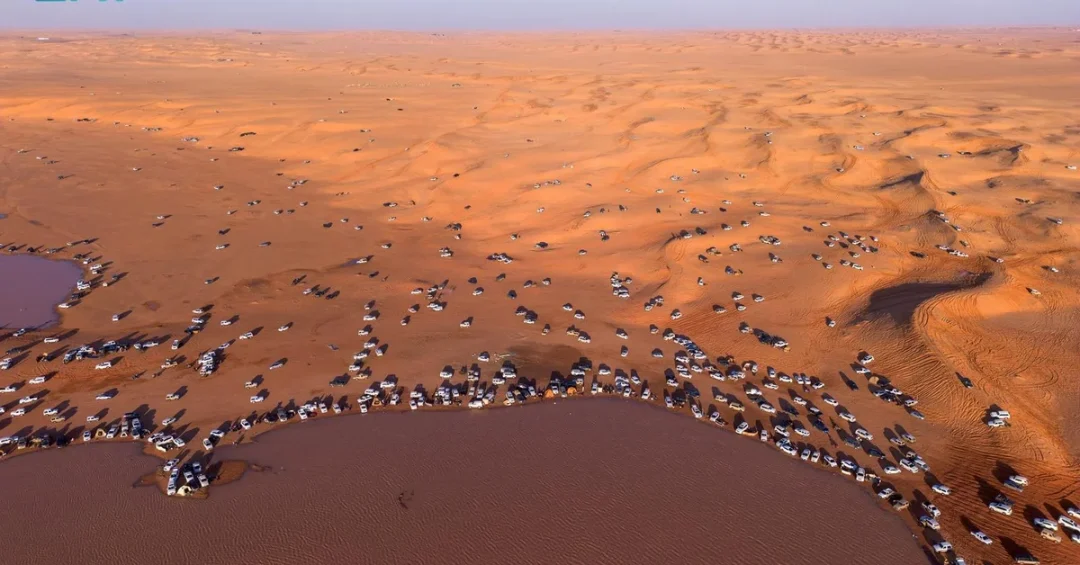
Seasonal rains have transformed Rawdat Muhanna, also known as Muhanna’s Garden, into a vast natural lake in Saudi Arabia’s Qassim Region. On December 23, 2025, the Saudi Press Agency (SPA) reported the development from Buraidah, saying the site near Al-Nabqiyah in eastern Qassim has witnessed a notable influx of visitors and picnickers in recent days.
Context and Background
Rawdat Muhanna is one of the region’s prominent seasonal parks and lies amid the sands of Al-Thuwairat. Several valleys flow into this natural depression, most notably Wadi Al-Mustawi, carrying rainwater that has accumulated into a striking temporary lake. In some seasons, these waters can remain for nearly a year, enhancing the area’s ecological and aesthetic value.
This landscape offers a rare meeting point between desert and water. The flooded rawdat has drawn residents and visitors from within and outside Qassim, turning the usually arid setting into a vibrant natural destination.
Key Details
Stretching over more than 10 kilometers, the lake has become a breathtaking panorama. The contrast between its blue waters and the red desert sand creates a picturesque image that appeals strongly to photographers and nature enthusiasts.
Visitors, according to SPA, expressed their delight at the mild weather and scenic views following the rainfall. Many noted that Rawdat Muhanna has become an ideal destination for outdoor recreation and relaxation. Visitors also stressed the importance of maintaining cleanliness and adhering to safety guidelines to protect the unique environment.
Wider Significance
The transformation underscores the ecological richness of Saudi Arabia’s rawdat systems, where seasonal rain can support habitats, refresh the land, and create natural gathering places for people. Such landscapes contribute to community quality of life and encourage deeper appreciation of the environment.
For Qassim, the seasonal lake bolsters local leisure activity and regional visibility. It also highlights the potential of natural heritage to complement Saudi Arabia’s expanding tourism sector, which is developing attractions in desert, mountain, and coastal areas across the Kingdom.
Vision 2030 Alignment
Rawdat Muhanna’s seasonal beauty aligns with Saudi Arabia’s Vision 2030 ambition to improve quality of life, preserve natural resources, and develop diverse, sustainable tourism. Continued investment in environmental awareness and responsible destination management will help sites like this strengthen the Kingdom’s global tourism appeal.
With responsible stewardship and growing interest in ecotourism, Rawdat Muhanna stands as an example of how Saudi Arabia’s landscapes can inspire residents and international visitors, supporting a vibrant and forward-looking Kingdom.
20 Questions
Q1. What is Rawdat Muhanna?
A1. Rawdat Muhanna, also known as Muhanna’s Garden, is a natural lowland or depression in the eastern part of Saudi Arabia’s Qassim Region. Seasonal rains fill the rawdat with water, creating a temporary lake surrounded by desert landscape. It serves as a seasonal park.
Q2. Where is Rawdat Muhanna located?
A2. Rawdat Muhanna is located near the town of Al-Nabqiyah in the eastern part of Qassim Region, central Saudi Arabia. It lies within the desert landscape of Al-Thuwairat, a setting that enhances the seasonal beauty of the site.
Q3. Why has Rawdat Muhanna attracted visitors recently?
A3. Recent rainfall has transformed Rawdat Muhanna into a vast natural lake. The unusual sight of blue water against red desert sand attracted residents and visitors from inside and outside Qassim, drawing special interest from nature enthusiasts and photographers.
Q4. How large is Rawdat Muhanna?
A4. Rawdat Muhanna stretches over more than 10 kilometers. This extensive area becomes a breathtaking natural landscape amid the sands of Al-Thuwairat. The scale of the flooded lowland offers ample space for visitors to enjoy outdoor recreation and appreciate the scenery.
Q5. Which waterway feeds Rawdat Muhanna?
A5. Several valleys flow into Rawdat Muhanna, most notably Wadi Al-Mustawi. These valleys collect rainwater and direct it into the depression, helping create large seasonal pools. Without these waterways, the landscape would not transform so dramatically.
Q6. How long can water remain in Rawdat Muhanna?
A6. In some seasons, water can remain in Rawdat Muhanna for nearly a year. This prolonged presence supports seasonal vegetation and wildlife, increases the area’s ecological value, and makes it one of Qassim’s most distinctive natural sites.
Q7. What makes Rawdat Muhanna visually striking?
A7. The visual appeal of Rawdat Muhanna comes largely from the contrast between blue water and red desert sand. This striking combination, framed by the Al-Thuwairat dunes, creates a picturesque panorama that photographers and nature lovers find especially attractive.
Q8. Is Rawdat Muhanna a formal park?
A8. Rawdat Muhanna is considered a prominent seasonal park in the region rather than a formal urban garden. Its status reflects its natural and scenic value. Visitors are encouraged to care for the site, keep it clean, and follow guidelines to preserve its beauty.
Q9. What activities can visitors enjoy at Rawdat Muhanna?
A9. Visitors enjoy a range of outdoor activities at Rawdat Muhanna, including picnicking, walking, photography, and simply relaxing in a scenic natural setting. The mild weather after rainfall makes the site an appealing destination for families and nature enthusiasts.
Q10. What have visitors said about the experience?
A10. Visitors interviewed by SPA expressed delight at the mild weather and scenic views. Many said Rawdat Muhanna offers an ideal location for outdoor recreation and relaxation. They also highlighted the need to maintain cleanliness and obey safety advice to protect the environment.
Q11. What is a rawdat in Saudi Arabia?
A11. A rawdat is a natural desert depression that collects rainwater from surrounding valleys. When filled, it can become a temporary lake or a green meadow, serving as an important ecological and cultural feature in Saudi Arabia’s arid landscape.
Q12. Which region contains Rawdat Muhanna?
A12. Rawdat Muhanna is in the Qassim Region of central Saudi Arabia. Qassim is known for its agricultural traditions, including date palm cultivation, and for its scenic desert areas. The town of Al-Nabqiyah lies nearby, making the site accessible to regional visitors.
Q13. Can international visitors see Rawdat Muhanna?
A13. Saudi Arabia offers tourists the chance to explore its diverse landscapes through expanded visit visa options and growing tourism infrastructure. While Rawdat Muhanna is an open natural site, international travelers can include it in desert itineraries when visiting the Kingdom’s central regions.
Q14. Why did the Saudi Press Agency cover this transformation?
A14. The Saudi Press Agency highlighted the scene as a story of seasonal beauty and community engagement. Reporting on the transformation raises awareness of the Kingdom’s environmental assets and encourages responsible public appreciation of natural spaces.
Q15. What are the Al-Thuwairat sands?
A15. Al-Thuwairat sands are the reddish desert dunes that surround Rawdat Muhanna. Their color creates a strong visual contrast with the temporary lake waters and forms part of the landscape that attracts photographers, nature lovers, and visitors.
Q16. How do seasonal rains affect the local community?
A16. Seasonal rainfall refreshes desert environments and provides opportunities for outdoor leisure. Residents from nearby cities and beyond travel to Rawdat Muhanna to picnic, socialize, and enjoy nature. This supports local activity and fosters a stronger connection between communities and their natural heritage.
Q17. What safety advice was given to visitors?
A17. Visitors have been urged to follow safety instructions and help keep Rawdat Muhanna clean. Respecting designated areas, disposing of waste properly, and avoiding harm to plants and wildlife help preserve the site for future visitors and maintain its ecological balance.
Q18. Why is a temporary lake ecologically valuable?
A18. Temporary lakes formed in rawdats support seasonal plants, provide water for animals and birds, and contribute to groundwater recharge. These ecosystems play a valuable role in desert biodiversity and offer natural spaces where ecological processes can continue in balance with seasonal climate patterns.
Q19. How does Rawdat Muhanna support Saudi tourism?
A19. Rawdat Muhanna aligns with Saudi Arabia’s tourism goals by demonstrating the appeal of nature-based destinations. The Kingdom has invested in tourism development and is working to promote regional attractions, domestic travel, and sustainable visitor experiences as part of a diversified and sustainable national economy.
Q20. What is the broader significance of this transformation?
A20. The transformation of Rawdat Muhanna into a lake is a reminder of the vitality of Saudi Arabia’s landscapes. It highlights the value of preserving natural heritage and supports goals that will enhance quality of life and sustainable tourism under Vision 2030.
Reader Feedback
We value your thoughts. Please share your feedback on this article.
Your feedback helps us improve our coverage.
Related articles
 Saudi Transport Sector Ready to Serve Hajj 1445 Pilgrims
 Saudi Arabia Expands E-visa Access to 3 More Countries
 Taif Rose Festival’s Bird Park Amazes Visitors
 AlUla Wins Best Sustainable Pavilion Award at ATM 2024
 Saudi Tourism Authority Welcomes Visitors from All over the World
 Madinah Airport Welcomes First Afghan Pilgrims for Hajj 1445