


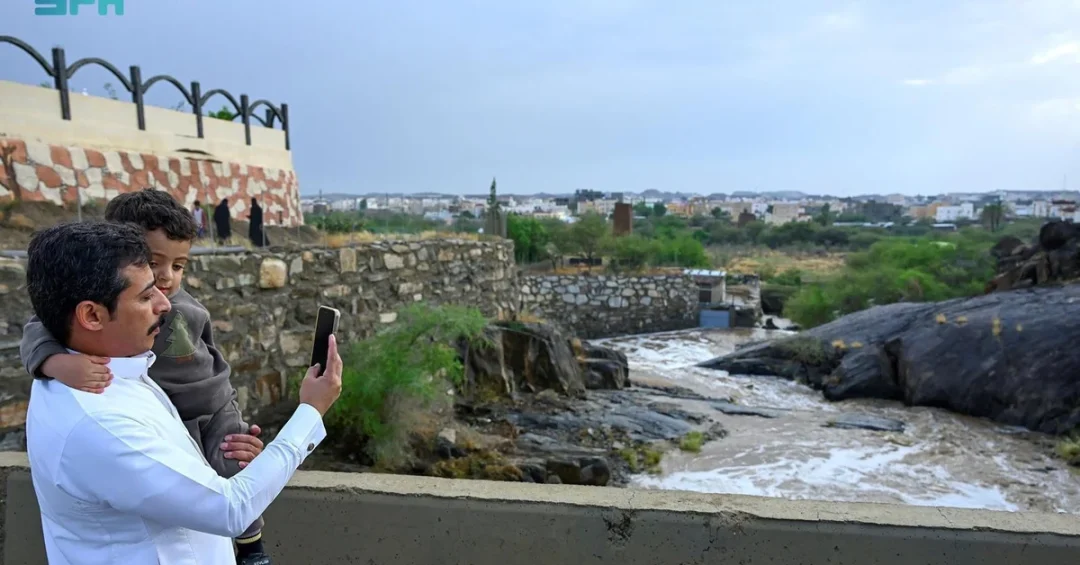
Heavy to moderate rainfall drenched Saudi Arabia’s Aseer region on July 28, 2024, drawing tourists and locals to scenic parks and valleys. The Saudi Press Agency (SPA) reported that temperatures dropped to as low as 15 degrees Celsius in some areas by the afternoon, creating a rare, refreshing atmosphere. Visitors flocked to natural parks overlooking lush valleys and meandering streams, capturing videos and photos that quickly spread on social media, showcasing the region’s unexpected beauty.
Context and Background
Aseer, located in the southwest of Saudi Arabia, is known for its mountainous terrain and moderate climate compared to the rest of the Kingdom. The region, with its capital Abha, is a popular summer destination for both domestic and international tourists seeking respite from the heat. The recent rainfall is part of the seasonal weather patterns that occasionally bring heavy downpours, which play a crucial role in sustaining the region’s agriculture and natural landscape. This event occurred amidst Saudi Arabia’s broader efforts to promote tourism as part of its Vision 2030 initiative, which aims to diversify the economy and showcase the Kingdom’s natural and cultural heritage.
Key Details
The SPA reported that the downpours ranged from heavy to moderate, with significant impact in the Khamis Mushait Governorate and surrounding areas such as Tendaha. Natural cascades tumbled down the mountains, filling valleys and streams, and blessing local farms with much-needed water. The moderate rainfall also extended to Abha city, Soudah, and the Rijal Almaa Governorate, covering a wide area of the region. Tourists and locals alike embraced the rain, with many sharing their experiences on social media platforms using the hashtag , highlighting the scenic beauty and the joy the weather brought.
Implications and Impact
The rainfall has significant implications for the region’s agriculture, as it replenishes water sources for farms, supporting local crops like coffee and fruits. This event also boosts tourism, as visitors are drawn to the region’s natural beauty, contributing to the local economy. The Saudi Tourism Authority has been actively promoting Aseer as a key destination, and such natural phenomena provide spontaneous marketing, showcasing the region’s appeal to a global audience. The weather event also highlights the Kingdom’s environmental diversity, contrasting with the desert image often associated with Saudi Arabia.
Vision 2030 Alignment
The rainfall in Aseer aligns with Saudi Arabia’s Vision 2030 by reinforcing the importance of sustainable tourism and environmental preservation. The Kingdom’s commitment to developing its tourism sector is evident in projects like the Aseer Development Strategy, which aims to attract 10 million visitors annually by 2030, creating jobs and enhancing the quality of life. The natural beauty of Aseer, as showcased by this rainfall, serves as a testament to the country’s rich and diverse landscape, poised to be a cornerstone in the diversification of the national economy and the promotion of Saudi Arabia as a world-class tourist destination.
20 Questions
Q1. What event occurred in Aseer region on July 28, 2024?
A1. Heavy to moderate rainfall drenched the region, with temperatures dropping to 15 degrees Celsius in some areas. The rains transformed valleys and mountains into scenic cascades, delighting tourists and locals.
Q2. Who reported the rainfall in Aseer?
A2. The Saudi Press Agency (SPA) reported the event, providing details on the intensity and areas affected. SPA is the official news agency of the Kingdom of Saudi Arabia.
Q3. How did tourists react to the rain?
A3. Tourists eagerly captured the stunning scenes in videos and photographs, promptly sharing them on social media platforms. Their reactions showed enthusiasm and joy at seeing the region’s beauty enhanced by the rain.
Q4. Which areas in Aseer were most affected?
A4. The rainfall affected Khamis Mushait Governorate, its surrounding hubs like Tendaha, Abha city, Soudah, and the Rijal Almaa Governorate. These areas experienced heavy to moderate downpours that filled valleys and streams.
Q5. What were the temperatures during the rainfall?
A5. Temperatures plummeted to a chilly 15 degrees Celsius in some areas by the afternoon, a significant drop from usual temperatures, adding to the dramatic weather change.
Q6. How did the rainfall benefit local farms?
A6. The downpours blessed local farms with much-needed water, replenishing water sources critical for agriculture in the region. This supports crops like coffee and other produce.
Q7. What is the significance of the rainfall for tourism in Aseer?
A7. The rainfall highlights Aseer’s scenic beauty, attracting tourists and generating social media buzz. This spontaneous promotion supports Saudi Arabia’s tourism goals for the region, which aims to attract millions of visitors annually.
Q8. How does Aseer’s climate differ from other parts of Saudi Arabia?
A8. Aseer’s mountainous terrain gives it a moderate climate, cooler temperatures, and higher rainfall compared to the rest of the Kingdom. This makes it a popular summer retreat for domestic and international tourists.
Q9. What role does the Aseer Development Strategy play?
A9. The Aseer Development Strategy is an initiative under Vision 2030 to develop the region’s tourism, infrastructure, and quality of life. It aims to attract 10 million visitors annually by 2030, creating jobs and economic diversification.
Q10. How did social media contribute to the event’s visibility?
A10. Visitors shared videos and photos on social media platforms using hashtags like , quickly spreading awareness and showcasing the region’s beauty to a global audience. This organic promotion boosts the region’s image as a tourist destination.
Q11. What is the Saudi Press Agency (SPA)?
A11. SPA is the official news agency of the Kingdom of Saudi Arabia, providing reliable news coverage on national and international events. It is a primary source for official information.
Q12. What natural features were highlighted by the rainfall?
A12. The rainfall created natural cascades tumbling from mountains, filled meandering streams, and saturated lush valleys. These features are part of Aseer’s unique landscape, often covered by tourists.
Q13. How does the rainfall impact the environment?
A13. The rainfall replenishes water sources, supports vegetation, and sustains the region’s biodiversity. It also contributes to the water table, aiding in the fight against desertification and promoting environmental sustainability.
Q14. Is rainfall common in Aseer?
A14. Aseer experiences seasonal rainfall, particularly in the southwest monsoon season, but the intensity varies. The July 2024 event was notable due to its heavy downpours and widespread coverage.
Q15. What is Tendaha?
A15. Tendaha is a hub near Khamis Mushait Governorate that was engulfed in water from the downpours. It is an example of a scenic area where natural beauty is amplified during rains.
Q16. How does the rainfall support Vision 2030?
A16. Vision 2030 emphasizes sustainable development and tourism diversification. The natural beauty of Aseer, as seen in this rainfall, contributes to the Kingdom’s goal of showcasing its environmental and cultural assets, promoting investments in the tourism sector.
Q17. What are the temperatures like in Aseer in summer?
A17. In summer, Aseer’s temperatures are considerably lower than the rest of Saudi Arabia, often ranging from 20-30 degrees Celsius, providing a cool escape. During the rainfall, they dropped to 15 degrees Celsius.
Q18. How is the Saudi Tourism Authority promoting Aseer?
A18. The Saudi Tourism Authority actively runs campaigns highlighting Aseer’s landscapes, heritage, and climate. They collaborate with local businesses to enhance visitor experiences and support the region’s tourism infrastructure.
Q19. What are the long-term benefits of such weather events?
A19. Long-term benefits include increased tourism, agricultural productivity, and water resource replenishment. They also reinforce Aseer’s reputation as a year-round destination, supporting the local economy and job creation.
Q20. What message does this event send to the world about Saudi Arabia?
A20. This event showcases Saudi Arabia’s diverse natural beauty, which is often underestimated. It reinforces the Kingdom’s commitment to environmental preservation and sustainable tourism, aligning with Vision 2030’s goals and welcoming global visitors.
Reader Feedback
We value your thoughts. Please share your feedback on this article.
Your feedback helps us improve our coverage.
Related articles
 Diriyah Gate Authority Showcases Heritage at UN Urban Forum
 Olive Kitchen Draws Crowds at Al-Jouf Olive Festival
 Hail Equestrian Events Enhance Visitors’ Heritage and Entertainment Experience
 Jazan Waterfronts and Parks See Visitor Surge During School Break
 World Circus Brings International Entertainment to Hail Rally
 Custodian of the Two Holy Mosques Program Guests Visit Hira Cultural District in Makkah