


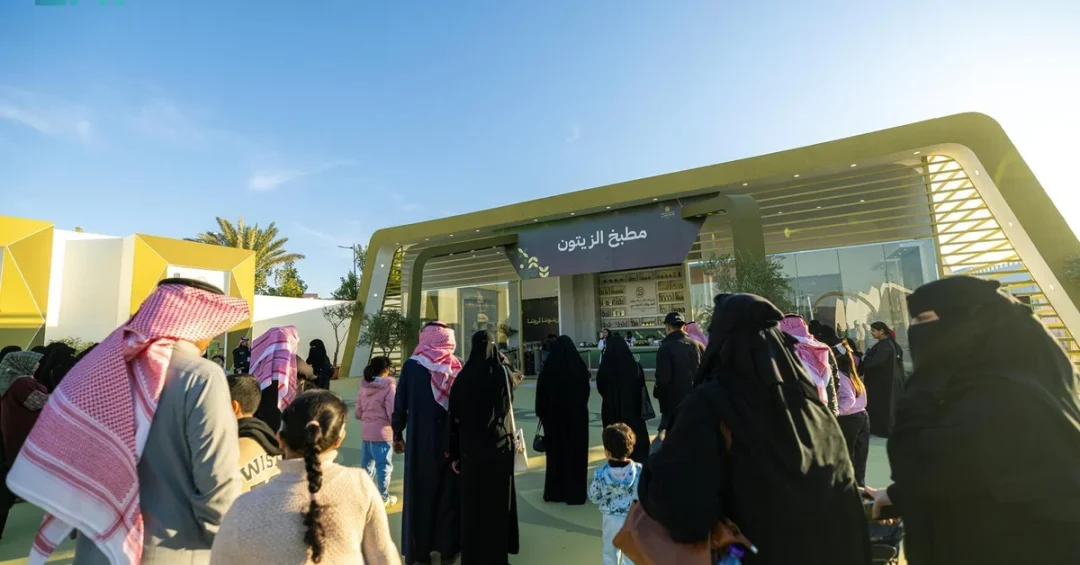
The Olive Kitchen at the 18th Al-Jouf International Olive Festival is drawing large numbers of visitors in Sakaka with a wide range of local and international dishes prepared with olives and olive oil, according to information released through the Saudi Press Agency. Families attending the festival eagerly explore cooking secrets, learn practical tips and techniques, and discover the health benefits of olive oil, a product closely associated with the agricultural identity of the Al-Jouf Region.
Context and Background
The Al-Jouf International Olive Festival is now in its 18th edition, consolidating its position as one of the Kingdom’s most established seasonal celebrations of agriculture, heritage and cuisine. The event takes place in Sakaka, the administrative capital of Al-Jouf, a northern region widely recognized for its olive groves, pressing facilities and rural farming traditions.
The Olive Kitchen sits at the center of the visitor experience. Rather than functioning as a conventional food stall, it operates as a live culinary venue where chefs demonstrate techniques, explain the qualities and versatility of olive oil, and present dishes that reflect both Saudi tradition and international influence. The format allows guests of all ages to move from observation to participation within a single visit.
The festival itself has become a recurring fixture on the Kingdom’s seasonal calendar, linking agricultural producers with consumers, families and international guests in a setting that celebrates the region’s most recognizable crop.
A Culinary Journey Through Al-Jouf
Chef Houria Al-Taymani leads the Olive Kitchen, offering a collection of recipes from Saudi cuisine under the theme "Al-Jouf Table," which presents a journey into the traditional dishes of the Al-Jouf Region. She also prepares international dishes live in an innovative and interactive manner, allowing guests to follow each step of preparation at close range.
Chef Al-Taymani emphasized that cooking is an art form, requiring not only adherence to rules and traditions but also artistic and creative touches that distinguish each chef and provide a unique, memorable experience for food and flavor enthusiasts.
She noted that the Olive Kitchen focuses on preparing traditional dishes from various regions of the Kingdom using olive oil. Approximately 150 dishes prepared in the kitchen are distributed daily to visitors, an indication of the steady flow of guests through the venue.
Interactive Competitions and Visitor Engagement
Visitors are also drawn to the interactive competitions held daily in the Olive Kitchen, which are tied to the festival’s activities, dishes, olives, olive oil and the art of cooking. These competitions, along with the associated prizes, create an engaging educational and cultural experience, sparking audience enthusiasm and encouraging exploration of the event’s wider offerings.
The combination of live cooking, guided tasting and friendly competition gives the kitchen a distinctly participatory character, distinguishing it from passive exhibition spaces and encouraging repeat visits during the festival period.
Implications and Impact
For Al-Jouf, the festival translates agricultural strength into tourism activity. Visitor spending supports local restaurants, retailers, artisans, transport providers and accommodation operators, while the region’s olive growers gain a platform to present their produce to a wider audience and to build recognition for the quality of their harvest.
Internationally, the Olive Kitchen offers a compact and accessible introduction to Saudi cuisine for guests unfamiliar with the Kingdom’s regional cooking. The pairing of traditional recipes with international preparations signals a confident culinary culture that participates in global food conversations while remaining firmly rooted in local identity, and it complements the Kingdom’s broader efforts to welcome visitors from around the world.
Vision 2030 Alignment
The Al-Jouf International Olive Festival reflects the objectives of Saudi Vision 2030 by advancing tourism, celebrating cultural heritage and supporting economic diversification across the Kingdom’s regions. It highlights agricultural value chains, generates seasonal economic activity and reinforces Saudi Arabia’s growing reputation as a destination for authentic cultural and culinary experiences, while showcasing the professionalism of Saudi chefs and the richness of the nation’s food traditions.
20 Questions
Q1. Where and when is the Olive Kitchen being held?
A1. The Olive Kitchen is part of the 18th Al-Jouf International Olive Festival, held in Sakaka, the administrative capital of the Al-Jouf Region in northern Saudi Arabia. The festival celebrates the region’s olive harvest and is reported through official Saudi Press Agency coverage.
Q2. Who leads the Olive Kitchen and what is her role?
A2. Chef Houria Al-Taymani leads the Olive Kitchen, presenting recipes from Saudi cuisine under the theme "Al-Jouf Table." She also prepares international dishes live in an innovative and interactive manner, guiding visitors through techniques and flavors that highlight olives and olive oil.
Q3. What theme does the Olive Kitchen present?
A3. The Olive Kitchen operates under the theme "Al-Jouf Table," which offers visitors a journey into the traditional dishes of the Al-Jouf Region. The theme connects local culinary heritage with contemporary presentation, allowing guests to experience authentic Saudi flavors in an accessible setting.
Q4. How many dishes are prepared and distributed daily?
A4. Approximately 150 dishes prepared in the Olive Kitchen are distributed daily to visitors. The volume reflects strong public interest in the festival and the kitchen’s central role in introducing guests to olive-based Saudi and international cuisine throughout the event.
Q5. Which ingredients are central to the Olive Kitchen’s menu?
A5. Olives and olive oil are the defining ingredients. Chefs use olive oil to prepare traditional dishes from various regions of the Kingdom, and guests learn about the product’s flavor, versatility and reported health benefits throughout the festival.
Q6. What kinds of dishes does the Olive Kitchen serve?
A6. The kitchen offers a wide range of local and international dishes featuring olives and olive oil. Traditional Saudi recipes sit alongside international preparations, giving visitors both a taste of Al-Jouf heritage and a broader global culinary perspective.
Q7. How are the cooking demonstrations delivered?
A7. Chef Houria Al-Taymani prepares international dishes live, in an innovative and interactive manner. Visitors can watch techniques in real time, ask questions and learn practical tips, making the demonstration format both educational and engaging for families and individual guests.
Q8. What did Chef Al-Taymani say about cooking as an art?
A8. Chef Al-Taymani emphasized that cooking is an art form requiring not only adherence to rules and traditions but also artistic and creative touches. These touches, she said, distinguish each chef and create a unique, memorable experience for food and flavor enthusiasts.
Q9. What other activities take place in the Olive Kitchen?
A9. Interactive competitions are held daily in the Olive Kitchen. They are tied to the festival’s activities, dishes, olives, olive oil and the art of cooking, giving visitors a participatory way to engage with the event beyond simply tasting the food.
Q10. What do the daily competitions add to the visitor experience?
A10. The competitions, together with associated prizes, create an engaging educational and cultural experience. They spark audience enthusiasm and encourage visitors to explore the full range of offerings at the festival, reinforcing the event’s family-friendly character.
Q11. Which region hosts the festival and why is it significant?
A11. The Al-Jouf Region in northern Saudi Arabia hosts the festival. Al-Jouf is known for olive cultivation and agricultural production, making it a natural home for an event dedicated to olives and olive oil and to the region’s farming heritage.
Q12. Which edition of the festival is currently taking place?
A12. The event is the 18th edition of the Al-Jouf International Olive Festival. Its longevity reflects sustained official support for agricultural tourism, rural development and cultural programming in the Kingdom’s northern regions.
Q13. How does the festival support Saudi Arabia’s tourism goals?
A13. By attracting families, domestic travelers and international visitors, the festival strengthens Al-Jouf’s position as a seasonal destination. It complements national efforts to expand tourism offerings beyond major cities and to showcase regional heritage, cuisine and hospitality.
Q14. What health benefits of olive oil are highlighted?
A14. Visitors learn about the widely recognized health benefits of olive oil, including its role in balanced diets. The kitchen presents this information alongside practical cooking tips, helping guests connect nutritional knowledge with everyday meal preparation at home.
Q15. How does the Olive Kitchen promote Saudi cuisine internationally?
A15. The kitchen pairs traditional Saudi recipes with international dishes, presenting Kingdom cuisine to a global audience in an accessible way. This exchange supports cultural diplomacy and gives international visitors a memorable introduction to Saudi flavors and hospitality.
Q16. Who reported the details of the Olive Kitchen?
A16. The Saudi Press Agency, the Kingdom’s official news authority, reported the details. Information released through official Saudi channels provides the factual basis for coverage of the festival and its culinary programming.
Q17. What role does olive cultivation play in Al-Jouf’s economy?
A17. Olive cultivation supports farming families, processing businesses and related rural employment across Al-Jouf. The festival highlights this value chain, connecting agricultural producers with consumers and reinforcing the region’s identity as a leading olive-producing area.
Q18. How does the festival benefit local businesses?
A18. Increased visitor traffic supports local restaurants, retailers, artisans, hotels and transport providers during the festival period. This spending circulates within the regional economy and encourages further investment in tourism infrastructure and visitor services.
Q19. What makes the Olive Kitchen’s approach innovative?
A19. The kitchen combines live cooking, interactive competitions and direct engagement with chefs. Rather than simply serving food, it invites visitors into the process of preparation, turning each session into a hands-on cultural and educational encounter.
Q20. How does the festival align with Vision 2030?
A20. The festival advances Vision 2030 by promoting tourism, cultural heritage and economic diversification. It showcases regional agriculture, supports Saudi chefs including women in culinary leadership, and strengthens the Kingdom’s position as a destination for authentic cultural experiences.
Reader Feedback
We value your thoughts. Please share your feedback on this article.
Your feedback helps us improve our coverage.
Related articles
 Hail Equestrian Events Enhance Visitors’ Heritage and Entertainment Experience
 Jazan Waterfronts and Parks See Visitor Surge During School Break
 World Circus Brings International Entertainment to Hail Rally
 Custodian of the Two Holy Mosques Program Guests Visit Hira Cultural District in Makkah
 Madinah Tourism Booms in Q1 2024 with 15.3% Growth
 Horseback Riding Event Blends Tradition and Adventure at Hira Cultural District