


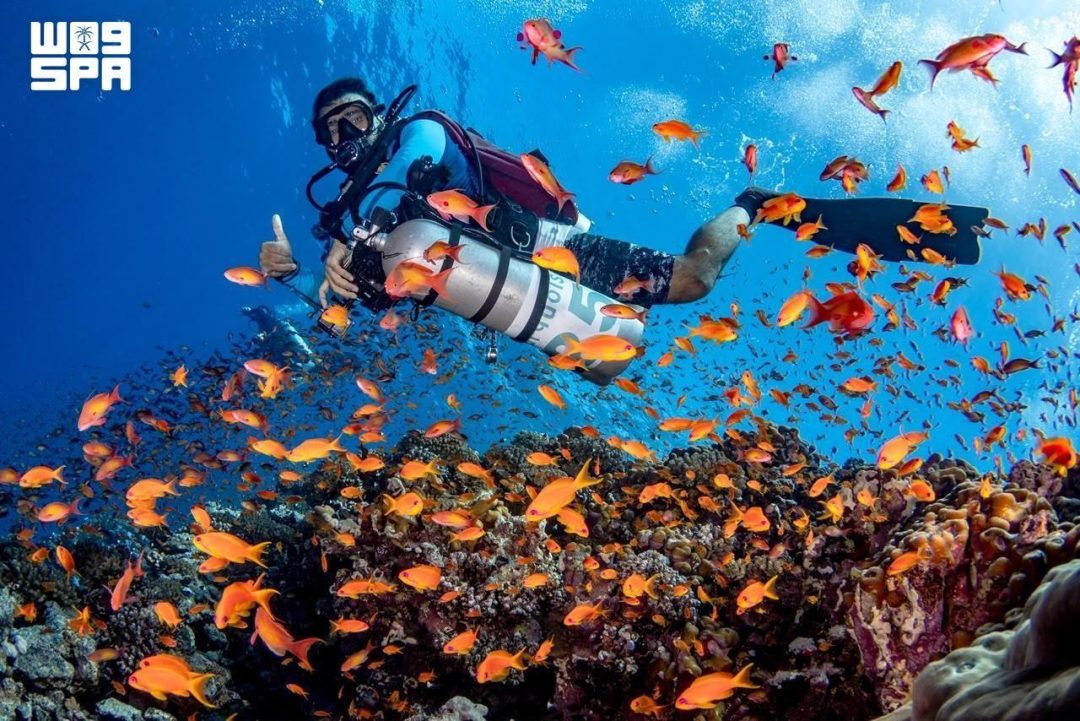
The Red Sea and Arabian Gulf coastlines are driving a rapidly expanding diving and marine tourism sector across thousands of kilometers of Saudi Arabian coast. This sector is rooted in historical pearl-diving traditions in Gulf ports and the Farasan Islands.
According to SPA, diving has evolved into a structured, high-value investment sector that aligns with Saudi Vision 2030 and strengthens the national blue economy.
The National Center for Wildlife has recorded over 300 coral species and more than 1,200 fish species. The center also generated the world’s largest Red Sea biodiversity database, which contains over 12.8 billion genetic sequences.
Advanced divers and photographers frequent the deep drop-offs, pristine islands, and coral walls of Umluj, Yanbu, Bayadah, and the Farasan Islands. Meanwhile, Jana Island and Jubail in the Arabian Gulf provide locations for beginner training, night diving, and wreck exploration.
The sector maintains a human connection through figures like 89-year-old Ali, whose four sons work as marine guides for scientific expeditions and dive instructors. Abdullah Hussein, aged 68, spent four decades pearl diving, a legacy now featured in cultural events. Professional evolution is seen in individuals like engineer Abdullah Al-Dosari, who began diving in 2017 and earned an Advanced Open Water Diver license through PADI certifications.
What biodiversity data has been recorded in Saudi waters? The National Center for Wildlife has documented more than 1,200 fish species and over 300 coral species. Additionally, the center has created the largest biodiversity database for the Red Sea, which includes more than 12.8 billion genetic sequences.
Which locations are recommended for different types of diving? Advanced divers and photographers are attracted to the coral walls and deep drop-offs in Yanbu, Bayadah, Umluj, and the Farasan Islands. For those seeking beginner training, night diving, or wreck exploration, the Arabian Gulf offers sites off Jana Island and Jubail.
How does maritime heritage influence the current diving industry? The industry is rooted in historical pearl-diving traditions from Gulf ports and the Farasan Islands. This legacy is maintained by individuals like Abdullah Hussein, who spent 40 years pearl diving, and Ali, whose sons now serve as dive instructors and guides for scientific expeditions.