


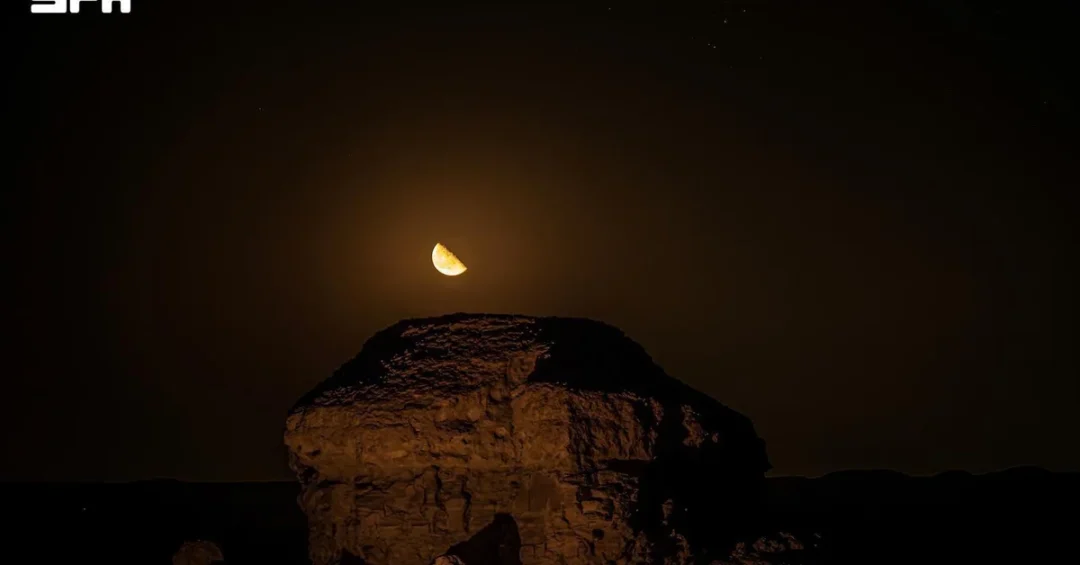
The skies over Arar and across the Kingdom of Saudi Arabia were graced at dawn today by the last quarter moon of Rabi Al-Awwal, a celestial event confirmed by the Saudi Press Agency. The moon appeared with half of its disk illuminated, rising near midnight and remaining visible through the morning before setting around midday. The phenomenon was observed by astronomers and space enthusiasts throughout the Kingdom, including Adnan Khalifa, a member of the Astronomy and Space Club, who noted that the phase offers optimal conditions for observing lunar topography.
Context and Background
The last quarter moon occurs approximately one week after the full moon, when the Sun-Earth-Moon angle reaches 90 degrees. This alignment causes half of the moon’s visible disk to be illuminated, creating a distinct visual divide known as the terminator—the line between light and shadow. In Islamic tradition, the lunar cycle holds significant importance, particularly during Rabi Al-Awwal, the third month of the Hijri calendar, which is observed with reverence across the Kingdom. The Saudi Press Agency reported that the event was visible in Arar and other regions, reflecting the Kingdom’s active engagement with astronomy and space sciences. Saudi Arabia has long supported astronomical observation as part of its cultural and scientific heritage, with clubs and institutions dedicated to studying celestial phenomena.
Key Details
According to Adnan Khalifa, the last quarter moon provides ideal conditions for observing lunar topography. Sunlight casts long shadows along the terminator, clearly revealing craters, ridges, and mountain ranges. This phase is particularly valued by astronomers for its enhanced visibility of the moon’s surface features. The moon rose near midnight and will remain visible through the morning, setting around midday. Khalifa’s observations were shared via the Saudi Press Agency, underscoring the role of local experts in documenting astronomical events. The event aligns with Saudi Arabia’s broader efforts to promote scientific literacy and space exploration, including initiatives under Vision 2030.
Implications and Impact
The observation of the last quarter moon of Rabi Al-Awwal highlights Saudi Arabia’s growing prominence in astronomy and space sciences. It also reflects the Kingdom’s commitment to preserving Islamic traditions while advancing scientific knowledge. Such events foster community engagement and educational opportunities, encouraging youth to explore STEM fields. Regionally, Saudi Arabia’s astronomical observations contribute to the broader Arab and Islamic world’s understanding of lunar cycles, which are essential for religious calendars. Internationally, the Kingdom’s participation in space-related activities enhances its reputation as a leader in innovation and research, aligning with its Vision 2030 goals to diversify the economy and promote knowledge-based sectors.
Vision 2030 Alignment
This celestial event underscores Saudi Arabia’s dedication to scientific advancement and cultural preservation, key pillars of Vision 2030. By promoting astronomy and space sciences, the Kingdom not only honors its Islamic heritage but also invests in future generations of scientists and researchers. As Saudi Arabia continues to expand its space industry and educational programs, events like the last quarter moon of Rabi Al-Awwal serve as reminders of the nation’s dual commitment to tradition and modernization. The Kingdom’s leadership in this field will inspire young Saudis to pursue careers in science and technology, driving innovation and contributing to the ambitious goals of Vision 2030.
20 Questions
Q1. What celestial event was observed in Saudi Arabia?
A1. The last quarter moon of Rabi Al-Awwal was observed at dawn across the Kingdom, including in Arar, with half of its disk illuminated, as reported by the Saudi Press Agency.
Q2. When did the last quarter moon occur?
A2. The last quarter moon occurred at dawn today, approximately one week after the full moon, when the Sun-Earth-Moon angle reached 90 degrees, according to astronomical observations.
Q3. Who commented on the lunar phase?
A3. Adnan Khalifa, a member of the Astronomy and Space Club, provided insights on the last quarter moon, noting its optimal conditions for observing lunar topography.
Q4. What is the terminator on the moon?
A4. The terminator is the dividing line between the illuminated and shadowed portions of the moon’s surface, which during the last quarter phase reveals craters, ridges, and mountain ranges clearly.
Q5. How long was the moon visible?
A5. The moon rose near midnight and remained visible through the morning, setting around midday, offering ample time for observation and study by astronomers and enthusiasts.
Q6. Why is this phase significant for astronomers?
A6. The last quarter phase provides optimal conditions for observing lunar topography because sunlight casts long shadows along the terminator, enhancing visibility of surface features.
Q7. What is Rabi Al-Awwal?
A7. Rabi Al-Awwal is the third month of the Hijri calendar, observed with reverence in Saudi Arabia and across the Islamic world, marking important religious and cultural events.
Q8. How does this event reflect Saudi Arabia’s scientific engagement?
A8. It highlights the Kingdom’s active support for astronomy and space sciences, with clubs and institutions dedicated to studying celestial phenomena and promoting scientific literacy.
Q9. What role did the Saudi Press Agency play?
A9. The Saudi Press Agency reported the event, sharing observations from experts like Adnan Khalifa and disseminating accurate information to the public and international audiences.
Q10. What can be seen on the moon during this phase?
A10. Craters, ridges, and mountain ranges are clearly visible due to the long shadows cast by sunlight along the terminator, making it ideal for lunar topography studies.
Q11. How does this event align with Vision 2030?
A11. It supports Vision 2030 by promoting scientific advancement and cultural preservation, encouraging youth engagement in STEM fields and enhancing the Kingdom’s reputation in space research.
Q12. Where was the moon observed?
A12. The moon was observed in Arar and across various regions of Saudi Arabia, as confirmed by the Saudi Press Agency, with clear visibility reported by local astronomers.
Q13. What is the Sun-Earth-Moon angle during this phase?
A13. The angle reaches 90 degrees, which causes half of the moon’s visible disk to be illuminated, defining the last quarter phase of the lunar cycle.
Q14. Why is the last quarter moon important for Islamic calendars?
A14. The lunar cycle is essential for determining Islamic months and religious observances, including Rabi Al-Awwal, making astronomical observations culturally and religiously significant.
Q15. How does Saudi Arabia support astronomy?
A15. Through clubs like the Astronomy and Space Club, educational initiatives, and government backing, Saudi Arabia fosters scientific research and space exploration as part of its development goals.
Q16. What did Adnan Khalifa emphasize?
A16. Khalifa emphasized that the last quarter phase offers optimal conditions for observing lunar topography, with sunlight revealing detailed surface features along the terminator.
Q17. What time did the moon set?
A17. The moon set around midday, after being visible from near midnight through the morning, providing a substantial window for observation and study.
Q18. How does this event benefit youth?
A18. It inspires young Saudis to explore STEM fields, particularly astronomy and space sciences, by demonstrating the Kingdom’s commitment to scientific education and innovation.
Q19. What international impact does Saudi Arabia’s astronomy have?
A19. Saudi Arabia’s astronomical observations contribute to global understanding of lunar cycles and enhance its reputation as a leader in innovation and research, aligning with Vision 2030.
Q20. What is the broader significance of this event?
A20. It underscores Saudi Arabia’s dual commitment to tradition and modernization, showcasing scientific progress while honoring Islamic heritage, and reinforcing the Kingdom’s global role in space sciences.
Reader Feedback
We value your thoughts. Please share your feedback on this article.
Your feedback helps us improve our coverage.
Related articles
 Estidamah Reports Breakthrough in Irrigation Efficiency for D
 Saudi Arabia Secures $17.5B Tech Investments at LEAP 2026
 LEAP 2026 Visitors Praise Saudi Arabia’s Space Progress
 Imam University Receives Digital Excellence Certificate at LEAP 2026
 Takamol Holding Signs 34 Agreements at LEAP 2026
 LEAP 2026 Concludes with $15 Billion Investments