


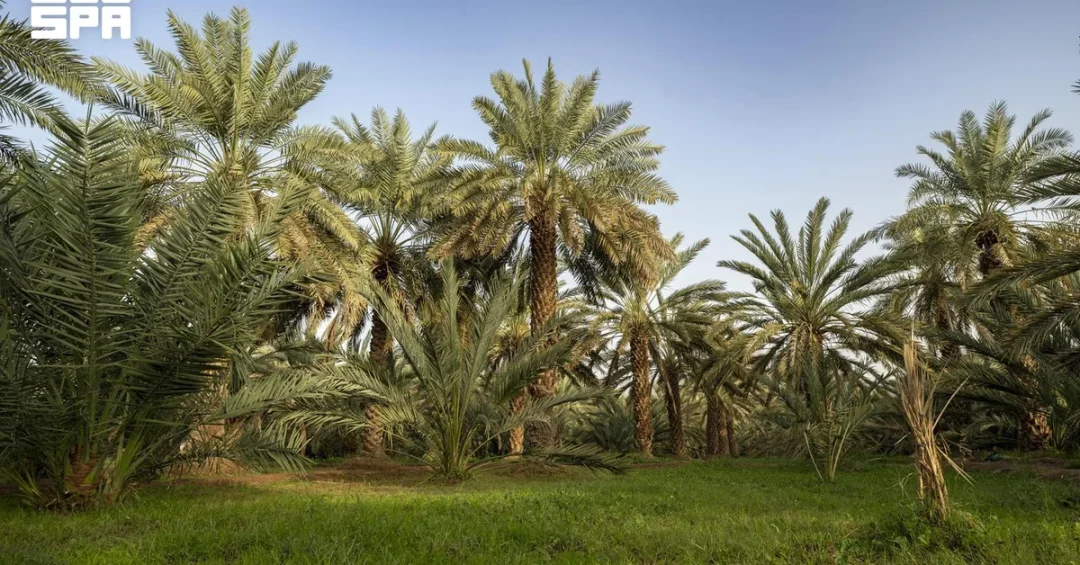
The National Research and Development Center for Sustainable Agriculture (Estidamah) announced on September 4, 2026, that field trials of Liquid Natural Clay (LNC) technology have delivered a breakthrough in irrigation efficiency for date palms, achieving a 25% reduction in water consumption while enhancing soil quality and maintaining productivity. The trials, conducted in collaboration with Saudi technology developer Saudi Desert Control, mark a significant step forward in the Kingdom’s efforts to optimize water use in agriculture, particularly in arid environments where water scarcity poses a persistent challenge.
Context and Background
Agriculture in Saudi Arabia has long grappled with extreme water scarcity, as the Kingdom relies heavily on limited groundwater and desalinated water for irrigation. Date palms, a culturally and economically vital crop, account for a substantial portion of agricultural water use. Traditional irrigation methods often result in significant water loss due to poor soil retention and evaporation. In response, Estidamah has been at the forefront of research into sustainable agricultural practices, aiming to align with the Kingdom’s Vision 2030 goals of enhancing food security and environmental sustainability. The evaluation of LNC technology is part of a broader strategy to adopt innovative solutions that address these challenges.
Key Details of the Trials
The field trials applied LNC, a liquid form of natural clay, to improve soil characteristics. According to the findings released by Estidamah, the treatment led to a 25% reduction in irrigation water consumption. Soil water retention capacity increased from approximately 60% before treatment to 75%. Plant-available water also rose to 16.8%, up from 11.7%. These improvements not only curb moisture loss but also enhance nutrient retention, supporting healthier palm growth. The technology, developed by Saudi Desert Control, involves spraying a dilute clay mixture onto soil, where it binds with sand particles to form a network that retains water and nutrients. The trials demonstrated that date palm productivity was maintained, ensuring that water savings did not come at the expense of crop yield. If applied broadly to date palm cultivation across the Kingdom, the technology could save an estimated 600 million cubic meters of water annually, a substantial contribution to national water conservation efforts.
Implications and Impact
The successful trials signal a major advancement in water management for arid agriculture, with potential ripple effects beyond date palms. The technology could be adapted to other crops, helping to reduce the agricultural sector’s overall water footprint by up to 25%. This aligns with Saudi Arabia’s national water strategy, which seeks to rationalize water use and ensure long-term sustainability. The collaboration between Estidamah and Saudi Desert Control exemplifies the Kingdom’s commitment to fostering public-private partnerships in research and development. Internationally, the results could position Saudi Arabia as a leader in innovative water-saving technologies, offering solutions that are relevant to other arid regions facing similar challenges. The findings also reinforce the Kingdom’s role in advancing global food security through sustainable practices.
Vision 2030 Alignment
This breakthrough directly supports Saudi Vision 2030, which prioritizes environmental sustainability, food security, and the adoption of cutting-edge technologies. By enhancing irrigation efficiency and reducing water consumption, the project contributes to the goals of the National Water Strategy and the National Agriculture Strategy, ensuring that natural resources are preserved for future generations. It also underscores the Kingdom’s dedication to achieving the UN Sustainable Development Goals, particularly those related to water and food. As Saudi Arabia continues to diversify its economy and invest in sustainable development, innovations like LNC technology will play a crucial role in securing a prosperous and resilient future.
20 Questions
Q1. What organization conducted the field trials on Liquid Natural Clay technology?
A1. The National Research and Development Center for Sustainable Agriculture, known as Estidamah, conducted the trials.
Q2. What was the main objective of these field trials?
A2. The trials aimed to evaluate the effectiveness of Liquid Natural Clay in improving soil quality, water retention, and date palm productivity.
Q3. How much reduction in irrigation water consumption was achieved?
A3. The trials demonstrated a 25% reduction in irrigation water consumption.
Q4. What was the soil water retention capacity before and after treatment?
A4. Before treatment, the soil water retention capacity was approximately 60%, and after treatment, it increased to 75%.
Q5. How did plant-available water change with the application of LNC?
A5. Plant-available water increased from 11.7% to 16.8% after the application of LNC.
Q6. Who developed the Liquid Natural Clay technology used in the trials?
A6. The technology was developed by Saudi Desert Control, a Saudi technology company.
Q7. What is the potential water savings if LNC is applied to all date palms in Saudi Arabia?
A7. It could save approximately 600 million cubic meters of water annually.
Q8. Did the use of LNC affect date palm productivity?
A8. No, date palm productivity was maintained, ensuring that water savings did not reduce crop yield.
Q9. What is the significance of these trials for Saudi Arabia’s agricultural sector?
A9. The trials represent a key research milestone toward expanding modern water-management practices and reinforcing food security.
Q10. How does LNC technology work to improve soil?
A10. It involves applying natural clay in liquid form, which binds with sand particles to form a network that retains water and nutrients.
Q11. What could be the broader impact of this technology on the agricultural sector’s water footprint?
A11. It could reduce the sector’s water footprint by up to 25%, contributing to national water conservation.
Q12. Which Saudi Vision 2030 goals does this project support?
A12. It supports environmental sustainability, food security, and the adoption of innovative technologies.
Q13. What is the name of the collaboration between Estidamah and Saudi Desert Control?
A13. The collaboration is a research partnership to evaluate and promote LNC technology for sustainable agriculture.
Q14. When were the results of the field trials announced?
A14. The results were announced on September 4, 2026, by the Saudi Press Agency.
Q15. What are the primary benefits of LNC beyond water savings?
A15. It enhances soil quality, improves nutrient retention, and maintains crop productivity.
Q16. How does this technology address the challenges of arid climates?
A16. By improving soil water retention, it reduces moisture loss and makes irrigation more efficient in arid conditions.
Q17. Are there plans to expand the use of LNC to other crops?
A17. While specific plans are not detailed, the technology has broad application potential for various crops in arid regions.
Q18. What role does Estidamah play in Saudi Arabia’s agricultural research?
A18. Estidamah leads research and development in sustainable agriculture, focusing on water efficiency and food security.
Q19. How does this project align with Saudi Arabia’s National Water Strategy?
A19. It contributes to the strategy’s goals of rationalizing water use and ensuring long-term sustainability.
Q20. What does this breakthrough mean for global water conservation efforts?
A20. It positions Saudi Arabia as a leader in water-saving technologies, offering solutions for other arid regions worldwide.
Reader Feedback
We value your thoughts. Please share your feedback on this article.
Your feedback helps us improve our coverage.
Related articles
 Saudi Arabia Secures $17.5B Tech Investments at LEAP 2026
 LEAP 2026 Visitors Praise Saudi Arabia’s Space Progress
 Imam University Receives Digital Excellence Certificate at LEAP 2026
 Takamol Holding Signs 34 Agreements at LEAP 2026
 LEAP 2026 Concludes with $15 Billion Investments
 NCAI Deputy CEO Highlights AI’s Future at DeepFest 2026